49 works in this view — arrow keys or swipe to move between them.
Dance in Art
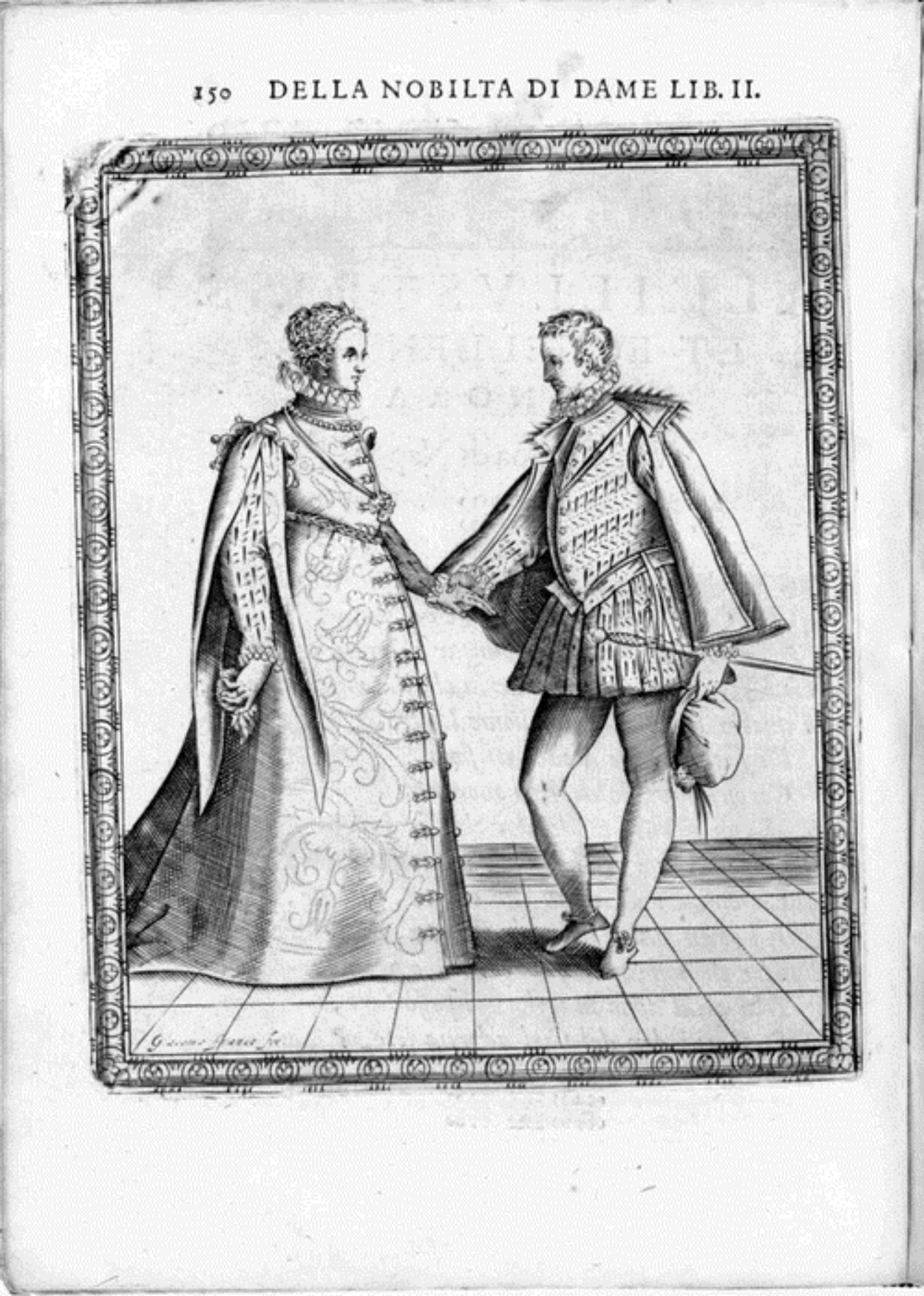
Caroso Nobiltà — Dance Plate (plate 10)
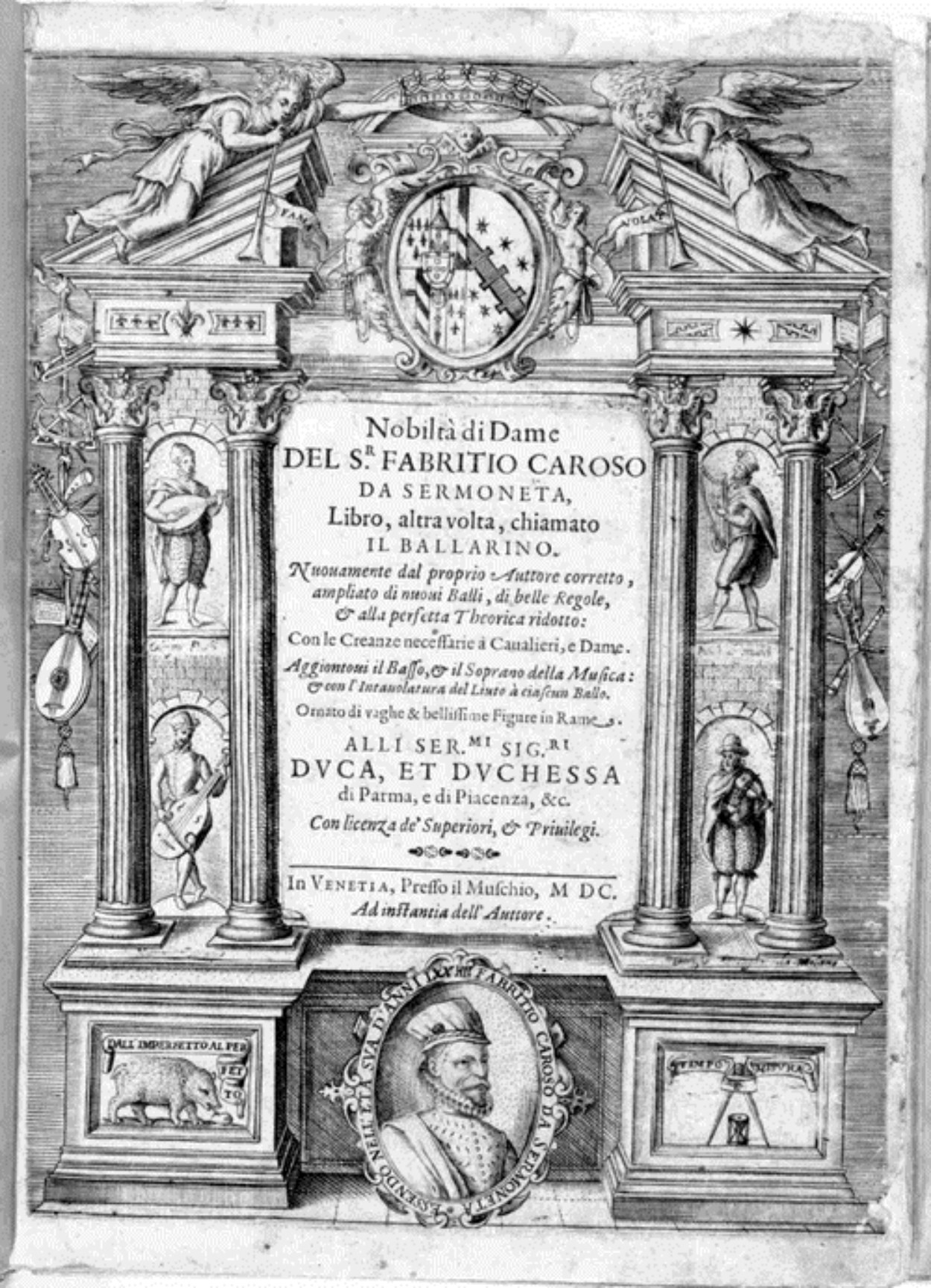
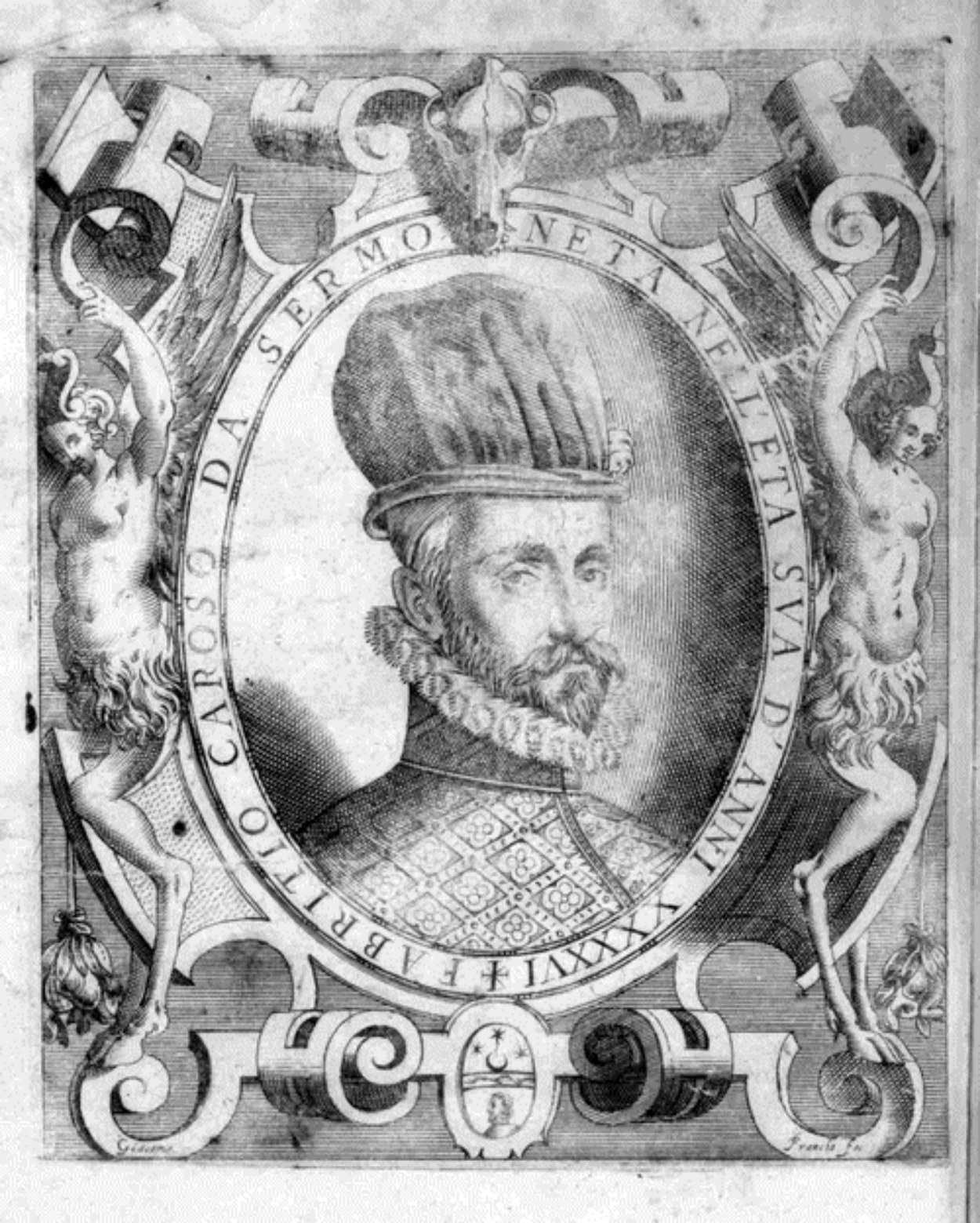
Fabritio Caroso da Sermoneta
- Medium:
- Woodcut
- Dance:
- Notation/Choreography
- Era:
- Pre-1700 (Renaissance/Baroque)
- Collection:
- Nobiltà di Dame (1600)
- Source:
- Library of Congress
- Rights:
- Public domain — free to use, share and adapt.
- Recorded as:
- Public Domain
Caroso's treatises are among the only detailed sources for how Renaissance court dances were actually performed; without them, we would have only music and fragmentary descriptions. This image is a rare window into the bodily practice of the elite—it shows us how a noblewoman held her body, how she was touched by her partner, and how these small gestures carried meaning in a rigidly hierarchical society. For historians of dance, gender, and courtship, it is an irreplaceable artifact.
What you are looking at
A noble couple stands face to face in a formal interior space with a tiled floor, rendered in the refined linear style of Renaissance woodcut. The woman on the left wears an elaborate gown with a high collar and jeweled neckline, the bodice fitted and decorated with scrolling embroidery or brocade, and the skirt falling in heavy folds to the floor. A cape or mantle lined with patterning drapes from her shoulders. The man on the right is dressed in military or court costume: a short tunic or doublet with decorative striping or gridded pattern, a high collar, and a capacious cape that sweeps from one shoulder. Both figures have their heads tilted slightly toward each other in an attitude of courtly attention. Their hands meet or nearly meet at the center of the composition—his right hand appears to gesture toward or support hers. The space is spare: a decorative border frames the scene, and a patterned floor establishes the shallow plane on which they stand.
The dancing
Both dancers are upright and face each other across a short distance, their posture formal and controlled. The woman's weight appears centered, her gown's volume dominating the silhouette; the man stands in a relaxed contrapposto with one leg slightly bent. Their hands meet at waist height in what appears to be a gentle clasp or a moment of hand-taking—a key gesture in Renaissance courtship dances. The frame is open and frontal; there is no close embrace. Both figures gaze toward each other with calm, aristocratic composure rather than animated expression.
The dance depicted
This is a figure from Fabritio Caroso's *Nobiltà di Dame*, a choreographic treatise that documented the most fashionable Italian court dances of the 1590s. The image most likely illustrates one of the paired opening figures of a *pavane* or *galliard*—dances that begin with partners approaching and taking hands in a formal salute or *riverenza*. The composition captures the moment just before or after the hand-taking, the essential social gesture of Renaissance court dance: two equals meeting in a structured, hierarchical space to perform their mutual respect. The stillness of the pose and the prominence of the hand connection suggest a slow processional dance rather than a turning or leaping one.
How it was made
This is a woodcut, a relief-printing technique that allowed rapid reproduction and distribution of instructional images throughout Europe. The artist used fine parallel lines and cross-hatching to model the fabric, faces, and architectural space, creating volume and texture without deep chiaroscuro. Woodcut's reliance on bold silhouettes and clear contours made it ideal for capturing the outline and bearing of the body—essential information for dancers learning choreography from the page. The medium implies this page was intended for a wide courtly audience, not just professional dancers, and that the movement was considered important enough to standardize and circulate in print.
About this work
This woodcut documents a foundational moment in European court dance: the formal greeting between a noble man and woman in the presence of others. It comes from Caroso's *Nobiltà di Dame* (Venice, 1600), a refined reissue of his earlier *Il Ballarino* and one of the most influential dance manuals of the Renaissance. The couple's dress, stance, and hand-taking follow the codes of Italian courtly behavior at the turn of the 17th century, when dancing was inseparable from courtship, politics, and the display of noble identity. The image is valuable precisely because it freezes a moment of motion and social ritual that otherwise left no trace: it shows us not what the dance looked like in performance, but what it was supposed to look like when executed with proper grace and decorum.
How to look at it
Look at the hands: they are the narrative center of the image, the place where the dance begins and where social contract is made visible. Notice how the bodies frame this moment without approaching it—there is distance, formality, and control. The woman's posture, with her weight settled and her gown undisturbed, shows that Renaissance court dancing was not about leaping or turning at every moment; much of it consisted of processional movement and formal pauses. The artist has chosen to freeze the dance at the moment of arrival and greeting, not at a moment of dynamic motion. This choice tells us that in Caroso's world, the social choreography—the approach, the salute, the taking of hands—was as important as any step.
The artist
Fabritio Caroso da Sermoneta (c. 1526–after 1600) was the most celebrated dancing master of Renaissance Italy. He spent much of his career in Rome and later Venice, serving the papal court and Venetian nobility. He published *Il Ballarino* in 1581 and revised and expanded it as *Nobiltà di Dame* in 1600, dedicating the later edition to Christine of Lorraine, grand duchess of Tuscany. His treatises included not only dance choreographies but also moral instruction on beauty, courtesy, and the nature of nobility—making dance a vehicle for the teaching of virtue. Caroso's fame rested on his ability to codify court dance in a way that made it teachable and repeatable, and his treatises were reprinted and imitated across Europe for over a century.
The period
The year 1600 marks a threshold. The pavane and galliard—the paired dances documented in this image—had dominated European court life for nearly a century, but their reign was ending. The rise of the minuet and newer dances was already underway, yet Caroso's *Nobiltà di Dame* was presented as a conservation of the "great dances" of the Cinquecento, now refined and updated for the more austere courtly style of the late 16th and early 17th centuries. The book was published in Venice at a moment when Italian court culture, though still prestigious, was beginning to yield to the court of France as the arbiter of dance fashion. Caroso's decision to present these dances in print, with woodcut illustrations, was itself an act of preservation—an attempt to fix in memory and teach to future generations a style of movement that was already becoming historical.
Where it lives
This woodcut is page 150 from the 1600 Venice edition of Fabritio Caroso's *Nobiltà di Dame*, held in the Library of Congress. The book is a printed instructional treatise, and this particular plate is one of many paired-figure illustrations interspersed throughout the text to demonstrate the opening positions and gestures of specific dances.
Dance in this work
Questions about this work
What dance is this couple doing?
Caroso does not label this particular plate with a dance name in a way that survives in this image alone. However, the format—two dancers facing each other, hand to hand, in formal court dress—is characteristic of the opening of a pavane or galliard, the two most prestigious dances in Renaissance Italy. This image likely illustrates the moment just after the initial salute (*riverenza*), when partners take hands to begin the processional figures.
Why are they not moving?
Renaissance court dances were not continuous movement. They consisted of walks, turns, and formal poses held for musical phrases. This image captures one of those held poses—the moment of hand-taking and greeting. It is not a failure to show movement; it is an accurate record of what the dancer was supposed to do at this point in the choreography.
How do we know this is about dance and not just fashion?
This image appears in Caroso's *Nobiltà di Dame*, explicitly a dancing master's manual. The layout, the pairing of figures, the progression through the book, and the context of Caroso's authorship all confirm that this is instructional dance material, not a fashion plate. Moreover, the pose and hand-holding follow the grammar of Renaissance court dance as documented elsewhere in the treatise.
Why is the woman's outfit so elaborate?
Noble women in Renaissance Italy wore expensive, heavily patterned fabrics as a display of wealth and status. When they danced, they danced in their best court dress. The gown's weight and volume affected how she could move—her steps had to be smaller, her upper body more restrained. The elaborate dress was not separate from the dance; it was part of what had to be danced with.
More Notation/Choreography artwork