49 works in this view — arrow keys or swipe to move between them.
Dance in Art
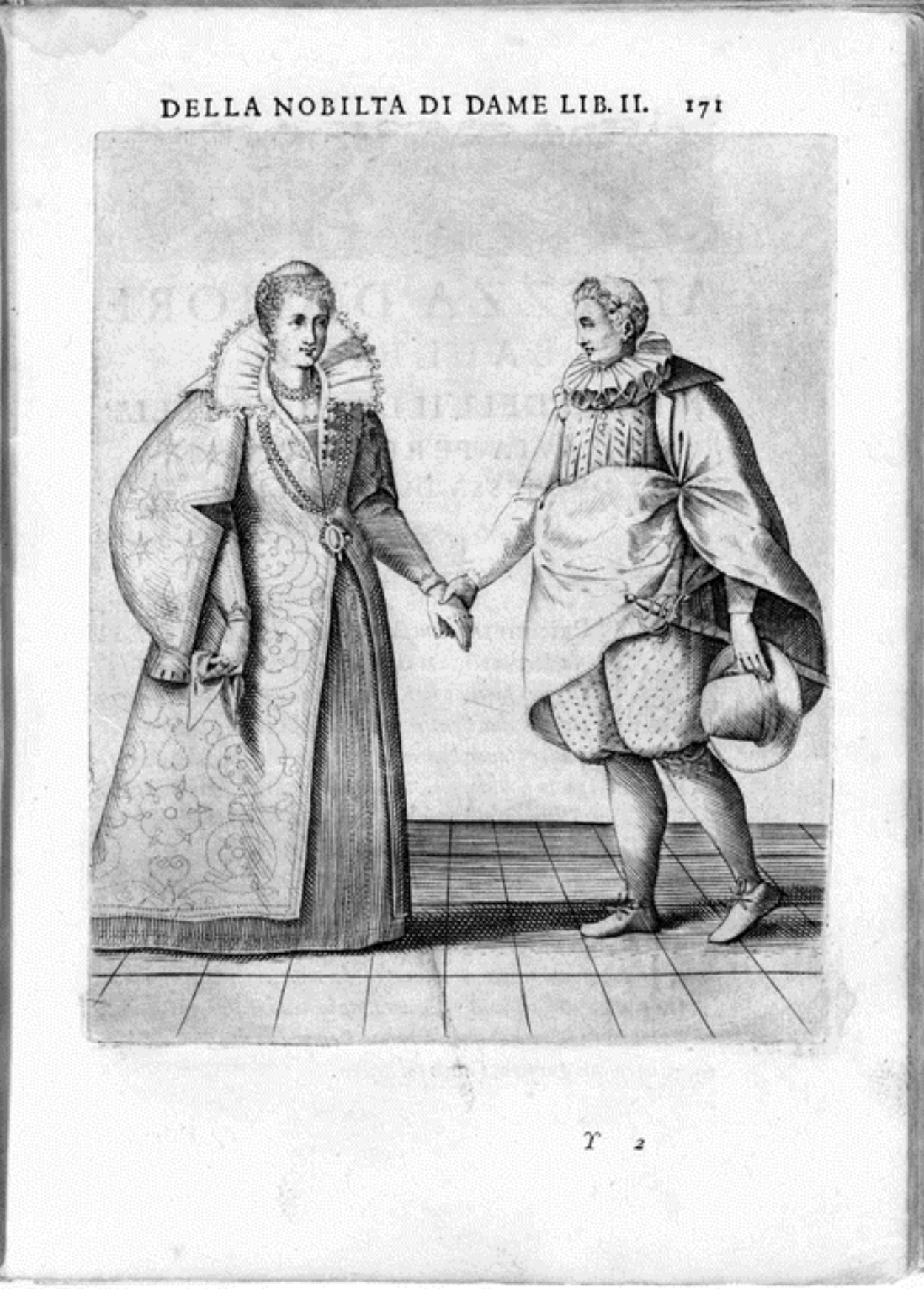
Caroso Nobiltà — Dance Plate (plate 13)
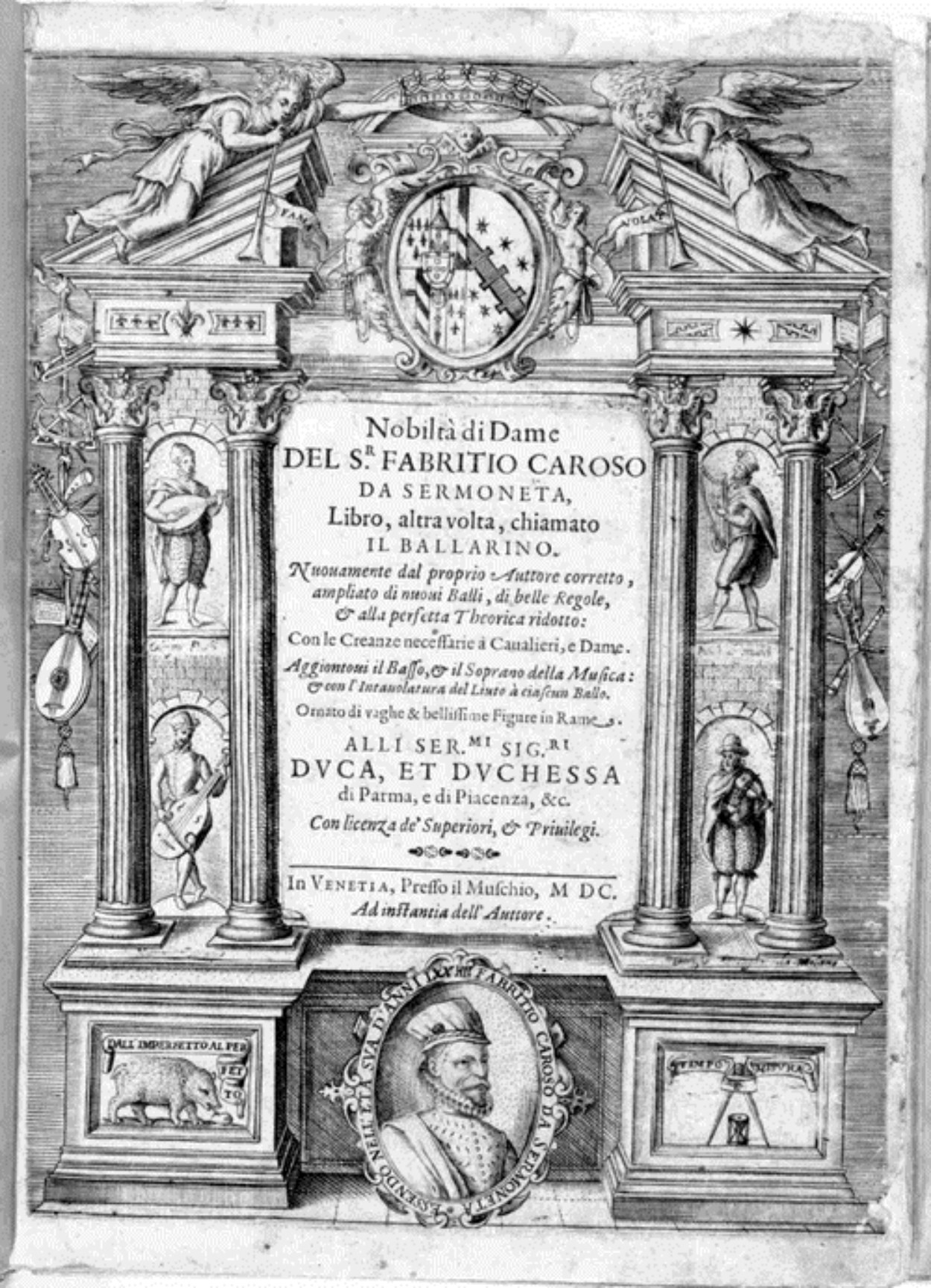
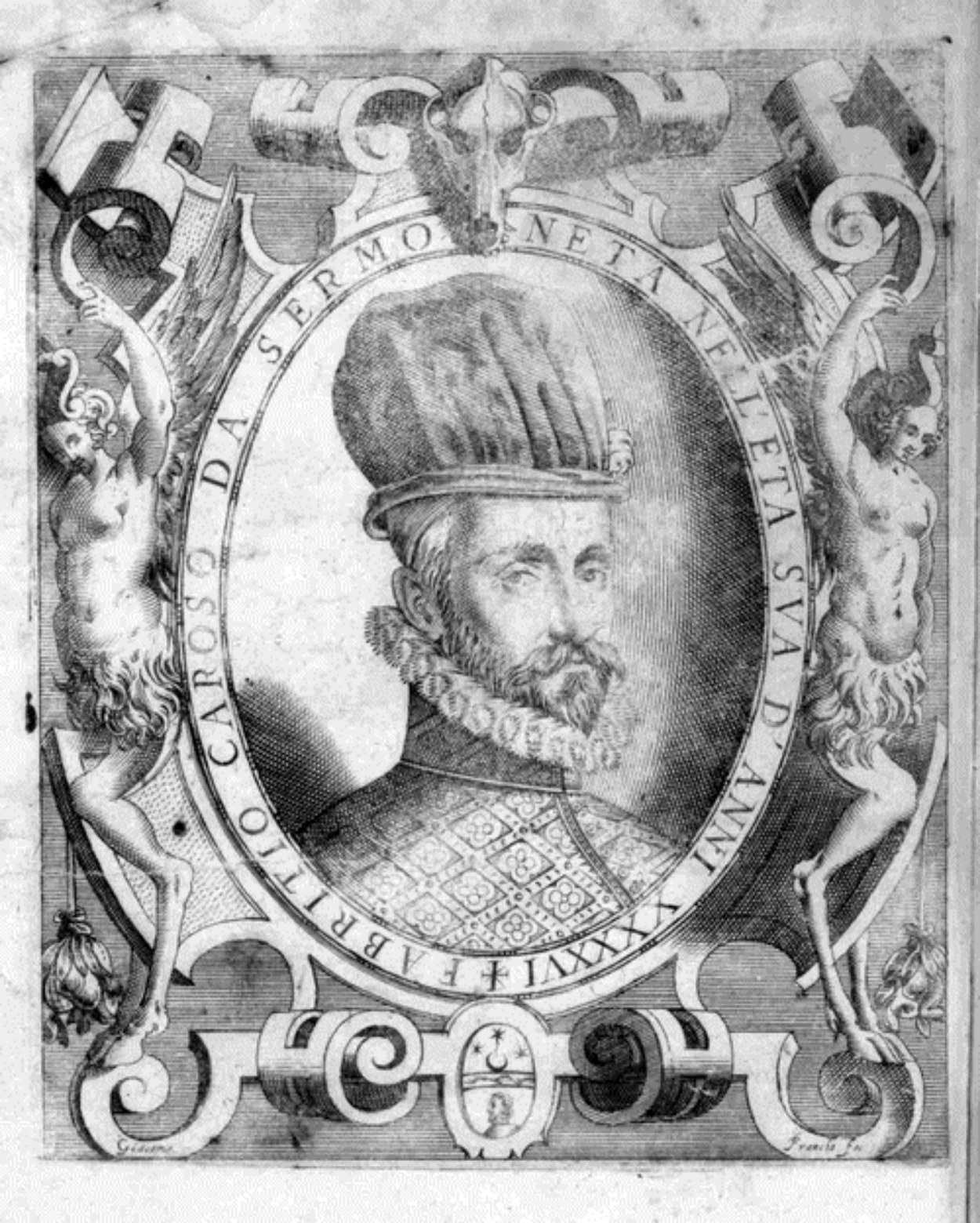
Fabritio Caroso da Sermoneta
- Medium:
- Woodcut
- Dance:
- Notation/Choreography
- Era:
- Pre-1700 (Renaissance/Baroque)
- Collection:
- Nobiltà di Dame (1600)
- Source:
- Library of Congress
- Rights:
- Public domain — free to use, share and adapt.
- Recorded as:
- Public Domain
For historians of dance, this plate provides direct evidence of how paired dances were actually positioned and held in Italian Renaissance courts—not from description alone, but from contemporary visual documentation made by someone embedded in that practice. For art historians, it exemplifies how woodcut technique was deployed for educational purposes in an era before photography, freezing a moment of social choreography for study and replication. The image reveals that Renaissance court dance was understood as an art of stillness and alignment as much as of movement, and that the dancer's dress and bearing were inseparable from the dance itself.
What you are looking at
A noble couple in formal Renaissance Italian court dress stand facing each other on a tiled floor, their hands joined in the center of the composition. The woman on the left wears an elaborate gown with a full skirt decorated with fine parallel lines suggesting rich fabric or embroidery, a fitted bodice with ornamental buttons, and a striking cartwheel ruff collar. Over her gown falls a long cape or mantle lined with a lighter fabric, draped dramatically behind her shoulders. The man on the right, dressed in courtly attire with hose and a short doublet, wears a smaller ruff collar and a cloak or cape that falls from his shoulders. His legs are notably muscular and pronounced, typical of aristocratic male dress of the period. Both figures stand upright and dignified, their connection through joined hands suggesting a formal, choreographed moment rather than intimate contact. The floor beneath them is rendered in careful perspective with parallel lines, establishing a stage-like space. The engraving is rendered in black ink with fine cross-hatching to model form and suggest texture, typical of woodcut technique.
The dancing
The two dancers stand at a slight angle to each other, hands joined at waist height in what appears to be a simple hand-hold characteristic of Renaissance paired dancing. The woman's weight is centered, her body upright; the man's stance is similarly formal and erect. Neither figure leans or tilts; the posture is one of restrained elegance rather than active movement. The woman's free arm hangs at her side while the man's hangs naturally. The relative scale and positioning of their bodies suggests they are dancing as equals in a social context rather than in a hierarchical or performance relationship.
The dance depicted
This plate illustrates a paired dance of the Italian Renaissance court, most likely a pavane or a similar stately processional dance such as an allemande or basse danse. The formal hand-hold, upright posture, and elaborate dress point to a slow, measured dance of aristocratic refinement, not a galliard or volta which would show more dynamic or energetic movement. Caroso's *Nobiltà di Dame* documents the courtly dances of late-sixteenth and early-seventeenth-century Italian nobility, and this plate belongs to that instructional tradition. The moment captured is a stationary position within a sequence—a moment of poise and alignment rather than a step or turn in progress. The image documents not just the dance itself but the ideal body and comportment expected of dancers in the highest circles of Renaissance society.
How it was made
This is a woodcut engraving, a relief printing technique in which an image is carved into the surface of a wooden block. The fine parallel lines used to shade and model the figures, the careful rendering of textile patterns, and the precision of the floor perspective are all characteristic of skilled woodcut work of the late sixteenth century. Woodcuts were economical to produce and could be printed in multiple copies, making them ideal for a didactic work like Caroso's dance manual. The technique's limitations—the difficulty of rendering very fine detail or soft gradations of tone—push the artist toward clarity of outline and bold patterning, which serves the instructional purpose well. The surviving impressions reveal the work was intended for wide circulation among the educated elite who could afford such books.
About this work
This woodcut plate from Fabritio Caroso's *Nobiltà di Dame* (Venice, 1600) documents a fundamental moment in Renaissance court dance: two aristocratic dancers poised in the formal hand-hold and upright stance that governed paired dances of refinement. The couple's elaborate dress—the woman's cartwheel ruff, embroidered gown, and lined mantle; the man's hose, doublet, and cloak—signals their social status and the ceremonial importance of the occasion. As an instructional image in a printed manual, the plate served a dual purpose: to record the actual choreography and steps of fashionable dances, and to illustrate the ideal carriage and dress of the nobility who danced them. Caroso's *Nobiltà* was among the most authoritative dance books of its era, and this image is a primary document of how Renaissance aristocrats understood their own bodies and social identities through dance.
How to look at it
Notice the stillness of the image: this is not a moment of action but of poised alignment. The artist has chosen to freeze the dancers in a position of readiness and formal greeting—a still point in an otherwise moving sequence. Attend to the hands, which are the primary point of connection and communication; the hold is neither tight nor casual but precisely calibrated. Look at the floor and the way it recedes in perspective; this establishes the dancers as figures in a measurable, architectural space rather than in nature or an undefined setting. The precision of the engraving—the clear lines, the careful hatching—mirrors the precision of the dance itself, which was understood as a geometry of space and position, not an expression of feeling.
The artist
Fabritio Caroso da Sermoneta (c. 1526–after 1605) was among the most celebrated dance masters of the Renaissance, active in Rome and Venice. He trained performers for the papal court and for prominent Italian noble families, and his two major treatises—*Il Ballarino* (1581) and its expanded revision *Nobiltà di Dame* (1600)—were foundational texts of Renaissance dance practice. These books combine detailed written instruction with woodcut illustrations of choreographic positions and patterns. Caroso's authority rested on his firsthand knowledge of the dances of the highest Italian courts; his books codified and disseminated those practices across Europe. The *Nobiltà* in particular, dedicated to Christine of Lorraine, reflects the refined court culture of the late Renaissance and signals the transition toward Baroque courtly dance.
The period
In the late sixteenth and early seventeenth centuries, dance in Italian and European courts was undergoing formalization and documentation. The invention of the printing press and the increasing sophistication of woodcut and engraving technology made it possible to preserve choreography in visual form, a revolutionary development for a bodily art. At the same time, Renaissance court culture was increasingly elaborate and rule-bound: dances became markers of noble status and refined education. The pavane and similar processional dances were reaching the height of their prestige in this period, seen as vehicles for displaying aristocratic dignity and control. Caroso's *Nobiltà* appeared at a moment when Italian court dance was influential across Europe but also beginning to yield to newer, more energetic forms. The book represents a conscious effort to establish and preserve a canon of "noble" dances against cultural change.
Where it lives
This plate is from the Biblioteca Nazionale Centrale di Roma's holding of *Nobiltà di Dame*, the 1600 Venice edition printed by Il Ciotti. The Library of Congress catalogue records the work from this source, making it a publicly documented exemplar of one of the most important Renaissance dance books.
Dance in this work
Questions about this work
What dance is actually being shown here?
The formal hand-hold, upright posture, and lack of dynamic movement suggest a slow, stately paired dance such as a pavane, allemande, or basse danse. The image shows a still moment within the sequence—a position of alignment and address—rather than a step in progress. Caroso's text would specify which dance and which step, but the visual evidence points to a dance of aristocratic refinement, not an energetic saltatory form.
Why is the man's clothing so different from the woman's?
In Renaissance court dress, aristocratic men and women followed different conventions. Men typically wore hose (tights) that displayed the leg, a fitted doublet, and a cloak or cape. Women wore full skirts and elaborate upper garments with distinctive collars. Both wore precious fabrics and ornaments, but the silhouette was distinct by gender. The difference was not functional but symbolic, marking masculine and feminine roles in courtly display.
Is this a real dance or an invention of the artist?
This is a documentation of real court dances as practiced in Italian nobility circles in the late sixteenth and early seventeenth centuries. Caroso was a celebrated dance master with direct knowledge of these practices, and his manual was intended to preserve and transmit actual choreography. The plate is not imaginative or decorative but instructional—a record of how nobles actually danced.
Why is the image so precisely rendered if it's just a dance instruction?
Precision was essential. For an instructional manual to serve its purpose, the positions and deportment had to be clear and reproducible. The woodcut technique allowed for multiple copies to be distributed, making the manual useful across different courts. The precision also reflects Renaissance ideals of clarity and order, and suggests that dance itself was understood as a precise, rule-governed art form rather than an improvised or spontaneous practice.
More Notation/Choreography artwork