49 works in this view — arrow keys or swipe to move between them.
Dance in Art
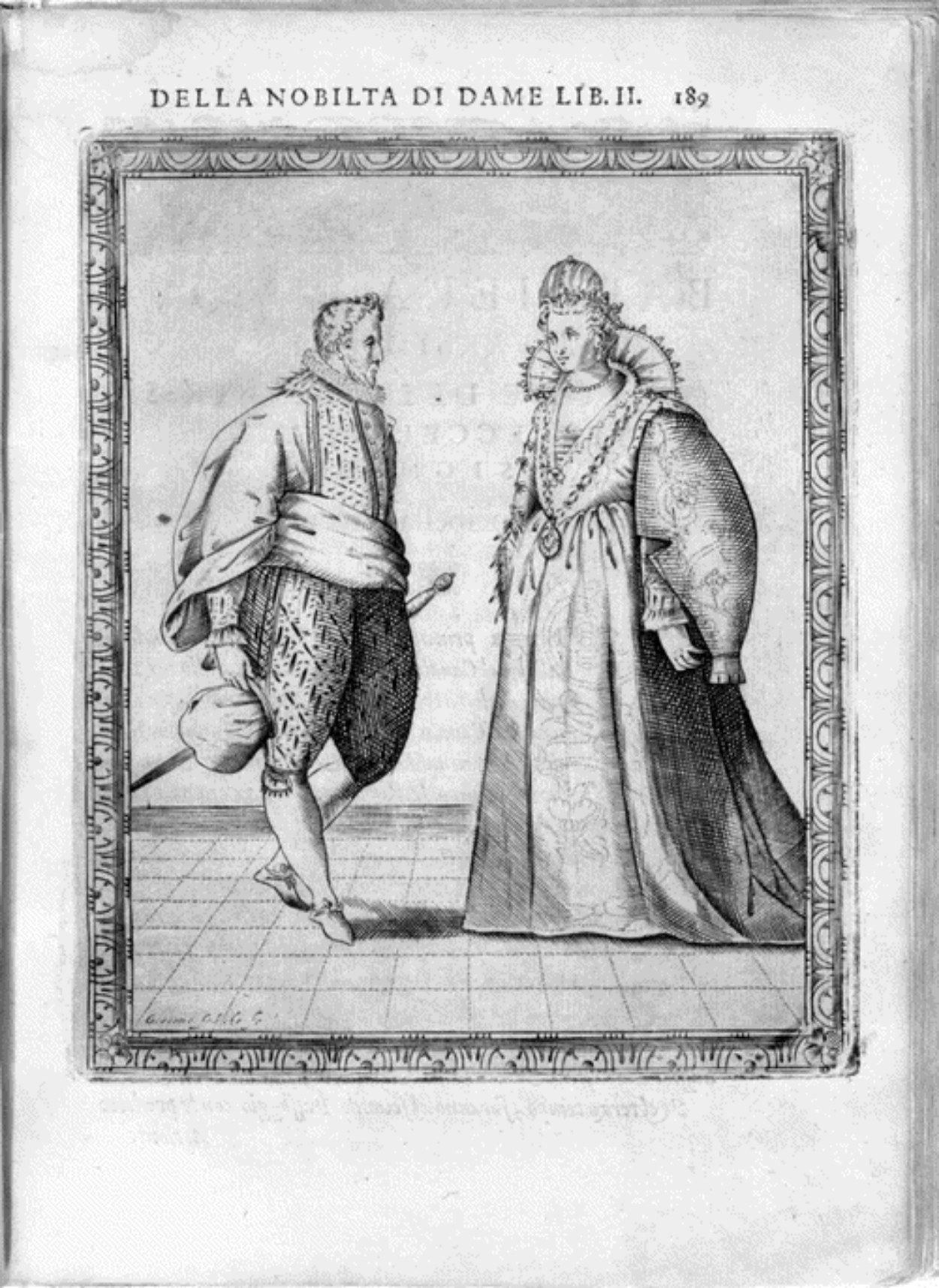
Caroso Nobiltà — Dance Plate (plate 16)
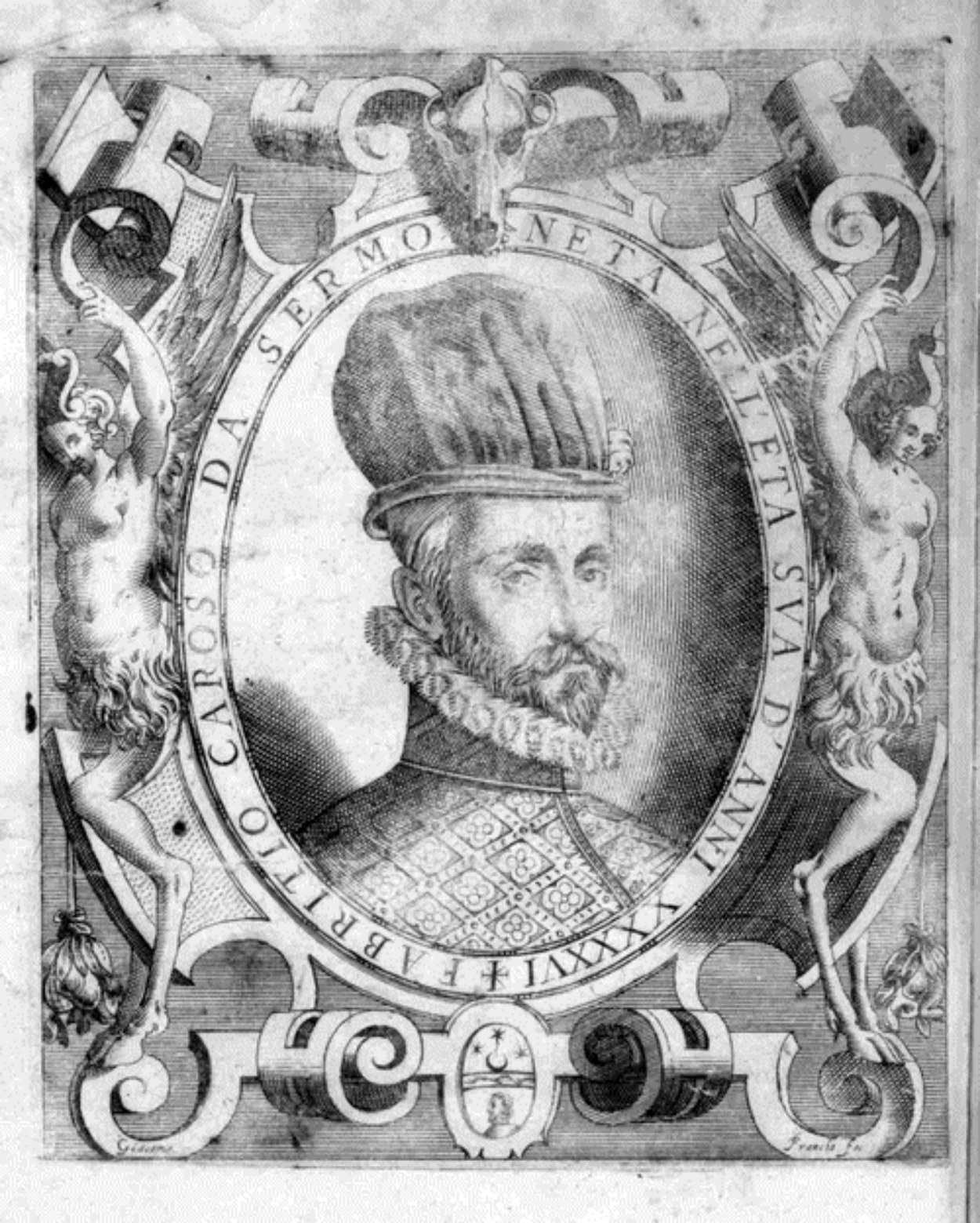
Fabritio Caroso da Sermoneta
- Medium:
- Woodcut
- Dance:
- Notation/Choreography
- Era:
- Pre-1700 (Renaissance/Baroque)
- Collection:
- Nobiltà di Dame (1600)
- Source:
- Library of Congress
- Rights:
- Public domain — free to use, share and adapt.
- Recorded as:
- Public Domain
Caroso's *Nobiltà di Dame* is one of only two complete written records of European Renaissance court dance that survive from the period, and the only one that attempts to show both the positions and the social context of the dances themselves. Without these plates and their accompanying descriptions, we would have only fragmentary evidence of how nobles actually danced in the sixteenth and early seventeenth centuries. The image also documents the visual culture of the Renaissance court: the silhouettes, fabrics, postures, and hierarchies that structured elite social life.
What you are looking at
A woodcut plate depicting a noble couple in Renaissance Italian court dress, arranged as a facing pair in a formal interior space with a tiled floor. The man stands at left, turned slightly in profile, wearing a richly patterned doublet with decorative slashing, a short cape draped asymmetrically across his shoulders, and breeches to the knee; he holds a feathered hat in one hand and gestures toward his partner with the other. The woman stands at right, facing front, wearing an elaborate high-waisted gown with puffed sleeves and decorative banding; her hair is dressed high and ornamented, and she wears a ruff collar and jeweled chains across her chest. Both figures are poised in an attitude of social address rather than active movement—the woman stands composed and upright while the man leans slightly forward in a posture of courtly deference or greeting. The setting is austere, defined only by the geometric floor pattern and the ornamental frame enclosing the composition.
The dancing
The two figures are not in physical contact and do not occupy a shared hold or closed position. The man's weight appears forward, his torso angled toward the woman in a gesture of presentation or salutation; his free arm extends in a graceful indication. The woman's posture is vertical and frontal, her arms held at her sides or folded. There is no visible footwork in active execution; instead, both figures occupy stable, posed positions that suggest either the opening of an interaction or a moment of formal acknowledgment before or after movement. The spatial relationship—face-to-face, some distance apart—emphasizes social negotiation and hierarchy rather than partnered motion.
The dance depicted
This is a dance instruction plate from Fabritio Caroso's *Nobiltà di Dame*, the authoritative manual of Italian Renaissance court dances published in Venice in 1600. The image most likely depicts a moment from a paired dance such as the *pavane* or *galliard*, or possibly the preliminary *riverenza* (bow and curtsey) that opened all formal dances of the period. The man's forward-leaning posture and gesture toward his partner is consistent with the male role in these dances: courtly deference, invitation, and display. The woman's poised, upright stance embodies the contrary ideal of noble restraint and dignity. Rather than showing active footwork in progress, the plate appears to freeze the moment of initial engagement—the recognition and formal greeting between dancers—which would have been a crucial choreographic element in court dance.
How it was made
This is a woodcut, a relief printing technique well suited to the mass circulation of instructional manuals. The bold outlines and clear tonal contrasts of the woodcut medium allowed fine detail in dress and pose while maintaining the legibility required for dancers attempting to learn from the printed page. The technique's long tradition in Northern European book production made it the natural choice for a Venetian dancing master seeking to reach an audience of nobles and their dance masters across Italy and beyond. The ornamental frame is characteristic of Renaissance printed books and signals the work's status as both practical instruction and cultured artifact.
About this work
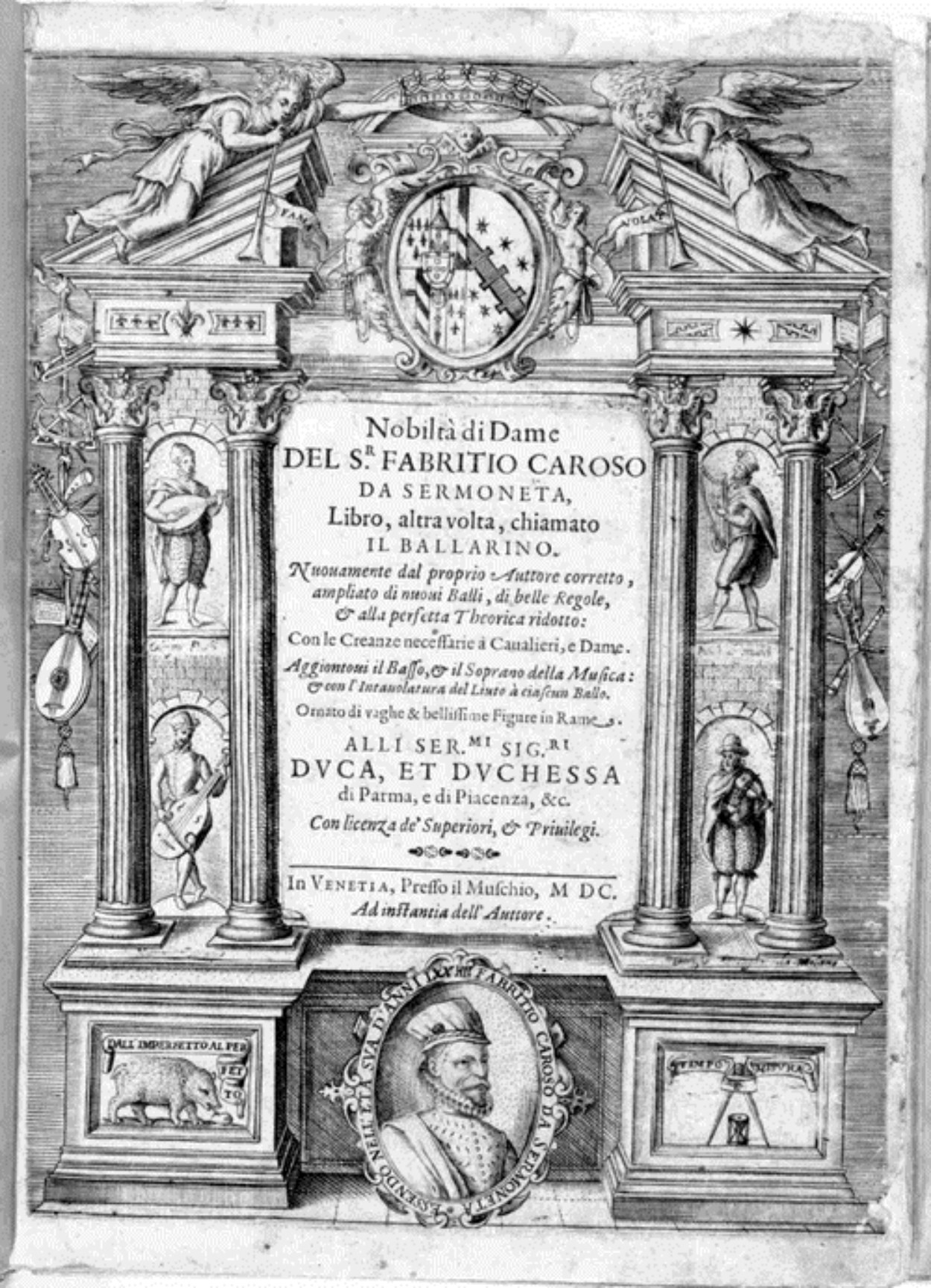
This is one of the instructional plates from Fabritio Caroso's *Nobiltà di Dame* (Venice, 1600), the most influential manual of Italian Renaissance court dance. Caroso was the leading dance master of the late sixteenth century, and his two published treatises—*Il Ballarino* (1581) and this revised and expanded *Nobiltà di Dame*—codified the dances of the Italian court and disseminated them across Europe. This particular plate shows a noble man and woman in the formal dress of the period arranged in what appears to be the opening moment of a paired dance. Rather than capturing kinetic action, the woodcut presents a teaching diagram: a still life of courtly social interaction that a reader could consult to understand the correct bearing, costume, and spatial relationship of dancers in the Italian Renaissance court. The work sits at the intersection of dance instruction, fashion documentation, and Renaissance courtesy literature.
How to look at it
Look first at the distance between the figures: this is not a moment of contact or closure, but of formal address. Notice the man's forward lean and the gesture of his extended arm—he is offering, inviting, or presenting. The woman's upright posture and frontal orientation signal acceptance and composure. The richness of dress—the slashing, the patterning, the jewels, the elaborate headdress—tells you that this is an image of nobility and expense, and that the dance itself was inseparable from display and status. Finally, observe that the artist has chosen not to show active movement (feet in motion, bodies in momentum) but rather the poised, stable moment before or at the threshold of the dance. This is pedagogical: Caroso understood that dancers learning from a printed page needed to see the correct deportment and frame, not a fleeting gesture.
The artist
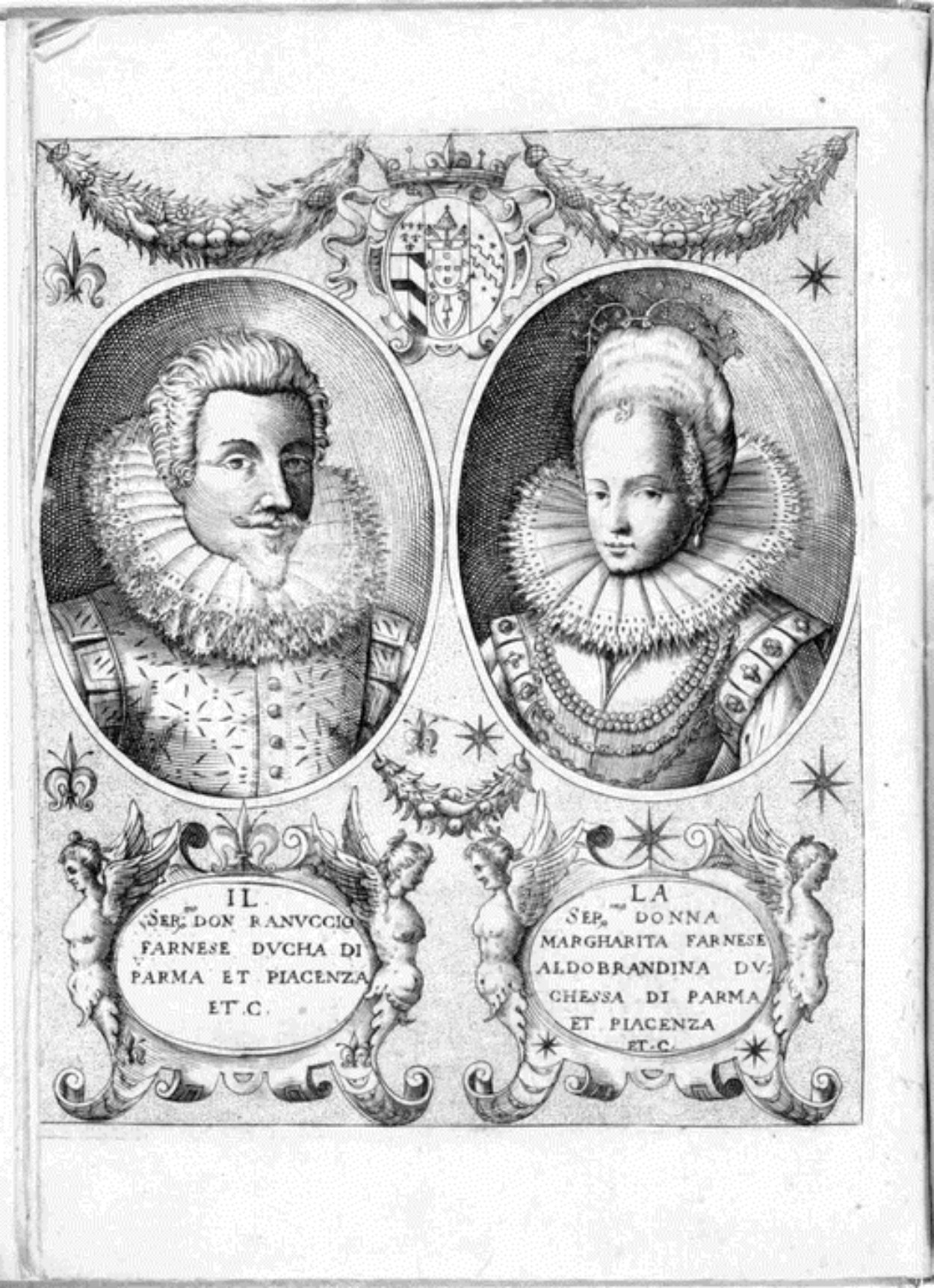
Fabritio Caroso da Sermoneta (c. 1526–1605) was an Italian dancing master, choreographer, and author based primarily in Rome. He served noble and papal patrons and gained renown as the foremost authority on courtly dance practice. His first publication, *Il Ballarino* (1581), was itself revolutionary—one of the first detailed written accounts of how to perform specific dances, complete with notational diagrams and choreographic structure. The *Nobiltà di Dame* (1600) was a revised and considerably expanded second edition, dedicated to Christine of Lorraine (widow of the Duke of Tuscany) and incorporating both the dances from the earlier work and new material reflecting the most fashionable court practice at the turn of the seventeenth century. Caroso's work established him as the authority on Italian Renaissance dance and ensured that his methods influenced dancing masters and noble dancers throughout Europe for generations.
The period
The Italian Renaissance court dance tradition of the fifteenth through seventeenth centuries represented one of the most sophisticated and documented traditions of social choreography in European history. By the late sixteenth century, when Caroso was writing, the major court dances—the *pavane*, *galliard*, *volta*, *branle*, and others—had been refined into highly formalized structures that embodied both artistic sophistication and strict social hierarchy. The publication of Caroso's manuals in 1581 and 1600 coincided with the high point of this tradition and a period when Italian court culture was at its peak under the patronage of families like the Medici and the papacy. The *Nobiltà di Dame* in particular reflected the refined aesthetic of the late Renaissance, with its emphasis on nobility, grace, and the display of status through learned bodily discipline. In the world of Renaissance art and printing, the appearance of illustrated dance manuals represented a new genre: the marriage of practical instruction with humanistic ideals of courtly education and self-presentation.
Where it lives
This plate is from Fabritio Caroso's *Nobiltà di Dame*, published in Venice in 1600. It is part of the Library of Congress holding of this seminal dance instruction manual. The work circulated widely among nobles, dance masters, and courtiers and survives in multiple copies in libraries across Europe and North America.
Dance in this work
Questions about this work
What dance is this showing?
The plate most likely depicts the opening or preparatory moment of a *pavane*, *galliard*, or another paired dance of the Italian Renaissance court. Caroso's manual includes dozens of dances with individual choreographies. The plate shows the formal address and spatial arrangement that would precede active steps. Without seeing the accompanying text, we cannot identify the specific dance with certainty.
Why does the man lean forward?
This forward inclination is the *riverenza* or formal bow—a gesture of courtly deference and invitation that opened all paired dances in the Renaissance court. The man is acknowledging his partner and inviting her to dance. This moment of social negotiation and hierarchy was as much a part of the choreography as the steps that followed.
How did people learn to dance from a book?
Caroso's manuals were not meant to be self-teaching; they were reference texts for noble dancers and their professional teachers. A noble would study them in combination with live instruction from a dance master. The plates and descriptions provided a standardized notation of positions, sequences, and social conventions that could be reviewed, discussed, and refined through practice.
What do the clothes tell us?
The richness and specificity of the dress—the slashed doublet, the puffed sleeves, the ruff collar, the jeweled chains, the elaborate headdress—document the fashions of the late Renaissance Italian court and signal that these dances were an elite practice tied to wealth and status. The careful rendering of fabric and ornament in the woodcut shows that costume was an integral part of the visual spectacle of the dance.
More Notation/Choreography artwork