49 works in this view — arrow keys or swipe to move between them.
Dance in Art
Caroso Nobiltà — Dance Plate (plate 20)
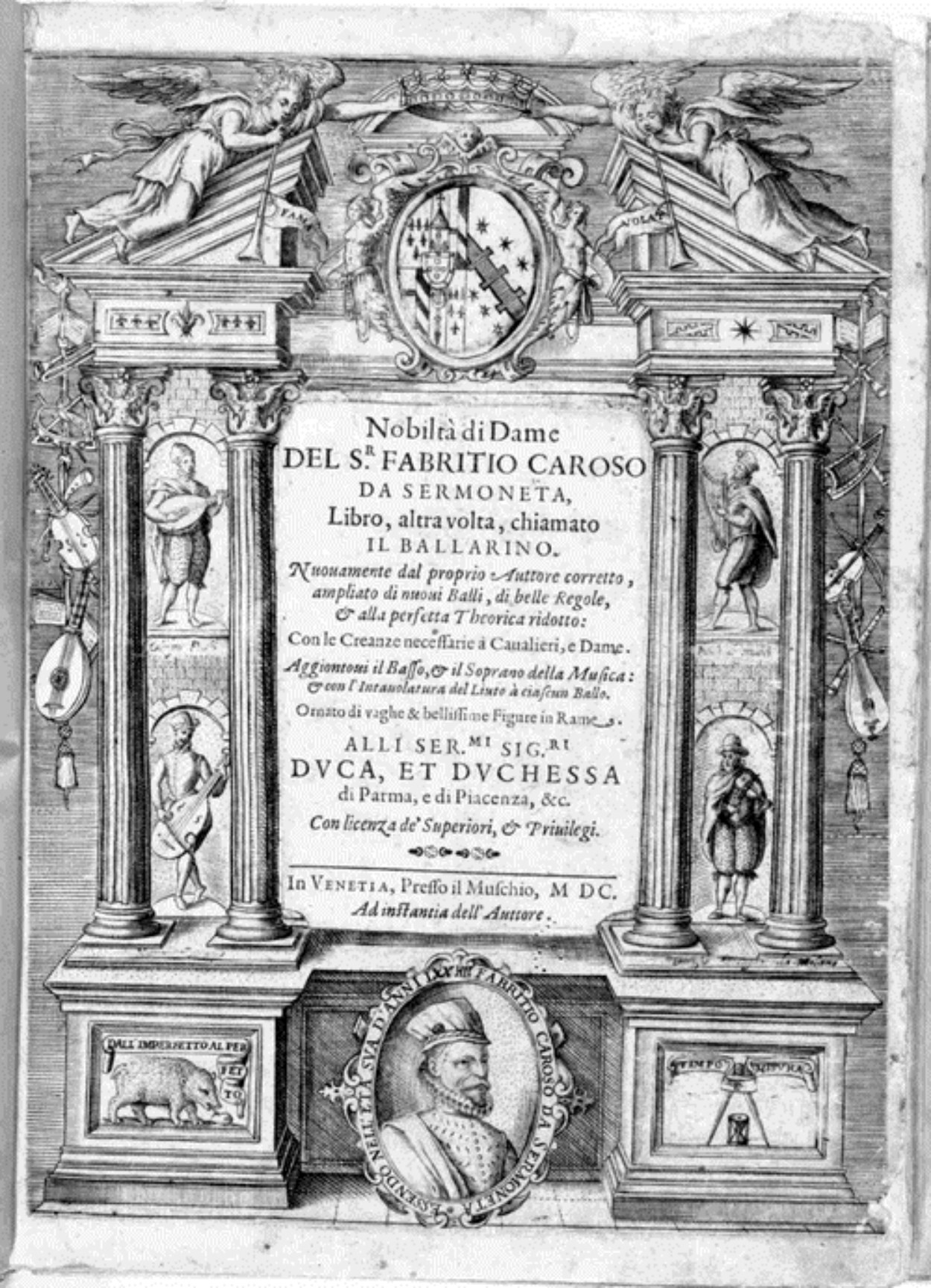
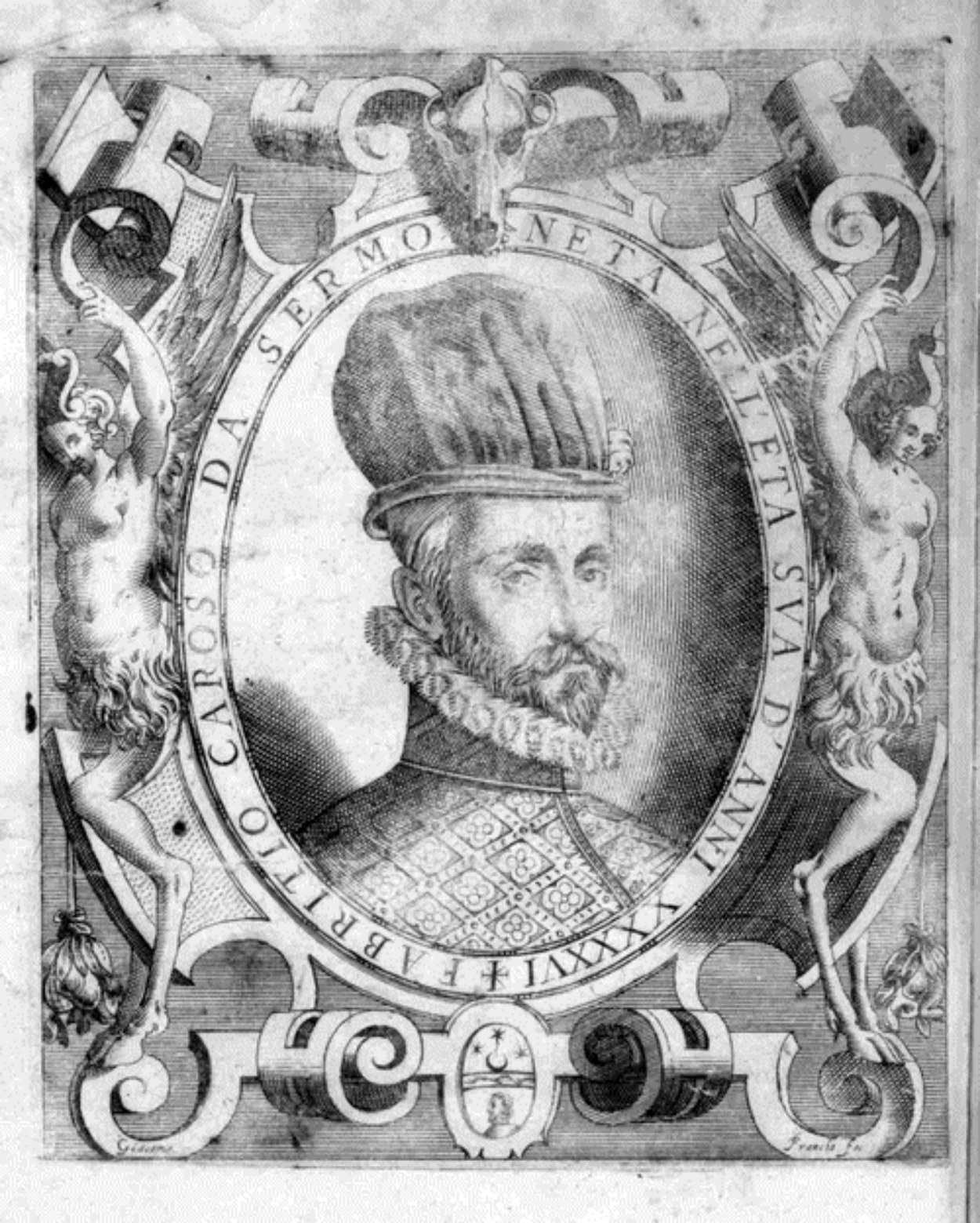
Fabritio Caroso da Sermoneta
- Medium:
- Woodcut
- Dance:
- Notation/Choreography
- Era:
- Pre-1700 (Renaissance/Baroque)
- Collection:
- Nobiltà di Dame (1600)
- Source:
- Library of Congress
- Rights:
- Public domain — free to use, share and adapt.
- Recorded as:
- Public Domain
This image documents the precise choreographic vocabulary of Renaissance Italian court dance at the moment of its systematic codification. For dance historians and practitioners, Caroso's plates are among the only surviving visual records of how these dances were actually performed, preserving not just steps but the formal, courteous bearing and spatial relationships that gave the dances their social meaning. The image also marks a significant shift in how dance knowledge was transmitted: from oral tradition and master-to-pupil apprenticeship to printed instruction available to a wider, literate elite.
What you are looking at
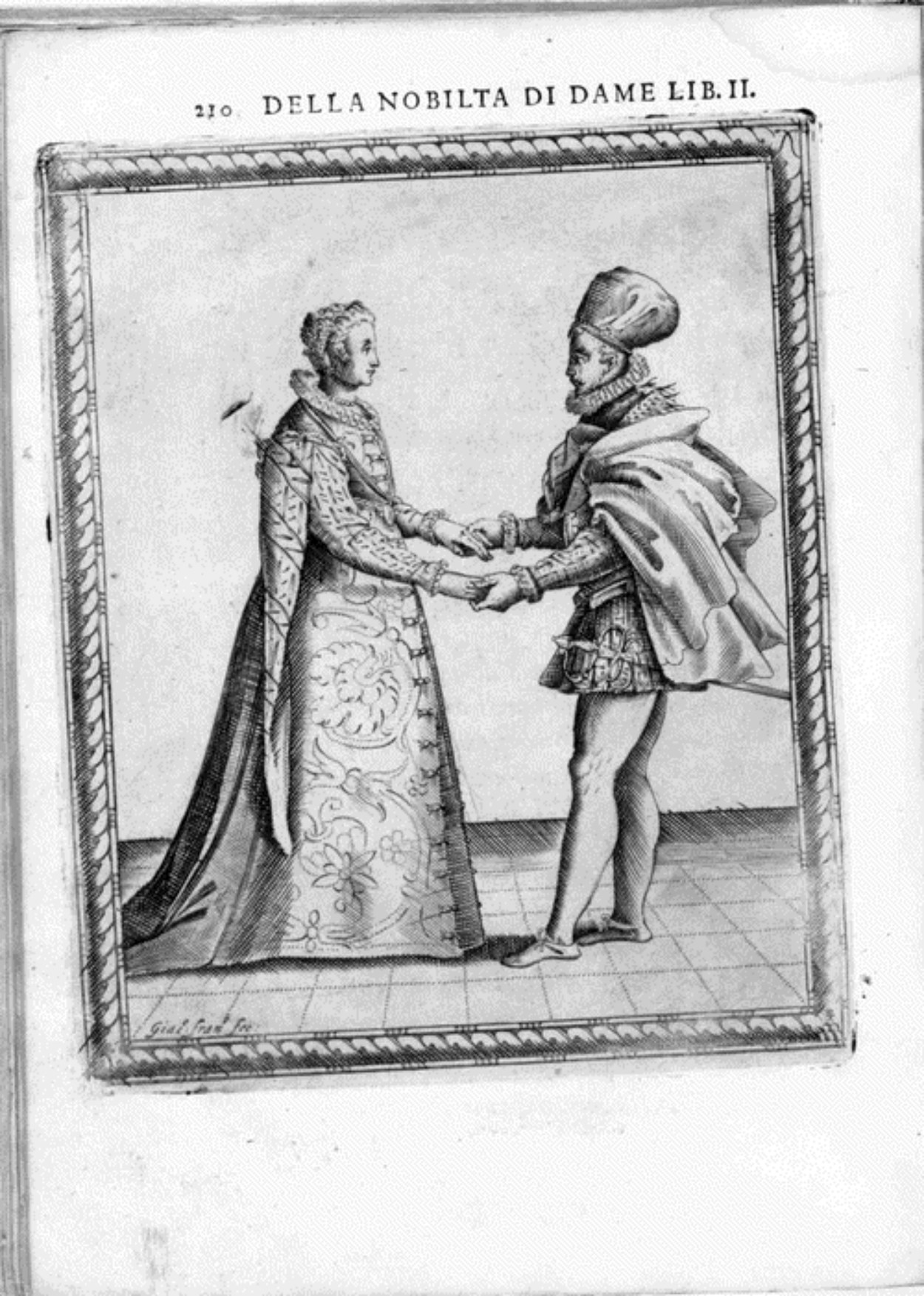
A noble couple in full Renaissance Italian court dress stand facing each other in what appears to be an interior space with a tiled floor. The woman on the left wears an elaborate gown with intricate embroidered or patterned decoration across the bodice and skirt, a high collar, and a long train extending behind her. Her hair is styled up in the fashion of the period. The man on the right wears a fitted doublet with decorative slashing, short breeches, and a voluminous cape or cloak draped across one shoulder. He wears a tall plumed hat. Both figures are captured mid-gesture: their hands are clasped or nearly touching at chest height, and their bodies are angled toward each other in a formal, choreographed posture. The composition is centered and symmetrical, emphasizing the paired nature of the encounter. The woodcut technique renders the scene in bold blacks and fine lines against white paper, with careful cross-hatching to suggest fabric texture and form.
The dancing
The pair are positioned in profile-to-frontal orientation, creating a three-quarter view of their interaction. Their hands meet at approximately chest height in what appears to be a formal hand-clasp or salutation—neither a tight hold nor fully separated. The woman's torso is upright with her weight seemingly balanced; the man leans slightly forward at the waist, suggesting a gesture of courtesy or deference. Both maintain formal posture with shoulders back. No footwork is visible, but their stance suggests a moment of stillness rather than active stepping—this is a posed moment from a choreographed sequence rather than a step in progress.
The dance depicted
This is a plate from Caroso's manual of courtly dances, and the image illustrates a formal greeting or salutation sequence—likely the opening of a paired dance such as a pavane, almain, or similar Renaissance court dance. The hand-clasp and mutual orientation suggest a moment when dancers acknowledge each other before beginning the dance proper, a convention central to Renaissance dancing practice. Caroso's treatise codified both the steps and the courtly gestures and protocols that framed them, and this image captures the gestural vocabulary as much as the step vocabulary. The formal, frontal presentation and the emphasis on symmetrical courtesy between the partners are consistent with dances designed to display noble bearing and mutual respect.
How it was made
This is a woodcut—a relief printing technique in which an image is carved into the surface of a wooden block, with printed areas left raised and non-printing areas cut away. Woodcut allowed for bold, clear lines and strong contrast, making it ideal for instructional diagrams that needed to be legible and reproducible. The technique's characteristic strong blacks and linear hatching are evident here in the rendering of fabric texture, shadow, and the elaborate patterns on the woman's dress. As part of a bound treatise, this image would have circulated among the educated elite and nobles who could afford printed books on courtly conduct and dance; the woodcut's reproducibility and durability made it a practical choice for a technical manual intended for repeated consultation.
About this work
This woodcut plate from Fabritio Caroso's *Nobiltà di Dame* (Venice, 1600) depicts a moment from the opening sequence of a paired Renaissance court dance—specifically the formal greeting or salutation in which the partners acknowledge each other before proceeding to the choreographed steps. The image is one of several didactic illustrations in Caroso's definitive manual of Italian courtly dance, which compiled both the great dances of the Cinquecento and contemporary revisions reflecting early seventeenth-century court fashion. The woodcut medium allowed Caroso to present the gestural vocabulary of courtly dancing alongside textual descriptions and step notation, making the abstract choreography visible and teachable. The work belongs in a gallery of dance imagery because it represents a crucial moment in the codification and circulation of dance knowledge—the point at which choreography became a subject of written instruction and visual documentation, available to those who could not learn directly from dancing masters.
How to look at it
Look first at the hands and how they meet—this is the central gesture, and the careful positioning of the fingers and the height and angle of the clasp convey information about the formality and type of greeting. Notice the asymmetry in the couple's posture: the woman is upright and frontal, while the man leans slightly inward, suggesting a courtly deference that was part of the social choreography of Renaissance dance. Observe how the woodcut's bold lines and hatching work to convey the weight and texture of the fabrics, especially the elaborate patterning on the woman's dress—in an era before photography, these details were the only way to preserve information about courtly fashion. The frame-filling, symmetrical composition is typical of Renaissance instructional imagery; it presents the dancers as exemplars, displaying the correct posture and deportment for others to imitate and learn from.
The artist
Fabritio Caroso da Sermoneta (c. 1526–c. 1605) was the most celebrated dancing master of the late Renaissance and author of two major treatises on courtly dance: *Il Ballarino* (Venice, 1581) and the expanded and revised *Nobiltà di Dame* (Venice, 1600). He worked in Rome and held a high position in the cultural life of the Roman court and among the nobility; his treatises were dedicated to members of the ruling families and were intended for the education of noble men and women. Caroso was not only a choreographer but a systematizer—he created a notation system for recording steps and dances, commissioned illustrations to accompany his text, and structured his treatises as comprehensive manuals covering technique, choreography, and courtly deportment. His work had enormous influence and was translated and reprinted throughout Europe, making him one of the most widely read authorities on dance in the early modern period.
The period
In the late sixteenth and early seventeenth centuries, dance held a central place in Renaissance court culture as both an art form and a marker of noble status and education. The publication of Caroso's *Il Ballarino* in 1581 was itself a landmark event, representing the first attempt to systematically notate and document the dances of the Italian Renaissance court. By the time of the *Nobiltà di Dame* (1600), printed dance manuals were becoming more common in Europe, and the codification of courtly dance practice was well underway. The period was also a moment of transition: the pavane and galliard, which dominate Caroso's first treatise, were being supplemented and gradually replaced by new dances such as the volta and figures drawn from France and other courts. Caroso's revision of his earlier work reflects these changes while maintaining the formal, measured character that distinguished Italian court dance. In the visual arts, anatomical precision and the study of human gesture and proportion were central concerns of Renaissance and early Baroque art; the careful attention to posture and hand position in Caroso's illustrations partakes of this broader cultural investment in the body as an object of study and refinement.
Where it lives
This plate is from *Nobiltà di Dame*, published in Venice in 1600. It is one of a series of woodcut illustrations interspersed throughout the text, each accompanying descriptions and notations of specific dances or choreographic sequences. The work held by the Library of Congress represents the 1600 Venice edition, a landmark publication in the history of dance notation and instruction.
Dance in this work
Questions about this work
What dance are these two people doing?
This illustration shows the opening salutation or greeting of a Renaissance court dance—the moment before the actual choreographed steps begin. The specific dance is not named in this single image, but based on Caroso's manual it could be any of several dances including the pavane, almain, or similar paired courtly dances. The illustration's purpose is to teach the correct posture, hand position, and courtly bearing for beginning a dance, which was a learned and formalized sequence.
Why does the man lean forward while the woman stands upright?
The asymmetry is intentional and conveys social choreography. In Renaissance court dancing, the man typically took the position of courtesy and service, bowing or leaning slightly toward his partner, while the woman maintained an upright, frontal bearing. This was not just dance technique but a visual and physical expression of courtly manners and the social order. The gesture demonstrates that dance was a medium through which social relationships and hierarchies were enacted and reinforced.
How do we know what the dances looked like if no video survives?
Caroso's treatises, of which this is a part, are our most detailed surviving source. They include textual step descriptions (using a notation system Caroso created), woodcut illustrations showing key positions and gestures, and dedication poems and essays on the philosophy and practice of dance. By combining these elements—and by studying the social context and other period sources—dance historians have been able to reconstruct and revive many of the dances described in Caroso's manuals. Modern practitioners of historical dance rely heavily on his work.
Is this actually Caroso's own artwork?
The plate is attributed to Caroso as the author and choreographer of the dance and as the compiler of the manual, but the actual woodcut carver is not identified. Like most instructional prints of the period, it was likely a collaboration between Caroso (who designed the pose and directed the illustration) and a professional woodcut artist. The signature or mark of the carver, if any, is not clearly visible in this image.
More Notation/Choreography artwork