49 works in this view — arrow keys or swipe to move between them.
Dance in Art
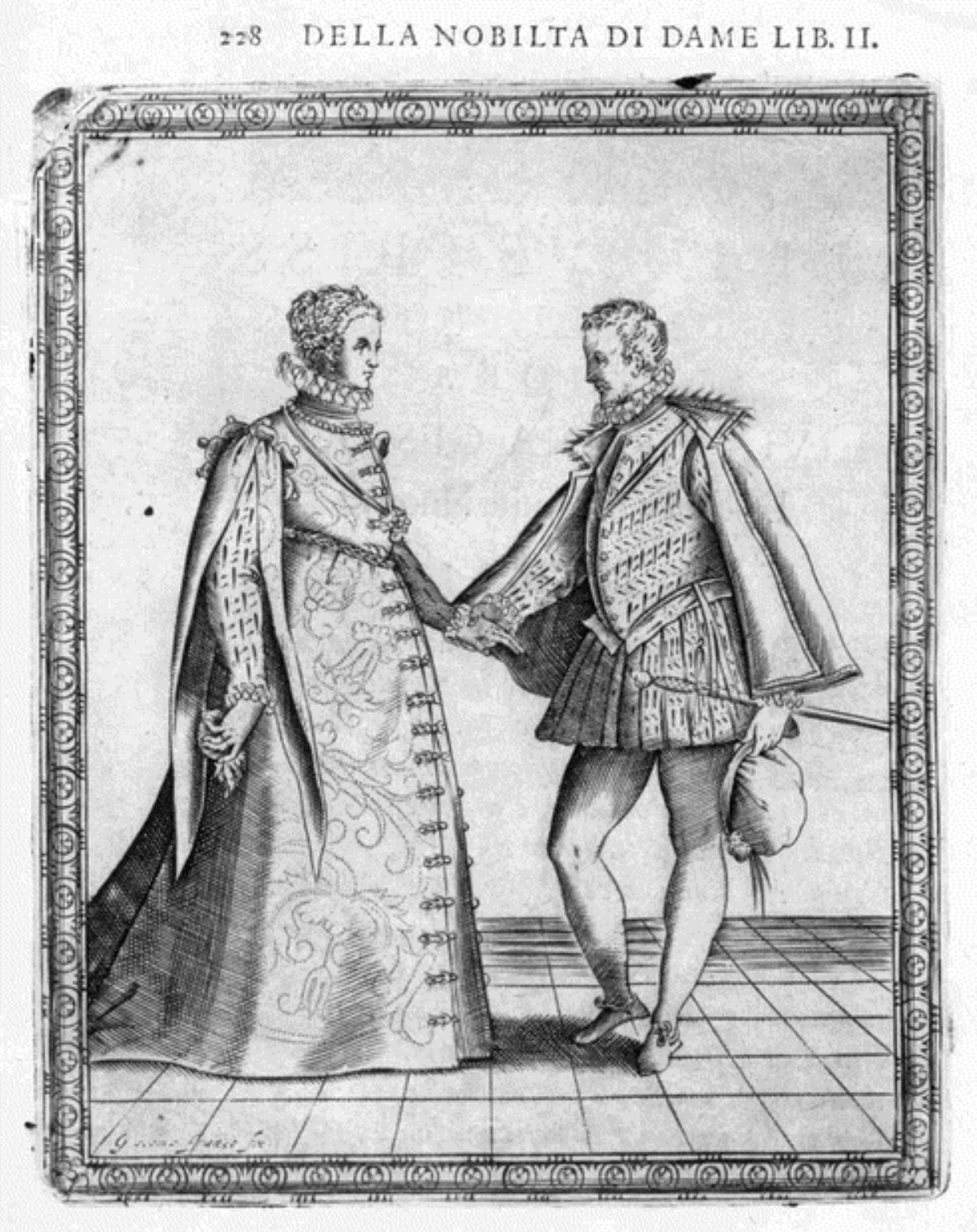
Caroso Nobiltà — Dance Plate (plate 23)
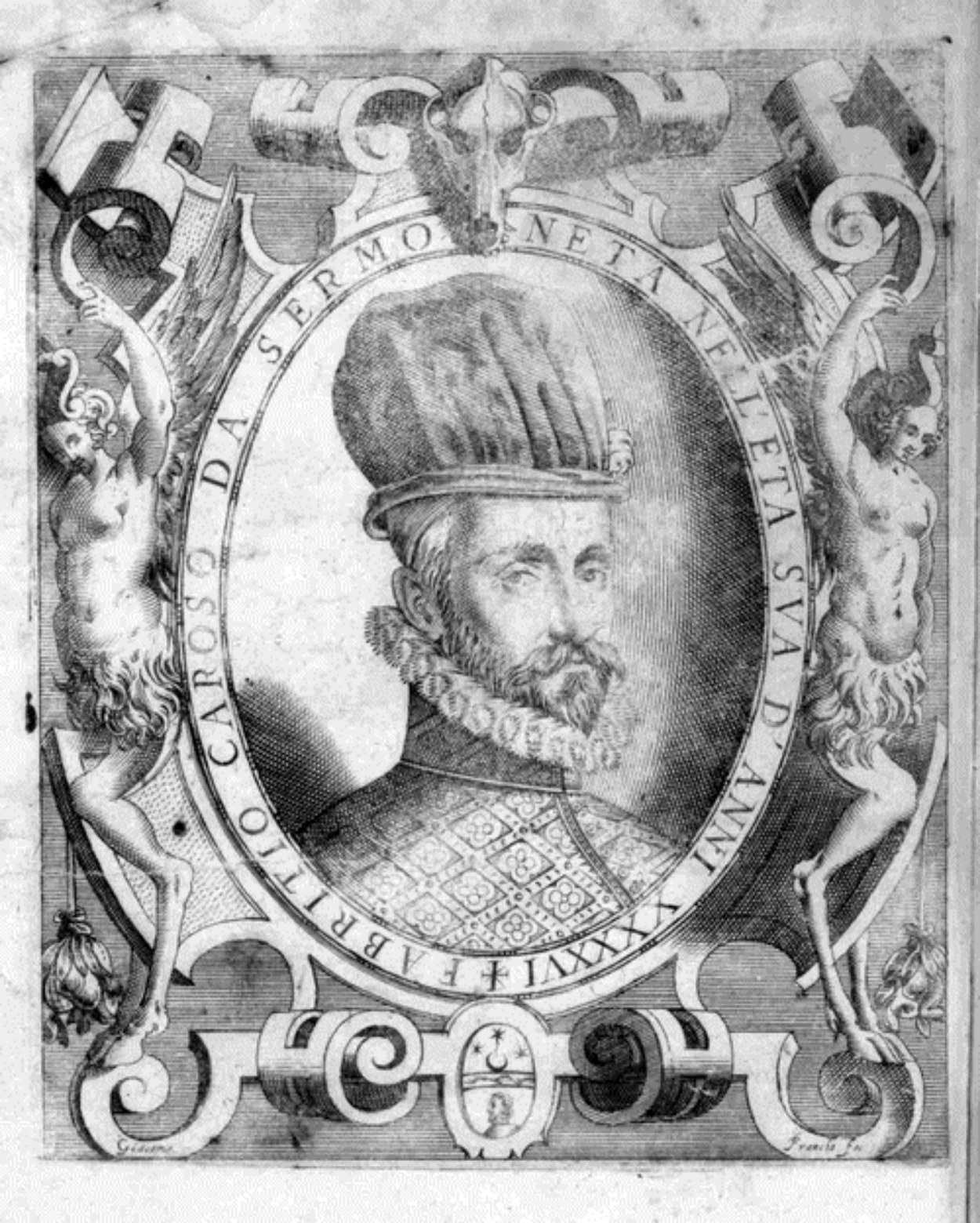
Fabritio Caroso da Sermoneta
- Medium:
- Woodcut
- Dance:
- Notation/Choreography
- Era:
- Pre-1700 (Renaissance/Baroque)
- Collection:
- Nobiltà di Dame (1600)
- Source:
- Library of Congress
- Rights:
- Public domain — free to use, share and adapt.
- Recorded as:
- Public Domain
Caroso's illustrated treatises are among the only Renaissance sources detailed enough to reconstruct the actual steps, positions, and sequences of period dances—making this simple paired figure an invaluable primary document for dance historians and historical performers. The image demonstrates that Renaissance court dance was a codified, teachable practice requiring precise alignment, formal dress, and practiced technique, not improvisation; it was an art form as demanding as any theatrical medium.
What you are looking at
A man and woman in Renaissance Italian court dress face each other in a formal dance pose, their hands joined in the center. The woman wears an elaborate embroidered gown with a high collar, ornate patterned sleeves, and a flowing cape lined with decorative detail; her hair is elaborately curled and arranged. The man wears a patterned doublet with decorative armor-style plates across the chest, puffy breeches, and a short cape draped from one shoulder. Both figures stand on a tiled floor rendered in perspective. The composition is symmetrical and frontal, presenting the dancers in formal presentation rather than captured mid-motion. The line engraving is finely detailed and contained within an ornamental rectangular border typical of printed instructional material.
The dancing
The couple stands at a slight distance, connected only by clasped hands held at roughly waist height in an open position. Both dancers face the picture plane with upright posture and measured stance. The woman's weight appears settled, her body square to the viewer; the man's pose mirrors hers with similar formal stillness. Neither figure suggests active movement or weight transfer—this is a posed demonstration of position rather than a captured moment of choreography. The hand-hold is the sole point of contact and engagement.
The dance depicted
This is a paired figure from Caroso's choreographic treatise demonstrating a dance position common to Renaissance court dances, particularly the pavane or similar processional forms where couples moved in dignified formation. The image shows what Caroso termed a "paired figure"—a foundational position in which man and woman establish their connection before proceeding through choreographed sequences. The formal dress, the frontal presentation, and the measured stance all confirm this is Italian Renaissance court dance, danced by nobility as a social and artistic practice. The stillness is deliberate: Caroso's notation system required freeze-frames to teach position and alignment to readers of his book.
How it was made
This is a woodcut, a relief printing technique that allowed Caroso's choreographic instructions to be mass-produced in Venice. The fineness of the detail—the cross-hatching in the fabrics, the precision of the ornamental border, the clarity of facial features—demonstrates skilled woodcut work. As a printed illustration in a bound treatise, this image was designed to teach: each dancer's proportion, posture, and dress would have been visible and repeatable to readers across Europe who owned or consulted the book. Woodcut was the standard technology for illustrated dance instruction in the Renaissance and early modern period, more durable and portable than manuscript.
About this work
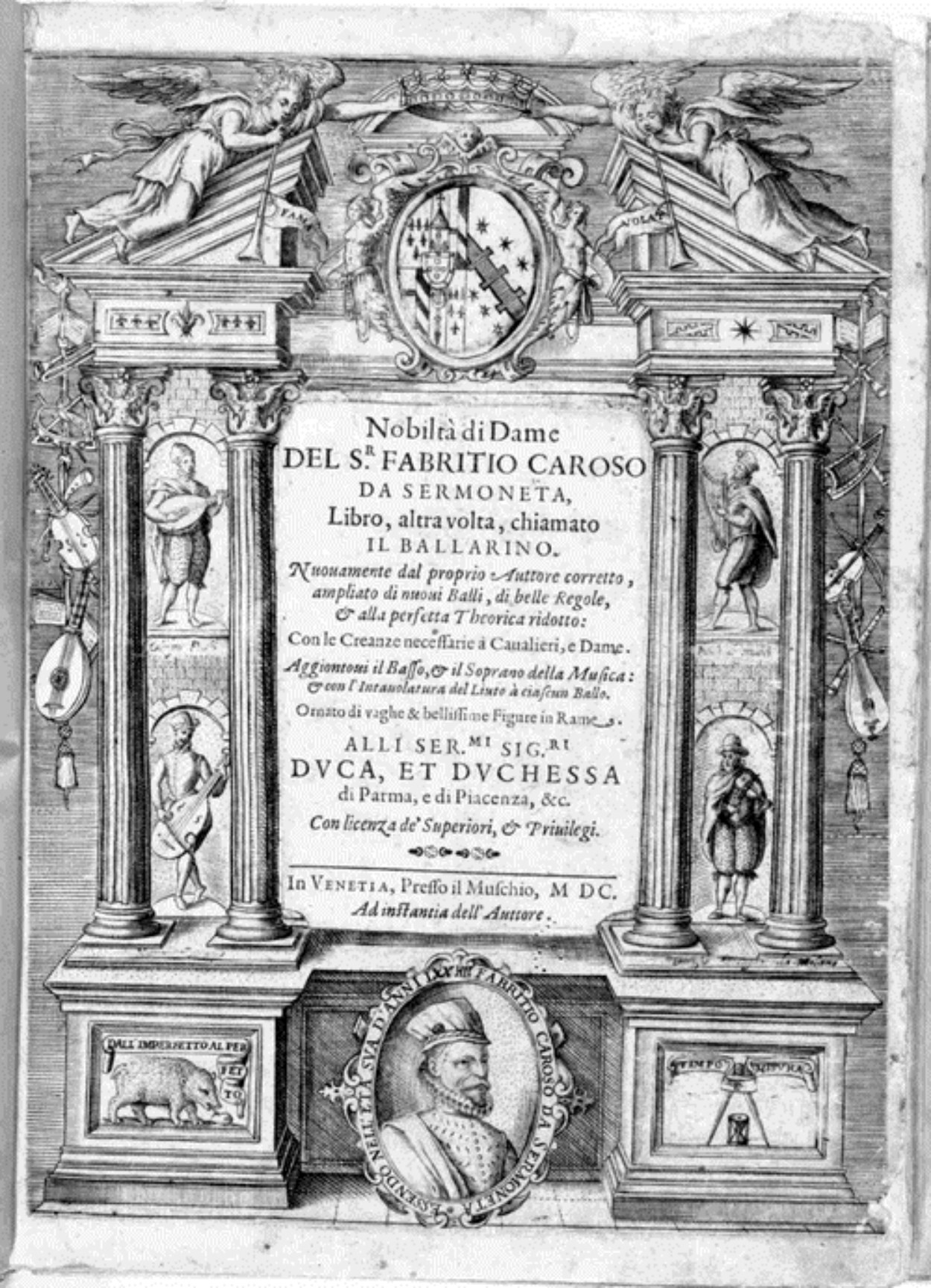
This is plate 23 from Fabritio Caroso's *Nobiltà di Dame* (Venice, 1600), one of the most influential Renaissance dance instruction manuals. The image demonstrates a foundational paired position used in courtly dances of the period. Caroso's treatises—his earlier *Il Ballarino* (1581) and this refined edition dedicated to Christine of Lorraine—were authoritative texts that codified Italian court dance at the moment of its highest refinement. This particular image survives as one of hundreds of such positions and sequences that constitute the only detailed record we have of how Renaissance nobility danced. The book was widely consulted and owned across courts and among educated families; this image would have been used as an instructional reference for dancers learning the elaborate choreographies of courtly performance.
How to look at it
The viewer should attend to the precision of alignment and dress: Caroso shows us what 'correct' position looks like, not a moment of dynamic motion. Note the formal symmetry, the measured distance between the partners, and the specificity of the hand-hold—this is instructional documentation. The ornamental border signals that this is a printed page in a book, part of a systematic sequence of positions and choreographies. The elaborate dress is not decorative; it is the actual costume of Renaissance court dance and constrains how the body can move. Each detail—the woman's embroidered gown, the man's armor-style doublet—tells you this is a formal courtly practice, not popular or theatrical dance.
The artist
Fabritio Caroso da Sermoneta (c. 1526–after 1605) was a celebrated dancing master active in Rome and Venice. He taught nobility and published two major treatises: *Il Ballarino* (Venice, 1581) and *Nobiltà di Dame* (Venice, 1600), the latter a refined and expanded edition that became the standard reference text for Italian Renaissance dance throughout the seventeenth century. Both treatises combined written notation with woodcut illustrations to preserve choreography in printable form. Caroso's authority and the success of his publications made him one of the most influential dance pedagogues of the Renaissance; his work defined what Renaissance court dance was and how it was to be learned.
The period
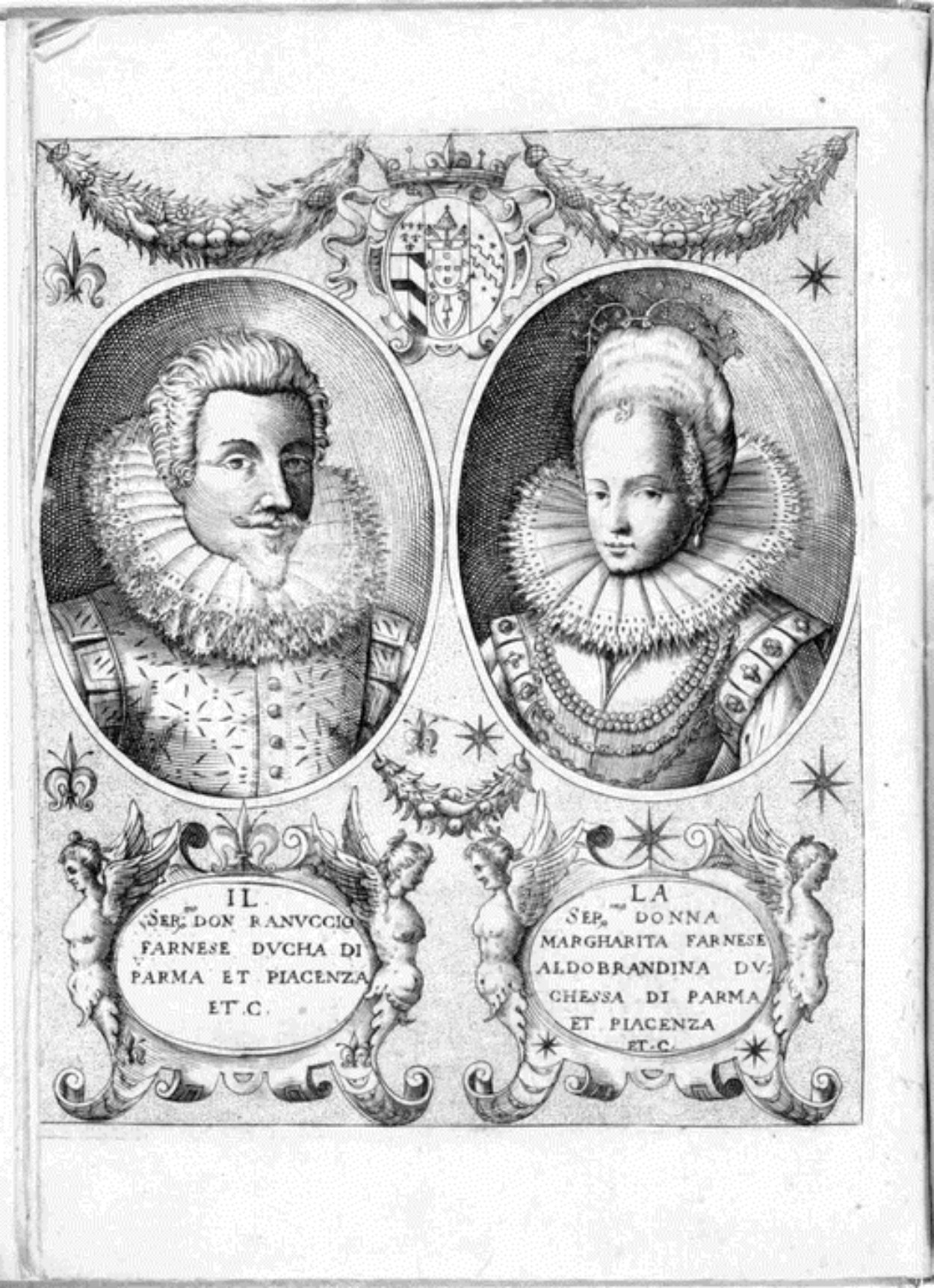
Caroso published at the end of the Renaissance and the turn of the seventeenth century, at the moment when Italian court dances (pavane, galliard, corrente, and others) were at their peak of complexity and refinement. This second edition, dedicated to the Grand Duchess Christine of Lorraine, was designed to present the most fashionable dance practice of the Italian courts in 1600—a conservative choice, as the French court was already shifting toward baroque forms. The woodcut illustrations made dance knowledge portable and teachable across courts and regions in a way manuscript could never achieve; Caroso's books became the standard text for dancers from Italy to England to Poland.
Where it lives
This image comes from *Nobiltà di Dame*, a printed book published by the Biblioteca Italiana in Venice in 1600. It is plate 23 of the illustrated sequence and exists in numerous copies in libraries and special collections across Europe and North America; it is held by the Library of Congress.
Dance in this work
Questions about this work
Is this an actual photograph or painting from the Renaissance?
No. This is a woodcut—a relief print made from a carved block—printed in 1600. It is a drawing or design translated into a printable medium so it could be reproduced in copies of Caroso's book. There are no photographs of Renaissance dance; this is one of the few detailed visual sources we have for how people actually danced at that time.
Are these two people actually dancing, or just standing there?
They are demonstrating a static position—a necessary frame in which the man and woman establish their connection before proceeding through a choreographed sequence. Caroso's book teaches dance step-by-step, position by position, so many of his illustrations show held poses. This image tells you where to place yourself and your partner before you begin to move.
Why are they dressed so elaborately?
Renaissance court dance was a formal social and artistic practice performed by nobility in expensive gowns, doublets, and jeweled ornaments. The elaborate costume was essential to the dance; the weight and structure of the garments constrained movement and created a specific aesthetic of measured, dignified motion. You cannot perform a Renaissance pavane in modern clothes and understand what it was.
Who was Caroso and why does his book matter?
Fabritio Caroso was the most celebrated dancing master of the Italian Renaissance. His two published treatises are the only surviving sources detailed enough to tell us how Renaissance courtly dances were actually performed. Without Caroso's illustrations and descriptions, Renaissance dance would be almost invisible to us. His books were used and copied across Europe for over a century after publication.
More Notation/Choreography artwork