49 works in this view — arrow keys or swipe to move between them.
Dance in Art
Comic Character — Plate 58
Gregorio Lambranzi
- Medium:
- Copper-plate engraving
- Dance:
- Notation/Choreography
- Era:
- 1700s (Enlightenment/Minuet Era)
- Collection:
- Nuova e curiosa scuola de' balli theatrali (1716)
- Source:
- Library of Congress
- Rights:
- Public domain — free to use, share and adapt.
- Recorded as:
- Public Domain
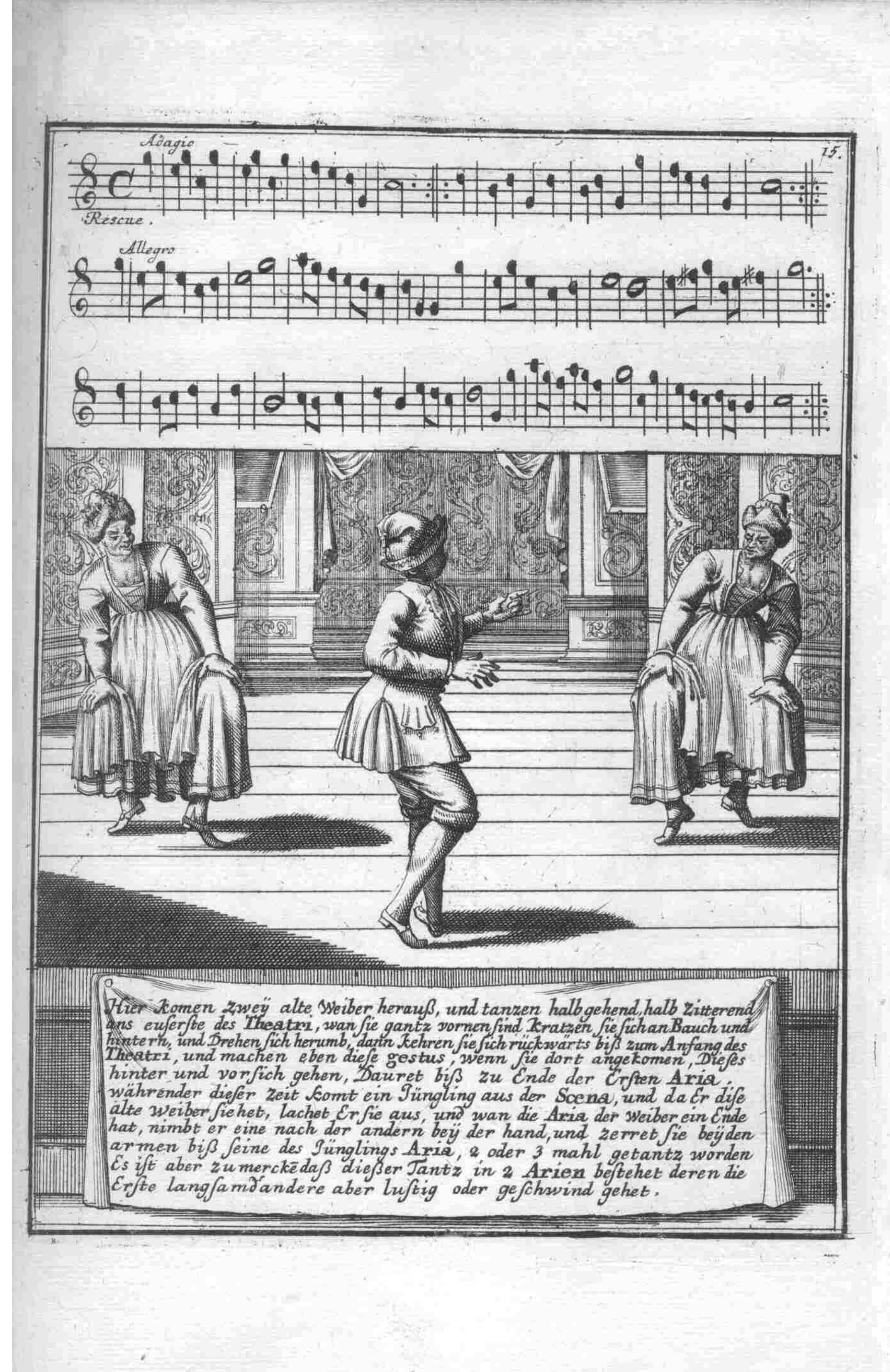
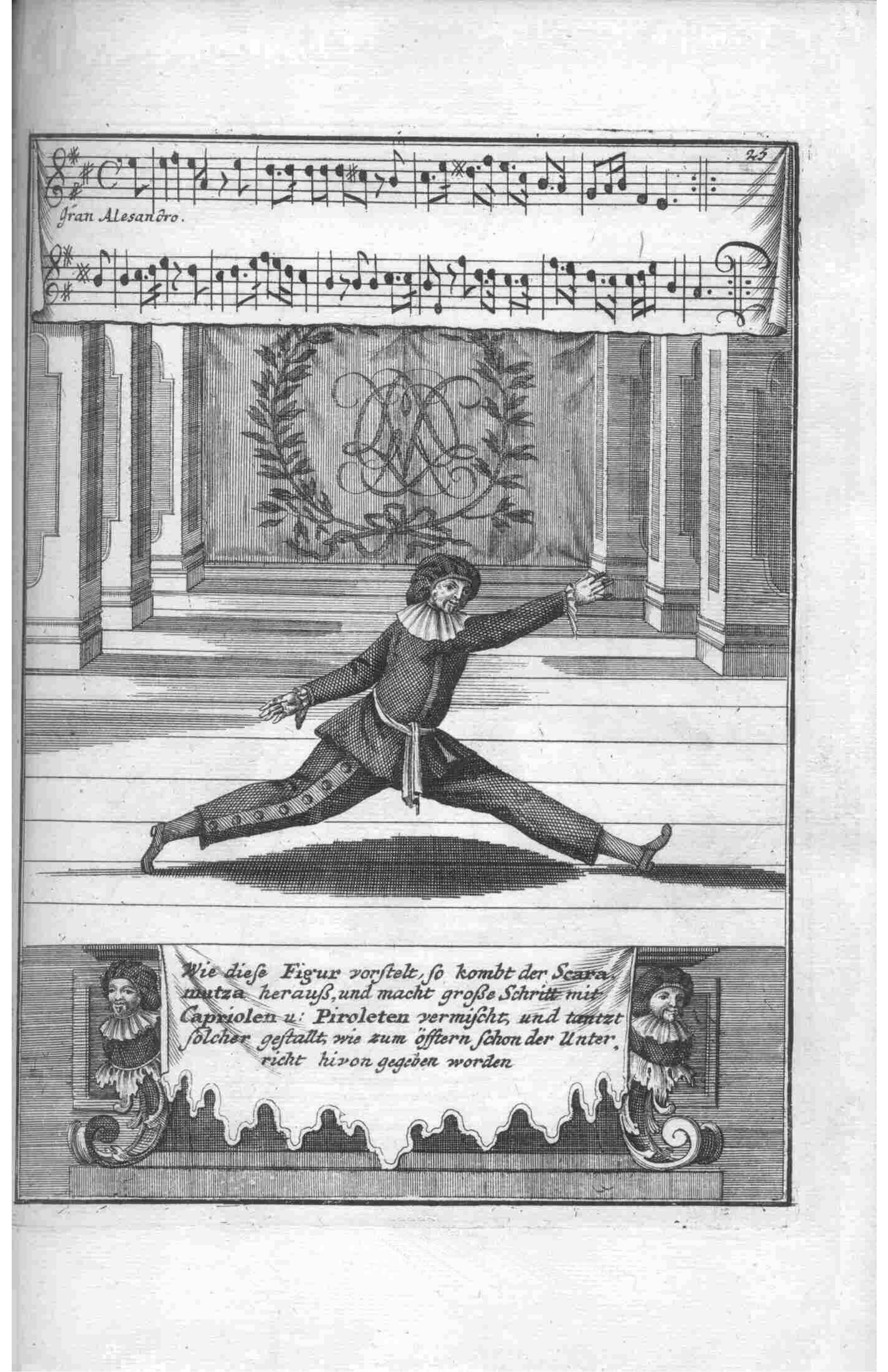
Lambranzi's manual is the most comprehensive surviving visual record of early 18th-century theatrical dance before ballet became fully codified. For a dancer or choreographer, this plate documents not only a step or phrase but the complete theatrical context: costume, character type, musical accompaniment, and performance space—showing how dance, music, and spectacle were integrated in professional theater of the period. The figure's heraldic pose and elaborate dress also reveal how much early theatrical dance relied on static display and character work rather than continuous movement.
What you are looking at
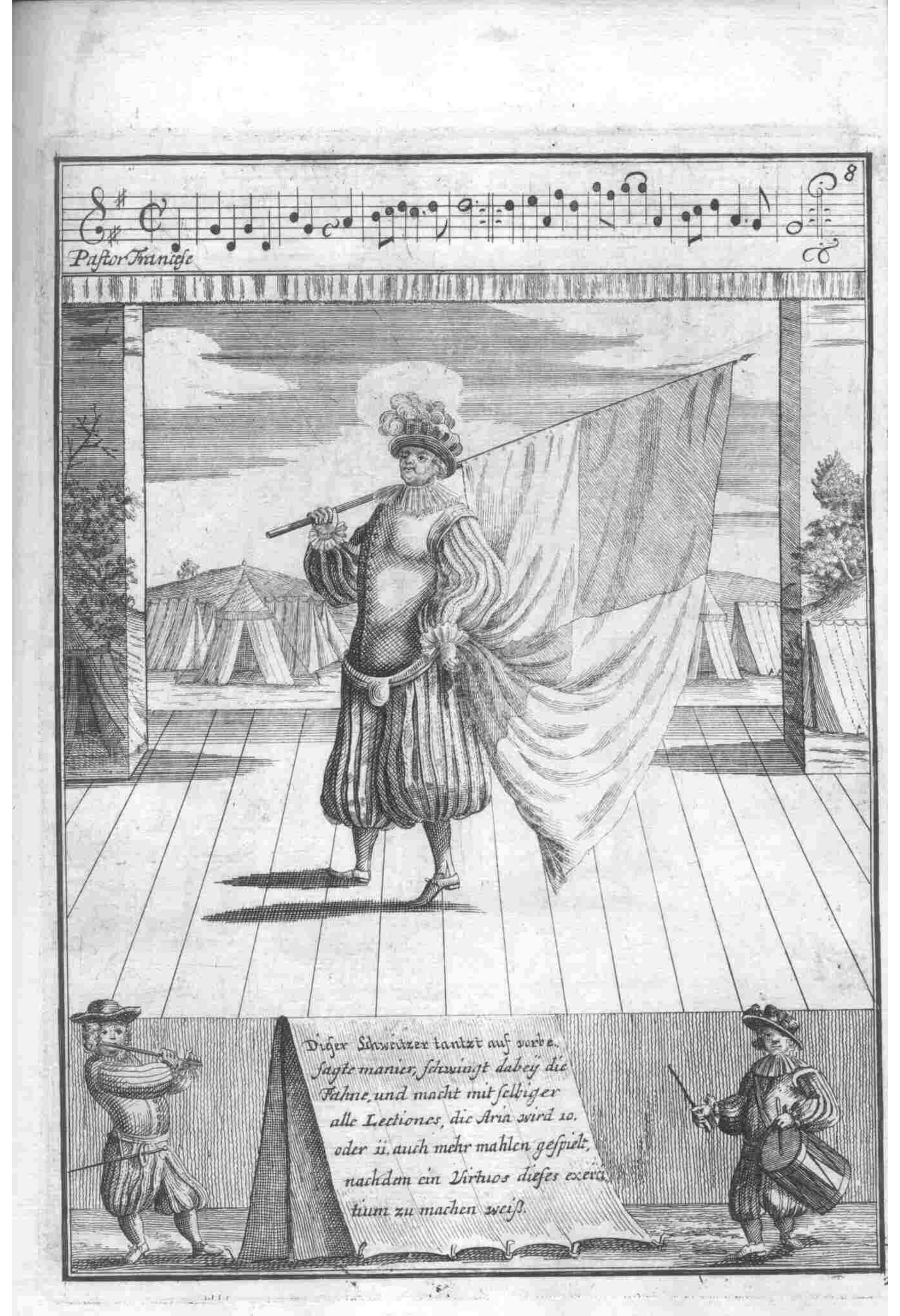
A richly dressed solo figure stands center stage on a wooden floor, framed by a painted backdrop of sky and distant tents suggesting a theatrical encampment or military setting. The dancer wears an elaborate costume of the early 18th century: a high crowned headdress, a fitted bodice with horizontal ribbed sleeves, and voluminous breeches gathered at the knee. A flowing cape or mantle extends dramatically from one shoulder, caught mid-gesture as the figure holds a long staff or pike diagonally across the body. The stage is bounded by classical pilasters at either side and a proscenium arch above, establishing this as a formal theatrical space. The composition isolates the performer in a moment of theatrical display, the costume and prop dominating the visual field.
The dancing
The figure is upright and frontal, with weight evenly distributed; the pose is heraldic rather than dynamic, suggesting the moment of display rather than active movement. The staff is gripped with both hands, angled from lower left to upper right, creating a diagonal line that animates the vertical axis of the body. The cape flows from one shoulder, suggesting either a sweeping gesture in progress or a static pose designed to display the garment's theatrical drape. This is a performer pausing in character rather than captured mid-step.
The dance depicted
This is theatrical dance from an early 18th-century commedia dell'arte or theatrical spectacle tradition. The costume—combining military elements (pike, headdress, breeches) with courtly fabric (ribbed silk, flowing cape)—suggests a comic soldier or warrior character of the type common in theatrical performance of the period. Lambranzi's manual was designed to document choreographed steps and character dances for theatrical performance, and this plate pairs a notated musical piece with the figure in costume. The pose is emblematic of the character and the theatrical moment rather than illustrative of a specific step or technique.
How it was made
This is a copper-plate engraving from a printed manual, a medium that demanded precision and permanence. Engraving allowed the publisher to circulate identical copies of Lambranzi's choreographic notation and character documentation across Europe—each plate pairs music notation at the top with a figure in full costume, creating a visual and musical archive. The technique's clarity and repeatability made it ideal for didactic purposes: each impression could serve a dance master or theater company as a reference. The wear visible in this impression suggests it was printed many times and circulated widely among the professional theatrical community.
About this work
This is one of 52 plates from Gregorio Lambranzi's Nuova e curiosa scuola de' balli theatrali (Nuremberg, 1716), an illustrated manual of choreography and character dances for the theater. Each plate presents a figure in costume paired with notated music, creating a visual and sonic record of early 18th-century theatrical dance practice. The manual was designed for theater professionals and dance masters, and this particular plate documents a comic military character—possibly a stock commedia figure—in a moment of theatrical display. The work is one of the most important surviving sources for understanding the relationship between notation, costume, characterization, and staged movement in the theatrical dance of its period.
How to look at it
Look at the pose as a moment of theatrical address rather than locomotion: the figure is presenting itself and its costume to the audience. Notice how the staff and cape are arranged to create visual spectacle—the diagonal line of the pike draws the eye, and the cape is positioned to display the richness of the fabric and the tailoring. The figure's stillness and frontal orientation are characteristic of early theatrical dance, which valued clear silhouette and character display. The notation at the top connects this moment of theatrical display to a specific musical phrase, suggesting that movement and music were inseparable units of composition.
The artist
Gregorio Lambranzi was an Italian dance master and choreographer based in Nuremberg in the early 18th century. His Nuova e curiosa scuola de' balli theatrali (New and curious school of theatrical dances) remains the only illustrated choreographic manual of its kind from the period. The work was designed to record and disseminate theatrical dances and character choreography for professional dancers and theater companies across Europe. Lambranzi's approach was practical and encyclopedic: each plate documents a character, a step, or a theatrical moment as a unit of performance, creating a visual archive that goes far beyond simple notation.
The period
In the early 18th century, theatrical dance was flourishing in European courts and public theaters, but it had not yet crystallized into the codified ballet system that would emerge later in the century. Commedia dell'arte and other forms of popular theater incorporated dance as a central element, and professional dancers often specialized in character work and comic roles as well as courtly movement. Lambranzi's manual was published during the transitional moment when dance was being systematized and documented—between the improvisational commedia tradition and the emergence of ballet d'action. The work coincided with growing interest in choreographic notation and the professionalization of dance as a teachable and transmissible art form.
Where it lives
This is plate 58 from the first edition of Lambranzi's Nuova e curiosa scuola de' balli theatrali, published in Nuremberg in 1716. The work was printed in multiple editions and circulated widely among dance masters and theater companies across Europe, making it one of the most influential documents of early 18th-century dance. This particular impression comes from the Library of Congress holding, part of a complete copy of the manual.
Dance in this work
Questions about this work
What is this figure dancing?
The figure is not captured mid-step but rather in a moment of theatrical display—a pose that establishes character and costume to the audience. The pike and military dress suggest a comic soldier or warrior character of the kind found in commedia dell'arte and theatrical spectacle. Lambranzi's manual recorded not just steps but complete choreographic moments, including entrances, poses, and character work. The music notation at the top would have accompanied this moment on stage.
Who was Lambranzi and why does his work matter?
Gregorio Lambranzi was an Italian dance master working in Nuremberg in the early 18th century. His manual is the most comprehensive surviving visual record of theatrical dance before ballet became fully codified. Unlike later notation systems that focused on pure movement, Lambranzi's plates document the complete theatrical context: costume, character, music, and setting. The work was circulated widely among European dance masters and remains essential evidence for understanding how theatrical dance was performed and taught.
Why does the music notation appear at the top?
Each plate in Lambranzi's manual pairs a notated musical phrase with a choreographed moment or character. This made the manual useful as both a musical and choreographic score—a dance master could read the music and execute the movement together. It also demonstrates a fundamental principle of early 18th-century dance: movement and music were composed as inseparable units. The notation allowed the work to be disseminated and reproduced across different theaters and companies.
What does the costume tell us about this dance?
The elaborate costume—high crown, ribbed silk sleeves, voluminous breeches, flowing cape—marks this as a theatrical character dance rather than courtly movement. The combination of military elements (pike, headdress) with fashionable fabric suggests a comic or satirical figure. Costumes of this kind were essential to early 18th-century theater, where character was often established through dress and accessories before movement began. The costume also shows the expense and skill involved in theatrical production of the period.
More Notation/Choreography artwork