49 works in this view — arrow keys or swipe to move between them.
Dance in Art
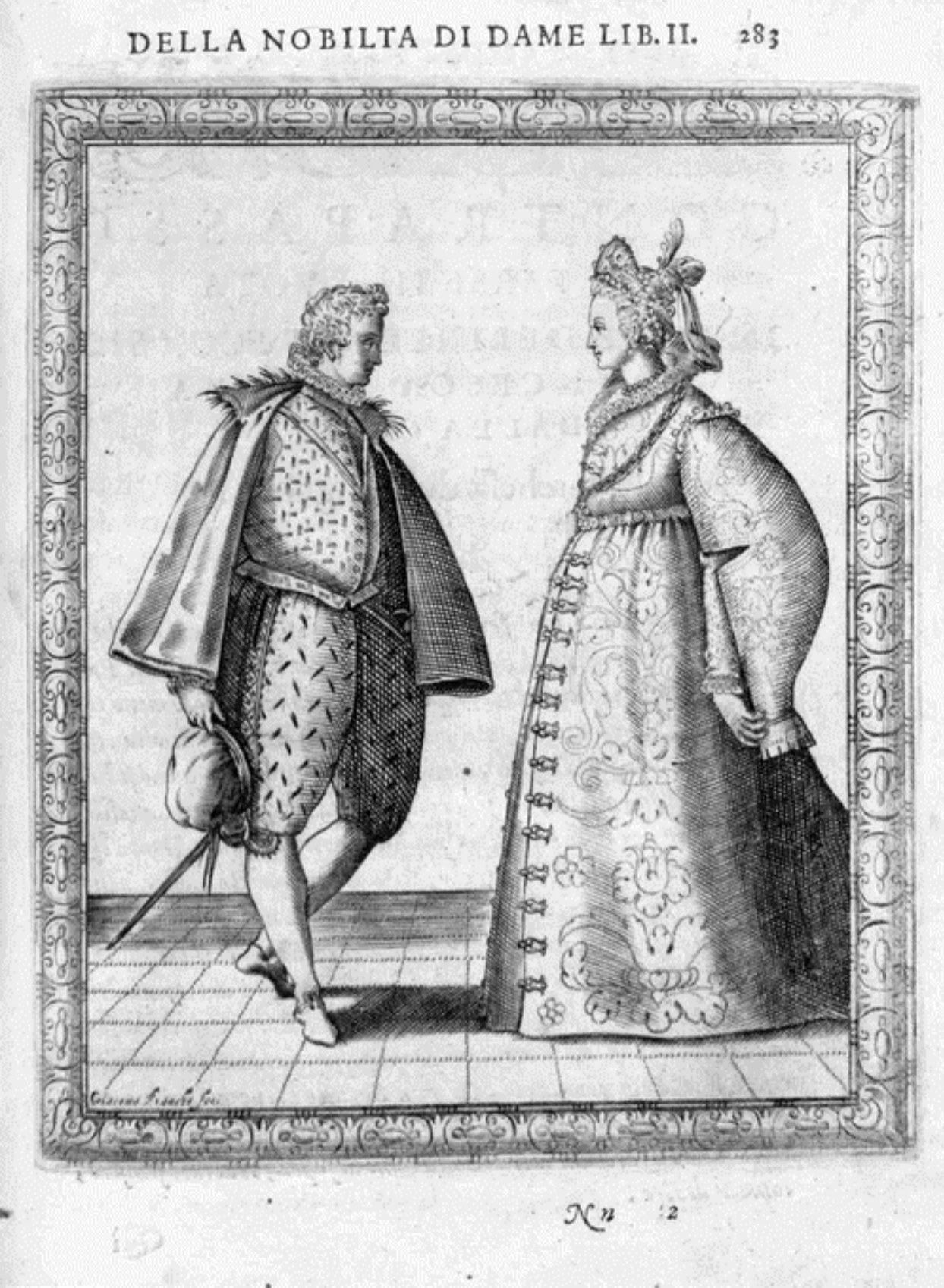
Caroso Nobiltà — Dance Plate (plate 33)
Fabritio Caroso da Sermoneta
- Medium:
- Woodcut
- Dance:
- Notation/Choreography
- Era:
- Pre-1700 (Renaissance/Baroque)
- Collection:
- Nobiltà di Dame (1600)
- Source:
- Library of Congress
- Rights:
- Public domain — free to use, share and adapt.
- Recorded as:
- Public Domain
Caroso's treatises are among the most detailed surviving records of how Renaissance dance actually looked and how it was transmitted. This image shows us not a frozen moment of virtuosity but the foundational courtly stance from which all the intricate footwork of the era began. For historians of dance and costume, this plate is invaluable evidence of the elaborate dress codes and formal spatial relationships that shaped how nobles moved and interacted.
What you are looking at
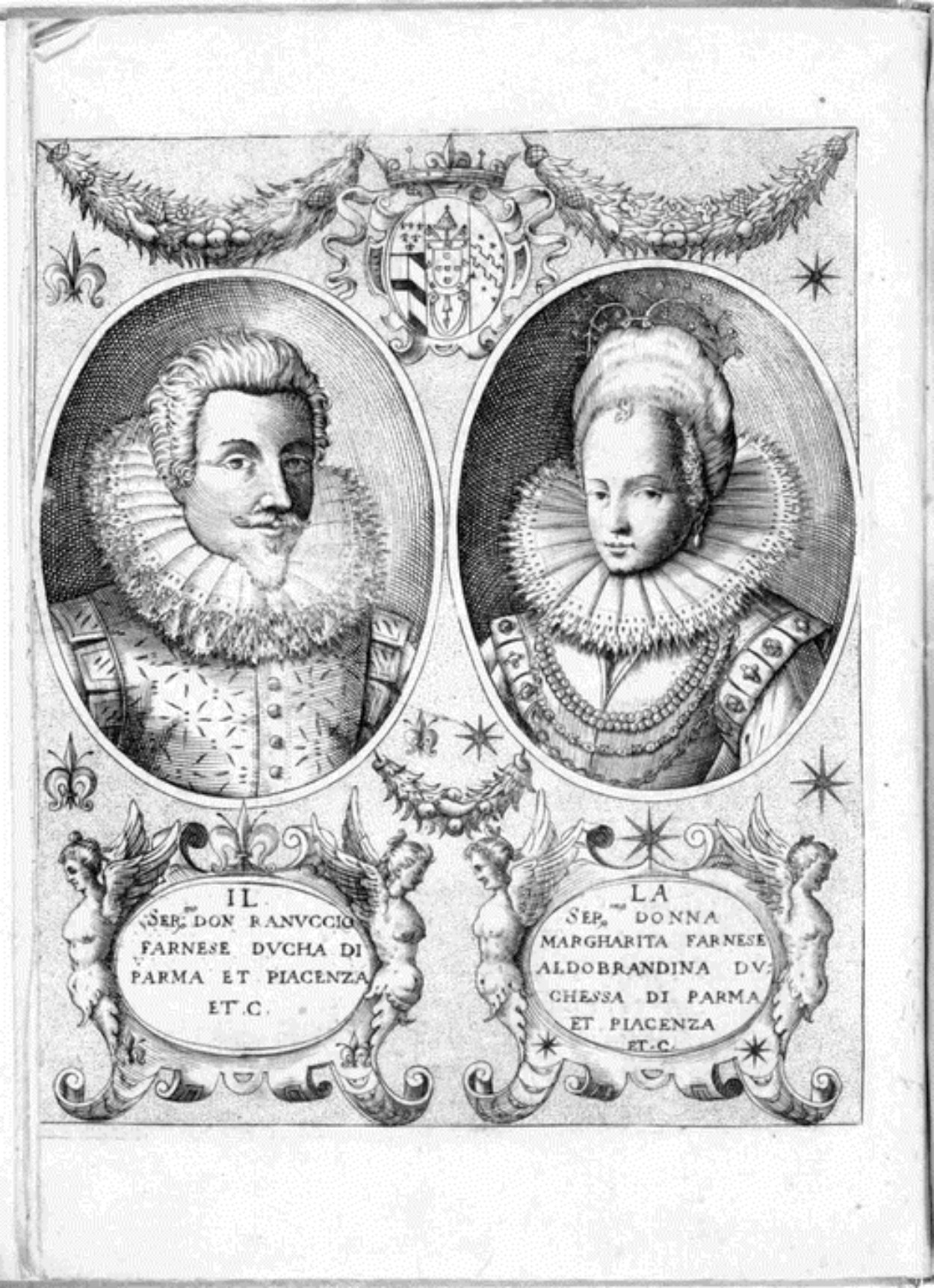
A woodcut depicting a noble couple in Renaissance Italian court dress, positioned as if in conversation or about to dance. The man stands to the left in profile, wearing an elaborately patterned doublet with a short cape trimmed in fur, hose, and shoes with ornamental ties. His curled hair and refined posture signal high status. The woman stands to the right, also in profile, wearing a richly decorated gown with puffed sleeves, an ornate bodice, and a full skirt. Her hair is elaborately dressed and adorned with feathers and jewelry. Both figures are rendered with considerable attention to textile detail—the patterns of their garments are meticulously cross-hatched and stippled to suggest rich fabrics. The setting is minimal: a simple checkered floor defines the ground, and the figures occupy an otherwise empty space bounded by an ornamental Renaissance border. The composition suggests a formal, choreographed moment rather than energetic movement.
The dancing
Both figures stand upright with weight evenly distributed, their bodies angled toward each other at approximately 45 degrees. The man's left arm hangs at his side while his right arm appears to be raised slightly, gesturing toward the woman in a courtly manner. The woman faces right in a similar relaxed stance. Neither figure demonstrates the lifted carriage or dynamic extension typical of active dancing; instead, the posture is formal and presentational, suggesting the preparatory moment before a dance or the formal acknowledgment between dance partners. The distance between them and their parallel orientation indicate they are not yet in contact.
The dance depicted
This plate illustrates the paired-figure format essential to Italian Renaissance court dance, particularly the formal greeting or opening stance before executing a dance such as a pavane or galliard. The image does not depict active movement but rather the courtly protocol of introducing or acknowledging a dance partner—a critical moment in Renaissance choreography. Caroso's treatises were prescriptive; they taught both the steps and the comportment required of noble dancers. This engraving would have served as a visual reference for the proper dress, bearing, and spatial relationship between partners in formal court dance practice.
How it was made
This is a woodcut, a relief-printing technique in which an image is carved into the surface of a wooden block. Woodcut allowed for bold, readable lines and areas of cross-hatching and stippling to suggest texture and shadow—here used extensively to render the intricate patterns of Renaissance textiles. As a woodcut from a printed treatise, this image could be reproduced in multiple copies and circulated widely among the courtly elite and dance masters. The technique's clarity and durability made it ideal for instructional texts; the image remains readable even after centuries of printing, ensuring that dancers and their teachers could consult these visual references repeatedly.
About this work
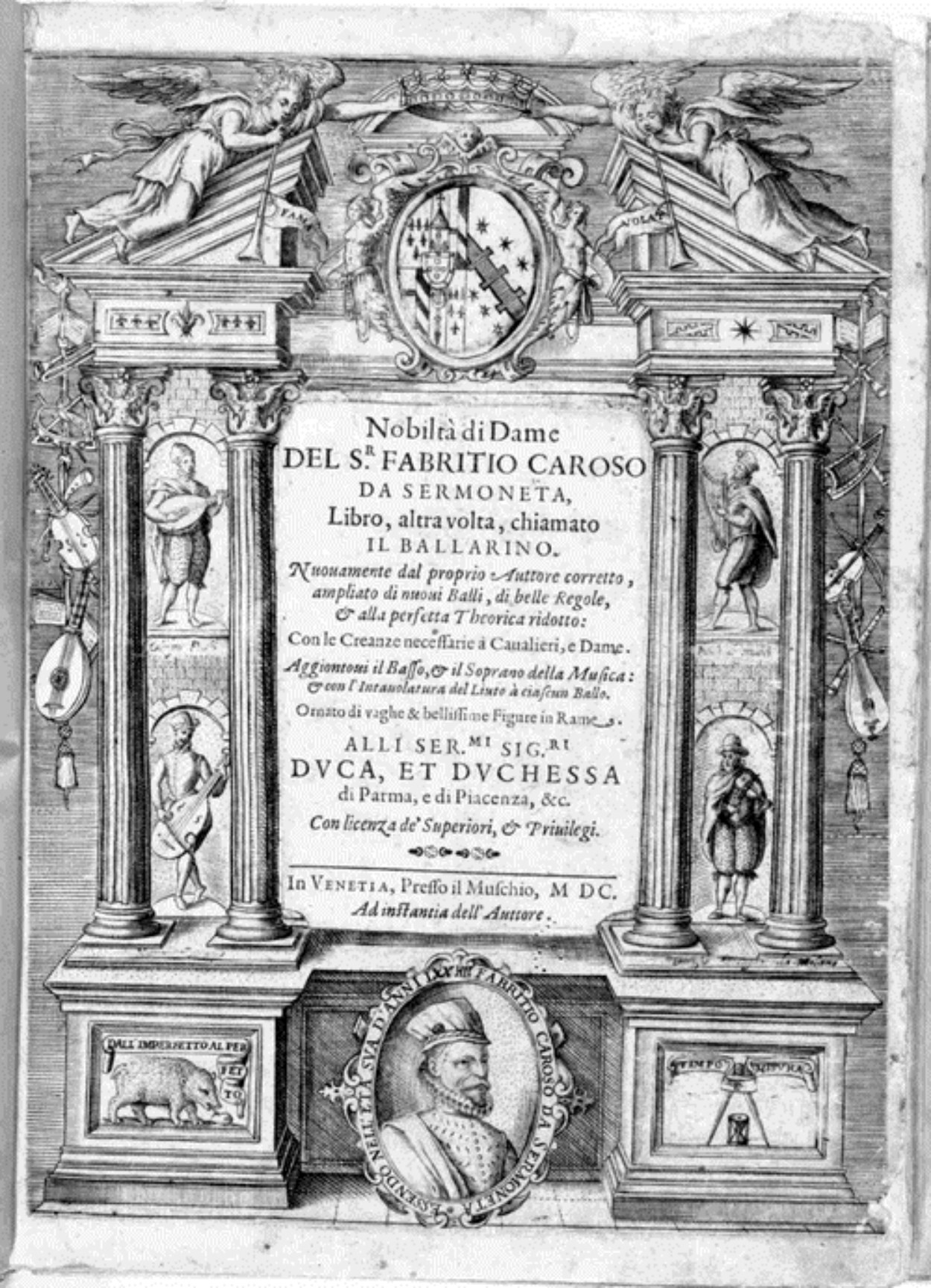
This is plate 33 from Fabritio Caroso's *Nobiltà di Dame* (Venice, 1600), a foundational manual of Italian Renaissance court dance. The work is not a record of a specific dance in action, but rather an instructional illustration of the proper appearance, dress, and spatial positioning of noble dance partners at the moment of formal introduction or greeting. Caroso's treatise was designed to teach the aristocracy how to dance with grace and correct deportment, and these woodcuts served as visual anchors for the written descriptions of steps and choreography. The image belongs in a gallery of dance art because it represents how dance was taught, documented, and understood in the Renaissance—not primarily as recorded movement but as a system of courtly behavior and aesthetic refinement that involved the entire body, wardrobe, and social protocol.
How to look at it
Attend to the meticulous detail of the clothing and jewelry: Caroso is as interested in how a noble dancer should dress as in how they should move. Notice the formal spatial relationship between the two figures—they are separated, not yet in contact, with their bodies angled in a symmetrical, almost heraldic pose. This is not a moment of energetic movement but of introduction and preparation. The woodcut medium allows the fine hatching and stippling that suggest the luxury fabrics—the man's patterned hose and doublet, the woman's embroidered gown and feathered headdress. Look at this image not as a record of a specific step but as a prescription for how to stand, how to dress, and how to present oneself at the threshold of the dance.
The artist
Fabritio Caroso da Sermoneta (c. 1535–1605) was a preeminent Italian dance master based in Rome. He produced two major treatises: *Il Ballarino* (1581), dedicated to Catherine de' Medici, and *Nobiltà di Dame* (1600, with a 1630 expanded edition), dedicated to Christine of Lorraine. These works are among the most comprehensive surviving sources for Renaissance dance technique, choreography, and social practice. Caroso's treatises contained detailed written descriptions of dances paired with woodcut illustrations showing the proper dress and bearing of dancers. His work codified the forms of the Italian ballo and established standards of noble comportment that influenced court dance throughout Europe. Caroso was not merely documenting existing practices; he was prescribing and standardizing them for an elite audience.
The period
At the turn of the 17th century, Italian court dance was entering a period of refinement and formalization. The late Renaissance saw the rise of the professional dance master as a keeper of courtly knowledge, and printed treatises became the primary medium through which dance was preserved and taught. Unlike theatrical dance, which was beginning to develop in the courts of Northern Italy and France, court dance in Caroso's era remained an essential social accomplishment for the nobility—a means of displaying lineage, grace, and education. The *Nobiltà di Dame*, published when Caroso was in his sixties, represented the culmination of his career and his effort to preserve the refined dances of the previous generation in the face of changing fashions. The woodcut medium, while labor-intensive, was ideal for reproducing these images in multiple copies for circulation among the courtly elite and their dance masters.
Where it lives
This plate is from *Nobiltà di Dame* (Venice, 1600), the refined re-edition of Caroso's earlier *Il Ballarino* (1581). The source record indicates it is held in the Library of Congress. The work is part of a series of instructional woodcuts designed to accompany written choreographic descriptions and to serve as a visual reference for dance masters and their pupils.
Dance in this work
Questions about this work
Is this showing an actual dance step?
No. This image shows the formal standing position and bearing that precedes or frames the dance. Caroso's treatises were instructional, and this plate establishes the proper dress, posture, and spatial relationship between partners. The actual steps were described in the accompanying text and in other plates showing movement.
What dance style is this from?
This is from the Italian Renaissance court dance tradition, which included formal dances like the pavane (a stately processional) and the galliard (an energetic jumping dance). The plate itself does not depict a specific named dance but rather the universal courtly greeting and positioning that preceded any formal dance.
Why was Caroso's work so important?
Caroso's treatises are among the most detailed surviving records of Renaissance dance technique and choreography. They preserve not just the steps but the entire social protocol and aesthetic values of Italian court dance. For historians of dance and social history, these volumes are invaluable primary sources.
What does the clothing tell us?
The elaborate dress—the patterned doublet and hose for the man, the embroidered gown and feathered headdress for the woman—confirms this is depicting nobility and courtly ceremony. Dance was inseparable from courtly display, and proper dress was part of proper dancing. The care Caroso took in rendering these fabrics shows how integral costume was to the aesthetic.
More Notation/Choreography artwork