49 works in this view — arrow keys or swipe to move between them.
Dance in Art
Caroso Nobiltà — Dance Plate (plate 34)
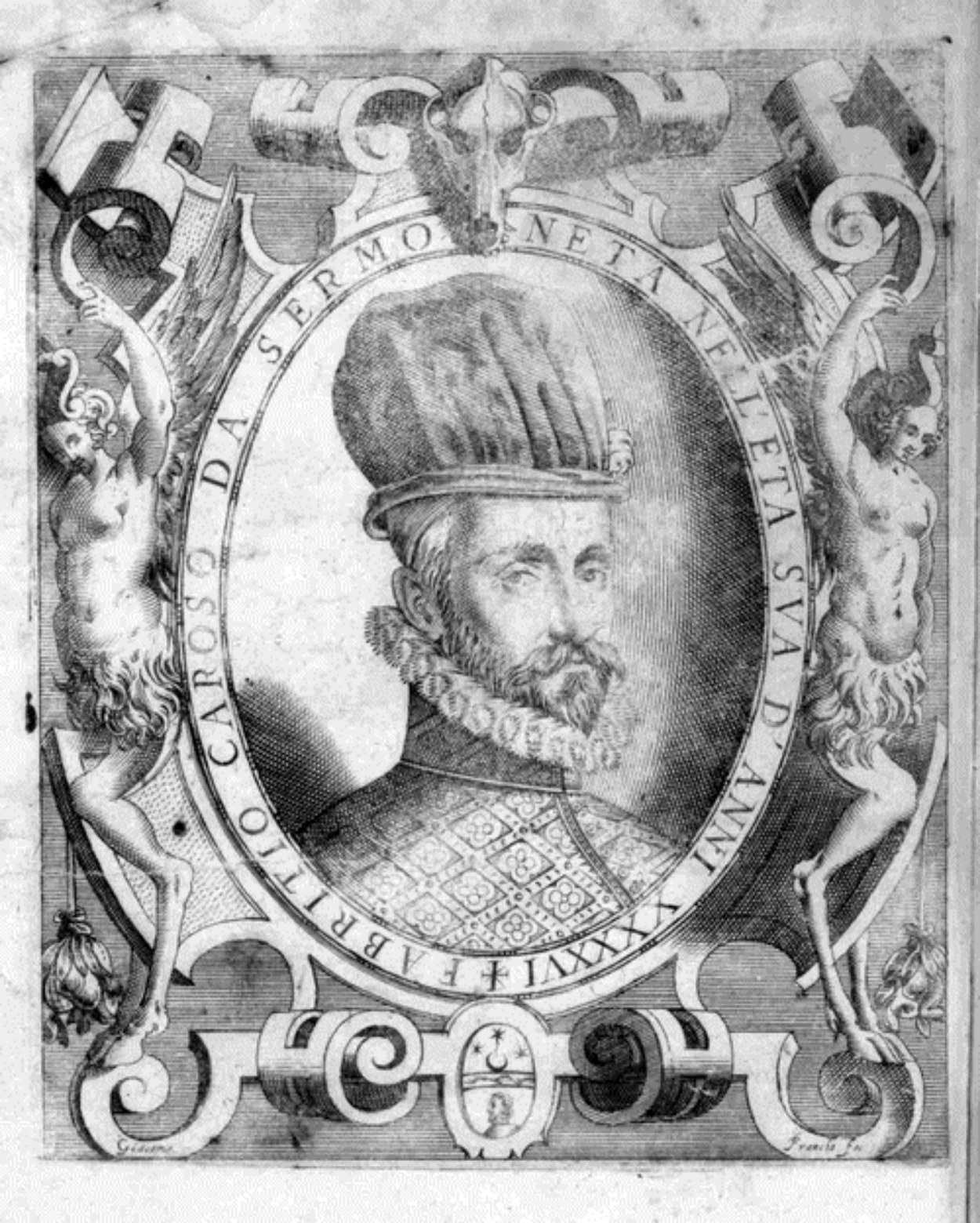
Fabritio Caroso da Sermoneta
- Medium:
- Woodcut
- Dance:
- Notation/Choreography
- Era:
- Pre-1700 (Renaissance/Baroque)
- Collection:
- Nobiltà di Dame (1600)
- Source:
- Library of Congress
- Rights:
- Public domain — free to use, share and adapt.
- Recorded as:
- Public Domain
Caroso's *Nobiltà di Dame* is the most authoritative surviving record of how the Italian nobility actually danced in the late 16th and early 17th centuries. This plate is visual evidence of a dance tradition that shaped courtly culture across Renaissance Europe, and Caroso's notations remain one of the few sources through which modern dancers and historians can reconstruct and perform these historical dances. For anyone studying the history of ballet, courtly manners, or the representation of dance in art, Caroso's work is foundational.
What you are looking at
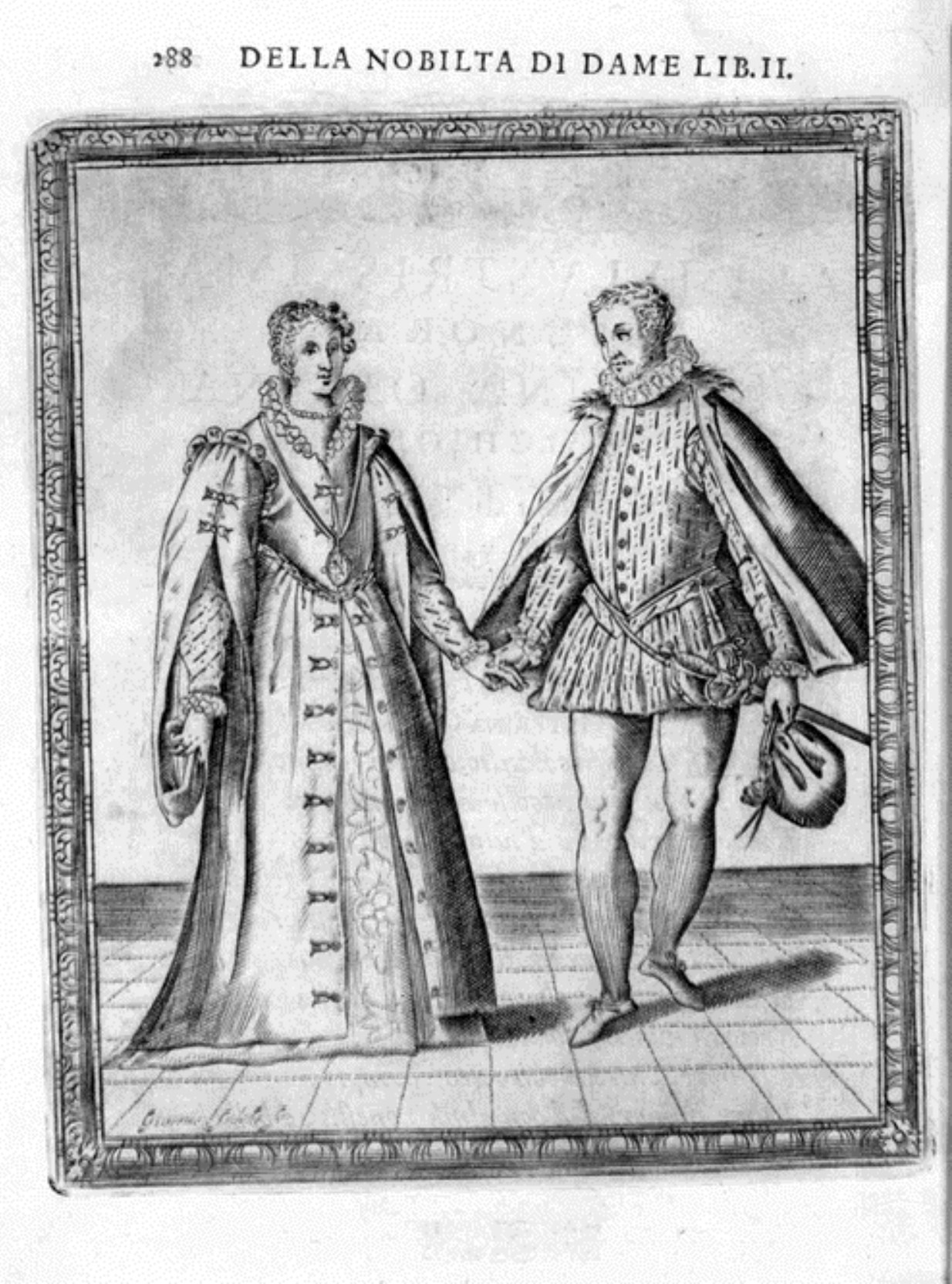
A noble couple stands facing each other in formal Renaissance Italian court dress, their hands joined in a gesture of connection or salutation. The woman on the left wears an elaborate long gown with a high neckline, puffed sleeves trimmed with ermine or similar fur, and a deep train that extends behind her; her hair is dressed up in curls typical of late 16th-century fashion. The man on the right is dressed in a doublet with vertical pleating, a short skirt with pronounced pleats, and a cape draped from his shoulders; he holds a feathered hat or plume in one hand. Both figures stand in a measured, formal posture on a tiled floor rendered in perspective. The setting is minimal and neutral, focusing attention entirely on the dancers and their interaction. The woodcut technique creates strong contrasts between light and shadow, and the ornamental border frames the scene with Renaissance decorative motifs.
The dancing
The couple's bodies are upright and aligned, with the woman's weight centered and the man in a similarly balanced stance. Their joined hands are the focal point, suggesting a moment of greeting or the beginning of a partnered movement. The woman's free arm hangs naturally at her side, while the man's other hand holds his hat in a gesture of courtesy. Neither figure leans forward or displays weight transfer, indicating this is a posed moment rather than an active step sequence. The formal spacing and mutual facing suggest the opening of a formal dance encounter rather than an energetic movement phrase.
The dance depicted
This is a notation plate from Caroso's choreographic manual, illustrating the paired figures and courtly decorum expected in Renaissance court dances—most likely a pavane or a similar processional dance, given the formal dress, upright posture, and ceremonial hand connection. Caroso's dances, drawn from Italian court practice of the late 16th and early 17th centuries, were performed by noble couples and emphasize grace, measured steps, and geometric formations. The image shows the type of opening encounter or position that would precede elaborate step sequences detailed elsewhere in the manual. The couple's posture reflects the Renaissance ideal of courtly behavior: restrained, symmetrical, and governed by strict social hierarchy.
How it was made
This is a woodcut, a relief printing technique in which an image is carved into the surface of a block of wood. Woodcut allowed for relatively rapid production and wide distribution of multiple copies, making it the ideal medium for an instruction manual aimed at court dancers and dancing masters across Italy and Europe. The strong black lines and high contrast of the woodcut lend themselves to clarity in depicting the precise positions and alignments essential to choreographic notation. The technique's bold graphic quality emphasizes the geometric structure of the dance rather than subtle movement or emotion.
About this work
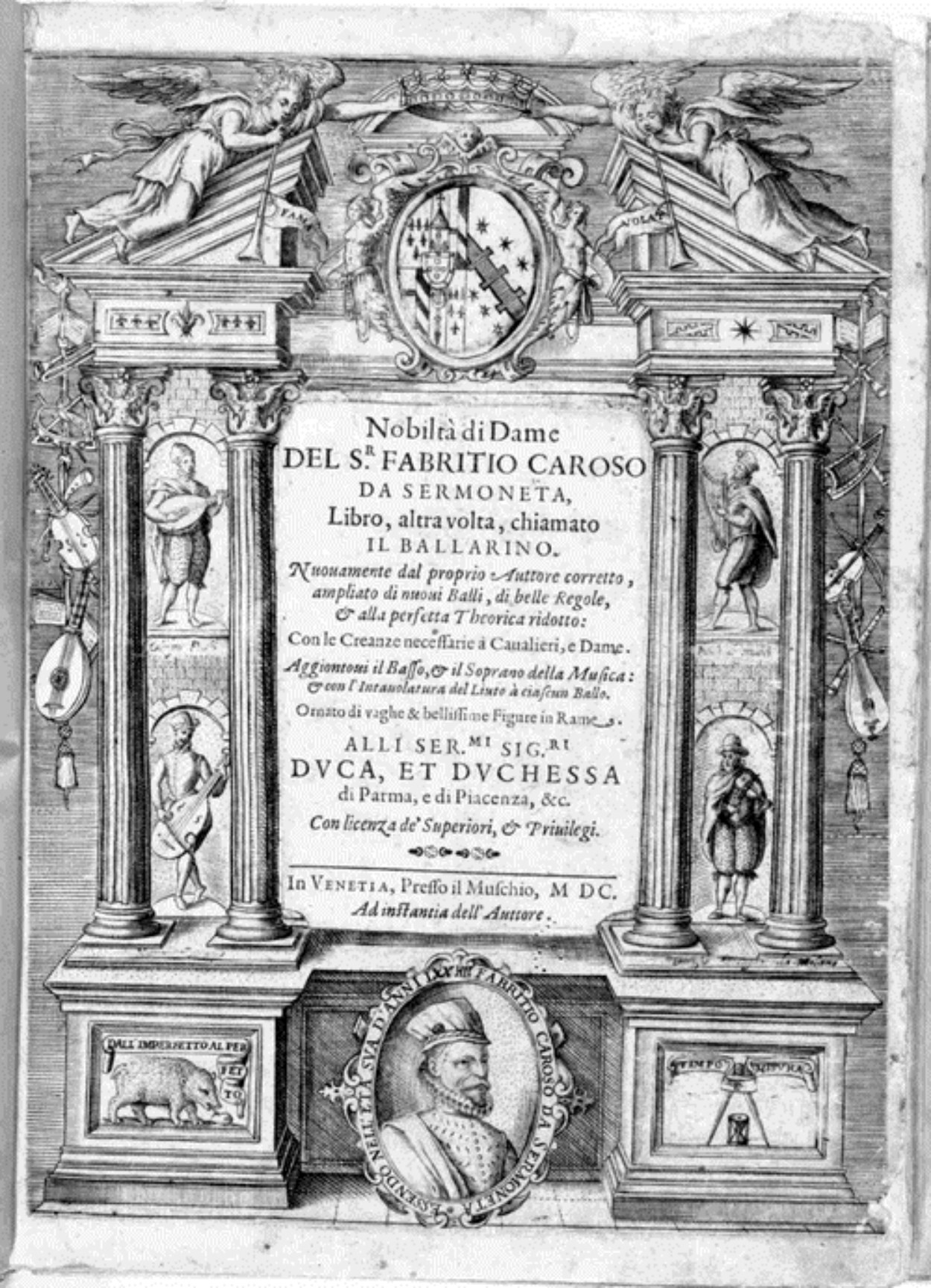
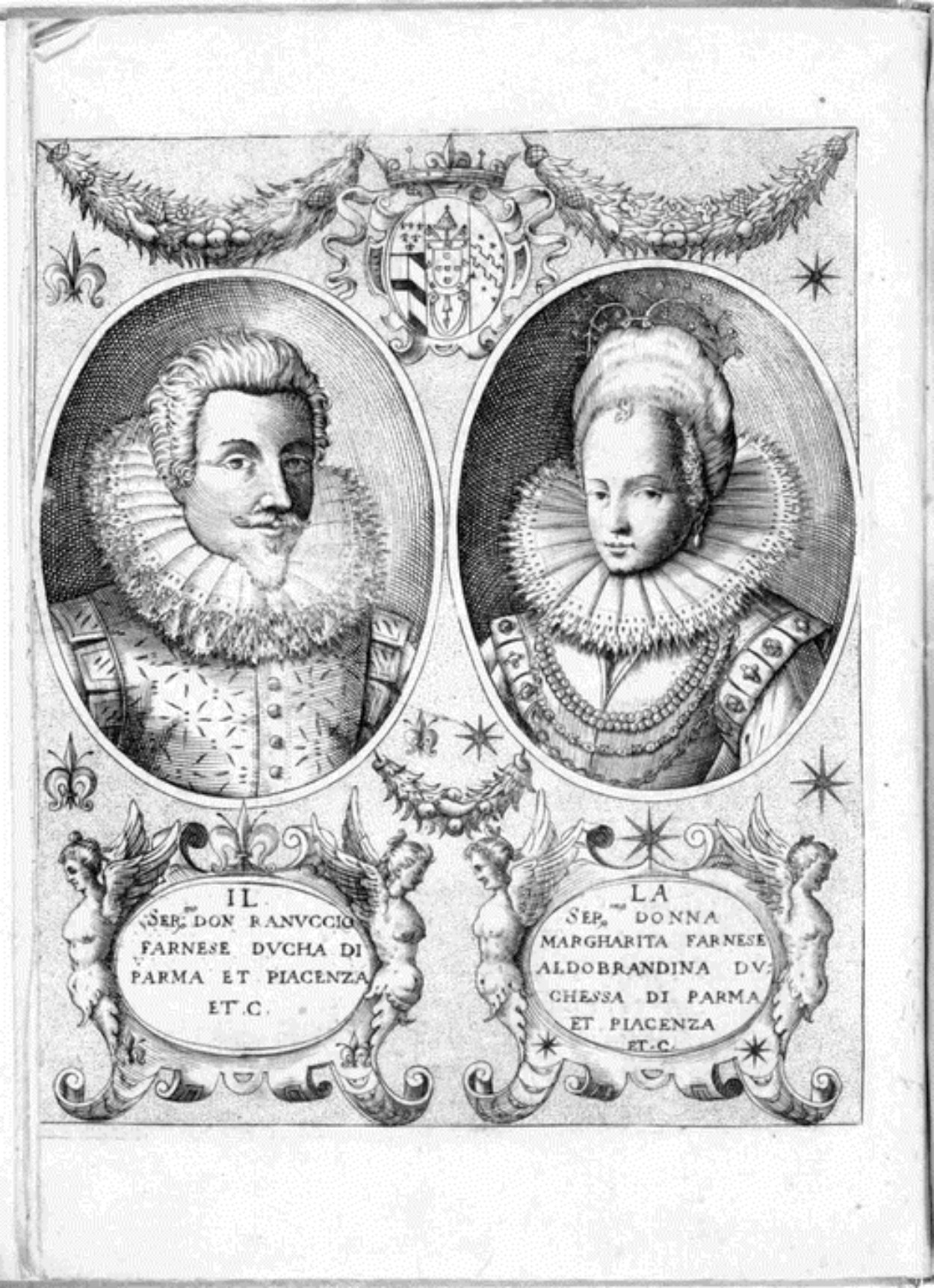
This woodcut is one of the choreographic plates from Fabritio Caroso's *Nobiltà di Dame* (Venice, 1600), a manual that codified the most refined dances of the late Italian Renaissance court. Caroso, the preeminent dancing master of his era, published this revised and expanded edition to document the dances performed before the highest nobility, including Christine of Lorraine, to whom it is dedicated. The plate illustrates the formal opening of a paired dance, frozen at the moment of greeting, and serves both as a record of actual court practice and as an instructional image for dancing masters and noble students learning the proper bearing and positions of courtly dance. The couple's dress, posture, and measured deportment embody the values of Renaissance court culture: order, symmetry, noble bearing, and refined sensibility.
How to look at it
Attend to the couple's alignment and the precise angle at which they hold their hands—these details encode information about the geometry of the dance and the correct posture a dancer should maintain. Note the woman's elaborate train and how it is positioned; in Renaissance court dance, managing long skirts required specific body placement and timing. The woodcut's strong lines emphasize the verticality and formality of the stance, which itself is part of the choreographic content: Renaissance noble dancers prided themselves on an upright, controlled bearing that contrasted with the more athletic galliard. The neutral setting and the couple's isolation in the frame direct focus to the precise, teachable moment of the dance.
The artist
Fabritio Caroso da Sermoneta (c. 1526–after 1605) was the most celebrated dancing master of the late Italian Renaissance. He served at courts throughout Italy and is credited with systematizing and elevating the art of dance to a status comparable to music and rhetoric. His first major publication, *Il Ballarino* (1581), was revolutionary in offering detailed choreographic notation; *Nobiltà di Dame* (1600) revised and expanded it, presenting a refined, up-to-date account of courtly dance practice. Caroso's work was widely studied across Europe and influenced the development of formal court dance well into the Baroque period.
The period
At the turn of the 17th century, Italian Renaissance court culture was at its height, with the nobility employing dancing masters to teach elaborate, choreographed dances as part of courtly education and ceremonial display. Dance was viewed as a moral and physical discipline, requiring mastery of precise positions and measured timing. The publication of Caroso's manual in 1600 represents a moment of codification: the dances of the 16th century were being systematized and formally recorded even as Baroque court dance was beginning to emerge. This transition is visible in the manual itself, which includes both the stately pavane and galliard inherited from mid-Renaissance practice and newer, more complex choreographies reflecting early 17th-century taste.
Where it lives
This plate is from *Nobiltà di Dame*, the 1600 Venice edition of Caroso's definitive choreographic manual. It is part of a series of notational woodcuts that comprise the entire published work, each illustrating a specific dance or position. The manual itself was reprinted multiple times and circulated widely among European nobility and their dancing masters, making it one of the most influential dance documents of its era.
Dance in this work
Questions about this work
What dance is this showing?
The plate illustrates the formal opening of one of Caroso's dances, most likely a pavane (a stately, processional dance) or another courtly paired dance. The specific sequence would have been detailed in text and notation elsewhere in the manual. The image captures the moment of greeting and initial positioning before the couple would proceed through the choreographed steps.
How do we know how to dance from a picture?
Caroso's manual combines woodcuts showing positions and formations with detailed written descriptions and a system of choreographic notation (often called *saltarello* notation). The images alone do not tell the whole story, but they provided dancing masters and noble students with visual reference for posture, spacing, and partner connection—crucial information that text alone could not convey. Modern dance historians reconstruct these dances by combining the images, notations, and written instructions.
Who would have performed these dances?
These were dances of the Italian nobility and their courts. The manual was dedicated to Christine of Lorraine, a great-granddaughter of the Italian nobility, and copies were owned by noble families, dancing masters, and courtiers across Italy and Europe. The dances were performed at festivals, weddings, court ceremonies, and as part of the education of noble youth in courtly manners and deportment.
What is the significance of the woman's elaborate dress?
The woman's high-necked gown, puffed sleeves, ermine trim, and long train are markers of the highest nobility and wealth. Her dress reflects the status of the woman who would wear it at court. The train and full skirt required particular body control and positioning in dance; Renaissance dancers had to maintain an upright posture and manage their garments with precision, which was itself part of the skill and refinement being displayed.
More Notation/Choreography artwork