49 works in this view — arrow keys or swipe to move between them.
Dance in Art
Caroso Nobiltà — Dance Plate (plate 37)
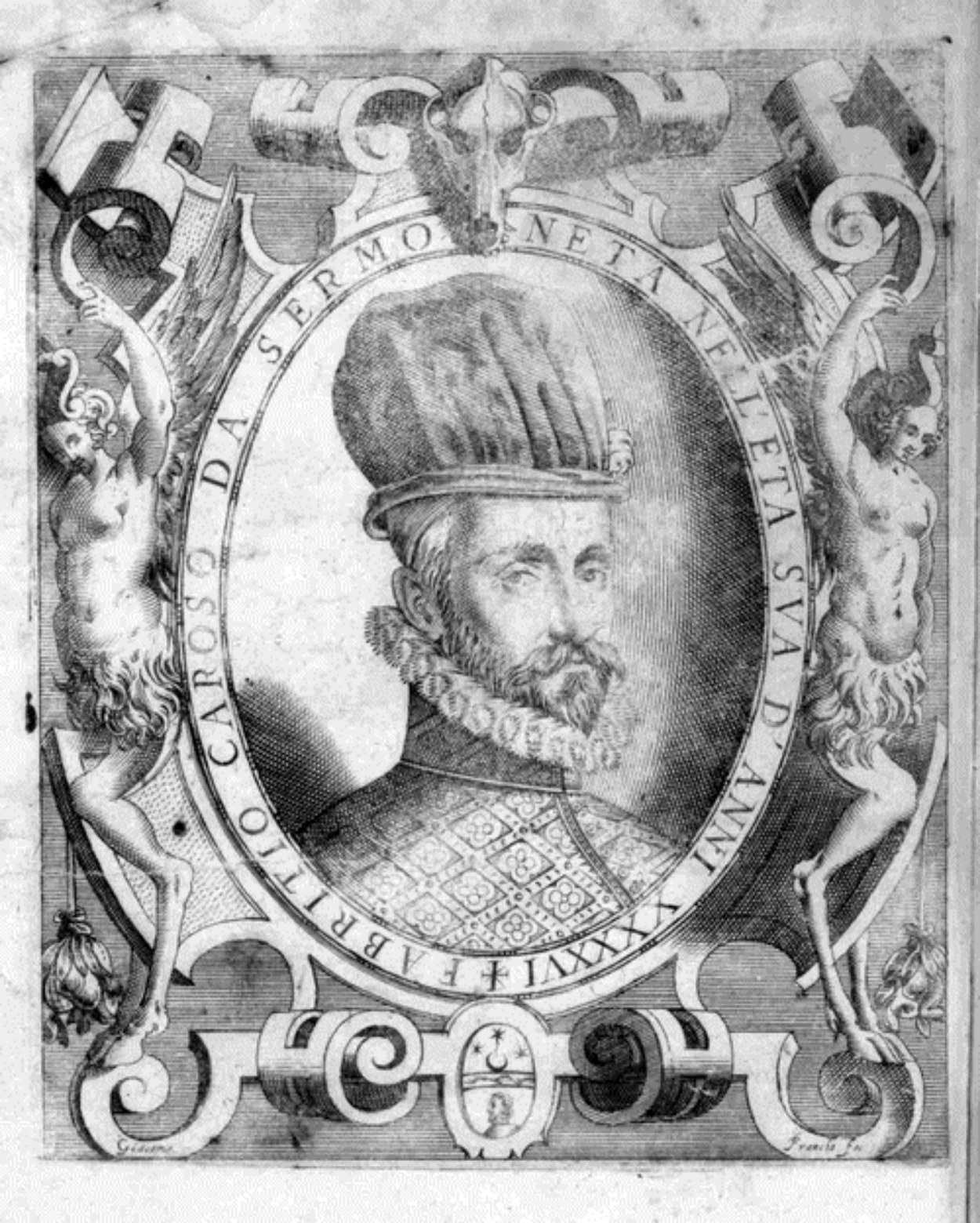
Fabritio Caroso da Sermoneta
- Medium:
- Woodcut
- Dance:
- Notation/Choreography
- Era:
- Pre-1700 (Renaissance/Baroque)
- Collection:
- Nobiltà di Dame (1600)
- Source:
- Library of Congress
- Rights:
- Public domain — free to use, share and adapt.
- Recorded as:
- Public Domain
Caroso's manual is one of the two most important surviving sources for how Renaissance dances were actually performed, offering not only written choreographies but visual models of the carriage, dress, and spatial relationships that defined court dance. This plate in particular preserves the visual vocabulary of courtship dance at a moment when Italian court practice was being codified and exported across Europe. For dancers and historians, it is irreplaceable evidence of how the body was positioned, how partners related to one another, and what the ideal noble dancer was expected to embody.
What you are looking at
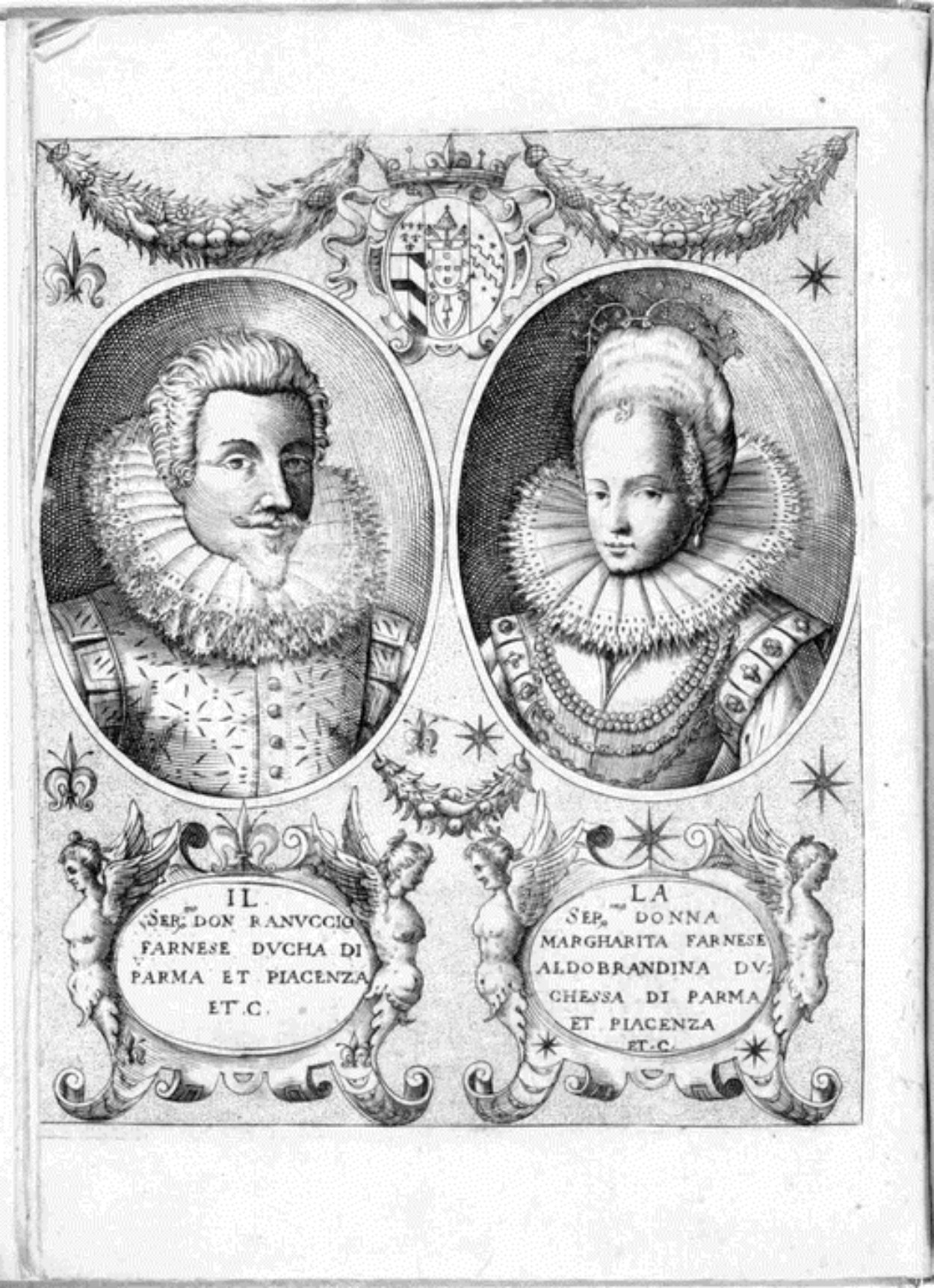
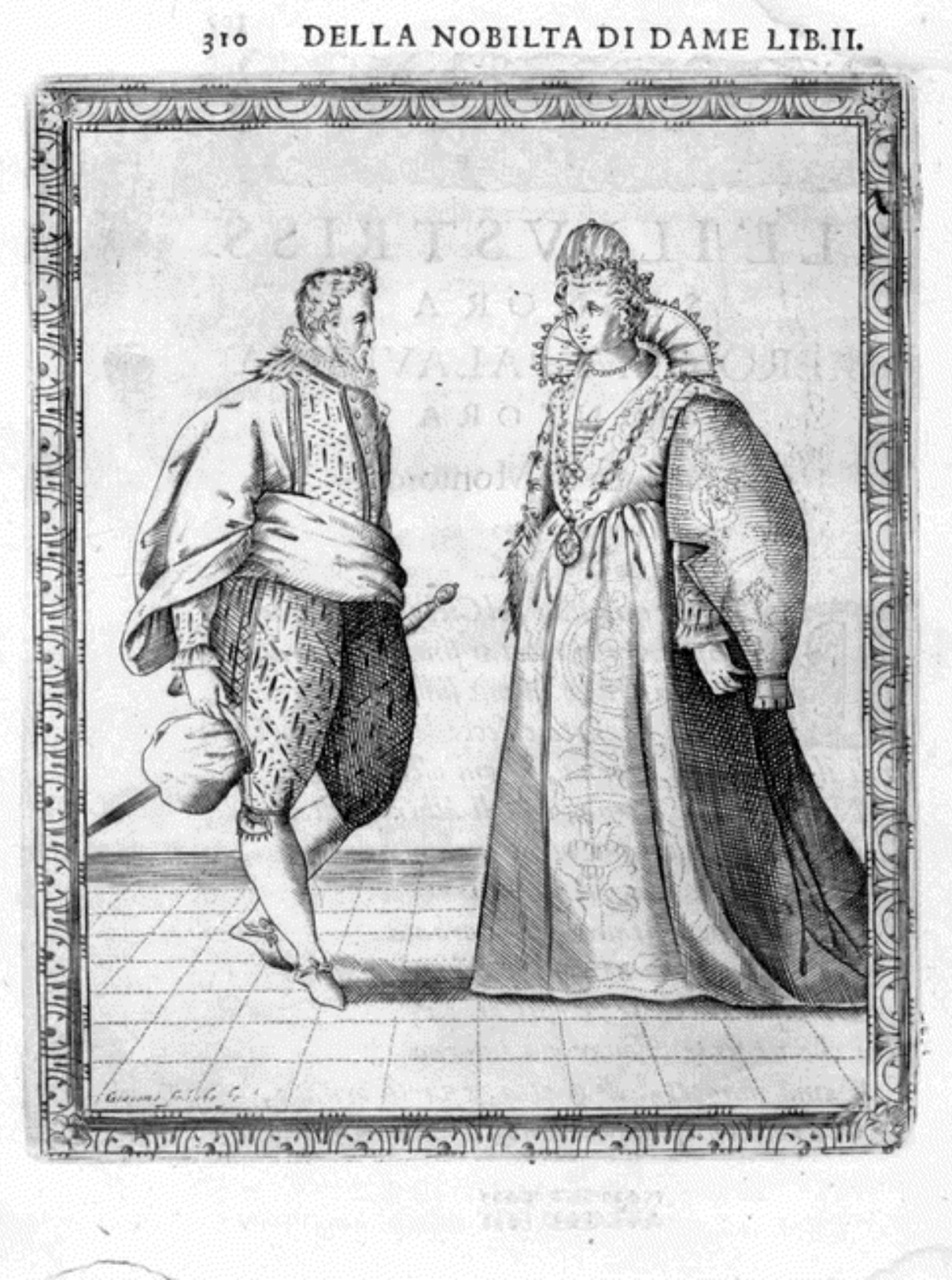
A woodcut plate from Caroso's dance manual showing a noble couple in formal Renaissance Italian court dress. The man, positioned on the left, wears a richly patterned doublet with slashed sleeves, short breeches, and elegant hose; he holds a rolled document or scroll in one hand and gestures with the other in an open, inviting posture. The woman, on the right, wears a floor-length gown with elaborate puffed sleeves trimmed in what appears to be fur or embroidered fabric, a wide jeweled collar, and an ornate headdress characteristic of early 1600s Venetian fashion. Both figures stand upright on a tiled floor against a plain background, positioned as if in conversation or about to begin a dance. The composition presents them in profile and three-quarter view, allowing the viewer to observe their stance, carriage, and the precise details of their costumes.
The dancing
Both figures maintain an upright, dignified posture typical of court dance. The man's weight appears grounded, his body open and his arm raised in an invitational gesture—the stance of someone preparing to lead or address his partner. The woman stands composed and attentive, her body positioned to engage with the man while maintaining formal distance. Their relative positioning suggests the beginning of a dance interaction: the man slightly forward and active, the woman receptive. Neither figure is captured mid-movement but rather in the preparatory moment before dancing commences, which is characteristic of didactic dance notation plates meant to show proper deportment and initial positioning.
The dance depicted
This plate illustrates the courtship dances of the Renaissance Italian court tradition, most likely a pavane or almain given the formal dress and the composed, stately positioning. Caroso's Nobiltà di Dame was the authoritative manual for court dances at the turn of the 17th century, and this plate serves a didactic function—it shows not the acme of movement but the beginning posture, the correct frame and mutual regard with which a couple should approach dancing. The image documents how partners positioned themselves, the distance they maintained, and the physical deportment expected of noble dancers. The woman's elaborate costume and jeweled ornaments emphasize her status; the man's elegant but somewhat less ornate dress and his active gesturing role reflect the gender conventions of courtship dance.
How it was made
This is a woodcut, a relief-printing technique that allowed for relatively rapid reproduction and wide circulation compared to engraving. The crisp black lines, the fine parallel hatching used to model form and fabric texture, and the bold outline of the figures are characteristic of skilled Renaissance woodcut work. As a woodcut, this plate could be printed many times, making it accessible to a courtly audience across Italy and Europe—essential for a dance manual intended as both instructional text and status symbol. The technique's limitations (compared to engraving's finer detail) are apparent in the simplified background and the broad handling of fabric, but the woodcut's directness and clarity serve the educational purpose well.
About this work
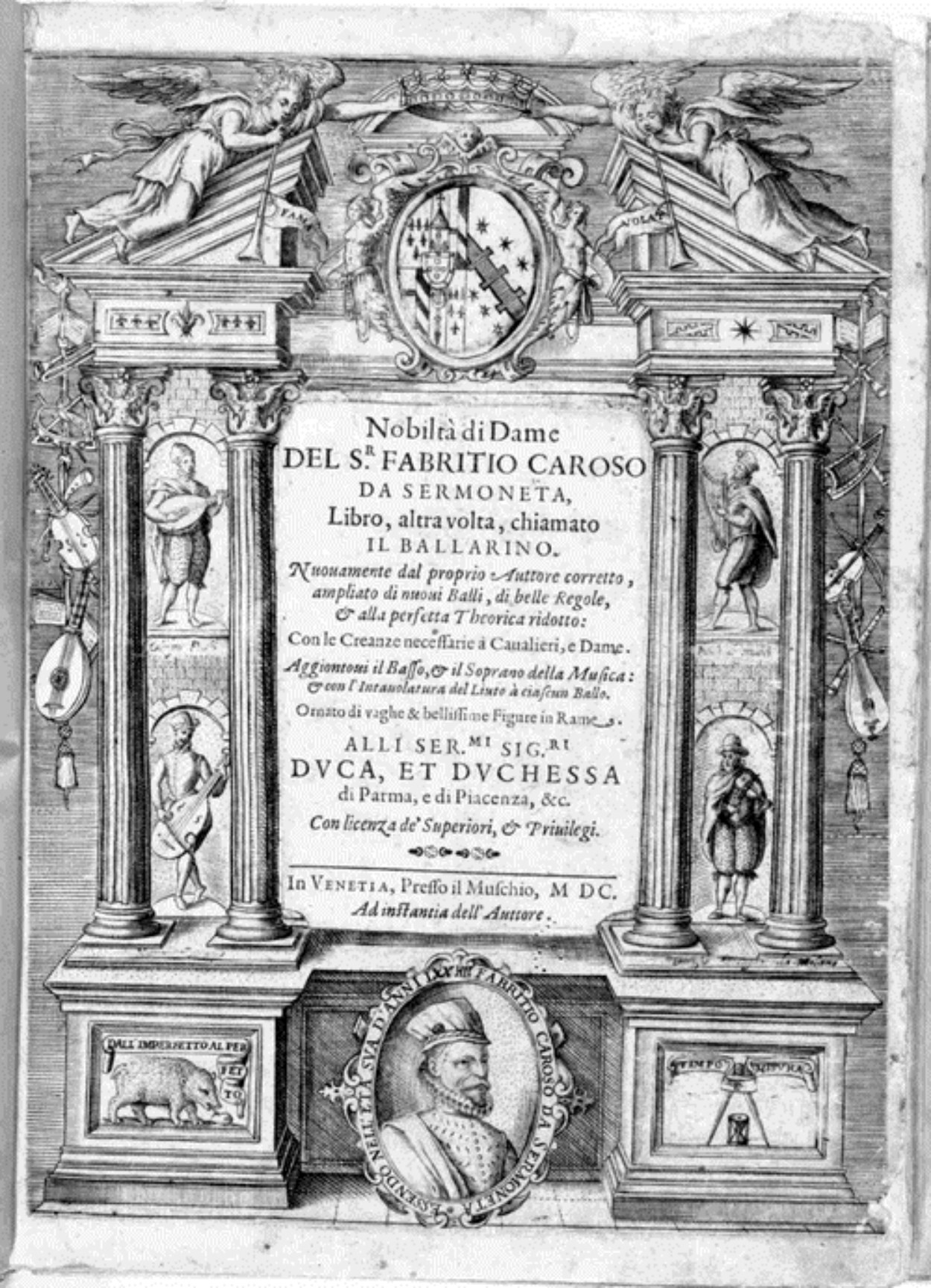
This is a didactic plate from Fabritio Caroso's Nobiltà di Dame (Venice, 1600), the refined and expanded reissue of his earlier Il Ballarino (1581). It shows a noble couple in the formal dress and initial posture of Renaissance court dance, functioning as both a model of proper carriage and a window into how partners were meant to interact in the dances of the late 16th and early 17th-century Italian court. The plate belongs to a crucial moment in dance history: the transition from the 16th century's Cinquecento style (which Caroso had documented in his first edition) to the fashions and practices of early Baroque Italy. As one of the plates in an immensely influential manual—dedicated to Christine of Lorraine and consulted across Europe—it stands as both art and evidence: a record of how noble couples danced and how that dancing was formally taught.
How to look at it
Attend first to the posture and the distance between the figures: they are neither touching nor distant, but poised in a carefully measured relationship that reflects the protocol of court dance. Notice the man's active gesture and the woman's receptiveness without passivity—she is attentive and engaged. Look at the costumes in detail: the jewelry, the slashing and embroidery, the cut of the sleeves. These are not generic nobles but a precise visual record of how the highest-ranking dancers dressed. The plate is a moment before movement begins—the preparatory stance. This is characteristic of dance manuals: rather than showing the height of a leap or spin, Caroso often captured the ordered beginning, the moment of mutual regard and correct positioning from which the dance would unfold.
The artist
Fabritio Caroso da Sermoneta (c. 1535–c. 1605) was a virtuoso dancer and the most celebrated dance master of the late Renaissance Italian court. He served at the courts of nobility across Italy and enjoyed the patronage of the Medici and other princely houses. His Il Ballarino (1581) established him as the foremost authority on courtly dance of the Cinquecento; the Nobiltà di Dame (1600) consolidated that authority and adapted his teachings to the fashions and tastes of the early 17th century. As both practitioner and theorist, Caroso stands at the apex of Renaissance dance culture; his two manuals are among the most carefully crafted and richly illustrated dance treatises of the period, and they remain the primary source for understanding how Italian nobles danced.
The period
In the final years of the 16th century and the opening of the 17th, Italian court dance was at the height of its refinement and international influence. The dances Caroso documented—pavanes, galliards, almains, branles, and other courtly forms—were the common language of courtship and ceremony across Europe. Venice in 1600, where Caroso published this edition, was a cosmopolitan center where courtly fashions and dance practices were both created and disseminated. The Nobiltà di Dame represents a moment of codification: existing dances being standardized, new variations being introduced, and the physical ideals of the noble body being made explicit through both text and image. In art, the period saw the rise of technical treatises that combined precise verbal description with illustrative plates—a hybrid form that Caroso's work exemplifies.
Where it lives
This plate is from the Nobiltà di Dame, published in Venice in 1600 and held at the Library of Congress. It is one of dozens of similar plates in the treatise, each illustrating either a couple preparing to dance or key moments within a choreographed dance. The manual was a luxury object—expensive to produce, illustrated throughout, and intended for elite patrons—but also a practical instructional text meant to be consulted and referred to repeatedly.
Dance in this work
Questions about this work
Did Renaissance couples actually dance in the exact poses shown here?
These plates show the formal beginning postures and key positions within the choreography, not snapshots of constant movement. A dancer would move through many positions during a single dance; Caroso selected these moments as reference points—the correct way to stand, regard one's partner, and begin. The poses are idealized but based on real practice.
What dance are these two about to do?
The plate number and position within the Nobiltà di Dame would indicate which specific dance this couple is executing. Without knowing the plate's placement in the treatise, we can say it is likely one of the formal courtship dances—a pavane, almain, or branle—based on the stately posture and the careful distance between them.
Why is the woman's costume so much more elaborate than the man's?
Noble women's court dress in this period was intentionally ornate—heavy with embroidery, jewels, and fine fabrics as a display of wealth and status. Men's dress, while also costly and skillfully made, tended toward a more restrained elegance. In the choreography of courtship dances, the woman's display was part of the social and erotic grammar of the dance.
Could I learn to dance from this image alone?
Not fully. The plate shows carriage and initial positioning, but Caroso's written descriptions in the adjacent text provide the actual step patterns, the direction of travel, the timing, and the precise movement sequence. The image and text work together; each is incomplete without the other.
More Notation/Choreography artwork