26 works in this view — arrow keys or swipe to move between them.
Dance in Art
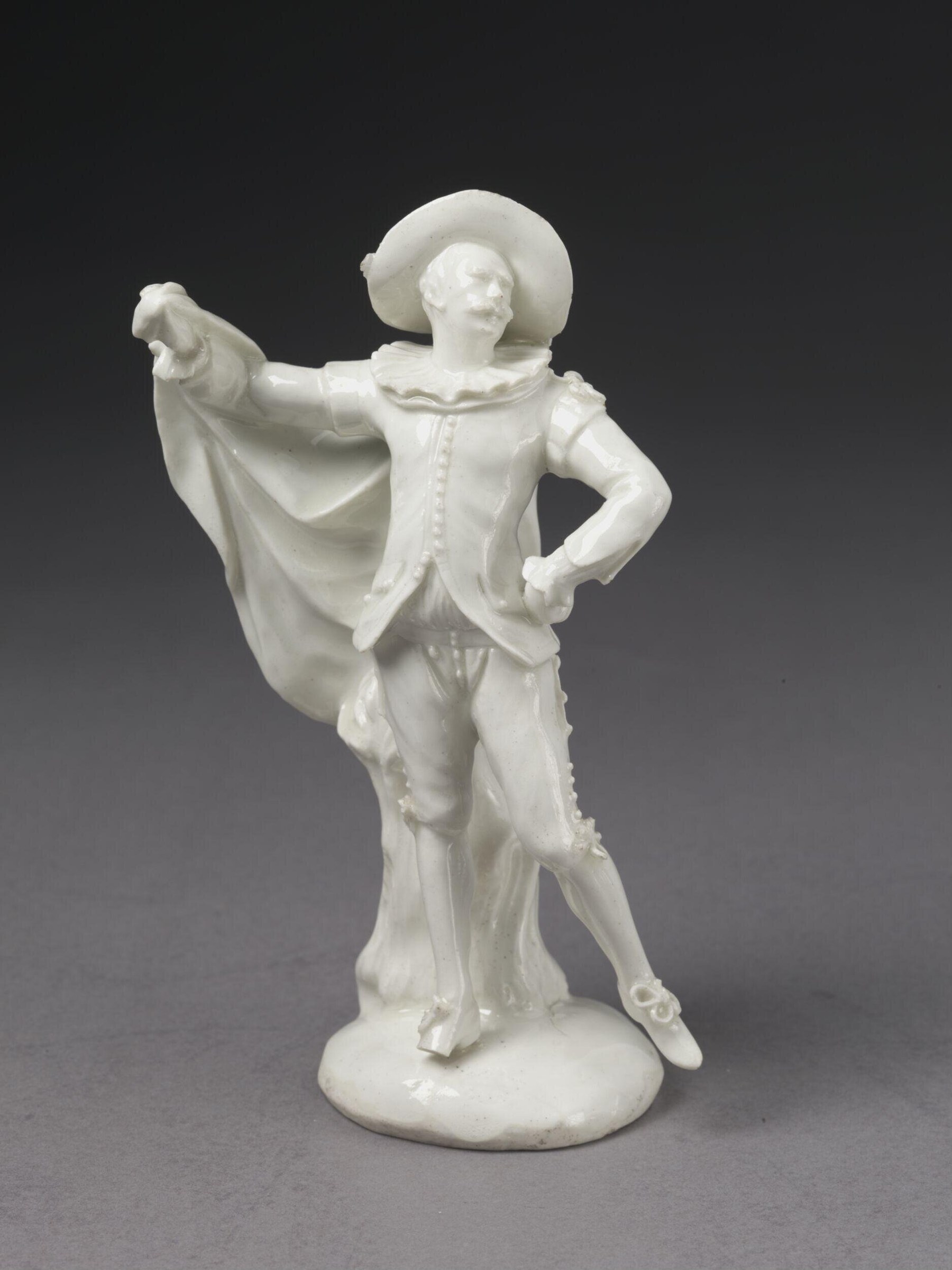
Dancing masquerader
Derby porcelain factory
- Era:
- 1700s (Enlightenment/Minuet Era)
- Source:
- Victoria and Albert Museum
- Rights:
- Rights vary by item — check the source record before reusing this image. Source record ↗
- Recorded as:
- Check V&A creditLine
This object reveals how masquerade and theatrical dance were understood and consumed in the domestic sphere. Rather than recording an actual choreography or technique, it captures the aesthetic and emotional core of masquerade entertainment—the showmanship, the costume, the performative stance—and preserves that moment as a collectible. It shows us what 18th-century audiences valued in entertainment: spectacle, character, and the transformative power of costume and display.
What you are looking at
A single porcelain figure stands alone against a neutral ground, dressed in the flamboyant costume of 18th-century theatrical masquerade. The dancer wears a voluminous cape that sweeps dramatically behind the body, a fitted jacket with ornate buttons and detailing, knee breeches, and a broad-brimmed hat with a tall crown. The figure's left arm extends outward, holding the cape aloft in a theatrical gesture of display; the right arm bends with the hand placed on the hip in a pose of confident showmanship. The body is angled in a walking or gliding posture, the right leg extended forward and the left supporting the weight, suggesting fluid forward momentum. The white glazed porcelain captures fine detail in the costume's folds and the figure's facial features, rendered with the precision typical of Derby factory work.
The dancing
A single male dancer depicted in three-quarter view, weight balanced on the back leg with the front leg extended in a walking position. The left arm is raised and extended, pulling the cape outward in an expansive, presentational gesture; the right arm drops to the hip. The pose is frontal and open—designed to be viewed from the audience's perspective—with the torso upright and the head held high. The positioning conveys display and self-presentation rather than complex footwork or partnered interaction.
The dance depicted
This represents a masquerader or 'dancer in fancy dress'—a figure from 18th-century theatrical and court entertainments. The costume and pose are consistent with the commedia dell'arte tradition and the entertainment masquerades that were popular in European courts, particularly in aristocratic balls and theatrical spectacles. The extended cape, theatrical hat, and proud, presentational stance indicate a performer engaged in a solo display piece or the opening moment of a masquerade dance, where the costume and character are revealed to the audience. The figure is not executing a specific codified step but rather embodying the character and spirit of theatrical entertainment through pose and dress.
How it was made
This is a porcelain figure, molded and glazed. The Derby porcelain factory (active from 1750 onward) specialized in producing such decorative figurines, often depicting theatrical and social subjects. The white glazed surface allows fine modeling of costume details—the buttons, cape texture, and facial features—while the monochromatic finish emphasizes silhouette and form. Such figures were created for display on mantels or in cabinets of collectors, functioning as both decorative objects and miniature theatrical representations. The technique of hand-modeling and glazing meant each piece was individually finished, making them valued commodities among the middle and upper classes.
About this work
This porcelain figure captures a moment of theatrical self-presentation from the mid-18th century, when masquerade entertainment was a central form of aristocratic amusement. The Derby factory produced such pieces for a domestic audience eager to own miniature versions of fashionable entertainment and costume. The figure embodies the spirit of masquerade culture—the celebration of disguise, theatricality, and the pleasure of display—frozen in the moment when the dancer reveals himself to the audience. It belongs to a broader tradition of ceramic figurines depicting dancers, musicians, and theatrical characters that decorated European homes and documented the social life of the period.
How to look at it
Observe the pose carefully: the extended cape held aloft is not a frozen moment of movement but rather a moment of presentation, designed to be admired from the front. The broad stance and confident placement of the body suggest a performer aware of an audience. Note how the porcelain captures the texture and weight of fabric—the cape flows dramatically while the fitted jacket shows the body beneath. The costume is the subject of the piece; without the hat, cape, and decorated jacket, this would be an ordinary standing figure. The artist has chosen to freeze not a step or sequence but the character in the moment of self-display.
The artist
The Derby porcelain factory (c. 1750–1848) was one of the leading English porcelain manufacturers, renowned for producing high-quality decorative figurines. The factory employed skilled modelers to create figures depicting contemporary life, entertainment, and fashion. Masquerade and theatrical subjects were popular genres within their output, reflecting the tastes and interests of their clientele. These figurines were often produced in series, allowing multiple copies to be sold, and they frequently showcased the factory's technical skill in rendering costume detail and human anatomy in miniature.
The period
In the mid-18th century, masquerade was at the height of its popularity in European aristocratic culture. Venice, London, and continental courts hosted elaborate masked balls and theatrical entertainments where costume, music, and dance created an atmosphere of licensed fantasy and social transformation. Masquerade dance occupied a peculiar position: it was partly social (participants danced together in costume) and partly theatrical (masquerades were often performed as spectacles). The same period saw a flourishing of genre figurines in porcelain, particularly from German and English factories, reflecting the growing market for miniaturized versions of fashionable life. These objects allowed the middle and upper classes to own representations of the leisure and spectacle they admired or participated in.
Where it lives
According to the catalogue record, this object is from the Victoria and Albert Museum collection, identified as a Derby porcelain factory production from around 1750. The V&A holds one of the world's largest collections of English ceramics and maintains extensive documentation on factory production, technique, and provenance.
Dance in this work
Questions about this work
Is this a real dance or a costume character?
It is both. Masquerade entertainment in the 18th century blended theatrical costume with social dancing. This figure shows a masquerader—a performer or participant in fancy dress, captured in a moment of theatrical display rather than executing a specific dance step. The cape and costume are the primary content; the pose suggests the character and spirit of masquerade performance rather than a codified choreography.
What was masquerade dancing like?
Masquerade was a form of aristocratic entertainment where participants wore elaborate costumes and masks and danced in themed balls and theatrical spectacles. It combined social dancing with performance and character play. The entertainments ranged from formal balls where masked dancers performed quadrilles and minuets to theatrical masquerades where dance and spectacle were deliberately mixed. Costume and display were central; the mask and costume allowed social transformation and fantasy.
Why would people collect tiny porcelain dancers?
Porcelain figurines of theatrical subjects were fashionable luxury goods in the 18th and 19th centuries. Collectors displayed them on mantels and in cabinets as evidence of taste, knowledge of contemporary entertainment, and aesthetic refinement. They functioned as decorative art, conversation pieces, and miniaturized versions of the fashionable entertainments and social life that their owners aspired to or participated in. Such figurines were often collected in series.
More dance artwork