35 works in this view — arrow keys or swipe to move between them.
Dance in Art
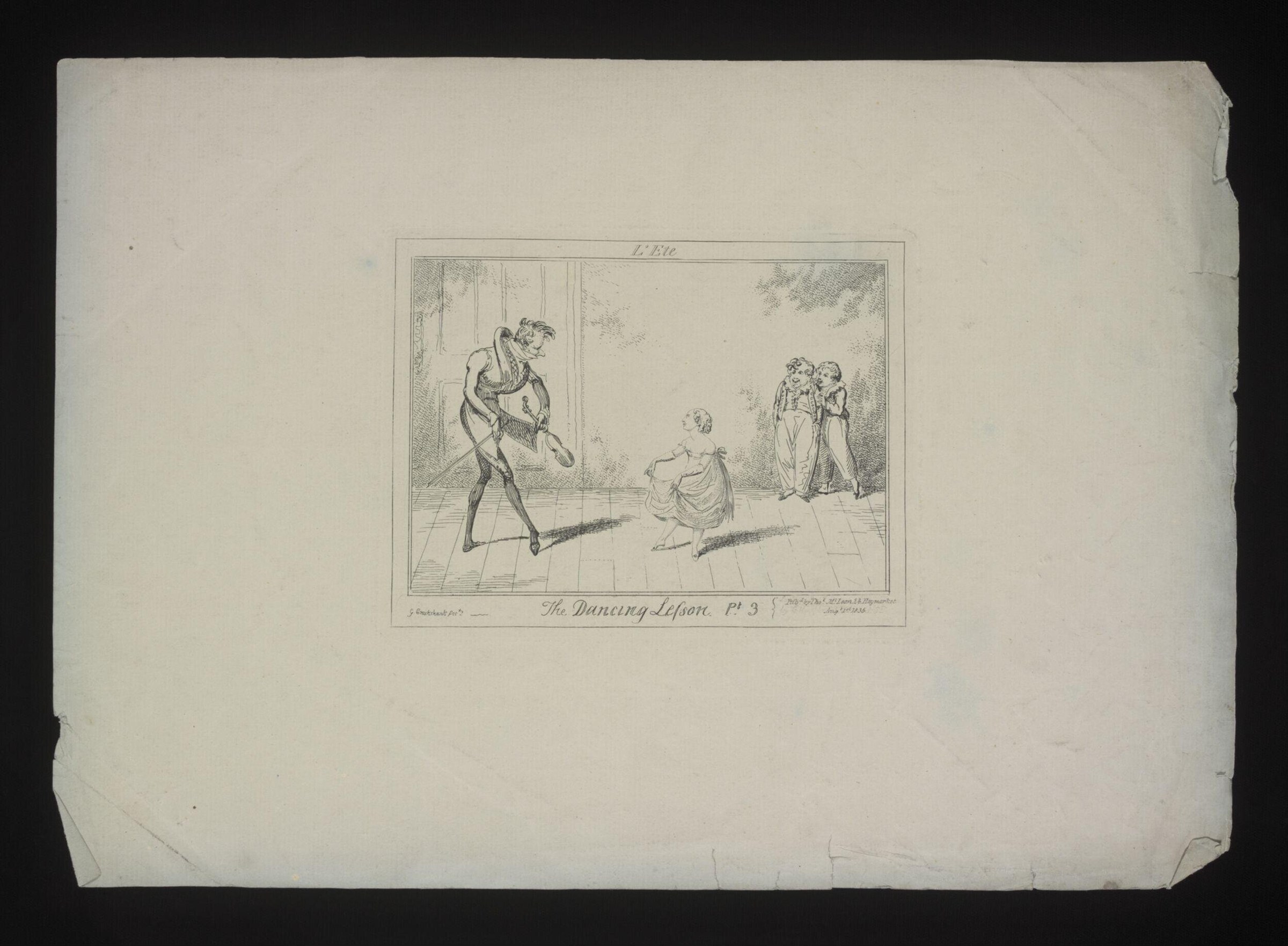
The Dancing Lesson, L'Ete
Cruikshank, George
- Dance:
- Ballroom
- Era:
- Mid 1800s (Polka Era)
- Source:
- Victoria and Albert Museum
- Rights:
- Rights vary by item — check the source record before reusing this image. Source record ↗
- Recorded as:
- Check V&A creditLine
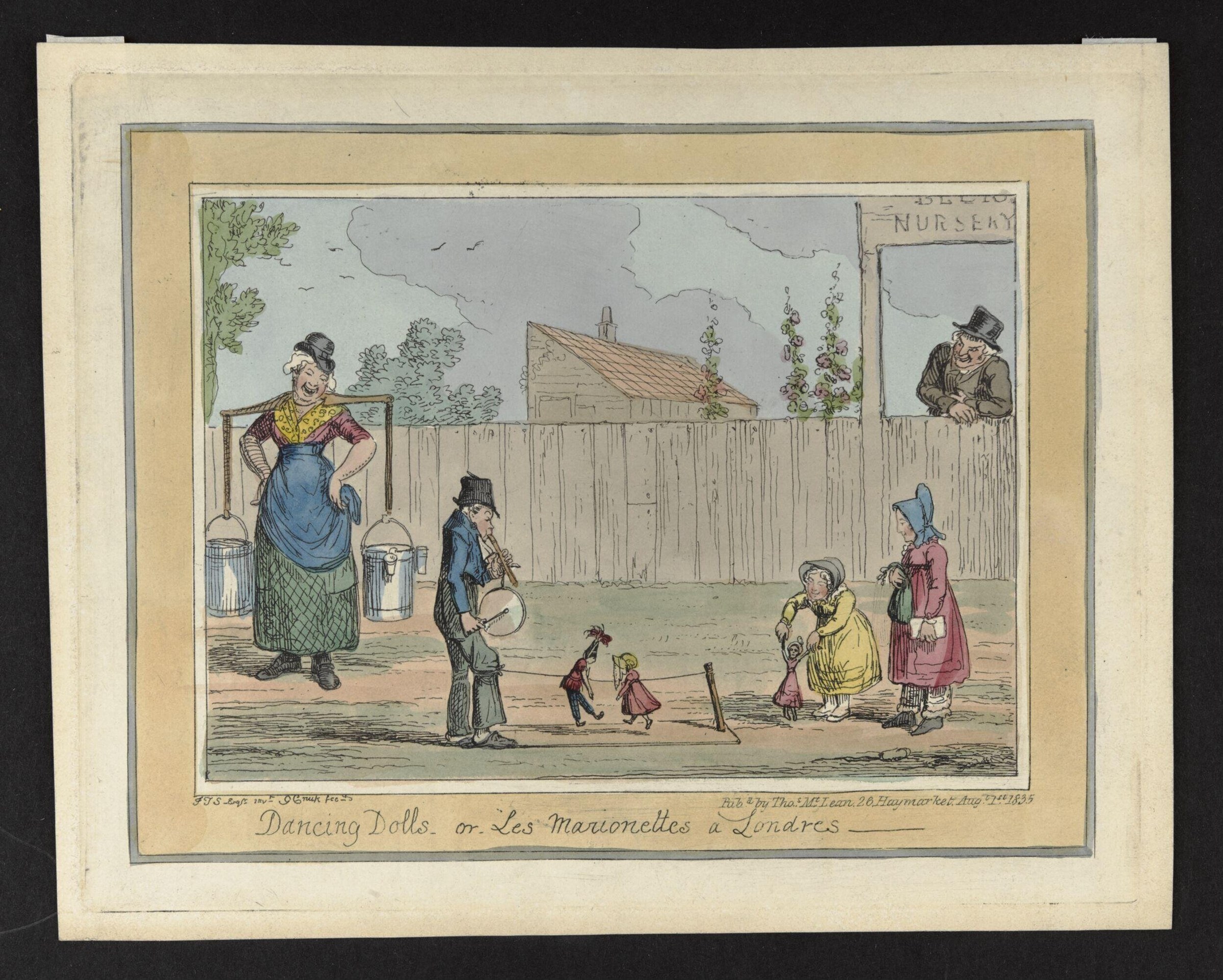
This engraving documents a crucial but often invisible moment in dance history: the formalization of technique instruction during the period when ballet vocabulary was becoming standard in ballroom and theatrical practice. For dancers and historians, it provides evidence of how pedagogical authority was performed, what body positions were valued, and how gender structured the teacher-pupil relationship in early 19th-century dance culture.
What you are looking at
A dance lesson unfolds in a sparse, columned interior with a polished floor. An instructor—a lean man in tight breeches and a short coat—demonstrates a dancing posture to a female pupil, his body extended in an exaggerated attitude suggestive of ballet technique. The woman stands passively, watching. Two other figures (a man and woman) converse in the background on the right, apparently waiting their turn or observing. The setting is austere and formal, with only architectural elements—columns and what appears to be a window or frieze—providing context. The engraving's fine hatching creates a delicate, almost satirical refinement that suggests this is not a celebration of the dance but an observation of its pretensions.
The dancing
The instructor displays an exaggerated turned-out leg position with his torso tilted and one arm extended, a pose recognizable from early 19th-century ballet pedagogy. His pupil stands upright and attentive, her body frame modest and receptive. The composition emphasizes the authority of the teaching figure—he is active and demonstrative, while she is passive and observant. The background figures are incidental, their posture relaxed and conversational, contrasting with the formal rigidity of the lesson.
The dance depicted
This is a lesson in ballroom and theatrical dance technique, most likely from the Regency or early Victorian period when the waltz and refined balletic posture were beginning to dominate fashionable dance instruction. The exaggerated attitude of the instructor—a pose associated with classical ballet vocabulary—suggests he is demonstrating an aesthetic ideal to a pupil. The title *The Dancing Lesson* names the subject plainly. The image captures the moment of pedagogical display rather than social dancing itself, documenting the formalized transmission of dance technique to an aspiring student.
How it was made
This is a hand-colored engraving, executed in fine parallel hatching and cross-hatching to create tonal depth and shadow. The technique allows precise detail in drapery, musculature, and architectural setting while maintaining the linear clarity characteristic of reproductive printmaking. Engravings of this period circulated widely as part of print series and satirical publications, reaching a broad educated audience. The refinement of the technique here, combined with the careful composition and subtle social observation, suggests this was intended for publication as part of a series on social manners or dancing instruction.
About this work
This is a scene from *The Dancing Lesson*, a Regency-era engraving that documents the formalized teaching of dance to aspiring practitioners. The work captures a moment of pedagogical display: a dancing master demonstrates an attitude or pose to a young female pupil, while other students wait in the background. The exaggerated posture of the instructor—turned-out leg, extended arm, tilted torso—reflects early 19th-century ballet vocabulary and the aesthetic ideals then being transmitted through dance instruction. As a satirical or observational print, the work offers evidence of how dance was taught, what body ideals were being enforced, and how the social structures of dance pedagogy operated during the Waltz Revolution. The formal, almost austere setting and the passivity of the pupil underscore the hierarchical and prescriptive nature of such instruction.
How to look at it
Attend to the posture of the dancing master: the turnout, the extended leg, the arm position, and the tilt of the torso are all indices of the ballet aesthetic being taught. Note the contrast between his active demonstrative stance and the pupil's passive receptiveness—this is not social dancing but instruction, a relationship of authority and deference. The background figures provide social context: this is a professional lesson, not a moment of spontaneous pleasure. The fine hatching and precision of the engraving's line suggest both the technical skill required to dance and the meticulous discipline of the master class.
The artist
George Cruikshank (1792–1878) was a prolific English engraver and caricaturist whose satirical prints documented social life and manners across the Regency and Victorian periods. Working in the tradition of Gillray, Cruikshank produced hundreds of prints on dancing, courtship, fashion, and domestic life, often with a sharp eye for pretension and social absurdity. His prints circulated widely as hand-colored engravings, reaching a broad popular audience and influencing perceptions of contemporary manners and morality.
The period
This engraving dates to 1835, a moment when the waltz and other closed-hold dances were still consolidating their dominance in ballroom culture, and when formalized ballet technique—previously confined to the theatre—was beginning to influence social dance instruction. The Regency period (1811–1820) and the years immediately following saw intense anxiety about dance propriety, the role of the dancing master, and the physical comportment appropriate to refined society. Satirical prints like Cruikshank's both reflected and shaped public opinion about these developments. The engraving's title, *L'Été* (The Summer), suggests it may be part of a series on seasonal or social themes.
Where it lives
This work is held in the Victoria and Albert Museum collection. It is described as part of the Early 1800s (Waltz Revolution) era in the museum's records. The engraving is hand-colored, suggesting it was part of a commercial series distributed to the print-buying public.
Dance in this work
Questions about this work
Who was the dancing master in 1835, and how did he teach?
Dancing masters in the Regency and early Victorian period were professionals who taught both theatrical ballet technique and ballroom dancing to aspiring pupils, often in private studios. This engraving shows a master demonstrating a classical ballet posture—an attitude or attitude derrière—suggesting that ballet vocabulary was already influencing social dance instruction. The teacher's role was to embody the ideal and have the pupil imitate it, a pedagogical model that emphasized visual learning and the authority of the master's body.
Why is this image satirical?
Cruikshank's print captures the social pretension and formal rigidity of dance instruction in a way that invites gentle mockery. The exaggerated posture of the dancing master, the passivity of the pupil, and the formal architectural setting all suggest a tension between the aspiration to refinement and the sometimes ridiculous means by which it was pursued. Cruikshank's prints were often satirical, though the satire here is subtle—observational rather than cruel.
What dance is being taught here?
The posture demonstrated is a classical ballet attitude or attitude derrière, a pose associated with theatrical ballet technique. However, the context—a private lesson in an interior space, the social dress of the pupils—suggests this may be a lesson in refined ballroom dancing that incorporates ballet vocabulary, a common practice in Regency-era dancing schools. The specific dance form is less important than the technique and aesthetic being transmitted: turned-out legs, upright carriage, and arm positions derived from ballet.
More Ballroom artwork