25 works in this view — arrow keys or swipe to move between them.
Dance in Art
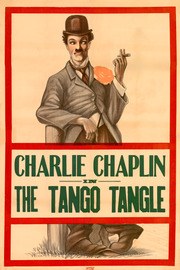
The Tango Tangle - Charlie Chaplin (Movie Poster)
Silent Movie Cinema
- Dance:
- Tango
- Source:
- Internet Archive
- Rights:
- Rights vary by item — check the source record before reusing this image. Source record ↗
- Recorded as:
- Check
This poster witnesses the moment when the tango entered Anglo-American consciousness not as a serious dance but as a subject of curiosity and comedy—a barometer of how mainstream audiences experienced the arrival of a foreign, sensual dance form. For historians of silent film, dance history, and popular culture, it documents the role cinema played in spreading knowledge of and attitudes toward non-Western dance in the early 20th century.
What you are looking at
A lithographed movie poster presents a man in early 20th-century dress against a warm cream background framed by a bold red border. He wears a brown bowler hat, collared shirt, and jacket in muted earth tones. His right arm extends outward in a gesture of invitation or appeal, palm open; his left arm hangs at his side. Below this portrait figure, a smaller scene shows a couple in an embrace or dance position, rendered in sepia tones and less detail. The composition is vertically oriented and symmetrical, with large sans-serif lettering in forest green announcing the title across the middle of the sheet. The lower scene is partially cropped by the frame, suggesting action in motion. The whole has the characteristic look of a silent-film promotional print: bold graphic design, clear hierarchies of image and text, economical use of color for mass production.
The dancing
The primary figure stands in a frontal, nearly static pose—feet grounded, weight evenly distributed—with the upper body slightly turned. The extended right arm, with palm facing outward at roughly waist height, suggests beckoning or demonstration rather than active dance movement. The gesture reads as theatrical or comedic rather than balletic. In the lower vignette, two figures appear to be in close contact, but the reduced scale and partial cropping make it impossible to discern clear details of hold, frame, or footwork. The contrast between the static portrait and the suggested movement below creates narrative tension typical of promotional design.
The dance depicted
The title and the lower scene both reference the tango, a dance that was a sensation in North American popular culture during the 1910s and 1920s. The tango had arrived from Argentina only a decade earlier and was regarded as daring, exotic, and slightly scandalous—a perfect subject for silent comedy. This image likely advertises a short film playing on those associations: the bowler-hatted figure's exaggerated gesture and bemused expression suggest comedy built around a character learning, attempting, or bungling the dance rather than performing it with skill. The lower vignette hints at the embrace and close contact central to tango technique, but the image makes no serious claim about authentic dance form; instead it trades in the tango's cultural cachet as a symbol of modernity and transgression.
How it was made
This is a color lithograph, a printing technique that allowed economical mass production of posters for theatrical distribution. Lithography's capacity for bold, flat areas of color and crisp text made it ideal for advertising. The limited palette—cream, earth browns, forest green, and red—is typical of cost-effective poster printing of the period. The technique allowed for both large-scale legibility from a distance and fine detail in the portrait, making it effective as a street advertisement and a collectible print. Such posters were produced in large runs and distributed to theaters, making them one of the primary ways audiences learned about new films.
About this work
This is a promotional lithograph for a silent film featuring Charlie Chaplin and a comedic take on the tango craze of the 1910s–1920s. The image captures a moment when the tango was entering Anglo-American popular culture as an exotic, modern, and slightly disreputable import; silent comedy frequently made light of the dance's foreignness and the social anxiety it provoked. The poster uses the tango's cultural charge—its association with passion, modernity, and transgression—as the hook for a comedy of manners. The image belongs in a gallery of dance in art not because it documents actual tango technique, but because it shows how dance functioned as a symbol of cultural conflict and fascination in early cinema, and how mass-market visual media packaged and domesticated the dance for popular consumption.
How to look at it
Notice the contrast between the static, frontal portrait of the bowler-hatted figure and the half-hidden, cramped dance scene below. The poster's design suggests that the comedy lies not in the tango itself but in the character's relationship to it—his bewilderment, his failure, or his social displacement. The exaggerated gesture of the raised arm is a visual pun: it promises ballroom sophistication but reads as buffoonery. The partial concealment of the lower scene is a clever marketing device: it promises revelation if you buy a ticket. The lithographic technique's bold simplification of form and color serves the poster's primary task: to arrest attention and communicate instantly from across a street.
The artist
The record attributes the work to "Silent Movie Cinema," which appears to be a collection category rather than an individual artist or studio name. The anonymous designer was likely a commercial lithographer working for a film distribution company or theater chain. Such poster design was collaborative, industrial work: scripts and visual concepts came from studios, but execution fell to in-house or freelance graphic artists whose names rarely survived. This anonymity is typical of the period and reflects the functional, disposable nature of promotional materials.
The period
The tango arrived in Europe from Argentina around 1912 and reached North America by 1913–1914. It provoked immediate moral panic: the dance's close embrace, hip motion, and association with Argentine working-class culture made it a lightning rod for anxieties about modernity, sexuality, and immigration. Clergy denounced it; social arbiters debated whether respectable people should dance it; dance halls advertised it as an attraction. Silent cinema, hungry for contemporary subjects, seized on the tango as both exotic spectacle and comedy. Chaplin's comic genius lay partly in his ability to take modish, anxiety-producing subjects and defuse them through physical comedy and pathos. A film about the tango in the late 1910s would have been timely and commercially promising—the dance was famous enough to draw audiences, controversial enough to seem daring, and absurd enough (to many viewers) to parody.
Where it lives
This poster is held in the Internet Archive digital collection, a large repository of texts, images, audio, and video. It was scanned and digitized as part of efforts to preserve ephemeral promotional materials from early cinema. Silent-film posters are now recognized as important documents of cinema history, design history, and popular culture, but they were originally treated as disposable advertising materials and discarded in large numbers.
Dance in this work
Questions about this work
Is this an actual dance scene or just a comedy about dancing?
The lower vignette hints at an actual tango embrace, but the poster is advertising a comedic film, not a dance performance. The comedy likely derives from the character's incompetence, social displacement, or the absurdity of a bowler-hatted figure attempting a transgressive Argentine tango. Silent films of this period often paired dance with comedy rather than showcasing dance technique.
Why was the tango considered so shocking?
The tango arrived from Argentina with associations to working-class culture, immigrant communities, and sexuality. Its close embrace, hip motion, and sensual music offended middle-class morality. For audiences in the 1910s–1920s, the tango symbolized modernity, danger, and cultural otherness—making it both titillating and comedic material for silent films.
What can we learn about early cinema from this poster?
This poster shows how silent cinema engaged with contemporary social anxieties and fads. It also reveals the economics of film advertising: bold graphics, instantly readable text, and topical subject matter designed to draw crowds. Posters like this were mass-produced and distributed widely, making them primary evidence for what audiences wanted to see and what studios thought would sell.
More Tango artwork
![[Les noces de trottoir, par les compagnies Tango Sumo et Vendaval. Chalon dans la rue. 2007 / photographies de Joël Verhoustraeten] by Verhoustraeten, Joël (1954-2019). Photographe](https://gallica.bnf.fr/iiif/ark:/12148/bc6p058zgkc/f1/full/800,/0/native.jpg)