49 works in this view — arrow keys or swipe to move between them.
Dance in Art
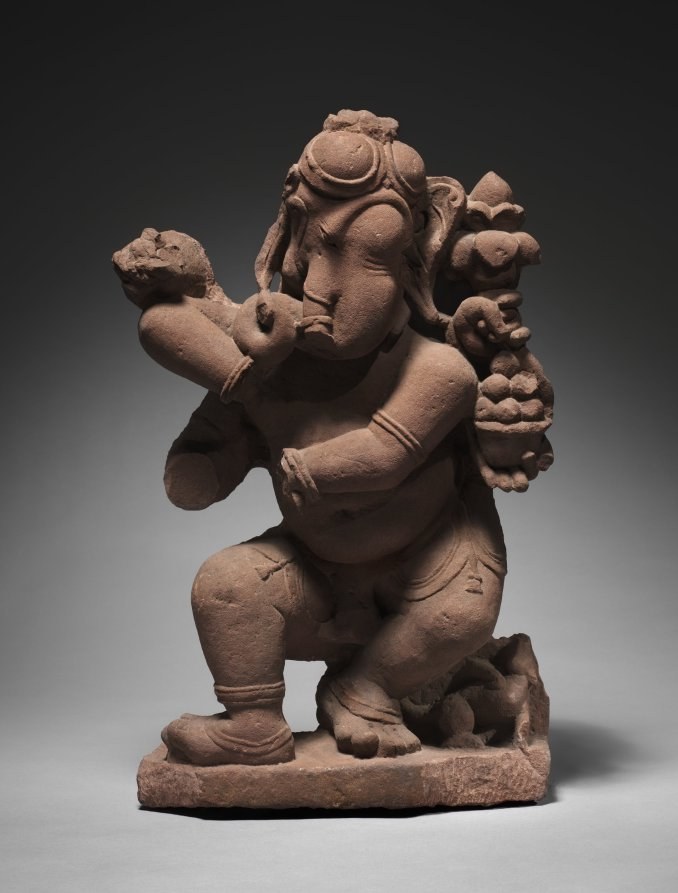
Dancing Ganesha
Unknown artist
- Source:
- Cleveland Museum of Art
- Rights:
- Public domain — free to use, share and adapt.
- Recorded as:
- CC0 (Public Domain)
This work documents the materiality and ritual function of sacred dance in Hindu practice—how deity and motion are inseparable in sculptural form. It shows that dance as a subject was significant enough in Indian temple culture to warrant skilled sculptural representation, and that the bodies of gods at play were considered worthy of permanent artistic record.
What you are looking at
A terracotta sculpture depicts Ganesha, the elephant-headed Hindu deity, in a dynamic dancing pose. The figure stands on a rectangular base with one leg bent in a lunge or stride position, suggesting forward movement or choreographed step. Ganesha's portly torso is bare and muscular, with a pronounced belly, and his four arms are raised and positioned at different heights in an exuberant gesture. The upper right pair of hands hold objects—likely ritual implements or attributes—while the lower hands extend outward. His large elephant head is crowned with an ornamental headdress or crown that sits above his rounded form. A small attendant figure, possibly a rodent (his vahana or vehicle), appears at the base beside the main deity's feet. The carving shows careful attention to anatomical detail and decorative elements, with the warm terracotta colour indicating either age or intentional surface treatment.
The dancing
The primary figure displays an asymmetrical stance with the weight shifted forward onto a bent leg, the opposite leg extended or planted behind, creating dynamic forward momentum. Both sets of arms are raised and extended away from the body in expansive, celebratory gestures rather than the formal holds of structured dance vocabularies. The bearing suggests exuberance and abandon—a deity in motion rather than formal posture. The sculpted musculature emphasises movement and energy; the figure is not static or merely posed but caught mid-action.
The dance depicted
This represents Ganesha Nritya (the dance of Ganesha), a sacred Hindu devotional form. Ganesha is traditionally worshipped as the remover of obstacles and the lord of beginnings, and his dance is not tied to a single codified technique but rather expresses divine joy and dynamic cosmic energy. The sculpture captures the playful, uninhibited quality associated with Ganesha's iconography—a deity whose dances appear in Hindu ritual, festival, and devotional contexts rather than in the classical codified systems like Bharatanatyam or Kathak (though those forms may reference him). The raised arms and forward stride suggest the celebratory, vigorous character of such performances.
How it was made
This is a carved stone or terracotta sculpture, worked in the round and likely created using subtractive carving techniques. The medium allowed the artist to create three-dimensional movement and weight shift visible from multiple angles, and to include fine detail in the headdress, facial features, and attributes. The durability of the material suggests this was a temple or shrine sculpture intended for long-term ritual or devotional use, not a temporary or portable object. The technique—direct carving without visible joins—indicates either a single artist's hand or a sculptural workshop tradition.
About this work
This terracotta sculpture of dancing Ganesha belongs to the Hindu sculptural tradition, likely created for a shrine or temple context where it would be viewed as both artwork and ritual object. The dancing pose is deliberate: Ganesha's dances appear across Hindu devotional and festival contexts, and this sculpture captures the dynamic, joyful energy of such sacred movement. The work demonstrates how dance in Hindu theology is not confined to classical codified forms but extends to the playful, cosmic expression of divine energy. For a gallery of dance in art, this object demonstrates the long tradition of sculpting dancers in sacred rather than secular contexts, and the centrality of movement to devotional Hindu practice.
How to look at it
Observe the asymmetrical weight distribution and the forward-bending of the supporting leg, which conveys the sense of a step in progress rather than a static pose. Notice how all four arms are raised and spread, creating a sense of expansive joy and energy radiating outward. The artist has chosen to depict not a moment of formal, composed dance but rather one of exuberant, uncontained movement—a deity in a state of celebration. The headdress and the small attendant figure anchor this as a sacred rather than secular subject.
The period
Hindu temple sculpture spans more than two millennia, and representations of dancing deities are a continuous feature of that tradition. Ganesha's worship became increasingly prominent and popular across regional Hindu practice, and his depictions in sculpture proliferated accordingly. The iconography of dancing gods—capturing divine motion in stone—reflects the philosophical importance of lila (divine play) in Hindu theology and the understanding that divine energy manifests as dynamic, joyful motion. Without a secure date, this work sits somewhere within that long tradition of devotional sculptural practice.
Where it lives
The work is held in the Cleveland Museum of Art's collection and is identified as part of their dance-related art holdings. No sculptor, date, or materials are recorded in the available catalogue information.
Dance in this work
Questions about this work
What is Ganesha dancing?
Ganesha's dances are not tied to a single codified technique or narrative, but rather express divine joy, cosmic energy, and the removal of obstacles. His dances appear in Hindu temples, festivals, and devotional rituals across many regions and centuries. Rather than telling a specific story, Ganesha's dance embodies the concept of lila—divine play—a central idea in Hindu theology.
How old is this sculpture?
The catalogue record does not provide a date. Based on style alone, it could originate anywhere from the medieval period to the modern era, as Ganesha worship and sculptural depiction have been continuous across Hindu practice for centuries. Further technical analysis or iconographic study would be needed to narrow the date.
Is this a functional object or art?
This sculpture was likely both. Temple and shrine sculptures in the Hindu tradition function simultaneously as devotional objects used in ritual and as artworks made for aesthetic and spiritual contemplation. The skill of the carving and the permanence of the material suggest it was intended for long-term placement in a sacred space.
More dance artwork