26 works in this view — arrow keys or swipe to move between them.
Dance in Art
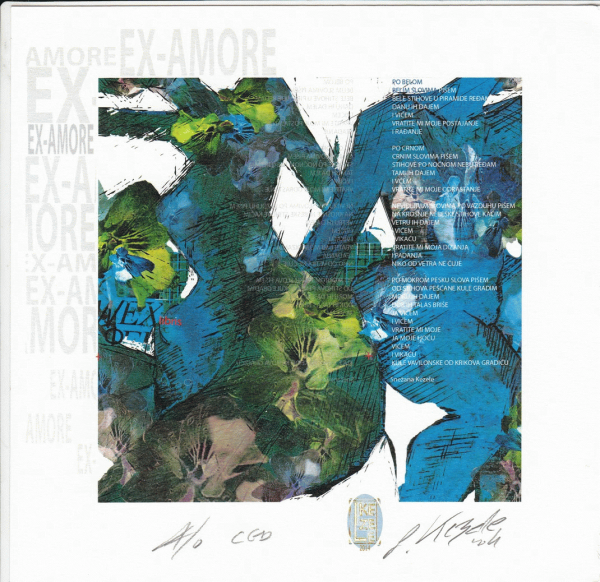
Spring waltz Екслибрис
Unknown artist
- Dance:
- Waltz
- Rights:
- Not recorded. Do not assume this image is free to reuse — check the source record.
This work documents the waltz's cultural status in the 20th century: no longer transgressive, but canonical and literary. The ex libris format reveals how dance was understood as part of an educated, cultivated life—something preserved in books and art objects rather than merely performed. For dance historians, it offers evidence of how the waltz was aestheticized and integrated into modernist visual practice.
What you are looking at
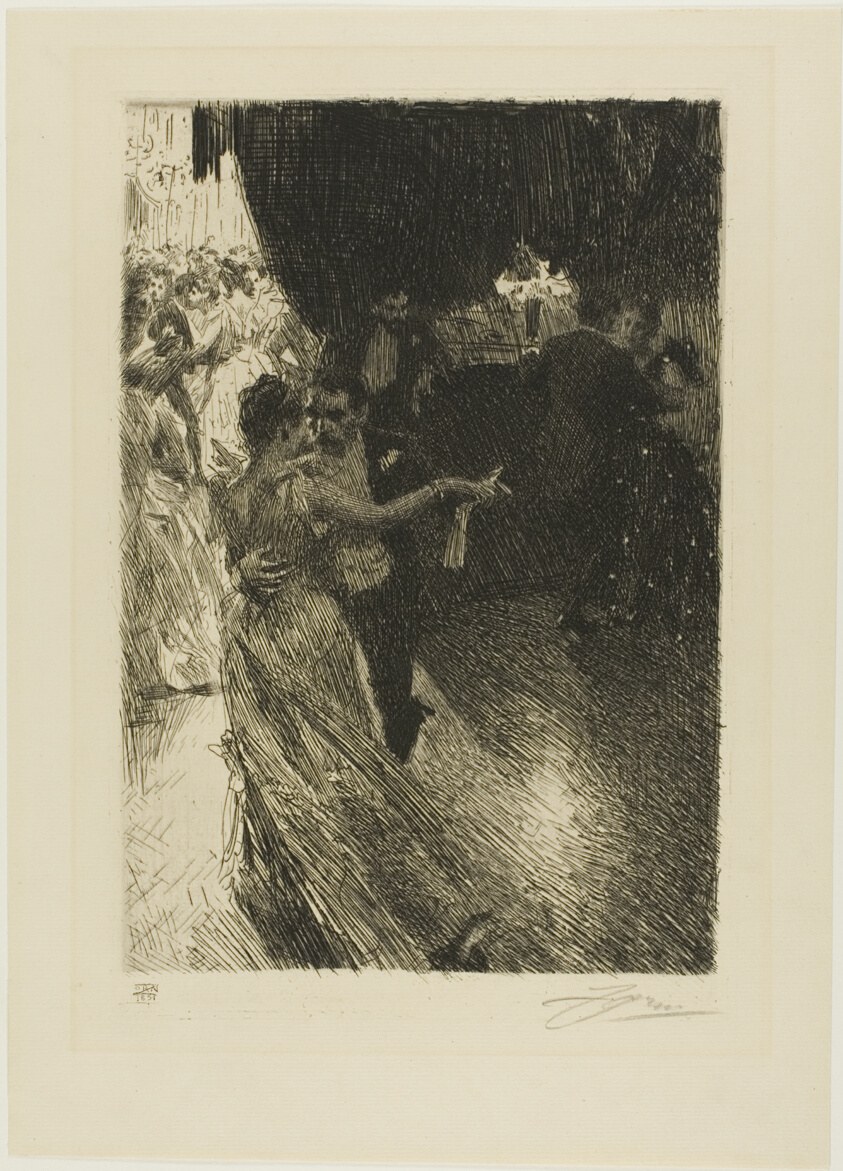
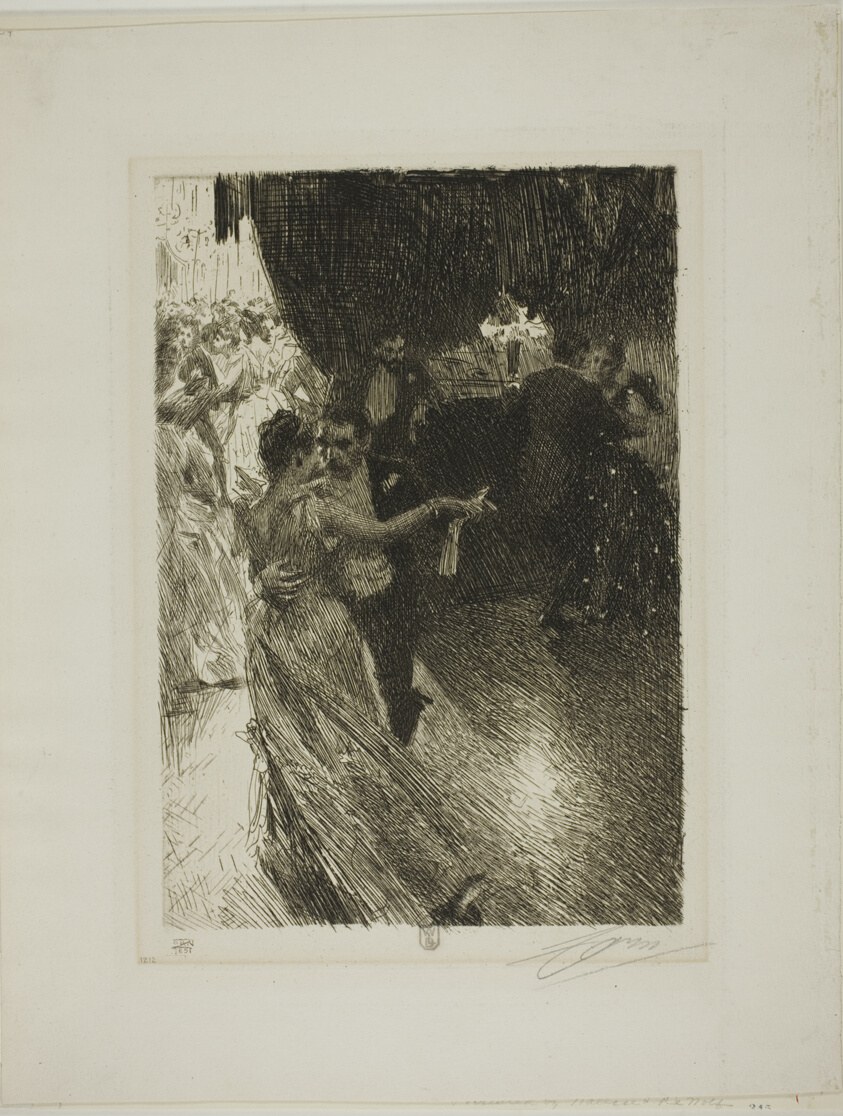
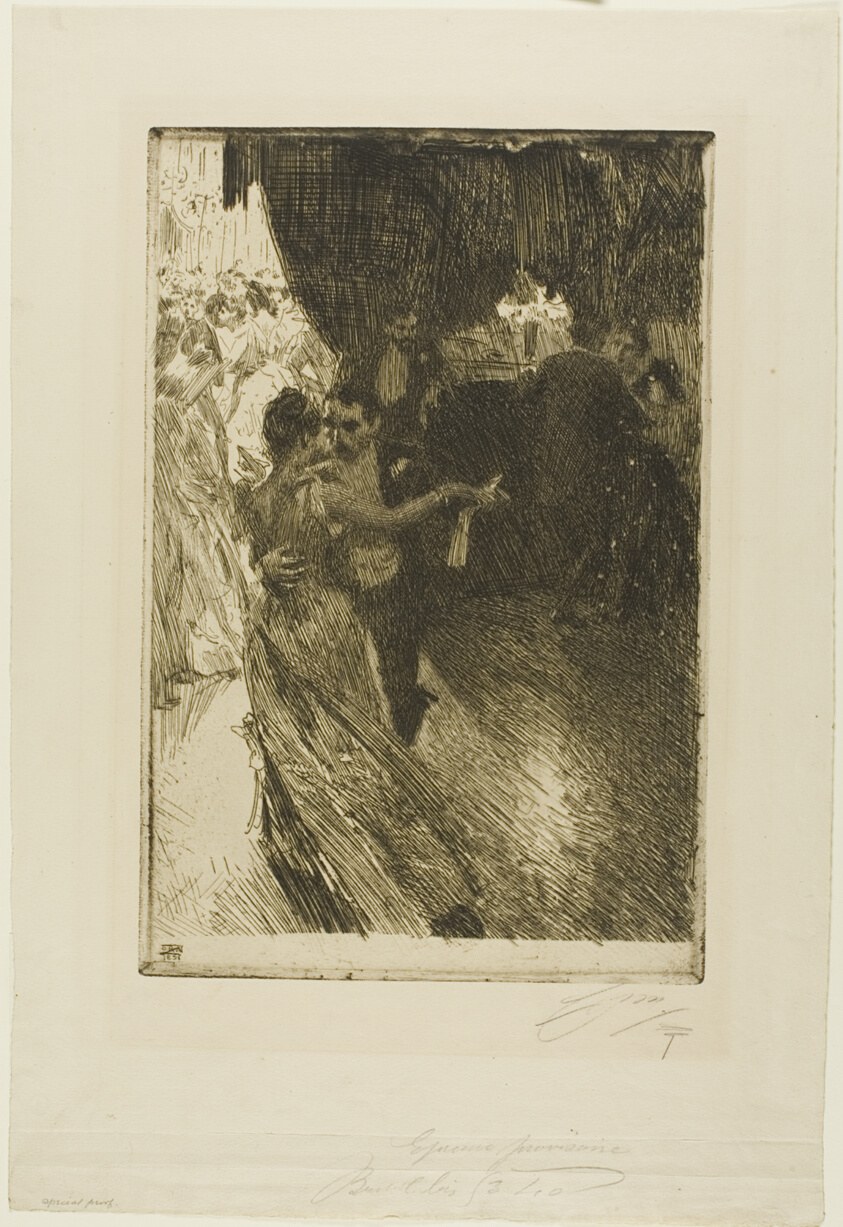
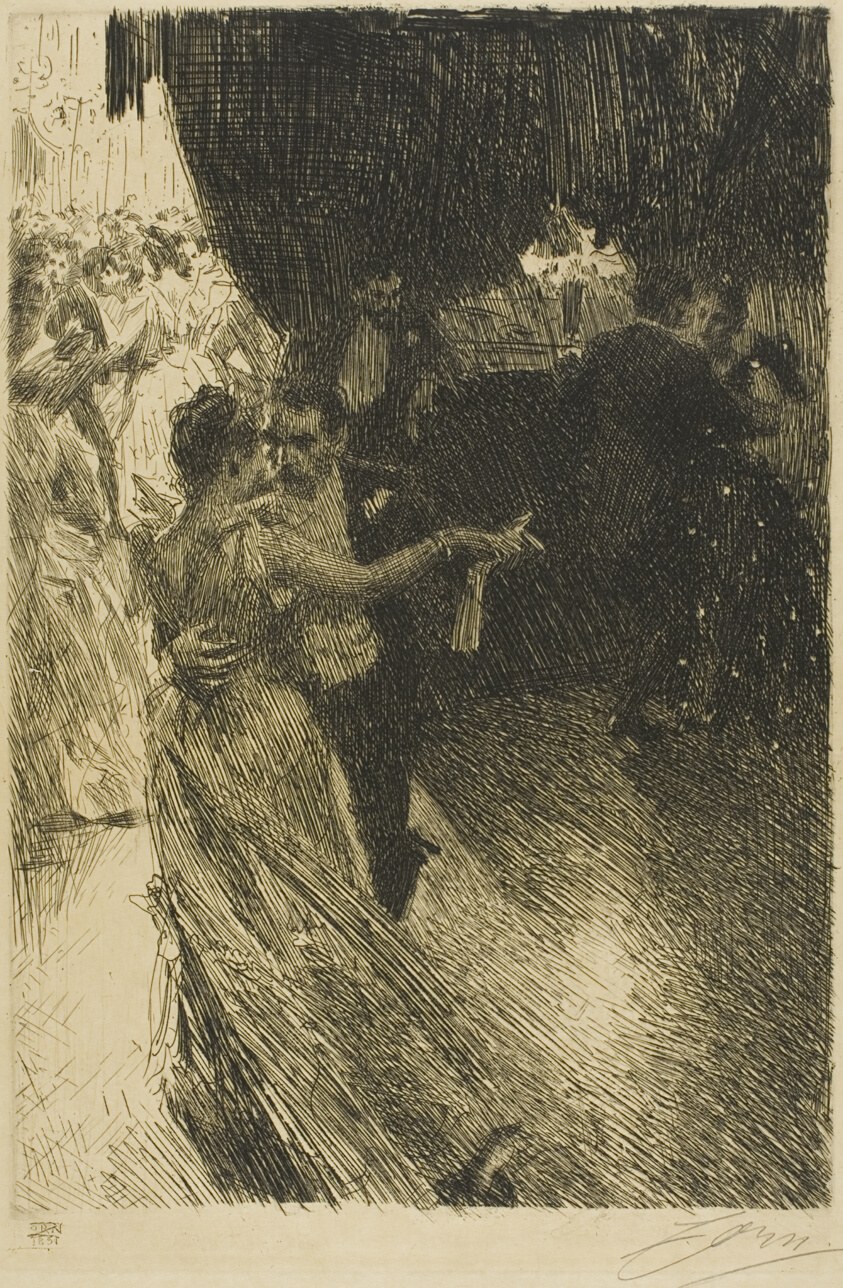
This is an ex libris (bookplate)—a small printed mark intended for pasting into the front cover of a book—depicting two figures in a waltz. The composition uses a double-exposure or layered technique: silhouettes of dancing couples are overlaid with landscape imagery (forest, water, sky in deep greens and blues) and dense text that fills much of the negative space. The two dancers dominate the center, their bodies intertwined in the characteristic closed embrace of the waltz. The male figure supports the female figure, who leans into the turn. The work is signed and numbered at the bottom ("#/8 CDD" and a further signature), indicating it is a limited edition print. The entire image has a romantic, literary quality enhanced by the integration of text and natural imagery, suggesting both the escapism of dance and the role of books in preserving such moments.
The dancing
Two figures are shown in a closed ballroom hold—the male dancer's right arm supporting the female dancer's left shoulder blade, their bodies parallel and close. The female dancer's right arm rests on the male dancer's left arm, and their joined hands are raised to frame height. Both figures lean forward slightly into the line of dance, their torsos creating the characteristic curved frame of the waltz. The posture and embrace are textbook ballroom technique, with the dancers' weight forward and their bodies unified in the rotation.
The dance depicted
This is a waltz, one of the foundational ballroom dances of European social culture. The closed frame, the partnered hold, and the forward-flowing posture are unambiguous markers of the waltz in its formal ballroom version. The artist has chosen to freeze the dancers mid-rotation, capturing the moment when the couple is most unified. The ex libris format suggests this work was created for a reader or collector of dance literature or romantic poetry—the waltz being historically associated with both courtship and literary Romanticism.
How it was made
This is a limited-edition print (the numbering suggests an edition of 8 or fewer), most likely a relief print, etching, or lithograph given the layering of text, figure, and landscape imagery. The technique allows for precise registration of the dancing figures against a richly textured background of nature and typography. The small scale is typical of the ex libris tradition, which served as both functional bookmarks and collectible artworks. The integration of dense text within the composition suggests influence from early 20th-century modernist design practices, where typography and imagery were treated as equal visual elements.
About this work
This ex libris presents a waltz as a subject worthy of preservation and personal ownership—a bookplate to mark a volume as belonging to someone who valued both dance and the printed word. The waltz, by the time this work was made, was no longer the shocking novelty it had been in the early 19th century, but rather an established feature of European social life and a subject of romantic idealization in literature and art. The integration of the dancing couple with landscape and text suggests a synthesis of movement, nature, and culture that was central to Romantic aesthetics. As a limited-edition object, this work occupies a space between fine art print and functional book art, elevating the waltz from ballroom practice to collectible subject matter.
How to look at it
Notice how the artist has frozen the couple at the moment of maximum rotation and engagement, when their bodies are most unified and the illusion of effortless gliding is strongest. The layering of text and landscape over and around the dancers suggests that the waltz is inseparable from the literary and natural worlds—it is not merely a physical fact but a cultural and romantic idea. The viewer should attend to the relationship between the precision of the dancing hold and the soft, atmospheric treatment of the background, which creates a tension between technical form and romantic reverie.
The artist
The artist is not identified in the record. The signature and numbering suggest a deliberate, limited production, but without additional research the maker cannot be placed.
The period
The waltz emerged in Austria and Germany in the late 18th century and became the dominant social dance of the 19th-century European ballroom. By the 20th century it had achieved canonical status and was frequently depicted in fine art, literature, and popular culture. The romanticization of the waltz—its association with whirling, intoxication, and courtship—persisted even as the dance itself became less dominant in living practice. The ex libris tradition flourished in the late 19th and early 20th centuries, particularly in Central Europe, as a space for experimental typography and design.
Where it lives
The work is held in Europeana, the European digital library, and is catalogued as an artwork of unknown era and unknown artist. The ex libris format indicates it was created as a personal or commissioned bookplate, likely for a Central European collector or reader of the late 19th or early 20th century.
Dance in this work
Questions about this work
What is an ex libris?
An ex libris (Latin for 'from the books of') is a small printed or engraved mark designed to be pasted inside the front cover of a book to indicate ownership. From the 15th century onward, ex libris became collectible artworks in their own right, often depicting the owner's interests, coat of arms, or personal symbols. They reached peak artistic development in the late 19th and early 20th centuries.
Why would a waltz be chosen as the subject of a bookplate?
The waltz, by the time this work was made, was strongly associated with Romanticism, courtship, and refined European culture. Choosing it as a personal bookplate symbol suggested that the owner valued both dance and literature as expressions of romantic and cultural ideals. The waltz had also become a subject of nostalgic literary interest, making it an appropriate emblem for a cultured reader.
How do you dance the waltz?
The waltz is a partner dance in closed frame, performed to music in 3/4 time. The basic movement is a box step—forward, side, together; back, side, together—repeated in a rotating pattern that moves the couple around the floor. The frame remains closed and stable throughout, distinguishing the waltz from many other ballroom dances. The characteristic rise and fall of the waltz comes from straightening and bending the knees in rhythm with the music.
More Waltz artwork