49 works in this view — arrow keys or swipe to move between them.
Dance in Art
Ancient dancing
Unknown artist
- Medium:
- Source:
- New York Public Library
- Rights:
- Public domain — free to use, share and adapt.
- Recorded as:
- public_domain
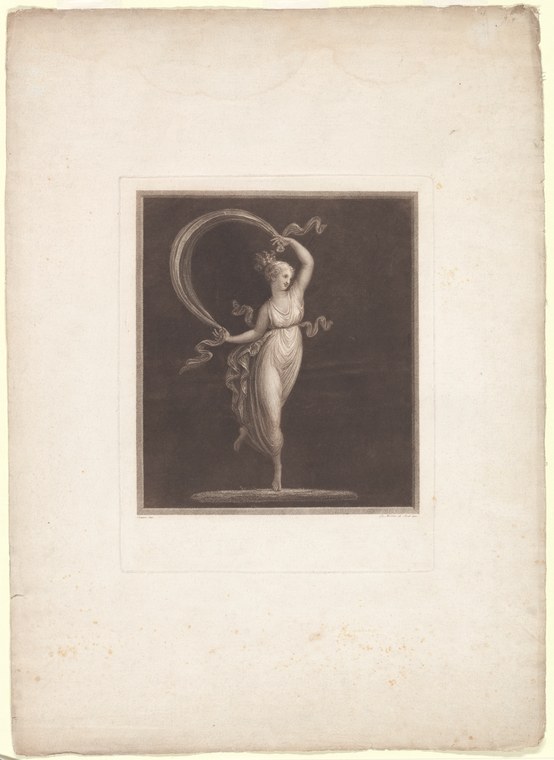
This image is a primary document of how nineteenth-century audiences understood and consumed dance. It shows the profound influence of classical aesthetics on Romantic theater and offers evidence of the visual conventions used to market and memorialize dancers and roles. For historians of theatrical imagery and costume, it demonstrates the persistent power of the "classical" as a shorthand for beauty, otherworldliness, and art itself.
What you are looking at
A solitary female figure stands in a contrapposto pose against a dark background, her body weight shifted onto one leg in a classical stance. She wears a flowing, high-waisted white or pale garment that drapes loosely from the shoulders—a Greco-Roman style chiton or similar classical dress. Her left arm is raised gracefully above her head, the hand curved as though holding or reaching toward an invisible object; her right arm extends outward and downward. Her dark hair is arranged in an classical updo. Around her torso and limbs swirl undulating ribbons or drapery elements that suggest motion and airiness. The figure appears to stand on a small stage or platform, and the overall composition resembles a classical sculpture or relief brought to life. The print technique creates a soft chiaroscuro effect, with the pale figure emerging from shadow.
The dancing
A single dancer is posed in profound classical balance: her weight settles on the right leg while the left appears weightless, extended or relaxed. Both arms are aloft in an open, generous frame—the left arm curves overhead in an arabesque-like line, the right extends horizontally or slightly downward. The torso is upright and elongated, the neck extended. The flowing drapery and ribbon elements move around her as though caught in motion, suggesting a deliberate, sustained pose rather than a fleeting moment of action.
The dance depicted
This appears to be a Romantic-era allegorical or mythological figure rather than a depiction of a specific historical dance style. The classical costume, the contrapposto stance, the ethereal draping, and the solitary, idealized pose suggest the influence of theatrical ballet aesthetics, particularly the Romantic ballet of the early–to mid-nineteenth century, when dancers were frequently depicted as classical muses, nymphs, or sylphs. The title "Ancient dancing" indicates the artist intended a reference to Greco-Roman movement, but the actual staging and technique shown here reflect nineteenth-century theatrical conventions and the period's romantic idealization of antiquity rather than any documented ancient practice.
How it was made
This is a print—most likely an engraving or stipple engraving, based on the soft tonal gradations and the method of creating shadow through fine dots or lines rather than bold strokes. The technique allows for delicate modeling of the figure and drapery and would have made this work reproducible and relatively affordable for circulation among educated audiences. The dark background and the careful tonal work suggest a late eighteenth- or early nineteenth-century production, when such refined figurative prints were popular as both artwork and documented record of theatrical performance.
About this work
This print presents an idealized classical female dancer frozen in a moment of poised, weightless grace. The work conflates Greco-Roman antiquity with Romantic-era theatrical aesthetics, showing how nineteenth-century artists and audiences imagined ancient movement through the lens of their own theatrical conventions. The solitary figure, the classical drapery, and the ethereal pose are hallmarks of Romantic ballet imagery, in which the dancer becomes a timeless muse rather than a human performer. The work belongs in a gallery of dance imagery not because it documents any actual ancient or contemporary dance practice, but because it reveals how a specific era imagined, romanticized, and staged the body in motion—and because it likely circulated among theater-goers as a record of or advertisement for a performer or production.
How to look at it
Attend to the sustained, weightless quality of the pose: this is not a fleeting action but a held moment of perfect classical repose. Notice how the drapery and ribbons, though rendered in static print, seem to move around the figure—this is the artist's way of suggesting motion and vitality without showing violent action. The open arms and elongated neck are deliberate choices that convey grace and nobility. The solitary figure against darkness emphasizes her isolation and idealization, separating her from any actual theatrical context or social setting.
The period
In the late eighteenth and early nineteenth centuries, classical imagery dominated European visual culture and was particularly pervasive in theatrical and dance representation. The Romantic ballet movement (roughly 1830s–1870s) made extensive use of classical costume, mythology, and the aesthetic of weightless, ethereal motion. Dancers were frequently depicted as sylphs, nymphs, or classical allegorical figures, both in performance and in prints and paintings meant to commemorate them. The refinement of reproductive printing techniques, especially stipple and refined engraving, made such images widely available and helped establish visual conventions for how the dancing body was to be understood and valued.
Where it lives
The work is held in the New York Public Library collection. No artist, date, or title beyond "Ancient dancing" is recorded in the catalogue.
Dance in this work
Questions about this work
Is this a real ancient dance?
No. The title and costume suggest ancient Greco-Roman movement, but the actual pose and aesthetic are rooted in nineteenth-century Romantic ballet. The artist has imagined antiquity through the visual language of their own time.
What is the white draped element?
It is a classical-style garment—a chiton or similar Greco-Roman dress, rendered in pale fabric with loose, flowing folds. The undulating ribbons or drapery elements around the figure are meant to suggest motion and airiness, creating a sense of the body moving through space even though the pose is static.
Who would have owned or seen this print?
Theatrical prints of this type were collected by the educated middle and upper classes, theater-goers, and patrons of the arts. They circulated as affordable reproductions, often commemorating famous dancers or roles, and served both as souvenirs and as visual records of theatrical performance.
More dance artwork