
Performer · Choreographer · Stage Icon
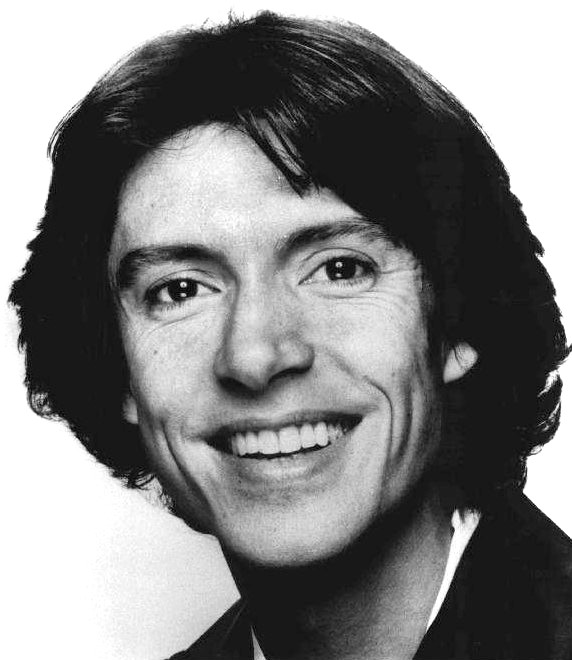
Tommy Tune
Broadway's Tallest Star
Why They Matter
He won nine Tony Awards across performing and directing categories, demonstrating that a single artist could master every aspect of musical theater.
Known For
Styles Tommy Tune shaped
Each one links to the style’s own page — its origins, music, tempo and video.
Watch
My One and Only | 1983 Tony Awards Opening
Tony Awards
Shows Tune and Twiggy leading Kicking the Clouds Away in the production for which Tune won acting and choreography Tonys.
Tommy Tune 2015 Lifetime Achievement acceptance speech
Tony Awards
Primary audiovisual evidence of the 2015 Special Tony and Tune’s own public remarks.
Performance (Working in the Theatre #167)
American Theatre Wing
Places Tune within a professional conversation about stage performance and working method.
Tommy Tune, 10-Time-Tony-Winner
Theater Talk Archive
Long-form contextual source on Tune’s performance, direction, and choreography career.
Biography
Thomas James Tune, born February 28, 1939, in Wichita Falls, Texas, is a performer, actor, singer, choreographer, director, and producer who became one of Broadway's most decorated artists. After earning a Bachelor of Fine Arts in drama from the University of Texas at Austin in 1962 and taking graduate courses in directing at the University of Houston, Tune moved to New York and made his Broadway debut in *Baker Street* in 1965. He followed with ensemble roles in *A Joyful Noise* (1966) and *How Now, Dow Jones* (1967), while also establishing himself in film—playing Ambrose Kemper in Gene Kelly's *Hello, Dolly!* and appearing opposite Twiggy in Ken Russell's *The Boy Friend*—but Broadway remained the center of his creative evolution.
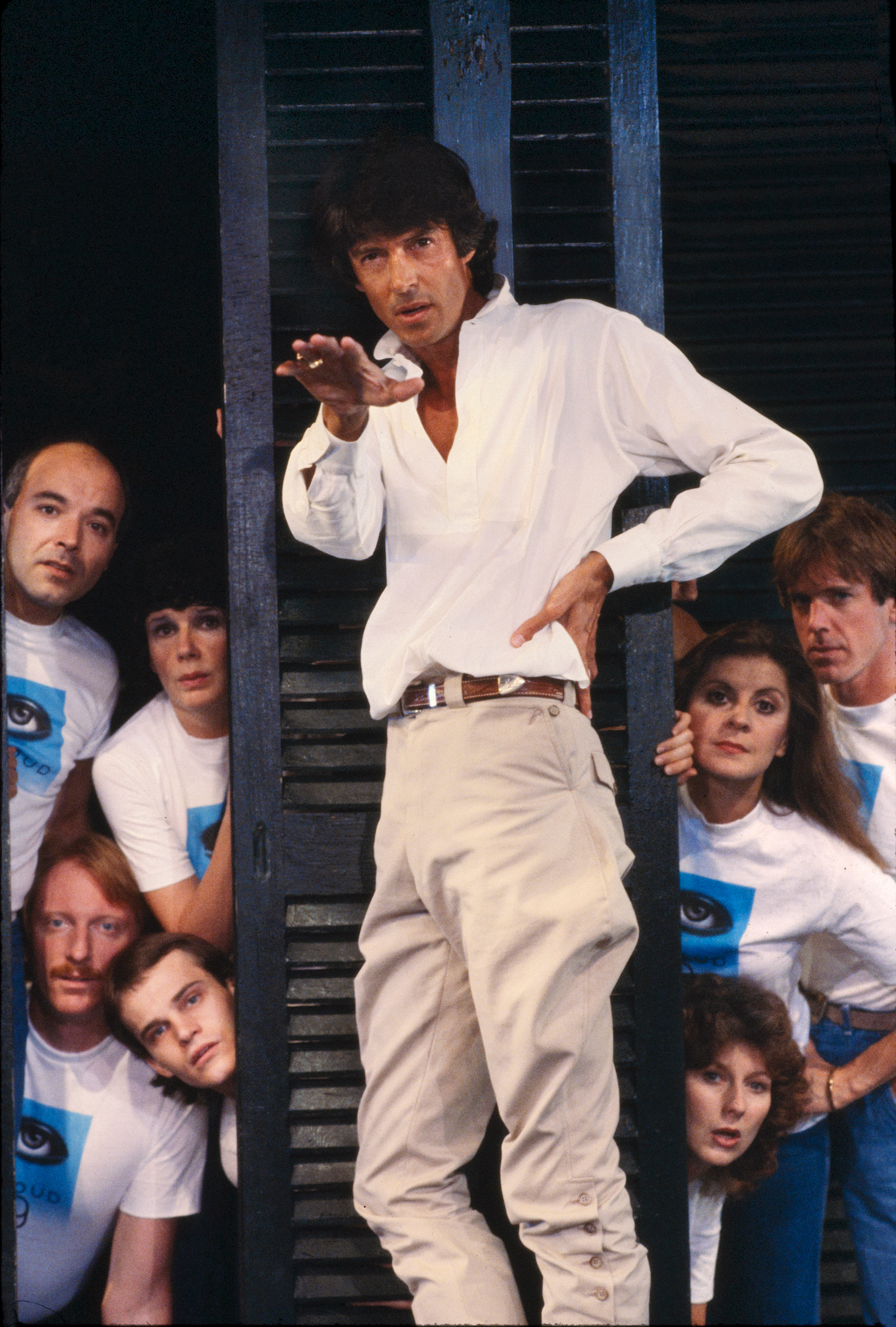
Tune won his first Tony Award in 1974 for Best Featured Actor in a Musical for *Seesaw*, a role that showcased his gift for conversational stage presence paired with exact rhythmic clarity. Through the late 1970s, he transitioned toward direction and choreography, directing Caryl Churchill's *Cloud 9* Off-Broadway and receiving nominations for both direction and choreography for *The Best Little Whorehouse in Texas*. The 1980s established the full reach of his achievement. He won the Tony for choreography for *A Day in Hollywood/A Night in the Ukraine* in 1980 and for direction of *Nine*—with music and lyrics by Maury Yeston and book by Arthur Kopit—in 1982, a production that won Best Musical. In 1983, *My One and Only*, reuniting him with Twiggy and pairing him with tap master Charles "Honi" Coles, brought him Tonys for both leading actor and choreography; Coles's partnership enriched the production's entire movement world.
Tune's synthesis of direction and choreography reached its peak in the late 1980s and early 1990s. He won both the directing and choreography Tonys for *Grand Hotel* in 1990, then repeated that pair for *The Will Rogers Follies* in 1991—a distinction that made him the only person to win those same two categories in consecutive years. In these works, stage traffic, entrances, exits, transitions, and danced sequences operated as an integrated kinetic system. His approach to staging favored expressive circulation: in *Grand Hotel*, the revolving world of the hotel emerged through movement patterns; in *The Will Rogers Follies*, revue display and biographical storytelling shared the same presentational frame.
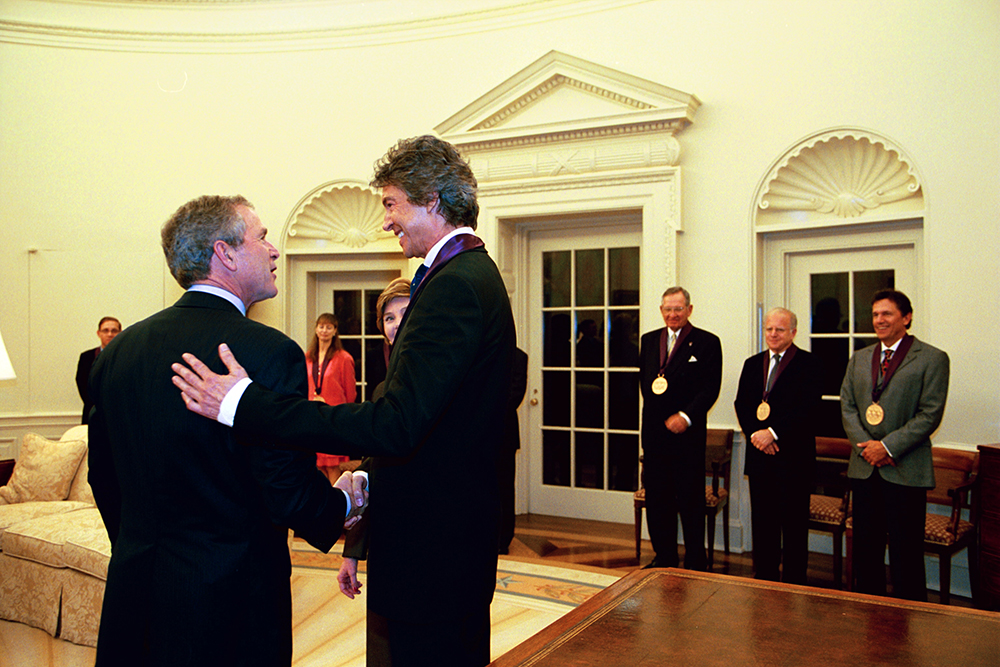
Tune continued to perform in concert and revue formats, often with the Manhattan Rhythm Kings. In 1997, he released the vocal album *Slow Dancin'* on RCA Victor, with Wally Harper as pianist, arranger, and conductor and Peter Matz as orchestrator. He received the National Medal of Arts in 2003 and, in 2015, the Tony Awards' Special Tony for Lifetime Achievement, bringing his total to ten awards when the lifetime honor is included alongside his nine competitive wins across four categories: featured actor, leading actor, direction, and choreography. In 2025, the University of Houston announced the Tommy Tune Collection, a gift comprising more than 50,000 items including scripts, choreography notes, photographs, correspondence, costumes, and production materials—a resource that documents not just what audiences saw, but how a Broadway staging system was developed across decades of collaborative work.
Career Highlights
Made his Broadway debut as a performer in Baker Street. University of Houston Libraries University of Houston Libraries
Appeared as Ambrose Kemper in the film adaptation of Hello, Dolly!; treat this as screen performance, not a Broadway credit. Playbill credits Playbill credits
Appeared opposite Twiggy in Ken Russell’s film The Boy Friend. National Endowment for the Arts National Endowment for the Arts
Won the Tony Award for Best Featured Actor in a Musical for Seesaw. Tony Awards Tony Awards
Won the Tony Award for Best Choreography for A Day in Hollywood/A Night in the Ukraine. Tony Awards Tony Awards
Won the Tony Award for Best Direction of a Musical for Nine. Tony Awards Tony Awards
Won Tonys for leading actor and choreography for My One and Only. Tony Awards Tony Awards
Won Tonys for direction and choreography for Grand Hotel. University of Houston finding aid University of Houston finding aid
Repeated the direction-and-choreography double for The Will Rogers Follies. Playbill production record Playbill production record
Released the RCA Victor vocal album Slow Dancin’ and published the memoir Footnotes. Playbill Masterworks Broadway Playbill
Received the National Medal of Arts and was photographed receiving congratulations from President George W. Bush on November 12. National Endowment for the Arts Wikimedia Commons file page National Endowment for the Arts
Received the Special Tony Award for Lifetime Achievement in the Theatre. Tony Awards Tony Awards
Gallery
Legacy & Impact
Tommy Tune matters because he made the Broadway song-and-dance performer inseparable from the modern director-choreographer. His performing career preserves a line of American tap entertainment grounded in clarity, charm, partner awareness, and rhythmic ease; his staging career shows how dance and movement can organize an entire musical's visual and narrative flow. His competitive wins across four Tony categories—featured actor, leading actor, direction, and choreography—remain rare. His collaborations with artists including Twiggy, Charles "Honi" Coles, Maury Yeston, Arthur Kopit, Peter Stone, Cy Coleman, Betty Comden, and Adolph Green, along with designers and ensembles, embody theatre as collaborative practice. The University of Houston archive promises to make that collaborative process increasingly researchable for future scholars.


Explore More Legends
Discover the dancers, teachers, choreographers, and cultural icons who shaped how the world moves.
Keep the thread going
Dance history, technique, and the occasional rabbit hole — in your inbox. Thoughtful, infrequent, unsubscribe anytime.
Free. No spam. One click to leave.