Contemporary Broadway
Also known as: Modern Broadway Dance, Contemporary Musical Theatre Dance, Broadway Contemporary
History & Cultural Context
Contemporary Broadway is the working idiom from the 1990s onward, defined less by a step list than by two habits: the choreographer is often also the director, and the movement palette is drawn from whatever world the show occupies. Susan Stroman won Tony Awards for Crazy for You (1992), Show Boat (1994), Contact (2000), which she developed as a three-part dance play, and The Producers (2001), where she became the first woman to win choreography and direction on the same night. Andy Blankenbuehler won for In the Heights (2008), Hamilton (2016) and Bandstand (2017), folding hip-hop, salsa and Broadway attack into movement the Drama Desk called indispensable to the storytelling. Justin Peck, New York City Ballet's resident choreographer since 2014, brought concert-ballet phrasing to Carousel (2018), Illinoise (2024) and Buena Vista Social Club (2025), winning each time. Christopher Wheeldon won for An American in Paris (2015) and MJ (2022), and Sonya Tayeh for Moulin Rouge! The Musical (2020). Camille A. Brown, whose credits include Once on This Island, Choir Boy, for colored girls, Hell's Kitchen and Gypsy, became the first Black woman to direct and choreograph a Broadway production in six decades.
Cultural Significance
The idiom reflects a broader opening of Broadway's hiring and sourcing. Hip-hop and Latin social forms entered the mainstream book musical through In the Heights and Hamilton, and choreographer-directors from concert ballet and street dance now share the same credit line.
Characteristic Movement & Technique
Floorwork and off-balance weight shifts from contemporary technique, isolations, grooves and gestural text from hip-hop, classical line and traveling phrases from ballet, plus recurring gesture motifs assigned to individual characters and tracked across an entire show.
Partnering Dynamics
Contact-improvisation influenced weight sharing, counterbalance and ensemble catches replace the formal ballroom hold. Partnering is frequently non-gendered and distributed across the ensemble rather than reserved for the leads.
Competitive Context
No competition circuit, but the style dominates commercial dance conventions and reality-television choreography, and Tony Awards for Best Choreography have gone to this idiom almost without interruption since 2008.
Regional Variations
Broadway and the West End develop the work, and licensed productions in Australia, Japan, Germany, South Korea and elsewhere reproduce it, sometimes adapting local social-dance references while keeping the original staging.
Common Misconceptions
It is not simply hip-hop on a Broadway stage. Choreographers such as Blankenbuehler and Peck build character-specific gesture systems that recur across a whole score, which is a dramaturgical structure rather than a style import.
Peak Popularity
Signature Figures
- Susan Stroman
- Andy Blankenbuehler
- Justin Peck
- Christopher Wheeldon
- Sonya Tayeh
- Camille A. Brown
- Sergio Trujillo
- Casey Nicholaw
- Kathleen Marshall
- Jerry Mitchell
Dance Lineage
Contemporary Broadway Music & Tempo
Drawn from 41 Contemporary Broadway tracks in the LODance music library.
Example tracks at practice tempo
- Night Vision — Lindsey Stirling123 BPM
- Shadows — Lindsey Stirling126 BPM
- Ice Storm — Lindsey Stirling150 BPM
- Artemis — Lindsey Stirling96 BPM
- Underground — Lindsey Stirling117 BPM
- The Arena — Lindsey Stirling87 BPM
Legends of Contemporary Broadway
Dancers, choreographers and teachers whose work shaped this style.
Contemporary Broadway on screen
Films and television where Contemporary Broadway appears, with the sequences worth watching for.
 Feel the Beat (2020)7 sequences indexedBroadway audition opening · chor. Mia MichaelsFinal team performance · chor. Mia MichaelsWisconsin state Teacher Feature recovery · chor. Mia Michaels
 West Side Story (2021)5 sequences indexedPrologue · chor. Justin PeckJet Song · 00:14:41 · chor. Justin PeckDance at the Gym — Blues and Promenade · 00:33:29 · chor. Justin PeckHamilton (2020)4 sequences indexedThe Schuyler Sisters · chor. Andy BlankenbuehlerSatisfied · chor. Andy BlankenbuehlerYorktown (The World Turned Upside Down) · chor. Andy Blankenbuehler
 Billy Elliot (2000)2 sequences indexedTown Called Malice street dance · 01:01:19 · chor. Peter Darling; Lynne Page (associate)A Town Called Malice street dance · chor. Peter Darling
 La La Land (2016)2 sequences indexedAnother Day of Sun · 00:01:13 · chor. Mandy MooreSomeone in the Crowd · 00:10:41 · chor. Mandy Moore
Poster artwork from TMDB.
 This site uses TMDB and the TMDB APIs but is not endorsed, certified, or otherwise approved by TMDB.
Contemporary Broadway in performance
One staged work in the Limelight catalogue contains Contemporary Broadway.
- Hamilton2015Musical theatre · Andy Blankenbuehler · defining style
Whole production, all staged numbers, built around the turntable staging — Choreography conceived around two rotating concentric turntables running through the whole show, described as 'dynamic and fluid' and 'indispensable to the musical's storytelling'; t…
Every claim above is quoted from a cited source and names where in the work the style appears. Claims we could not place or could not quote are held back from this list and shown on the work’s own page instead. Browse the full performance catalogue →
What to Wear
Attire guidance for Contemporary Broadway and other Musical Theatre Dance dances. Each card below is sized to the moment — class, practice, social, or competition — because the wardrobe shifts as the stakes do.
Reading the cards
In Class
Fitted enough that the teacher can see your line, because this style is judged on shape and storytelling from the neck down: leggings or jazz pants, a fitted top or leotard, hair pinned off the face so it doesn't break the focus of a head snap. Jazz shoes cover most classes; bring character shoes when the class works in heels, and expect Fosse-derived material to ask for turned-in, isolated positions your shoes must let you pivot in. Add knee pads or thicker leggings for classes with floorwork or knee slides.
Social Dancing
There is no social floor for musical theatre — the public-facing equivalent is the audition room, and it has its own conventions. Wear something solid-coloured and form-fitting that shows your body clearly and hints at the show you're auditioning for without being a costume; carry both jazz shoes and character shoes in your bag and change to whatever the choreographer calls. Keep jewellery minimal, avoid logos, and never wear brand-new shoes to an audition.
Competition
Musical Theatre is a scored category on the studio competition circuits (as opposed to a separate governing body), judged on character and storytelling as much as technique, so costume is expected to read the number from the back row. Whatever the design, it has to survive the choreography: straps secured, nothing that can slip during lifts or floorwork, and shoes broken in and taped well before the event. In professional work the costume is assigned by the production and your job is to arrive with your own well-fitted shoes and dance belt.
Shoes
Leather character shoes with a secure strap and a leather or suede sole. Around 2–2.5" is the workhorse height for anything with turns and leaps; 3" only when the number is mostly walking and kick lines, since a higher heel puts you in relevé before you start and raises the odds of rolling an ankle. Soft soles let you point the foot and land jumps; hard soles give support under a heavy costume. Jazz shoes cover most class work, with tap and ballet shoes as the show demands — Capezio, Só Dança and Bloch at the affordable end, LaDuca and Miller & Ben as the Broadway premium tier.
In Practice
Rehearsal wear is fitted so the choreographer can see shape and alignment: leggings or jazz pants, a fitted top, hair fully secured. Rehearse in the shoe you will perform in, from as early as possible — heel height changes your balance point, and tech week is the wrong time to discover it. Period shows call for a rehearsal skirt in roughly the weight of the costume, and anything with floorwork or knee slides calls for pads under the leggings.
Common Pitfalls
- ✗Wearing brand-new character shoes to an audition or performance — they need breaking in and a broken-in shoe is a safer shoe.
- ✗Jumping to 3" heels before the ankles are conditioned; rolled ankles come from height, not from choreography.
- ✗Baggy layers that hide the line — this style is scored on shape, so the shape has to be visible.
- ✗Arriving at an audition with only one type of shoe when the choreographer may call for either jazz or character.
- ✗Dancing in socks on marley, which is genuinely slippery, rather than in proper shoes or bare feet.
Price Range
- Budget: Capezio or Só Dança character shoes roughly $40–80, jazz shoes $30–60, leggings and fitted tops you already own.
- Mid: Bloch character shoes roughly $70–120, a dance belt $25–40, knee pads $20–40, a rehearsal skirt $40–80.
- Premium: LaDuca or Miller & Ben, made in Italy and often custom-fitted, at several hundred dollars a pair — the professional standard for eight shows a week, and worth it only once you are dancing that much.
Key Terms
- Character shoe
- Strapped leather heel built for dancing rather than walking — flexible shank, suede or leather sole, heights typically 1.5–3".
- Dance belt
- Supportive undergarment worn under tights or fitted trousers; standard, expected, and not optional in professional rehearsal rooms.
- Rehearsal skirt
- Weighted practice skirt approximating the costume, so the choreography is learned with the fabric rather than against it.
- Sole tape / rosin
- Tape or rosin applied to soles to adjust grip on an unfamiliar stage — too slick and you skid, too tacky and you catch.
- Look like the show
- Audition convention: solid colour, form-fitting, a hint of the era or character — suggestion rather than costume.
Quick Tips
- •Suede-soled shoes allow controlled sliding and pivoting — essential for most partner dances.
- •Avoid rubber soles on dance floors; they grip too much and can cause knee injuries.
- •Bring a separate pair of clean shoes for the dance floor to keep it in good condition.
Sources & Further Reading
Cultural & Historical Context
Contemporary Broadway emerged from New York City and London (Broadway and the West End) during the 1990s—present day. Understanding the cultural roots, musical traditions, and social circumstances of this era enriches appreciation for the dance's characteristics and significance.
Formative Influences
Signature Movement Vocabulary:
Susan Stroman, Andy Blankenbuehler, Justin Peck, Christopher Wheeldon, Sonya Tayeh, Camille A. Brown, Sergio Trujillo, Casey Nicholaw, Kathleen Marshall, Jerry Mitchell
Primary Source Documents
The Library of Dance contains public-domain primary sources for dance history. Copyrighted modern syllabi are indexed with purchase links to their respective copyright owners. Search by dance name or codifier to discover primary source documents.
Last reviewed: September 2026 — This dance profile synthesizes historical research, cultural documentation, and contemporary practice knowledge to provide authoritative context.
More in Musical Theatre Dance
Golden Age Broadway Jazz
The show-dance idiom of the integrated book musical from Oklahoma! to Fiddler on the Roof, in which jazz, ballet and character steps were welded directly to plot and score.
Fosse Style
Bob Fosse's codified stage vocabulary of turned-in knees, rolled shoulders, isolated hips, splayed hands and hat-and-cane props, built into numbers of tightly controlled, sardonic movement.
Dream Ballet
The extended wordless narrative ballet inside a musical, entered from a character's mind, revealing desire or dread that the script and lyrics cannot state aloud.
Precision Kickline
Precision chorus dancing in which a long line executes identical steps and eye-high kicks in exact unison, descended from Russell Markert's Rockettes at Radio City Music Hall.
Musical Theatre Character Dance
Period and character styling for the stage, in which folk, social and national dance is stylized in character shoes to establish a show's time, place and social world.
Musical Theatre Dance in art
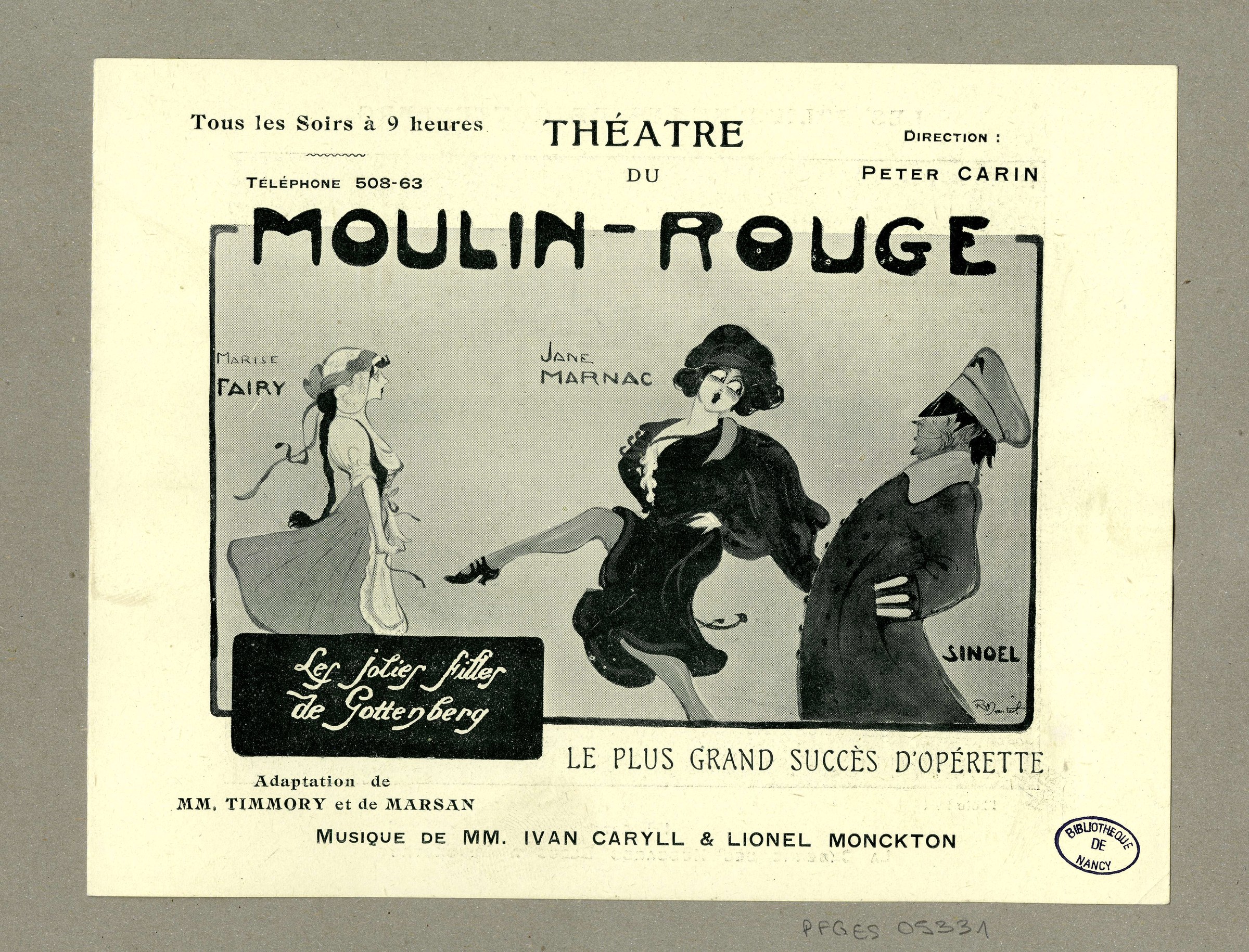
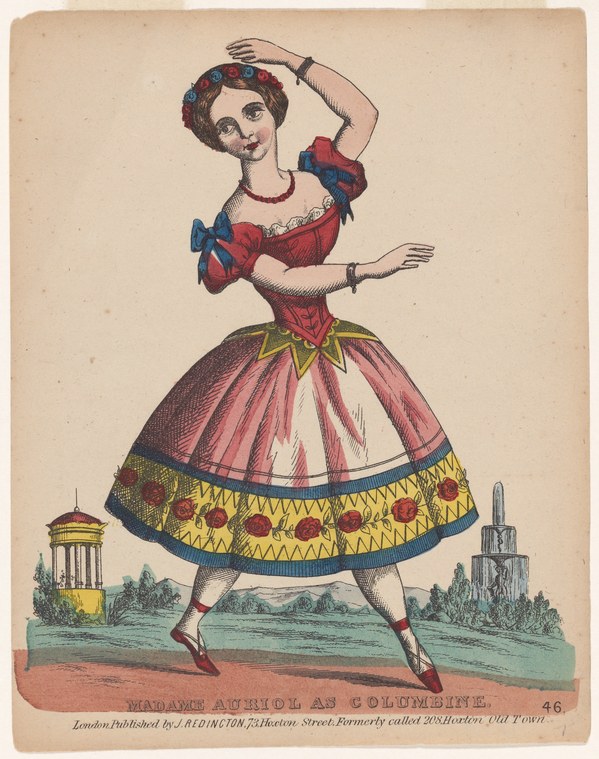
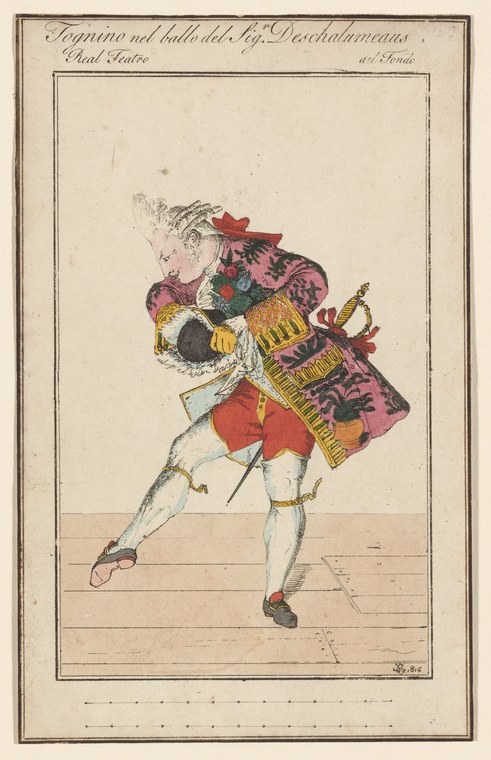
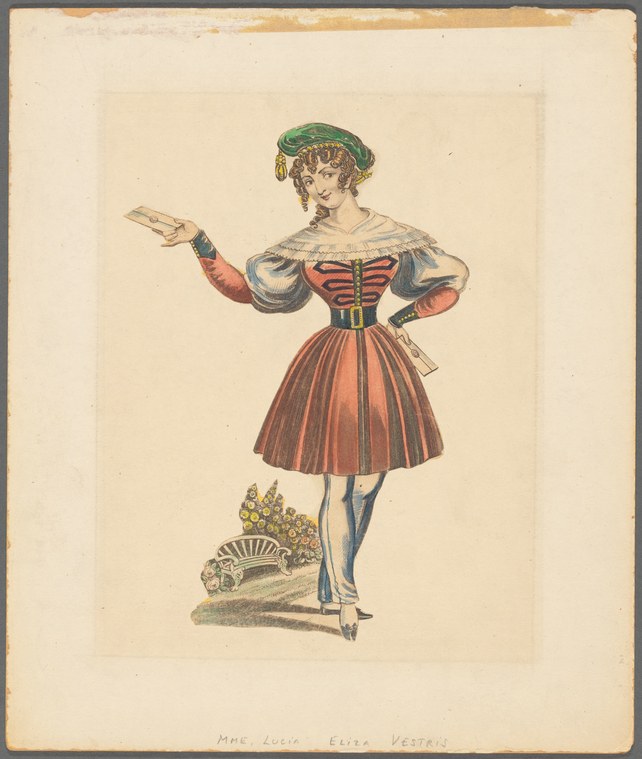
Browse the gallery →Works from the wider Musical Theatre Dance tradition — we have not yet identified enough that depict Contemporary Broadway specifically.
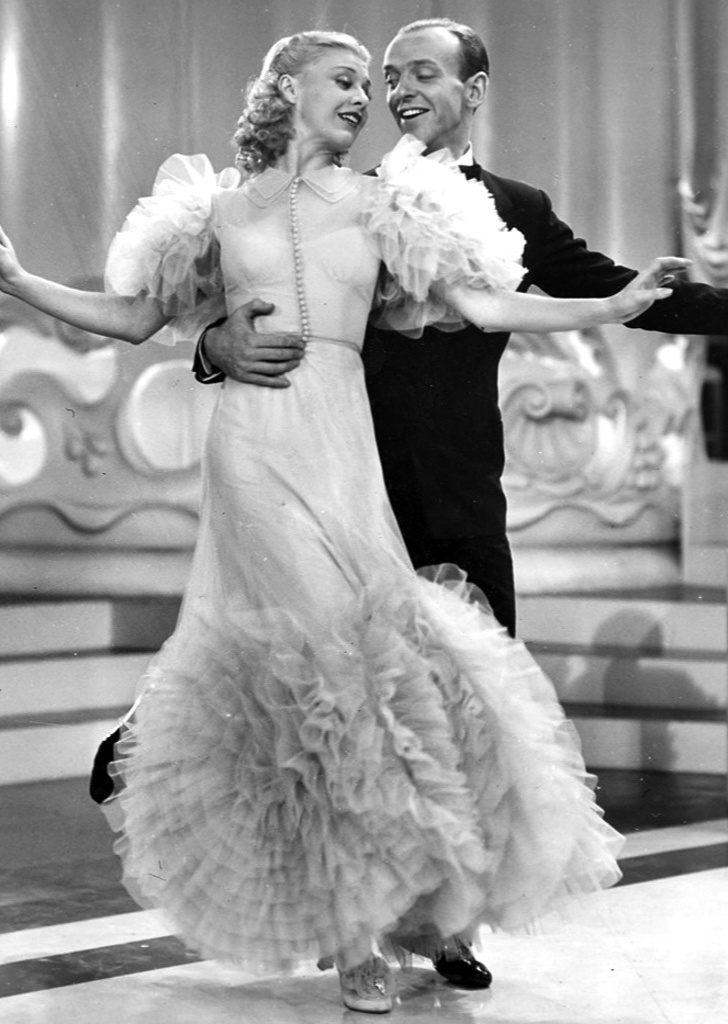
Fred Astaire and Ginger Rogers
Unknown artist
public_domain
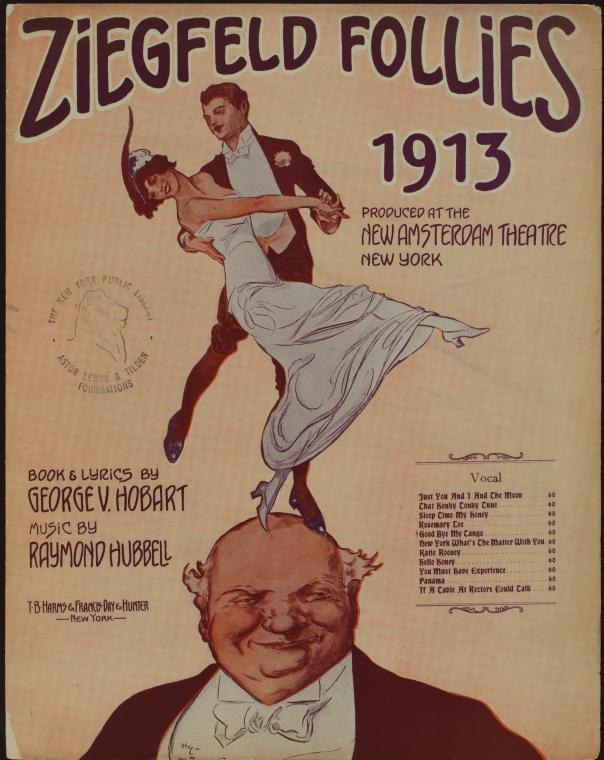
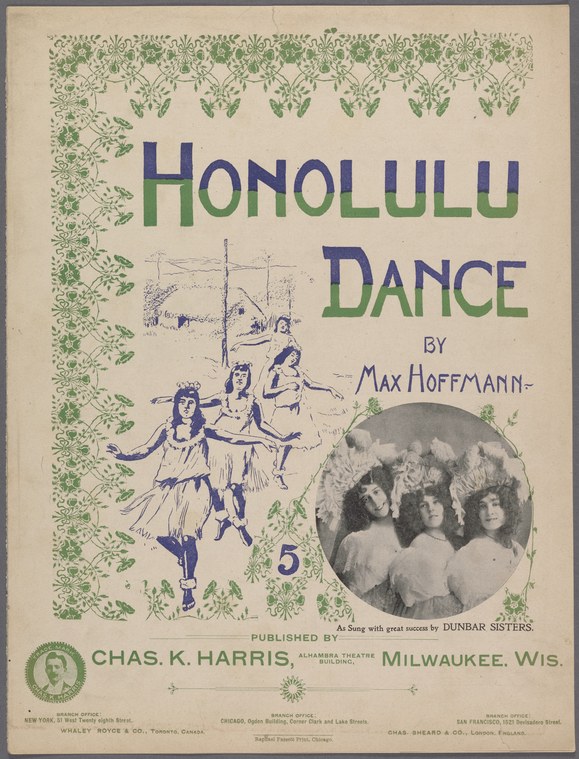
Honolulu dance
Unknown artist
public_domain
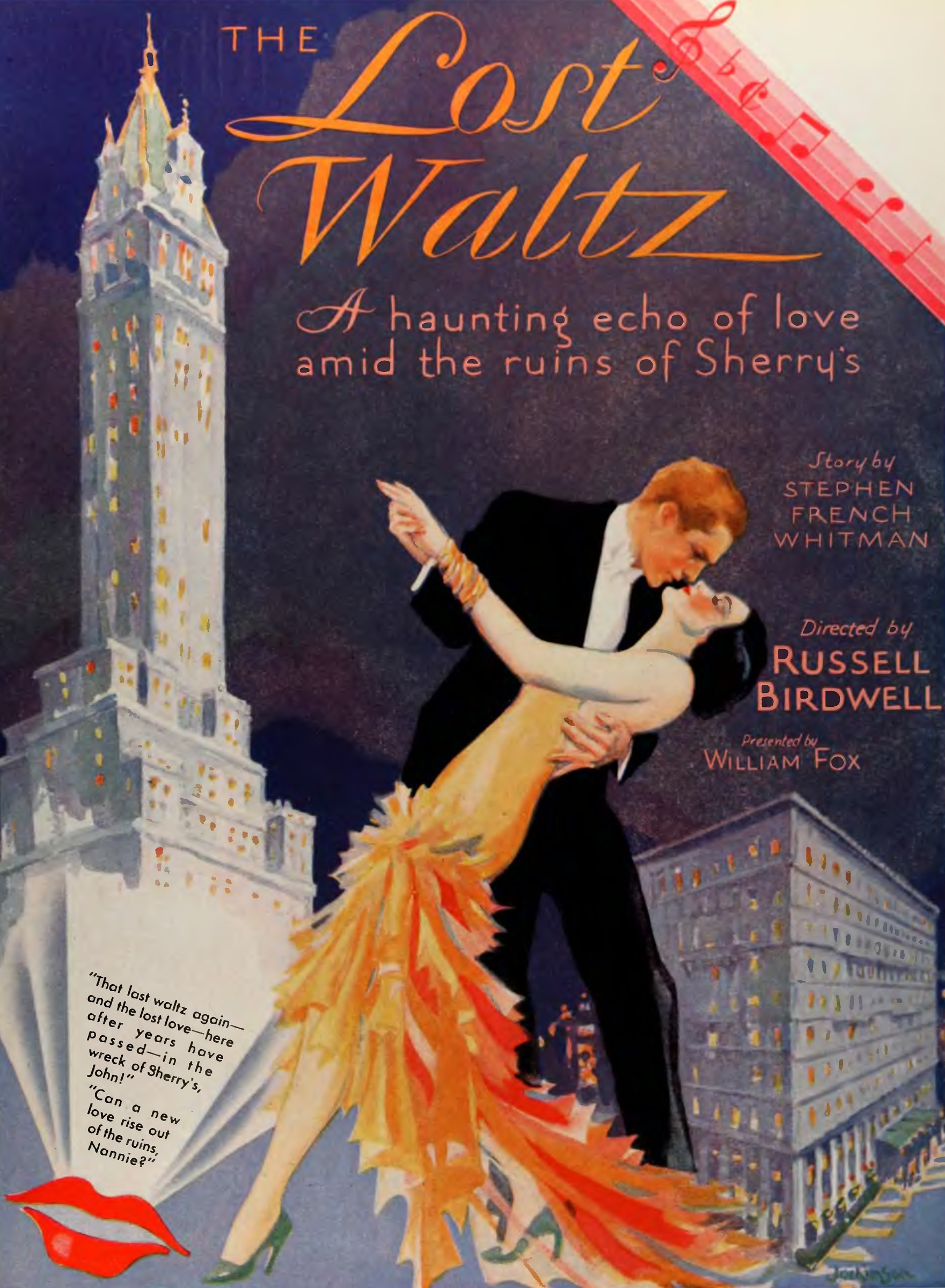
The Lost Waltz ad in The Film Daily, Jan-Jun 1929 (page 1479 crop)
New York, Wid's Films and Film Folks, Inc. · 1929
Public Domain
Madame Auriol as Columbine
Unknown artist
Public Domain
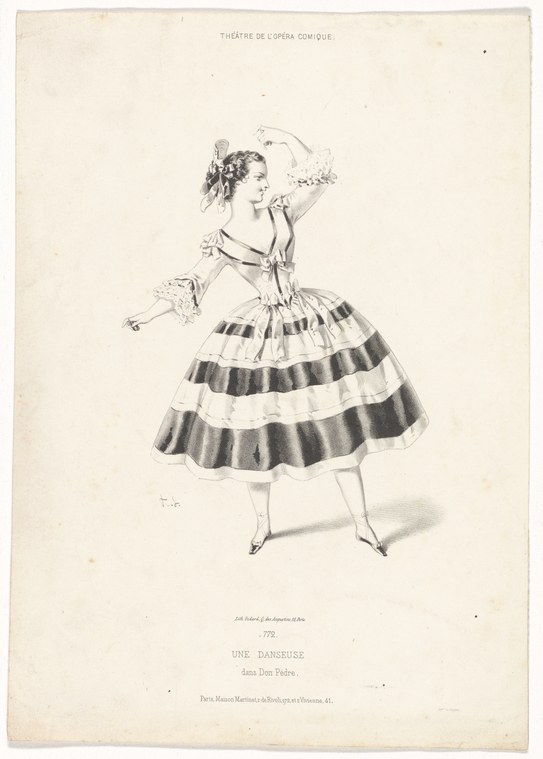
Theatrical portraits
Unknown artist
Public Domain
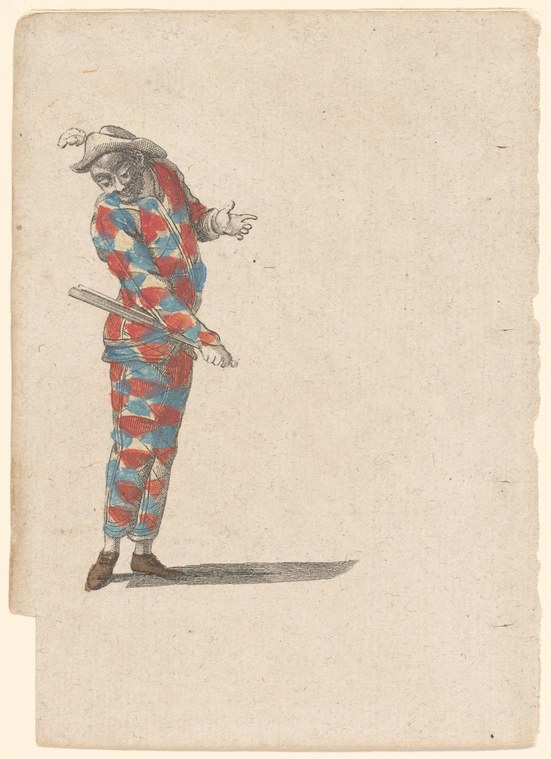
Harlequin
Unknown artist
Public Domain
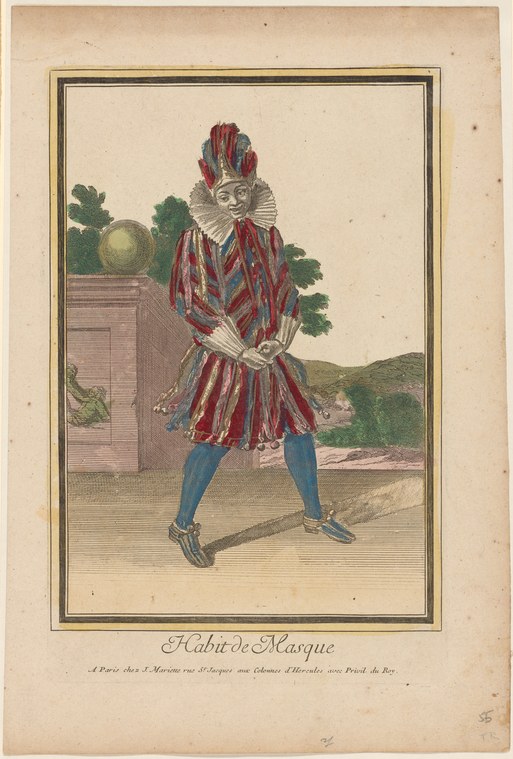
Habit de masque
Unknown artist
Public Domain
Continue Exploring
Lineage of Dance
500 years of dance evolution
Champions of Dance
Winners of marquee national & world titles
Language of Dance
161 dance terms & translations
Listening of Dance
Tempo, timing & musicality tools
Gallery of Dance
5,700+ artworks from museum collections
Attire of Dance
Evolution of dance dress across eras
Keep the thread going
Dance history, technique, and the occasional rabbit hole — in your inbox. Thoughtful, infrequent, unsubscribe anytime.
Free. No spam. One click to leave.