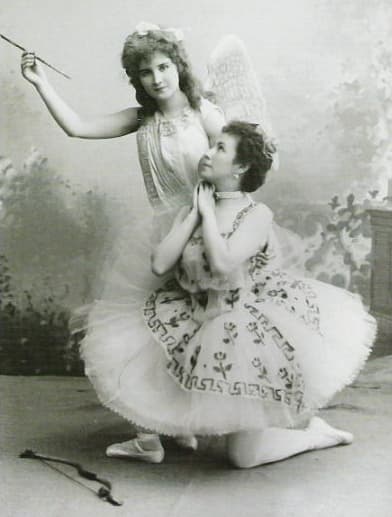
Unknown photographer. Photography studio of the Imperial Mariinsky Theatre. St. Petersburg, Russian Empire. — Souvenir program for the Mariinsky Ballet's production of the ballet "Le Réveil de Flore". State Academic Mariinsky Theatre, 2007. · Public domain
Le Réveil de Flore is a one-act ballet anacréontique — a mythological, pastoral ballet in the Petipa tradition — made as a piece d'occasion for the 1894 wedding of Grand Duchess Xenia to Grand Duke Alexander Mikhailovich, first given at Peterhof and then folded into the Imperial Ballet's regular Mariinsky repertory. It sits alongside The Sleeping Beauty and The Nutcracker as a product of the Petipa/Drigo partnership at its most formally elaborate, built from the same architecture of entrées, pas d'action, grand pas and coda that defines the high imperial style.
What it contains
- Classical Ballet — Entrées d'Apollon, de Zéphyr, de Cupidon / Pas d'action · Tableau 4, the pas d'action following the entrées of Apollo, Zephyr and Cupid — A pas d'action built from an ensemble scene, a solo variation for Zephyr, a solo variation for Flora and a grande valse-coda, the standard adagio/variations/coda skeleton of academic Petipa choreography. Source: "A classical Pas d’action is performed."
- Classical Ballet — Grande marche–bacchanale / Grand pas / Galop générale · Tableau 6, the closing grand pas before the finale — An ensemble grand pas performed by the full assembled cast of deities, bacchantes, satyrs and fauns, closing into a company finale — the imperial grand-ballet closing convention. Source: "A Grand pas is performed by all assembled, followed by a rousing finale."
- Viennese Waltz — Valse · Tableau 3, ensemble waltz for Aurora, Flora and the nymphs — Aurora, Flora and her nymphs dance together in waltz time as a consoling ensemble scene ahead of Apollo's entrance; no further step detail is given in the source. Source: "Aurora, Flora, and her nymphs perform a waltz."
What is danced
The ballet is built as a sequence of tableaux populated by Greco-Roman deities — Flora, Diana, Aurora, Apollo, Zephyr, Cupid, Mercury, Hebe, Bacchus — rather than a narrative cast of named individuals, which pushes the choreography toward the demi-caractère and classical vocabulary Petipa used for his divertissement scenes throughout the 1890s. The centrepiece is the pas d'action in Tableau 4, explicitly labelled in the libretto ("A classical Pas d'action is performed") and structured, per the published score, as an ensemble scene followed by a solo variation for Zephyr, a solo variation for Flora, and a grande valse-coda — the standard adagio/variations/coda skeleton of an imperial grand pas, here compressed into a single act. The final tableau builds a grand pas for the full assembled company (bacchantes, satyrs, fauns, sylvans around the chariot of Bacchus and Ariadne) followed by a galop finale and an apotheosis tableau revealing Olympus.
The article gives comparatively little detail on step vocabulary itself — no counts of fouettés, no named enchaînements — so a dancer preparing the role set should expect the technical demands to be inferred from genre and era rather than quoted outright. What is explicit is the number plan: an opening nocturne for Diana, a scene-and-dance of dew (scherzo) for Aquilon's incursion, a waltz for Aurora, Flora and the nymphs, individual entrées for Apollo, Zephyr and Cupid, and the closing bacchanale/grand pas/galop/apotheosis sequence — a structure a stager or historian can use to map surviving notation or recordings against.
Context
The ballet was made in 1894, in the final decade of Petipa's dominance of the Imperial Ballet, and shares its structural grammar (entrée–adagio–variations–coda, grand ensemble finale) with his large-scale works of the same period. Its Stepanov notation, recorded soon after the premiere, made it one of the earliest ballets preserved in that system, which is why it later became a test case for the reconstruction movement associated with the Sergeyev Collection. The choreographic-credit dispute the article documents — Petipa's public letter insisting Ivanov had no hand in the dances despite the printed programme crediting both men — is itself a small window onto how authorship was recorded, and mis-recorded, in the Imperial Ballet's own paperwork.
Staging history
First performed at Peterhof on 6 August 1894 as a wedding entertainment, the ballet transferred to the Mariinsky Theatre in January 1895 for a benefit performance, and continued in repertory until a final performance in 1919. Anna Pavlova carried an abridged version in her touring company's repertory, and that abridged edition was recorded by Richard Bonynge with the London Symphony Orchestra for a 1974 LP. The full production was reconstructed by Sergei Vikharev for the Mariinsky Ballet in 2007 using the original Stepanov notation, restored orchestral manuscript, and reproduction décor and costumes; that revival won the 2007 Golden Mask award. Separately, in 2004 Yuri Burlaka drew on the same notation materials to make a stand-alone pas de quatre, La Roseraie, for four ballerinas as Diana, Aurora, Hebe and Flora, which has since become a competition and school-repertory piece independent of the full ballet.
How to watch it
Watch for the imperial grand-pas architecture compressed into one act: entrées for the principal gods, a central pas d'action with paired variations and a coda, and a closing procession-into-grand-pas-into-apotheosis that mirrors the finales of Petipa's full-length ballets. Because the cast is entirely mythological figures rather than individuated characters, expect the demi-caractère conventions Petipa used for divinities and personified natural forces (wind, dew, dawn) rather than mimed narrative drama.
Structure
- Scene Tableau 1 · Prélude / Danse de Diane–nocturneFlora sleeps with her nymphs while Diana guards them at night; as dawn approaches Diana withdraws into the clouds.
- Scene Tableau 2 · L'apparition d'Aquilon / Scène et danse de la roséeAquilon, the north wind, storms in and awakens Flora with cold; chilled by dew, she calls on Aurora for help.
- Scene Tableau 3 · ValseAurora consoles Flora and announces Apollo's approach; Aurora, Flora and the nymphs dance a waltz.
- Scene Tableau 4 · Entrées d'Apollon, de Zéphyr, de Cupidon / Pas d'actionApollo arrives and unites Flora with Zephyr, joined by Cupid and the amours; a classical pas d'action with variations and a coda follows.
- Scene Tableau 5 · Arrivée de Mercure, de Ganymède et d'HébéMercury announces Hebe and Ganymede, who bring Flora and Zephyr a cup of nectar granting eternal youth.
- Scene Tableau 6 · Grande marche–bacchanale / Grand pas / Galop généraleA procession led by the chariot of Bacchus and Ariadne, with bacchantes, satyrs, fauns and sylvans, culminates in a grand pas for the full company and a galop finale.
- Scene Apotheosis · Apothéose: Gloire d'OlympeOlympus is revealed with Jupiter, Juno and the assembled gods.
Structure read from an encyclopaedia article, not from a libretto or score we hold. Confirm against a programme before treating the numbering as authoritative.
Credits
- composer: Riccardo Drigo
Related works
Other staged works in the register connected to this one by author or lineage.
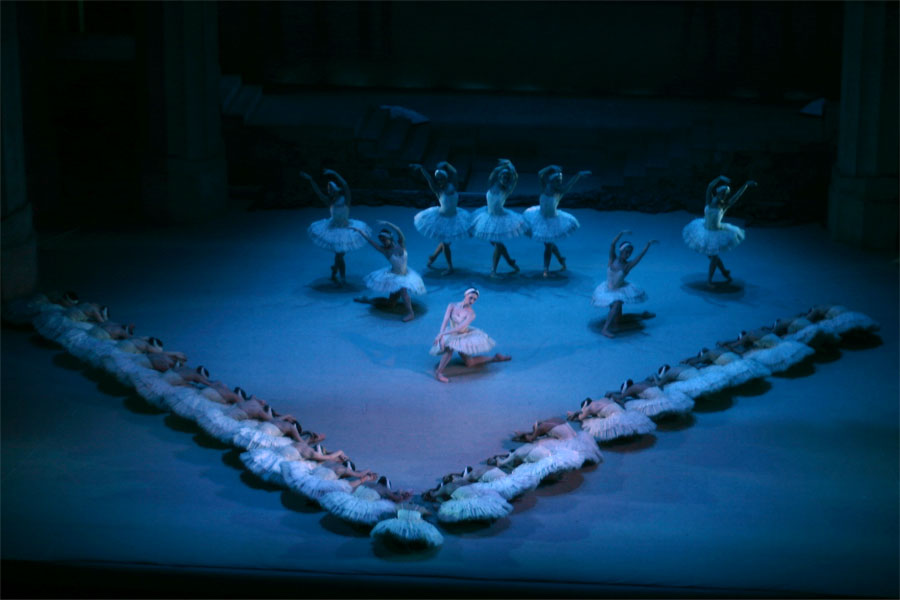 Swan LakeBallet · 1877Ivanov · video
 The NutcrackerBallet · 1892Ivanov · video
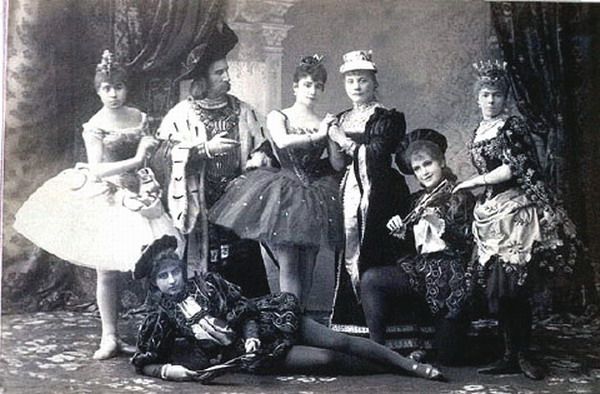 The Sleeping BeautyBallet · 1890Petipa · video
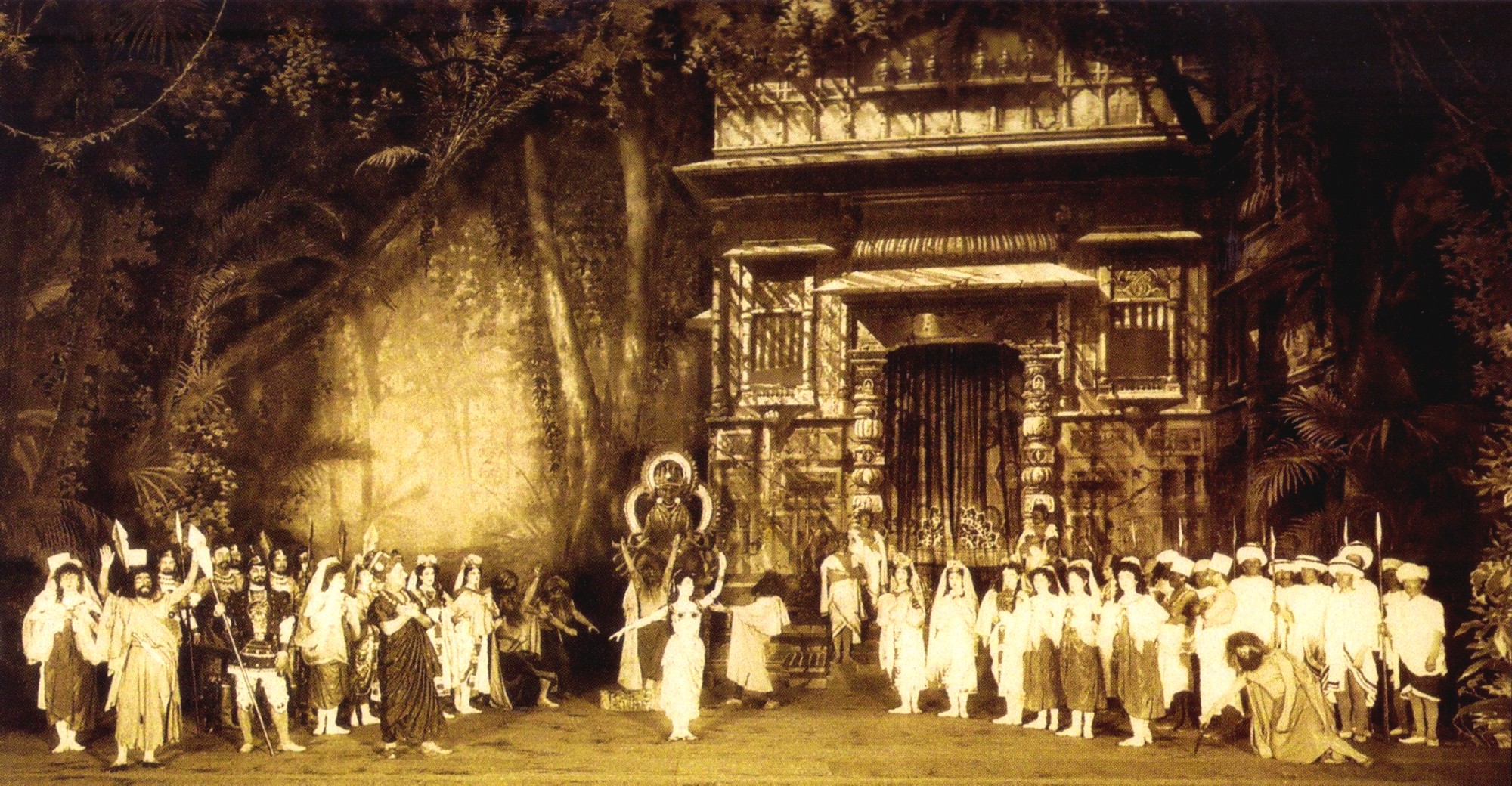 La BayadèreBallet · 1877Petipa · video
 Don QuixoteBallet · 1869Petipa · video
 RaymondaBallet · 1898Petipa · video
 Western SymphonyBallet · 1954Same lineage · video
 Square DanceBallet · 1957Same lineage · video