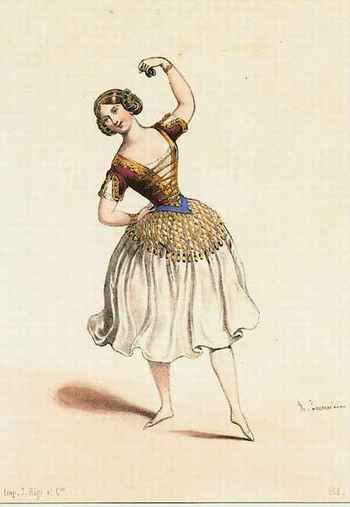
original author unknown, scanned by Mrlopez2681 · Public domain
Paquita is an 1846 ballet in two acts and three scenes made by Joseph Mazilier for the Paris Opera, with a score by Édouard Deldevez and a libretto credited to Paul Foucher. It belongs to the Romantic-era repertory of story ballets built around mistaken identity, exotic setting and reunion through a recognition token, but its lasting importance in the catalogue comes almost entirely from what Marius Petipa grafted onto it decades later at the Imperial Ballet.
What it contains
- Classical Ballet — Paquita grand pas classique · the Grand pas classique added to the final act in Petipa's 1881 revival — A grand-pas structure of entrée, adagio with solo-violin cadenza, solo variations and coda for a principal ballerina and demi-soloists, in the codified vocabulary that made it a standalone repertory showpiece. Source: "Today these pieces, particularly the Grand pas classique, are major cornerstones of the traditional classical ballet repertory and have been staged by ballet companies throughout the world."
- Classical Ballet — Paquita pas de trois · the Paquita pas de trois added to the first act in the 1881 revival — A demi-soloist pas de trois to newly composed Minkus music, built in the same classical idiom of framed solo variations as the later grand pas. Source: "This included the Paquita pas de trois for the first act and the Paquita grand pas classique and the Mazurka des enfants for the last act."
- Mazurka — Mazurka des enfants · the Mazurka des enfants added to the final act in the 1881 revival — A national-character mazurka danced by children, forming part of the divertissement Petipa added to close the ballet. Source: "This included the Paquita pas de trois for the first act and the Paquita grand pas classique and the Mazurka des enfants for the last act."
What is danced
The source account gives almost no description of Mazilier's original 1846 choreography itself — no named variations, no described steps for the title role or the corps. What it does document in detail is Petipa's 1881 revival for the Imperial Ballet, which added a Paquita pas de trois to the first act and, to the final act, a Grand pas classique and a Mazurka des enfants, all to new Ludwig Minkus music. The Grand pas classique included 'a Grand adagio with cadenza for solo violin' written for the virtuoso Leopold Auer, indicating a formal adagio-variations-coda structure built for a principal ballerina and demi-soloists — the standard architecture of a 19th-century grand pas. The Mazurka des enfants, as its name states, is a children's mazurka, a national/character dance form performed by young dancers rather than the principal cast.
The source account is explicit that these Petipa additions, and the Grand pas classique above all, are what a dancer or company today actually encounters: it calls the piece one of the 'major cornerstones of the traditional classical ballet repertory,' staged worldwide independently of the full ballet. Beyond this, the source does not describe mime scenes, ensemble work, or the choreographic content of Act I or II in any technical detail, so nothing further about vocabulary can be responsibly claimed from it.
Context
Paquita was made in 1846 at the Paris Opera under Mazilier, during the mature phase of French Romantic ballet — the era of exotic, tragic-or-redemptive plots built around a wronged or displaced heroine. Its move to Russia the very next year, in a staging credited to the young Marius Petipa and Pierre-Frédéric Malavergne, is presented in the source account as a landmark: 'the first work ever staged by Petipa in Russia,' the opening act of a career that would remake Russian classical ballet. Petipa's 1881 return to the piece, decades later, layered fully Imperial-era grand-pas conventions (formal adagio, cadenza, coda) onto a French Romantic original, which is why the ballet now reads as two different historical strata welded together.
Staging history
The Paris original held the Opéra stage only until 1851. Petipa's expanded version, with the Minkus additions, stayed in the Mariinsky repertory until 1926, and its choreography was recorded around 1902 in Stepanov notation — made, notably, while Petipa was coaching Anna Pavlova for her title-role debut — and preserved in the Sergeyev Collection. The full ballet was effectively revived from that documentary base only much later: Pierre Lacotte re-choreographed the whole work for the Paris Opera Ballet in 2001 (repeated 2007), restoring Mazilier's mime and mise-en-scène alongside Petipa's 1881 numbers, and in 2014 Doug Fullington and Alexei Ratmansky mounted a reconstruction of Petipa's final Mariinsky version for Bayerisches Staatsballett using the Stepanov notation directly. Independent of the full ballet, the Grand pas classique alone has had a dense separate stage history — Pavlova's company kept it in repertory; Nureyev staged it in 1964, 1970 and 1971 using John Lanchbery's orchestration; Makarova restaged it for American Ballet Theatre in 1984 (still current there); and in Russia, Dolgushin's 1974 Maly Theatre staging (with input from original cast member Elizaveta Gerdt) and Vinogradov's 1978 Kirov/Mariinsky staging (based on Pyotr Gusev's 1952 version) established the two main lines still performed today.
How to watch it
Most audiences will see only the Grand pas classique, performed as a stand-alone gala or company showpiece: watch for the formal adagio with its violin cadenza, the string of solo variations for the demi-soloists, and the closing coda — a textbook grand-pas structure rather than narrative dance. If watching a full staging (Lacotte's or the Fullington/Ratmansky reconstruction), note that these are late-20th/21st-century reconstructions built back from notation and restored mime, not an unbroken performance tradition from 1846.
Structure
- Act I · Paquita pas de troisAdded by Petipa in 1881 to new Minkus music, a demi-soloist showpiece inserted into the first act of the revived ballet.
- Act II · Paquita grand pas classiqueAdded for Ekaterina Vazem's 1881 benefit performance; a formal grand pas in the final (second) act with a solo-violin cadenza, now performed independently of the full ballet.
- Act II · Mazurka des enfantsA children's mazurka added in the same 1881 revival, closing the final (second) act's divertissement.
Structure read from an encyclopaedia article, not from a libretto or score we hold. Confirm against a programme before treating the numbering as authoritative.
Credits
- composer: Édouard Deldevez
- composer: Ludwig Minkus
Related works
Other staged works in the register connected to this one by author or lineage.
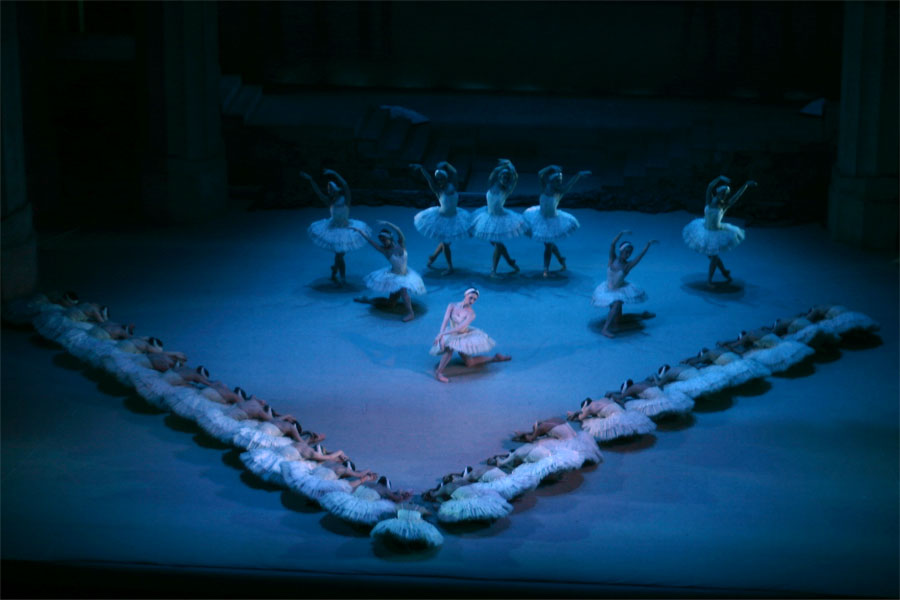 Swan LakeBallet · 1877Petipa · video
 The NutcrackerBallet · 1892Petipa · video
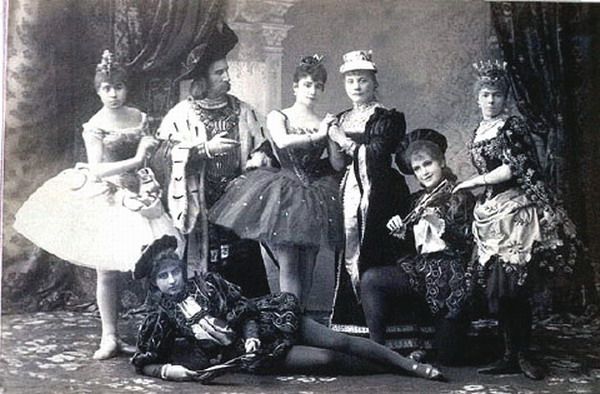 The Sleeping BeautyBallet · 1890Petipa · video
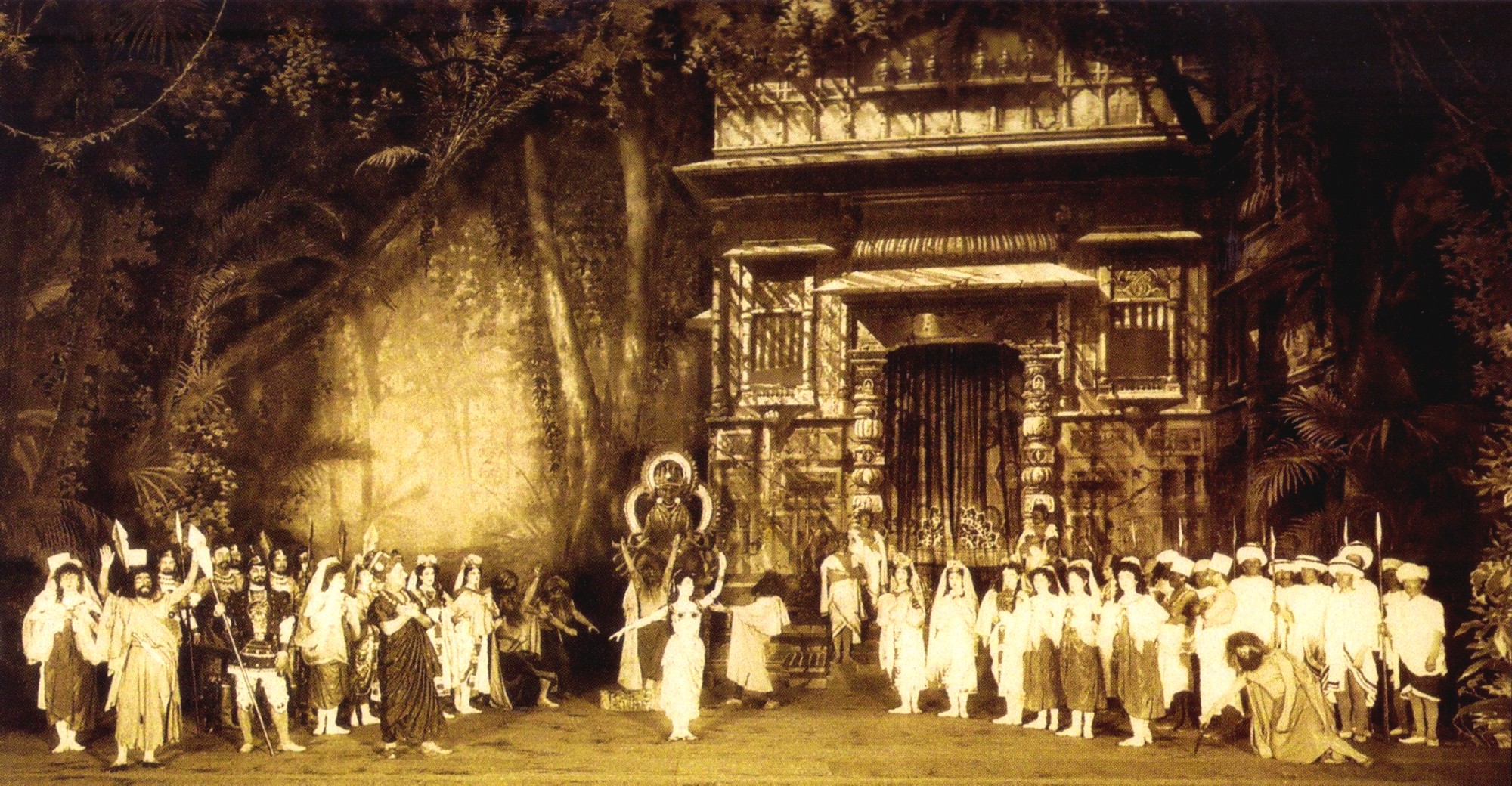 La BayadèreBallet · 1877Petipa · video
 Don QuixoteBallet · 1869Petipa · video
 Le CorsaireBallet · 1856Mazilier · video
 Theme and VariationsBallet · 1947Same lineage · video
 NamounaBallet · 1882Same lineage · video