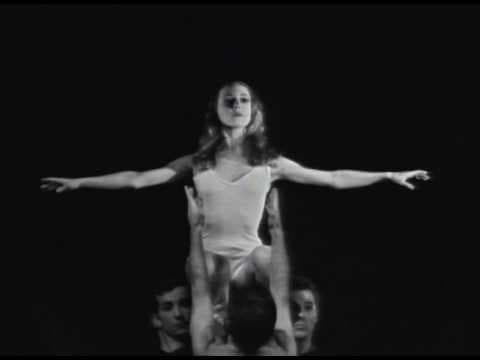
Ivesiana is a plotless, suite-form ballet George Balanchine made for New York City Ballet to music of Charles Ives, premiered posthumously for the composer four months after his death. Balanchine had known and admired Ives's music since 1934 but long considered it 'far too complex for dancing'; he returned to it after finishing a Schoenberg ballet, drawn to Ives's rhythm and to what he called 'the shock necessary for a new point of view.' The title is Balanchine's own tribute to a composer he never met.
What it contains
- Neoclassical Ballet · The whole work, across all four movements of the settled version — A plotless suite of short, mood-driven movements performed in practice clothes rather than classical costume, using abstracted partnering, pedestrian gesture and kneeling processionals in place of conventional step vocabulary — the defining traits of Balanchine's neoclassical, score-driven repertory of this period. Source: "The dancers were dressed in practice clothes."
- Contemporary Ballet — Central Park in the Dark · First movement, danced to Central Park in the Dark — The principal female role is built on non-virtuosic exploratory movement — walking with eyes closed, groping and feeling for something unseen — rather than classical steps, against a corps de ballet. Source: "Balanchine told me to close my eyes and pretend I was a blind person. I practiced trying to find something as if I couldn't see. It's very difficult because it's just walking, it's groping, trying to really feel with your hands."
- Partner Acrobatics (Adagio) — The Unanswered Question · Second movement, set to The Unanswered Question — The female principal is lifted and manipulated by four male partners — threaded under their legs, pulled into splits — while remaining physically passive throughout, an extended sustained-lift adagio sequence rather than a conventional supported pas de deux. Source: "In this role I was manipulated - threaded under legs and pulled into splits - all the time remaining passive and inaccessible, The woman in this ballet ultimately represents the unattainable."
What is danced
The ballet as it now stands is a four-part suite, each part danced to a separate Ives score with its own cast configuration and movement problem rather than a continuous narrative. Central Park in the Dark is built around a principal couple and an all-female corps; the female lead is asked to move as if sightless, groping and searching rather than executing steps — Patricia McBride described being told to close her eyes and 'find something as if I couldn't see.' The Unanswered Question is danced by a principal couple and four men and turns the pas de deux into an extended, extreme partnering sequence: the woman is lifted, threaded beneath the men's legs and pulled into splits while staying passive throughout, embodying a figure who is manipulated but never actually touched emotionally — Allegra Kent, who created the role, called herself 'manhandled.' In the Inn is a duet built on 'old-time dance rhythms' echoed in the steps, ending with the two dancers acting exhausted, shaking hands, and parting — a deliberately informal, vernacular-inflected number rather than a classical adagio. In the Night, for corps de ballet only, consists largely of the ensemble crossing the stage on their knees, a floor-bound, non-virtuosic image that critic Jack Anderson read as praying, despairing, or mourning.
Context
Ivesiana belongs to the mid-1950s run of plotless, score-driven ballets through which Balanchine and NYCB were defining an American neoclassical repertory distinct from narrative Romantic ballet; the dancers appeared in practice clothes rather than costumed characters. It followed directly on Balanchine's Schoenberg ballet and represents a continued push toward music considered 'too complex' or too abstract for conventional balletic treatment, using rhythmic and structural difficulty as a generative constraint rather than an obstacle.
Staging history
The ballet's structure was unstable for its first years: the 1954 premiere had six sections (Central Park in the Dark, Hallowe'en, The Unanswered Question, Over the Pavements, In the Inn, In the Night); Hallowe'en was replaced by Arguments (from String Quartet No. 2) in March 1955, which was itself replaced by Barn Dance (from A Symphony: New England Holidays) later that year, before the ballet left the NYCB repertory until a 1961 revival. That revival dropped both Barn Dance and Over the Pavements, settling the work into its now-standard four movements, and In the Inn was rechoreographed for a new cast (Diana Adams and Arthur Mitchell) with costumes changed to street clothes. In 1978 Peter Martins's Calcium Light Night (also to Ives) was briefly interpolated into the running order. The ballet has been staged outside NYCB by Dutch National Ballet and Berlin Opera, and The Unanswered Question is sometimes extracted and performed on its own, including by the Suzanne Farrell Ballet.
How to watch it
Watch each movement as a discrete, self-contained problem rather than part of a plot: the blind, groping duet of Central Park in the Dark, the extreme passive partnering of The Unanswered Question, the vernacular-tinged, deliberately unglamorous duet of In the Inn, and the kneeling processional of In the Night. Costuming (practice clothes, later street clothes) signals that this is meant to be watched as abstraction, not character drama, and the absence of conventional virtuoso steps in several sections is the point, not a simplification.
Structure
- Central Park in the DarkA principal couple, with an all-female corps de ballet, dance a meeting between two people who become lost together in the dark; the female role is built on blind, groping search movement.
- The Unanswered QuestionA principal couple and four men enact a woman as unattainable sphinx-figure, passively lifted, threaded under the men's legs and pulled into splits while remaining emotionally inaccessible.
- In the InnTwo young dancers perform an informal duet echoing old-time dance rhythms, ending exhausted; they shake hands and part.
- In the NightThe corps de ballet crosses the stage on their knees in a slow, tranquil-unsettled processional read variously as prayer, despair, or mourning.
Structure read from an encyclopaedia article, not from a libretto or score we hold. Confirm against a programme before treating the numbering as authoritative.
Credits
- composer: Charles Ives
More from George Balanchine
Other staged works in the register connected to this one by author or lineage.
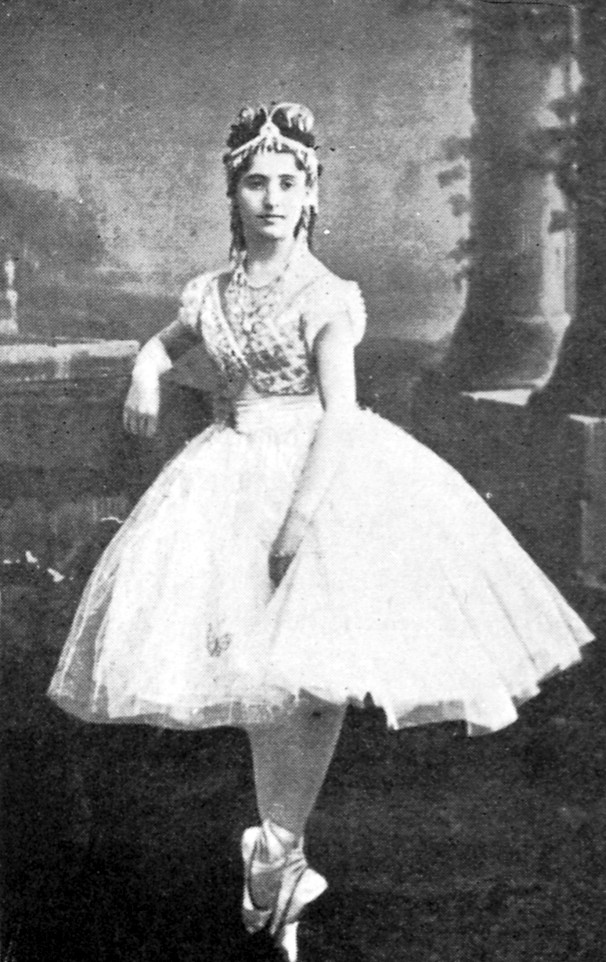 CoppéliaBallet · 1870Balanchine · video
 ApolloBallet · 1928Balanchine · video
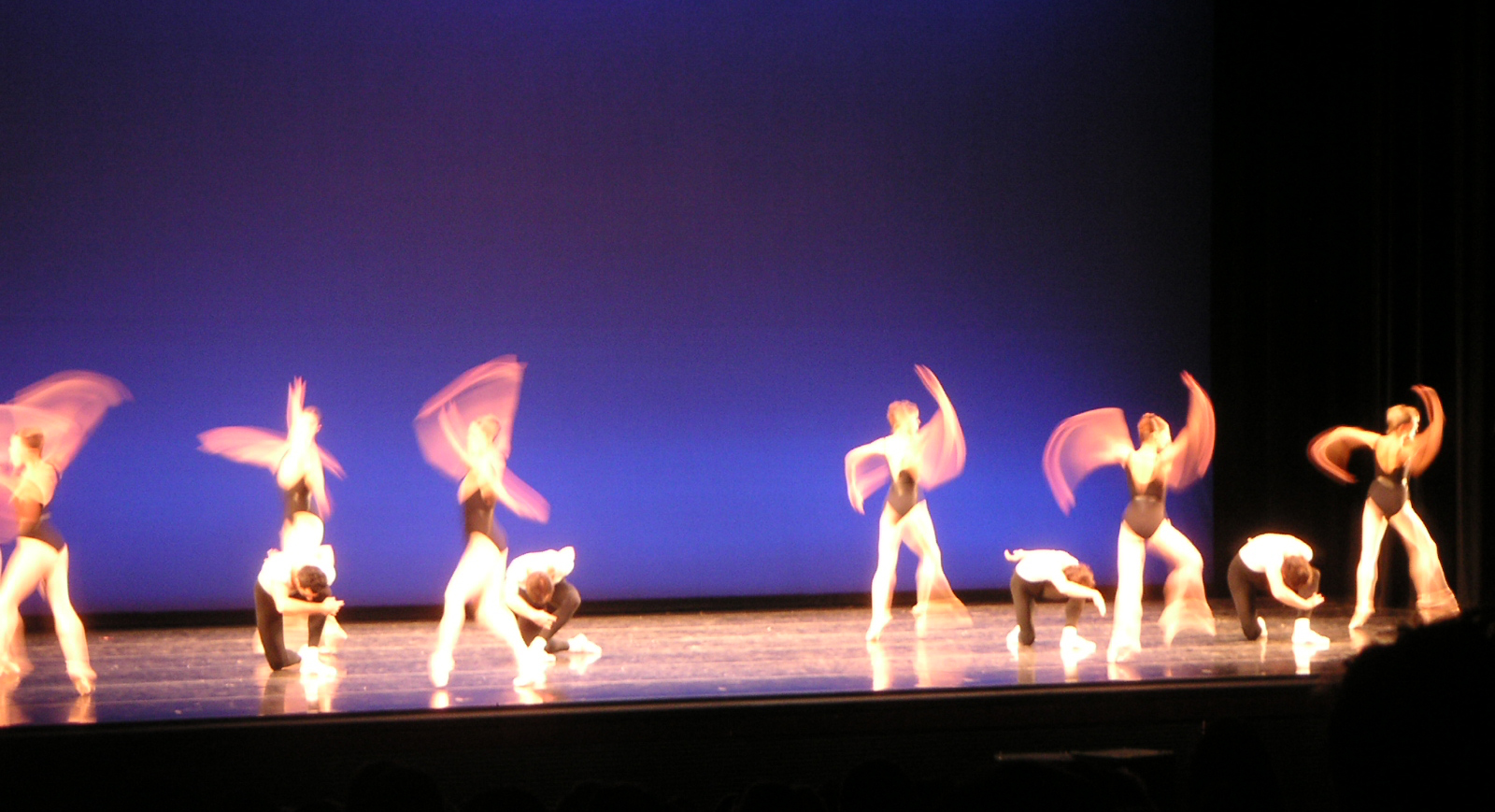 AgonBallet · 1957Balanchine · video
 Le chant du rossignolBallet · 1920Balanchine · video
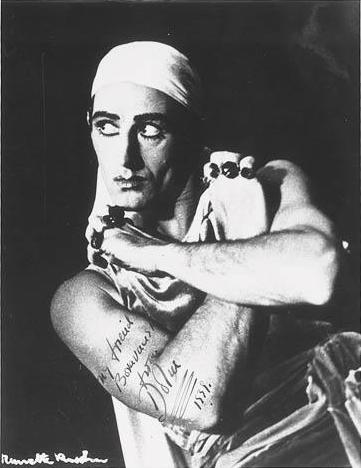 The Prodigal SonBallet · 1929Balanchine · video
 The Seven Deadly SinsBallet · 1933Balanchine · video
 Stravinsky Violin ConcertoBallet · 1972Balanchine · video
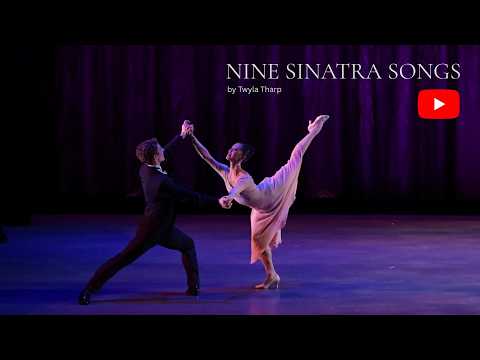 Nine Sinatra SongsBallet · 1982Same lineage · video