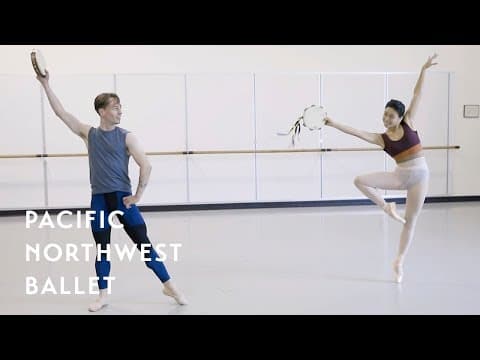
Tarantella is a pas de deux made by George Balanchine for New York City Ballet, set to Hershy Kay's arrangement of Louis Moreau Gottschalk's Grande Tarantelle. It premiered on January 7, 1964, at the New York City Center, danced by Patricia McBride and Edward Villella, and was NYCB's final premiere at that theatre before the move to the New York State Theater.
What it contains
- Balanchine Method · The whole pas de deux — Choreography built explicitly around Villella's speed and jump and McBride's matching technique, described by the dancer as physically punishing bravura passages performed at full-out attack. Source: "to showcase New York City Ballet dancers Patricia McBride and Edward Villella's techniques, especially the latter's speed and jumps"
- Bournonville Method · The whole pas de deux — Critic-noted stylistic homage to Bournonville's manner within a Balanchine vehicle piece, though the article flags the influence itself as contested rather than confirmed in specific steps. Source: "Tarantella is one of Balanchine's ballets that "paid homage" to Bournonville"
What is danced
The article frames the piece as a showcase built around the specific gifts of two dancers: Balanchine designed it to display McBride and Villella's technique, with particular emphasis on Villella's speed and jump. Villella himself describes the choreography as constructed in short, out-of-order fragments during breaks in other rehearsals, so that neither dancer registered the full stamina demand until the sections were assembled — his own account of the result is that he would be "flying parallel to the floor" and then collapsing in the wings gasping for air, which points to a piece built on sustained attack and virtuosic bravura rather than sustained lyricism.
Context
The ballet belongs to Balanchine's mid-career period at New York City Ballet, when he was regularly turning short, character-flavored orchestral showpieces into vehicle pas de deux for the company's rising virtuoso dancers. Critic Anna Kisselgoff placed it among the Balanchine works that nod toward August Bournonville, though she called the extent of Bournonville's actual influence on Balanchine debatable — a critical judgment rather than a technical description of steps, so it is reported here as a noted stylistic association rather than a confirmed vocabulary.
Staging history
Beyond its 1964 origin at New York City Ballet, the article lists Miami City Ballet (founded by Villella), Pacific Northwest Ballet, Joffrey Ballet, San Francisco Ballet, and The Royal Ballet as companies that have performed it. In 2018 NYCB's "Balanchine: The City Center Years" festival featured Royal Ballet dancers Anna Rose O'Sullivan and Marcelino Sambé in the roles, and NYCB released a 2013 recording with Megan Fairchild and Joaquín De Luz publicly during the coronavirus pandemic.
How to watch it
Watch for sustained attack in the male role — fast beaten jumps and quick directional changes that Villella described as leaving him airborne and then gasping in the wings — set against the female role's own matching bravura. The tambourines the dancers themselves play are part of the choreography's rhythmic engagement with Gottschalk's tarantella source, not just a costume prop; note also the red-and-black versus red-and-white costuming by Karinska as a visual pairing device.
Credits
- composer: Louis Moreau Gottschalk
More from George Balanchine
Other staged works in the register connected to this one by author or lineage.
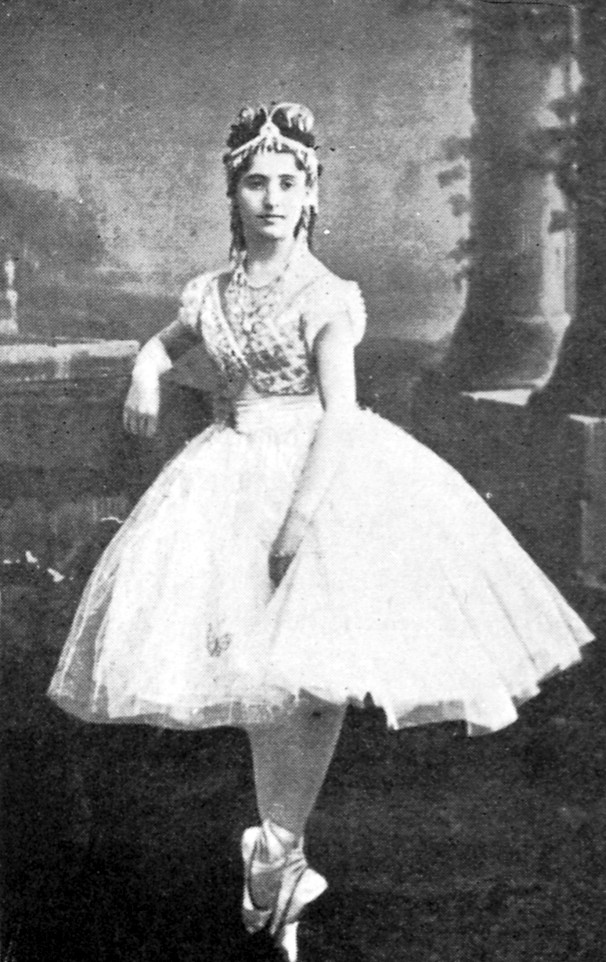 CoppéliaBallet · 1870Balanchine · video
 ApolloBallet · 1928Balanchine · video
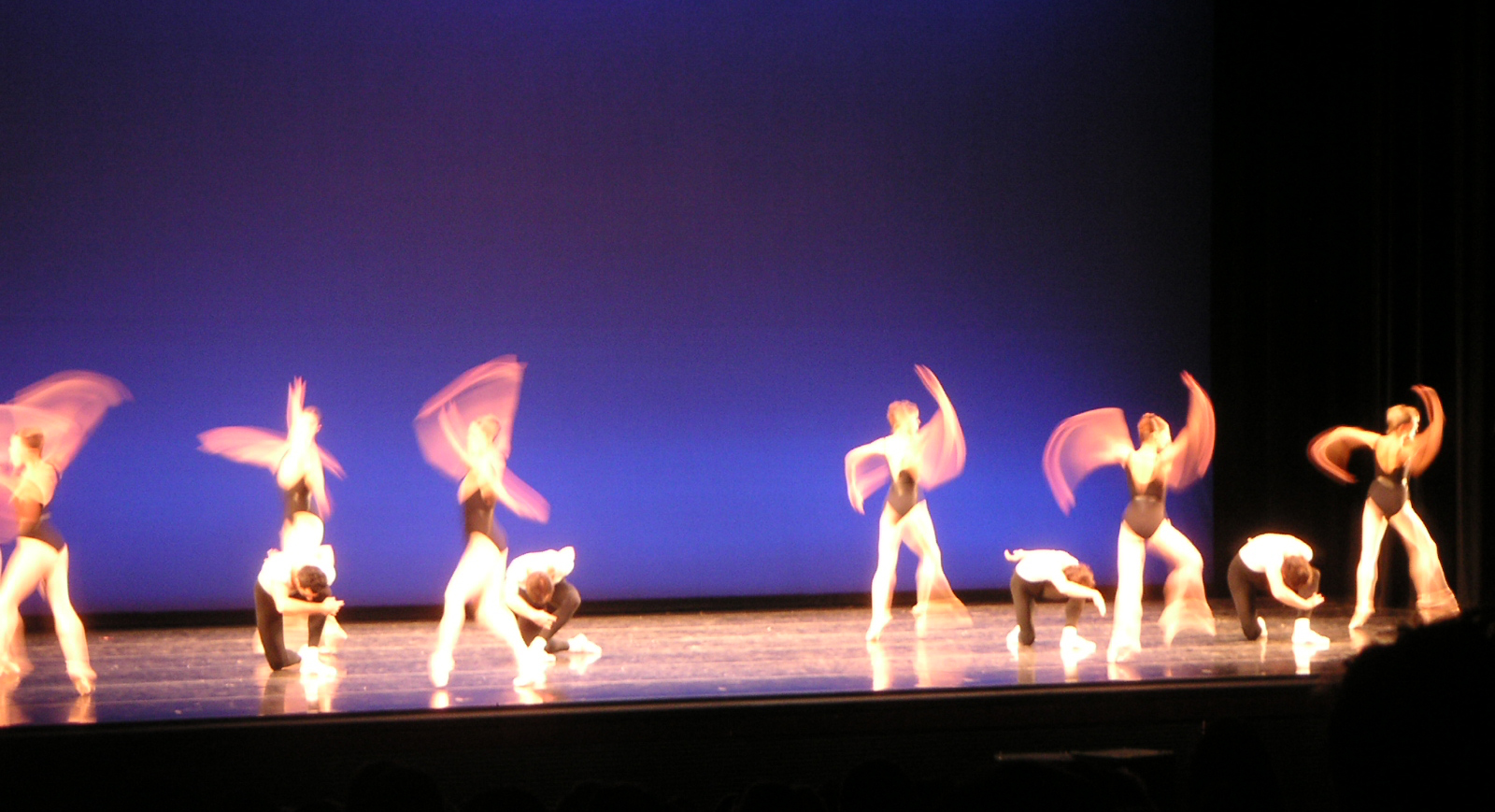 AgonBallet · 1957Balanchine · video
 Le chant du rossignolBallet · 1920Balanchine · video
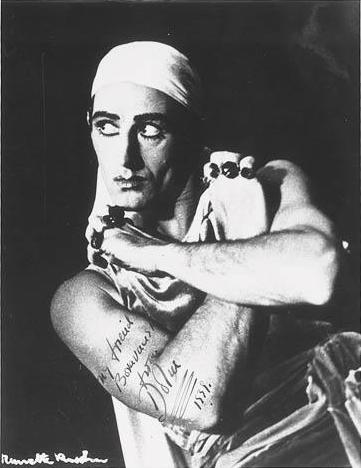 The Prodigal SonBallet · 1929Balanchine · video
 The Seven Deadly SinsBallet · 1933Balanchine · video
 Liebeslieder WalzerBallet · 1960Balanchine · video
 Symphony in Three MovementsBallet · 1972Balanchine · video