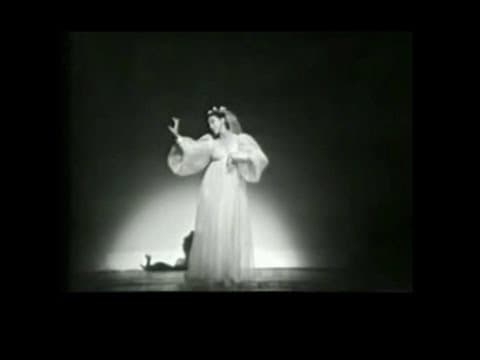
The Wise Virgins (1940)
The Wise Virgins is a one-act narrative ballet, created in 1940, dramatising the biblical Parable of the Ten Virgins (Matthew 25) with a score assembled from Bach cantata movements and chorale preludes, orchestrated by William Walton. The article credits Frederick Ashton as choreographer and the Vic-Wells Company (forerunner of The Royal Ballet) as originating company, with a premiere cast led by Margot Fonteyn and Michael Somes — none of which is currently on our record, so it sits here as a documented but unconfirmed identity for the work.
What it contains
- Classical Ballet · the whole one-act ballet — Ashton shaped the dancers' bodies to evoke baroque sculptural form and elaborate contortion within a classical stage-ballet frame, for a Vic-Wells company premiere. Source: "Ashton was also inspired by 18th century sculpture and architecture, and tried to depict with the dancers' bodies "the swirling, rich, elaborate contortions of the baroque.""
What is danced
The article gives almost no scene-by-scene account of the choreography. Its one direct statement on movement is that Ashton, drawing on 18th-century sculpture and architecture, 'tried to depict with the dancers' bodies "the swirling, rich, elaborate contortions of the baroque."' This points to a classical vocabulary stretched and shaped toward baroque sculptural line and group composition, rather than any social or court dance form being quoted literally on stage.
The named roles — the Bride, the Bridegroom, the Father, the Mother — indicate a small principal cast carrying the parable's narrative (the article does not describe their individual variations or the corps' treatment of the wise/foolish virgins split). Designer Rex Whistler was picked specifically for his affinity with Baroque art from his studies in Rome, which suggests the visual world reinforced the same baroque-body aesthetic Ashton was reaching for, but the source gives no further technical detail — no pointe work, partnering, or floor pattern is described.
Beyond the one quoted sentence, a reader hoping for step-level detail will not find it here; the article is a music-and-production history, not a synopsis or répétiteur's note.
Context
Created in 1940 for the Vic-Wells Company at Sadler's Wells, the ballet belongs to the formative English repertoire that would become The Royal Ballet, made as the country entered the Second World War. It is notable in that history for reworking sacred and secular Bach into a single dramatic sequence via a purpose-made orchestration by William Walton, rather than drawing on an existing ballet score — the musical decisions (settled partly through informal play-throughs by Boris Ord, Constant Lambert and Patrick Hadley) preceded the choreography.
Staging history
The article records the premiere as 24 April 1940 at Sadler's Wells Theatre, with the Vic-Wells Company, and states the ballet stayed in repertoire until 1944; no later revival of Ashton's staging is mentioned. Walton's concert arrangement outlived the ballet itself: the article notes the Ballet Suite was reused for a different work, Cantus Firmus, choreographed by Jeanne Brabants for Ballet Vlaanderen in May 1970 — a separate ballet on the same music rather than a revival of The Wise Virgins.
How to watch it
Watch for how the classical vocabulary is pushed toward baroque sculptural shaping — extended, curved lines and group arrangement said to evoke 18th-century statuary and architecture — rather than any literal period social dance. Attend also to how the score moves between austere chorale preludes and the repurposed secular 'Sheep may safely graze,' since the ballet's tension between wise and foolish virgins is carried as much by that musical contrast as by the staging.
Credits
- composer: Johann Sebastian Bach
More from Johann Sebastian Bach
Other staged works in the register connected to this one by author or lineage.
 Le jeune homme et la mortBalletMusic by Bach · video
 Concerto BaroccoBallet · 1941Music by Bach · video
 A Suite of DancesBallet · 1994Music by Bach · video
 BrandenburgBallet · 1997Music by Bach · video
 The Goldberg VariationsBallet · 1971Music by Bach · video
 Swan LakeBallet · 1877Same lineage · video
 Les RendezvousBallet · 1933Same lineage · video
 Danses concertantesBallet · 1944Same lineage · video