Clog
Also known as: Clog dance, Clogging, Lancashire clog, Clog hornpipe
- Origin
- Industrial northern England, chiefly Lancashire, Cheshire, Durham and Northumberland
- Era
- 1750–1850
- Rhythm
- 4/4 hornpipe rhythm with dotted eighths; also 6/8 and 3/4 for the waltz clog
- Tempo
- Roughly 100-140 BPM
- Character
- percussive, contained, precise, rhythmically intricate, low to the ground, unshowy
History & Cultural Context
Wooden-soled clogs were ordinary working footwear in the mills and pits of northern England, and the dance grew out of that setting rather than being imported with it, with steps worked out to the rhythm of machinery and taken up in pubs and at fairs. The step material is closely tied to the hornpipe, danced in 4/4 with dotted rhythm, the feet kept low and the sound made by the wooden sole rather than by height or leap. In the nineteenth century it became a professional stage act: clog championships were danced for belts and prize money, and Dan Leno's championship win in 1880 was famous enough to follow him for the rest of his career. Carried to North America by British and Irish emigrants, the same step vocabulary combined with African American percussive dance to produce flatfooting and buck dancing in the southern mountains, and later the team clogging that grew out of Appalachian square dance exhibition sides in the early twentieth century. On the minstrel and variety stage the Lancashire clog, the waltz clog and the pedestal clog were standard turns, and it was through that repertoire, meeting Black percussive dance in the same theatres, that tap took shape.
Cultural Significance
It belonged to working people in industrial towns and was learned informally, in the house or the pub or the mill yard, before it was ever taught in a class. Skill in it carried real local standing, and the championship circuit meant a good dancer could earn money at it, which made it one of the few routes from a mill town onto a professional stage. In its later American form clogging became a family and community activity organised around teams, festivals and conventions.
Characteristic Movement & Technique
Weight is kept over the balls of the feet with the knees soft, and the feet stay close to the floor so the wooden sole can strike cleanly and repeatedly. The upper body is held quiet and fairly upright with the arms relaxed at the sides, so that the audience reads the rhythm rather than the gesture. Sound is produced by toe taps, heel drops, shuffles, taps of the outside edge and rapid alternations of heel and toe, often with several distinct sounds packed into a single beat. Appalachian derivatives loosen this — flatfooting drops the whole foot and keeps it lower still, while buck dancing allows more bounce and swing through the hips.
Partnering Dynamics
Traditionally a solo dance, danced for an audience or for judges. American clogging is usually performed by precision teams or in couples within square and line formations, and some traditional English forms are danced in duets or by informal groups sharing a floor.
Competitive Context
English clog dancing had a genuine professional competitive circuit in the nineteenth century, with contests for championship belts and cash, and it survives today in competitions at folk festivals in the north of England and in the Northumbrian and Durham traditions. In the United States there is a large organised clogging circuit concentrated in the Southeast, running conventions, workshops and team competitions judged on timing, clarity of sound, difficulty and unison. Related percussive competitions run in Cape Breton and in Irish and Canadian step dancing.
Regional Variations
Lancashire clog is associated with the music-hall repertoire and highly intricate footwork; Durham and Northumbrian styles are quieter and more contained, and Northumbrian rant steps connect to rapper sword dancing. In Wales clog dancing developed its own repertoire including displays of high stepping and stunt figures. In North America the form split into Appalachian flatfooting and buck dancing, and then into modern team clogging, which absorbed steps from tap and later from country and hip-hop dance.
Common Misconceptions
The frequent claim that English clog dancing descends from Dutch wooden-shoe dance does not hold up; the Dutch tradition is a separate one, more processional and figure-based than percussive, and the shared element is the footwear rather than the dance. It is also wrong to treat clogging as originally American mountain dance: the American forms are the later branch, and they are mixed with African American percussive dance rather than being purely British. Dating the tradition to the sixteenth or seventeenth century confuses the age of wooden footwear with the age of the dance, which is documented from the later eighteenth century onward.
Peak Popularity
Signature Figures
- Shuffle
- Double shuffle
- Heel-and-toe
- Waltz clog
- Rant step
- Pedestal clog
Clog Playlists
Curated collections on the LODance YouTube channel — performances to watch, lessons to learn from, and the right music to practice with. Tap a collection to play.
▶ Performances · Open on YouTube →
Clog Music & Tempo
Drawn from 5 Clog tracks in the LODance music library.
Example tracks at practice tempo
- Stilt dance — Victor Orchestra
- Clog dance — August P. Stengler
- Clog dance Roger — Adélard St-Louis
- Wilson's clog — Shamrock Band
- Buck and wing dance — Victor Orchestra
Clog on screen
Films and television where Clog appears, with the sequences worth watching for.
Poster artwork from TMDB.
 This site uses TMDB and the TMDB APIs but is not endorsed, certified, or otherwise approved by TMDB.
Clog in performance
2 staged works in the Limelight catalogue contain Clog, 1789–1960 — 2 of them in a named act or number.
- Ballet · Jean DaubervalClog Dance
The Clog Dance, created for Ashton's 1960 production — A humorous number for the Widow Simone and four women in wooden clogs, inspired by Lancashire clog dancers, in which the dancers move from clog footwork into pointe work. Source: "which also features th…
- Ballet · Frederick AshtonAct I · No.17a Clog Dance
Act I, the Clog Dance (No.17a) for Widow Simone and four dancers — Simone and four dancers perform in wooden clogs, whirling through steps that are executed sur la pointe while wearing the clogs, directly modelled on a Lancashire clog dancing performance. S…
Every claim above is quoted from a cited source and names where in the work the style appears. Claims we could not place or could not quote are held back from this list and shown on the work’s own page instead. Browse the full performance catalogue →
Sources & Further Reading
Where This Dance Is Documented
Regional folk traditions; EFDSS publications
An editor's note on where the technique for this dance is actually written down — sometimes a named book, sometimes the fact that no such book exists. A judgement, not a count of what we hold.
Cultural & Historical Context
Clog emerged from Industrial northern England, chiefly Lancashire, Cheshire, Durham and Northumberland during the 1750s—1850s. Understanding the cultural roots, musical traditions, and social circumstances of this era enriches appreciation for the dance's characteristics and significance.
Formative Influences
Signature Movement Vocabulary:
Shuffle, Double shuffle, Heel-and-toe, Waltz clog, Rant step, Pedestal clog
Primary Source Documents
The Library of Dance contains public-domain primary sources for dance history. Copyrighted modern syllabi are indexed with purchase links to their respective copyright owners. Search by dance name or codifier to discover primary source documents.
Last reviewed: September 2026 — This dance profile synthesizes historical research, cultural documentation, and contemporary practice knowledge to provide authoritative context.
Related Dances
More in Tap Dance
Soft Shoe
The smooth, light, low-volume tap idiom—historically sometimes danced on a sanded floor—that precedes and underlies both rhythm and Broadway tap.
Rhythm Tap (Hoofing)
The grounded, weighted, jazz-rooted tap style in which the dancer is a percussive musician improvising complex syncopation 'into the floor.'
Broadway Tap
The lighter, more upright, presentational tap style of musical theater, oriented to line, travel, and choreography for the proscenium stage.
Buck-and-Wing
A fast, vernacular late-19th-century precursor of modern tap, combining flat-footed 'buck' rhythms with springing 'wing' steps on the minstrel and vaudeville stage.
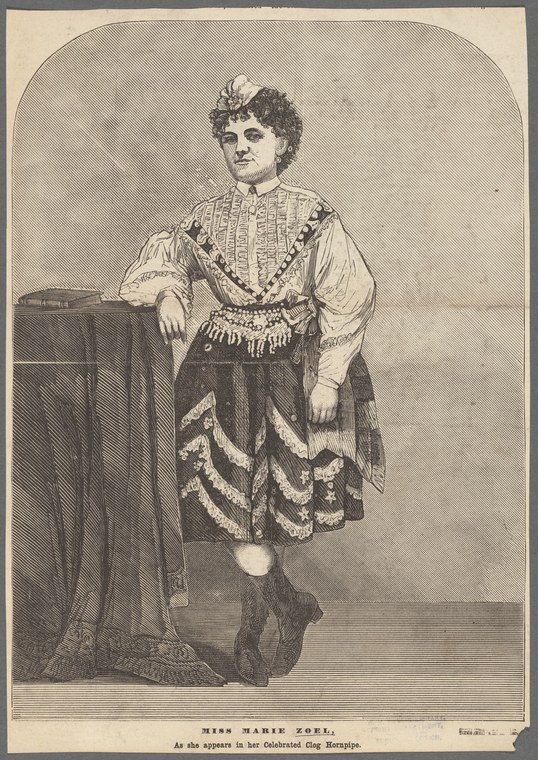
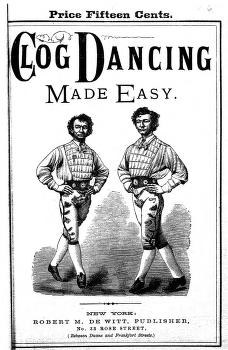
Clog in art
Browse the gallery →Works our catalogue identifies as depicting clog.
Continue Exploring
Lineage of Dance
500 years of dance evolution
Champions of Dance
Winners of marquee national & world titles
Language of Dance
161 dance terms & translations
Listening of Dance
Tempo, timing & musicality tools
Gallery of Dance
5,700+ artworks from museum collections
Attire of Dance
Evolution of dance dress across eras
Keep the thread going
Dance history, technique, and the occasional rabbit hole — in your inbox. Thoughtful, infrequent, unsubscribe anytime.
Free. No spam. One click to leave.