49 works in this view — arrow keys or swipe to move between them.
Dance in Art · 1790
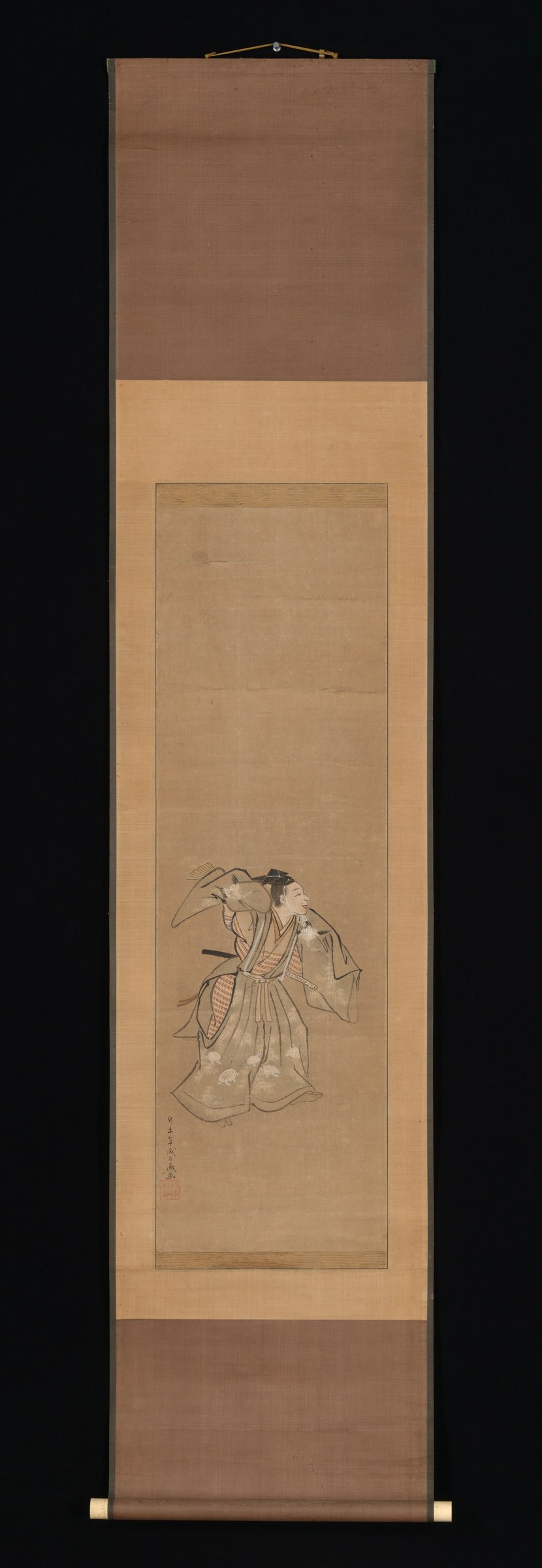
「翁」図-The Auspicious Noh Dance "Okina" MET DP-12232-121
Toriyama Sekien
- Medium:
- Oil Painting
- Era:
- 1700s (Enlightenment/Minuet Era)
- Source:
- Wikimedia Commons
- Rights:
- Public domain — free to use, share and adapt.
- Recorded as:
- CC0
Okina is the ritual foundation of Noh theatre and remains performed today almost unchanged in form and meaning. This painting by a major Edo-period artist documents how the role was embodied and presented in the late 18th century, providing visual evidence of Noh performance practice at a moment of high refinement. For dancers and historians of Asian theatre, it shows how a non-narrative, purely ceremonial form could be the subject of serious artistic attention and collector interest.
What you are looking at
A single figure in an elegant standing pose dominates this vertical scroll painting, rendered in subtle ink line and minimal wash on paper. The dancer wears layered robes in pale tones with red and patterned inner garments visible at the sleeves and hem, typical of formal Japanese dress of the period. The figure's weight is distributed in a composed, upright stance with the left arm extended gracefully forward and slightly upward, the right arm held closer to the body. The head is turned slightly, with a small dark cap or ornament visible. The composition is intimate and focused—the figure occupies the lower third of the scroll's painted area, leaving substantial empty space above, which draws attention to the precise positioning and deliberate gesture. The brushwork is restrained and assured, with particular attention to the fall and layering of the garments. The mounting shows signs of age but remains intact.
The dancing
A single performer shown in a standing position with weight evenly balanced. The left arm extends forward and upward in an open, inviting gesture; the right arm remains lower, closer to the torso. The posture is upright and dignified, the spine straight. The figure's gaze is directed slightly downward or to the side—not directly forward—which lends contemplation to the pose. The proportions and positioning suggest a mature or elderly performer. The garment arrangement and the way the body holds itself within the layers of cloth speak to trained, controlled movement rather than everyday stance.
The dance depicted
This is a representation of Okina (翁), the oldest and most prestigious form in the Japanese Noh theatrical tradition. Okina is not strictly a narrative drama but rather a celebratory ritual performance traditionally performed at New Year or other auspicious occasions. The figure's dignified bearing, formal dress, and the particular quality of stillness within the pose reflect Okina's ceremonial nature. The raised arm and composed stance suggest the vocabulary of Noh movement—economical, precise, and laden with symbolic meaning. Okina is typically performed by an experienced or elderly actor (often the most senior in a troupe), and the figure here reads as a mature performer, which aligns with the tradition of reserving this role for artists of high rank.
How it was made
This is a hanging scroll painting in the Japanese tradition, rendered in ink line and light wash on paper mounted on silk. The attribution to Toriyama Sekien (1712–1788) situates it within the Edo period practice of recording theatrical subjects, and Sekien was known for prints and paintings documenting kabuki and Noh actors. The technique—spare, linear, with careful attention to drapery and silhouette—is characteristic of actor portraiture (yakusha-e tradition) adapted to the Noh context. The restraint of the medium matches the aesthetic of Noh itself, where suggestion often exceeds explicit representation. The scroll format and mounting indicate this was intended for display, likely in a collector's home or studio, reaching an educated audience familiar with Noh performance.
About this work
This is a portrait of a Noh actor in the role of Okina, one of the most sacred and formally constrained roles in Japanese classical theatre. Created by Toriyama Sekien in the late Edo period (1790), the work captures the essence of Okina not through narrative action but through the body itself—its composure, its formal dress, and the symbolic gesture of the raised arm. The painting sits at the intersection of portraiture, theatrical documentation, and religious or ceremonial art. It belongs in a gallery of dance art because Okina, while not a narrative drama, is fundamentally a movement practice: a codified sequence of gestures, walks, and stillnesses performed to music and chant, transmitted through rigorous training. The image preserves a moment of a living tradition, showing how an artist of the period understood and recorded the physical presence of a master performer.
How to look at it
Attend to the economy of the figure's gesture: the raised arm is not a dramatic flourish but a contained, deliberate movement. Note the verticality of the composition and how the scroll format's height emphasizes the figure's isolation and formal presence. Look at the face and gaze direction—downturned and inward rather than engaging the viewer—which conveys the ritual and inward focus of Noh. The restraint of the painting technique (the absence of background detail, the minimal color) mirrors the aesthetic principles of Noh itself, where suggestion and formal precision outweigh decoration.
The artist
Toriyama Sekien (1712–1788) was a prolific and versatile artist of the mid-to-late Edo period, known for his comic and satirical prints (manga), landscape paintings, and theatrical actor portraits. He was a student of Nishikawa Sukenobu and moved fluidly between different genres and formats. His interest in kabuki and Noh performance reflected a broader Edo-period fascination with documenting actors and theatrical moments. Sekien's style—elegant, economical, and attentive to human gesture—made him well suited to recording both the flamboyance of kabuki and the austere formality of Noh.
The period
In the late 18th century, Noh was an established classical art form, supported by the shogunate and patronised by the samurai class and educated merchants. Simultaneously, kabuki was the popular theatrical form, and actor portraiture had become a major print genre. The production of paintings and prints documenting Noh roles was less common than kabuki documentation, but it reflected growing antiquarian and scholarly interest in preserving 'high' classical forms as Japan engaged in intensive self-examination of its cultural heritage. Okina itself had ancient roots (possibly pre-Noh) and was understood as a blessing ritual, a role that demanded the greatest skill and dignity.
Where it lives
The work is recorded in the Metropolitan Museum of Art collection (accession DP-12232-121) and is accessible through Wikimedia Commons. It exists as a hanging scroll, a format indicating it was created for private display and collecting rather than public theatrical circulation. Its presence in a major Western museum collection suggests it was recognized as a significant document of Japanese theatrical culture.
Dance in this work
Questions about this work
What is Okina and why is it part of Noh?
Okina is the oldest and most ceremonially important form within Noh theatre. Unlike most Noh pieces, it is not a narrative drama but a ritual of blessing and celebration, traditionally performed at New Year. It consists of a highly codified sequence of movements, chants, and musical passages performed by one or more actors. Okina is believed to have pre-Noh origins and is treated as sacred within the Noh tradition; only actors of high rank and experience are permitted to perform it.
How do you recognize Okina in visual representation?
Okina is identified by several formal features visible in this painting: the formal, layered costume; the composed, upright posture; the minimal gesture (here, the raised arm); and often the presence of a small ornamental cap or headdress (as shown here). The stillness and dignity of the pose, the lack of narrative action, and the aged or mature appearance of the performer are also typical markers. In Noh performance, Okina is accompanied by specific musical and choral elements.
Why would Toriyama Sekien paint a Noh actor?
Toriyama Sekien was a major documenter of theatrical life in Edo Japan. While he is famous for prints of kabuki actors, he also recorded Noh, reflecting the cultural status of both forms. By the 18th century, documenting performance through visual art—whether prints, paintings, or scrolls—was an established way of preserving and celebrating theatrical tradition. A painting of an Okina performer by a respected artist would have appealed to collectors interested in theatre, classical culture, or the particular actor.
Is this a record of a specific performance or a generic representation?
The painting is likely a portrait of a named actor in the role, though without additional inscription or documentation, it is difficult to determine which performer is represented. The inscription visible on the scroll (lower left) would typically identify the artist and possibly the subject, but it requires expertise in reading Edo-period seals and signatures to confirm. The work is both a portrait and a documentation of how the role was embodied at a particular moment.
More dance artwork