49 works in this view — arrow keys or swipe to move between them.
Dance in Art
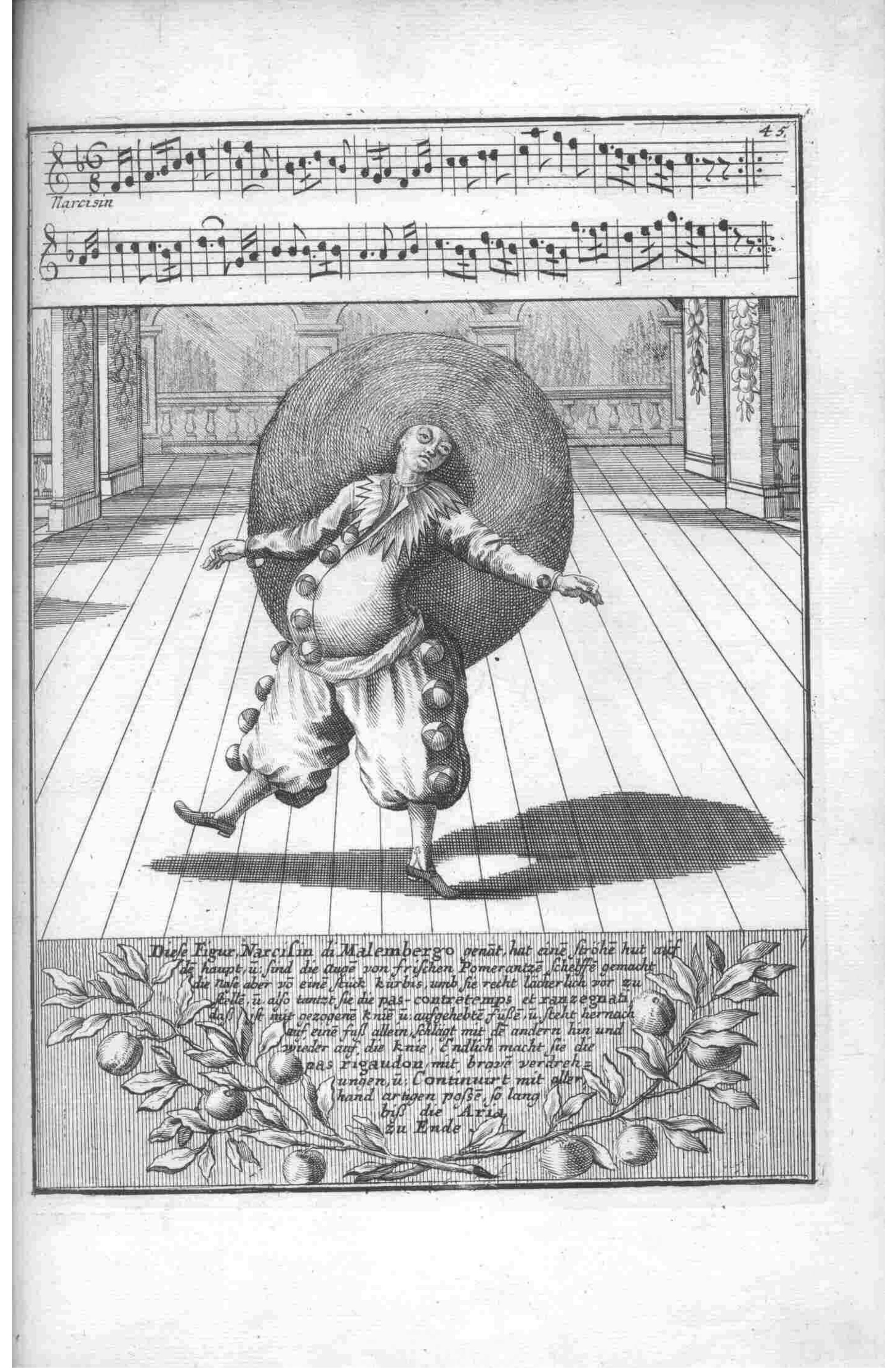
Grotesque — Plate 44
Gregorio Lambranzi
- Medium:
- Copper-plate engraving
- Dance:
- Notation/Choreography
- Era:
- 1700s (Enlightenment/Minuet Era)
- Collection:
- Nuova e curiosa scuola de' balli theatrali (1716)
- Source:
- Library of Congress
- Rights:
- Public domain — free to use, share and adapt.
- Recorded as:
- Public Domain
Lambranzi's manual is one of very few detailed surviving records of actual choreography from the early 18th century, and one of the few that documents the grotesque and comic traditions alongside courtly dances. This plate demonstrates that early modern theatre valued exaggerated physicality and bodily humour as much as refined technique, and that dance was understood as a scripted, repeatable art form integral to theatrical spectacle.
What you are looking at
A rotund male comic character stands alone on a bare wooden stage, his body and costume designed for maximum visual exaggeration. His enormous belly dominates the composition—swollen and rounded, it is the principal subject of the engraving. He wears a loose, light-coloured shirt and baggy breeches, with what appear to be bells or ornaments dangling from his waist and legs. His posture is unstable: one leg is lifted and bent, the other barely supporting him, his arms splayed outward for balance. His face is small and distant, tilted back slightly as though in effort or distress. The stage is defined by simple linear perspective—receding floorboards and a distant curtained arch. This is theatre of the grotesque, the absurd made visual: a body pushed to its comic limit.
The dancing
The single figure demonstrates a precarious, off-balance stance with one leg raised and bent sharply, the supporting leg trembling under exaggerated weight. The arms are thrown wide in a gesture of either comic despair or desperate equilibrium, with no frame or hold visible—this is solo performance. The posture suggests movement in progress: neither stable nor grounded, the body reads as momentarily caught in a comedic tumble or grotesque waddle. The proportions—an enormous belly supporting a comparatively small torso and head—suggest the figure is struggling with its own mass.
The dance depicted
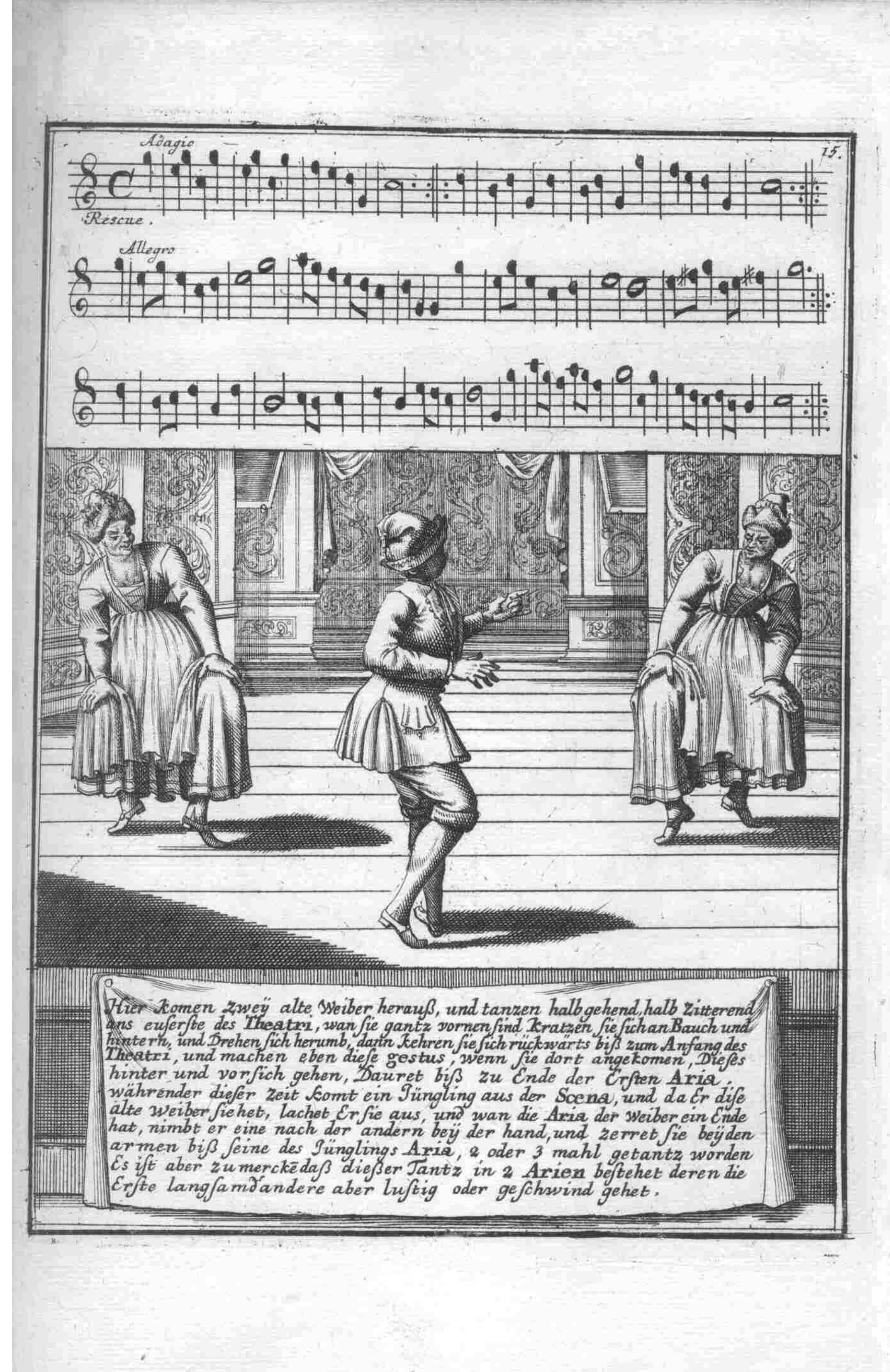
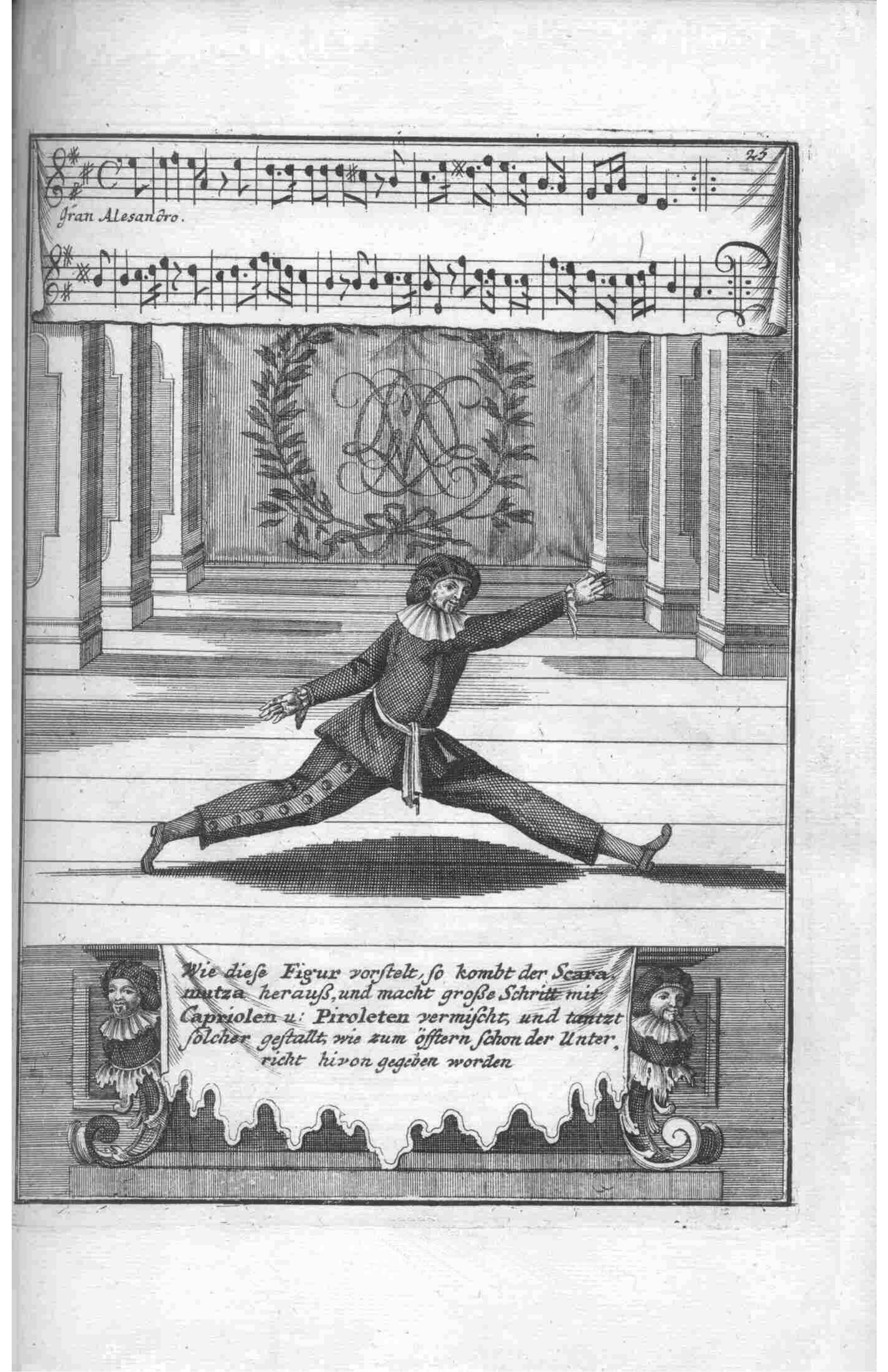
This is theatrical burlesque of the grotesque tradition, a comic character dance from early 18th-century German theatre. The notation at the top indicates this plate pairs a specific musical piece with a choreographed movement sequence. The dance is not technically virtuosic but rather stylised comedy: the figure performs exaggerated, unstable movement that derives its humour from bodily distortion and the mockery of dignified bearing. This is entertainment through the grotesque body, a tradition central to commedia dell'arte and Germanic theatrical practice. The musical notation suggests the piece was danced to a composed score rather than improvised.
How it was made
This is a copper-plate engraving, a technique that allows precise linear detail and fine tonal variation through hatching. The engraver has used dense, parallel lines to model the figure's massive belly and create shadow and depth on the stage. Engraving was the standard reproductive medium of the period—this plate is one of many in Lambranzi's manual, designed for circulation among theatre practitioners and amateurs learning choreography. The technique supports both the delicate notation at the top and the detailed costume rendering, making it an ideal medium for a practical dance instruction book.
About this work
This is Plate 44 from Gregorio Lambranzi's *Nuova e curiosa scuola de' balli theatrali* (1716), one of the most important dance manuals of the early 18th century. The plate pairs musical notation with an engraved illustration of a comic grotesque character, demonstrating the choreography for a solo theatrical burlesque. Lambranzi's manual documented the dance vocabulary of German and Italian theatre of the period, including dances for professional performers and amateurs. Each plate functions simultaneously as a score and as a visual guide to costume, stage setting, and bodily deportment. This particular plate celebrates the grotesque body as a vehicle for comedy—a tradition that runs from commedia dell'arte through popular theatre.
How to look at it
Focus first on the body: the exaggerated proportions and unstable posture are the dance itself. The engraver has frozen the figure mid-movement, caught in a moment of comic imbalance. Notice the small, distant head and the immense belly—this is caricature rendered as choreography. The musical notation above tells you that this movement was danced to a specific score. The stage setting, though minimal, grounds the figure in a theatrical space, reminding us this was a staged performance, not a street spectacle. The costume details—the bells or buttons at the waist—suggest this was a recognisable character type in early 18th-century theatre.
The artist
Gregorio Lambranzi was a dancer and choreographer active in Nuremberg in the early 18th century. His *Nuova e curiosa scuola de' balli theatrali* (New and Curious School of Theatrical Dances), published in Nuremberg in 1716, remains one of the most detailed surviving dance manuals of the period. The book contains 110 engraved plates, each pairing a musical score with an illustration of a costumed dancer performing a specific choreographed sequence. Lambranzi drew on both Germanic and Italian theatrical traditions, documenting everything from courtly minuets to popular grotesque and comic numbers. The manual was influential across Europe and survives in multiple copies, indicating its circulation among both professional dancers and educated amateurs.
The period
In the early 18th century, theatre and dance were understood as allied arts, with choreography considered a compositional skill worthy of documentation and transmission. Lambranzi's manual appeared during the height of the Baroque period and at a moment when dance notation systems were competing for standardisation. The grotesque characters in the manual—of which this is one—reflect the continued vitality of commedia dell'arte traditions and the popularity of comic interludes in German and Italian theatrical productions. The juxtaposition of musical score and choreographic illustration in Lambranzi's work represents a broader effort to render dance legible and repeatable, a project central to the professionalisation of theatrical performance.
Where it lives
This engraving is one of 110 plates in Lambranzi's *Nuova e curiosa scuola de' balli theatrali*, published in Nuremberg in 1716. The manual was designed as a practical dance instruction book and survives in multiple copies held in libraries and museums across Europe. This particular image derives from the Library of Congress holding.
Dance in this work
Questions about this work
What does the music notation at the top tell us?
The notation indicates this grotesque character was danced to a specific composed musical piece, labelled here as 'Harletsin' (likely a Harlequin character). This confirms the dance was choreographed and repeatable, not improvised, and allows modern performers to reconstruct or reinterpret it.
Is this dance related to ballet?
No. This is theatrical burlesque or grotesque comedy, a separate tradition from courtly ballet. While both existed in the same period and occasionally on the same stages, the grotesque tradition celebrated exaggeration, bodily distortion, and comic effect—everything courtly dance rejected. Lambranzi's manual documents both traditions separately.
Who performed these grotesque dances?
Professional theatre dancers and comedians performed them in public playhouses and at court entertainments. But Lambranzi's manual was also purchased by educated amateurs and wealthy households, suggesting these dances circulated as a form of social entertainment and amateur performance as well as professional spectacle.
What is a 'grotesque' in this context?
In early modern theatre, a grotesque was a comic character type, usually exaggerated in appearance and movement, descended from commedia dell'arte traditions. The term could refer to both the character and the style of performance—movement that prioritised distortion and comedy over grace or refinement.
More Notation/Choreography artwork