49 works in this view — arrow keys or swipe to move between them.
Dance in Art
Caroso Nobiltà — Dance Plate (plate 8)
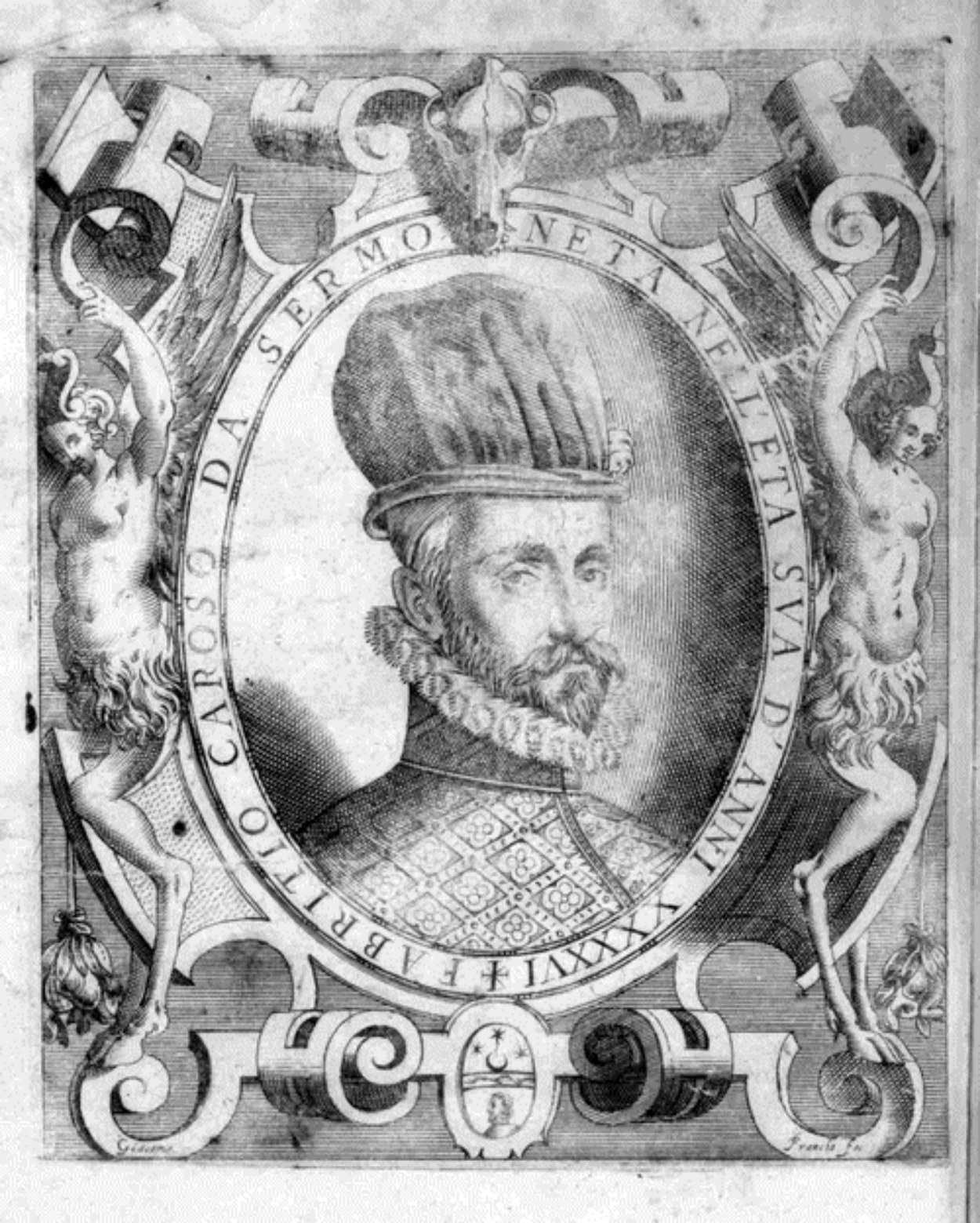
Fabritio Caroso da Sermoneta
- Medium:
- Woodcut
- Dance:
- Notation/Choreography
- Era:
- Pre-1700 (Renaissance/Baroque)
- Collection:
- Nobiltà di Dame (1600)
- Source:
- Library of Congress
- Rights:
- Public domain — free to use, share and adapt.
- Recorded as:
- Public Domain
For historians and dancers alike, this image is invaluable primary evidence of how Renaissance court dance actually looked when performed by trained nobility, not later romantic imaginings or modern reconstructions. Caroso's treatises are among the most detailed surviving records of pre-Baroque dance technique, choreography, and aesthetics, and the woodcuts are among the few contemporary images that show the dances in performance context rather than pure notation. Understanding how the body moved, how partners related, and how dance functioned as a marker of social status and courtly accomplishment depends on these images.
What you are looking at
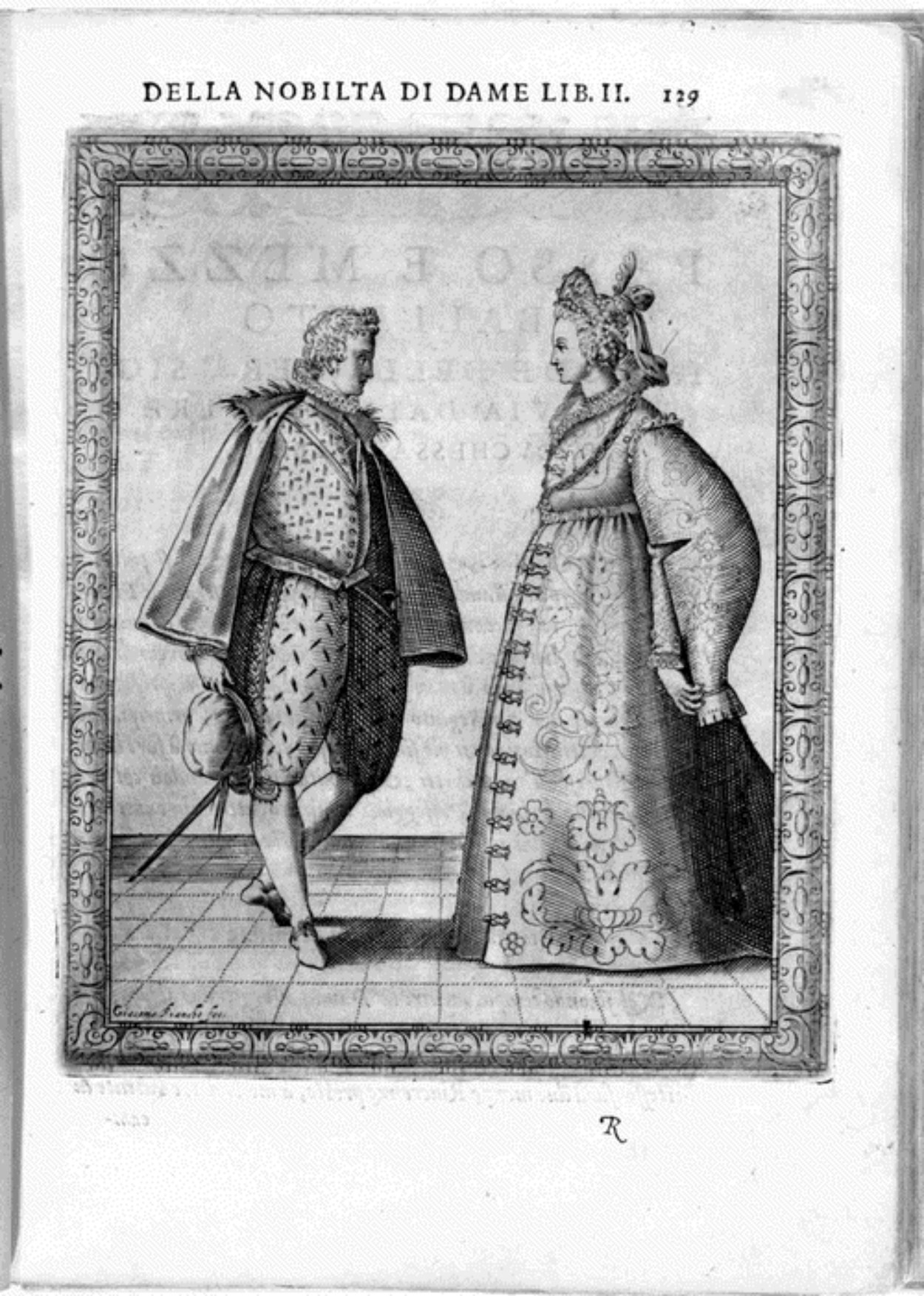
A nobleman and noblewoman stand facing each other on a tiled floor in what appears to be a palace or court interior. The man, on the left, wears elaborate Renaissance court dress: a richly patterned doublet with decorative embroidery, fitted hose, and a short cape lined with fur draped from his shoulders. He holds a plumed hat in one hand and a sword at his side. The woman, on the right, wears a formal gown with a high waistline, long sleeves, and a heavily decorated front panel with embroidered or jeweled ornament running down the center. Her hair is elaborately dressed and bound with ribbon or ornamental bands. Both figures are depicted in profile or three-quarter view, their bodies upright and formal. The wooden floor with its linear perspective tiles establishes a courtly interior space, and the ornamental border framing the entire composition—typical of Renaissance woodcut printing—emphasizes the status and formality of the moment.
The dancing
Both dancers stand with upright posture and formal bearing, their bodies not in contact. The man's weight appears to rest easily on one leg, his free leg slightly extended; his arm with the hat hangs naturally while his other arm is positioned at his side. The woman stands with similar formality, her arms hanging naturally, her body's weight evenly distributed. Their gazes are directed toward each other across a small space between them. The distance and mutual regard suggest they are meeting or greeting rather than executing a partnered figure—a moment of acknowledgment before or between steps.
The dance depicted
This is documentation of Italian Renaissance court dance, almost certainly a pavane or related processional dance of the type that would have opened formal court balls. The woodcut is from Fabritio Caroso's *Nobiltà di Dame* (1600), the definitive instruction manual for Italian court dancing at the turn of the 17th century. Caroso's treatises documented the dances, dress codes, and courtly protocols of the highest Italian nobility. The formal dress, the upright frame, the mutual regard across a defined space, and the ballroom setting all align with the stately, processional character of pavane and similar dances where partners moved in dignified parallel formation or with measured turning figures. The image documents not just the steps but the comportment and social grammar of elite court dancing.
How it was made
This is a woodcut, a relief printing technique in which an image is carved into the surface of a wooden block, with the raised portions inked for printing. Woodcut allowed for bold contrasts of light and dark, fine linear detail (visible in the cross-hatching on the fabrics and the ornamental border), and wide circulation—each block could print hundreds of copies. For an instructional manual like Caroso's, woodcut was the standard medium, offering legible reproductions that could be distributed to courts across Europe. The technique's inherent qualities—strong outline, clear silhouette, and decorative border—reinforced the formal, emblematic character of the subject.
About this work
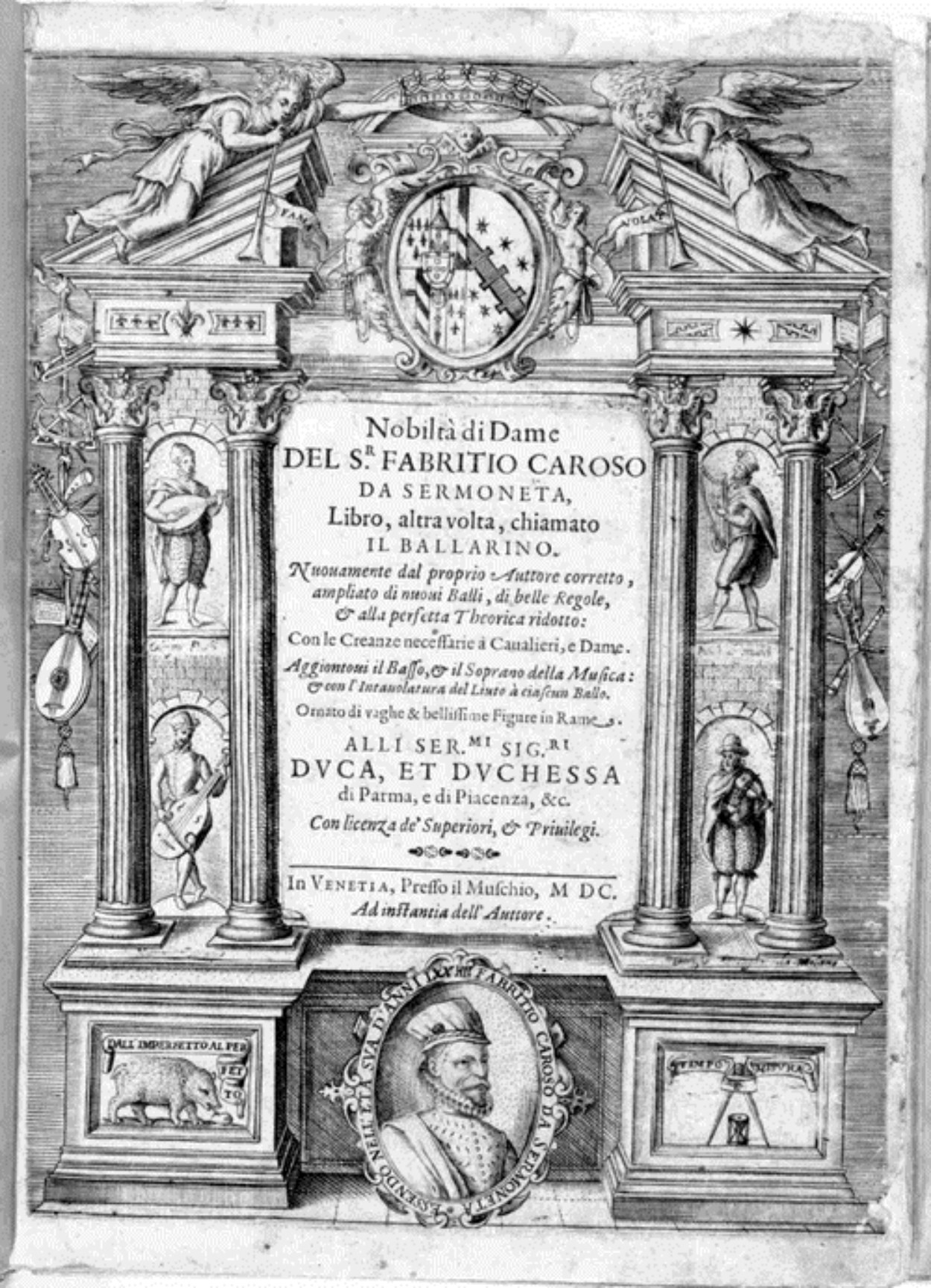
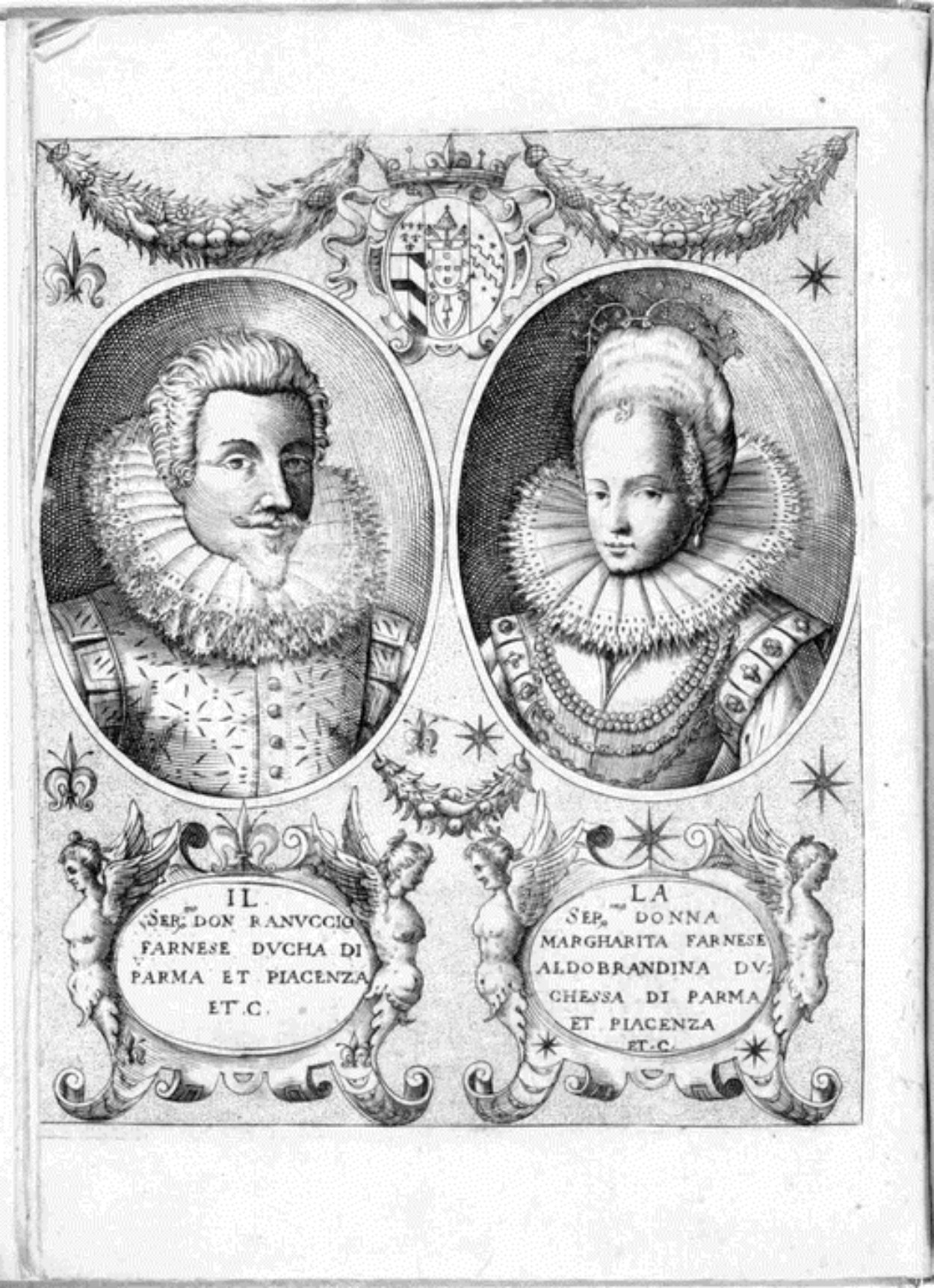
This plate from Fabritio Caroso's *Nobiltà di Dame* (Venice, 1600) documents the appearance, dress, and formal comportment of a noble couple engaged in court dance at the turn of the 17th century. Caroso's treatise was the most influential guide to Italian Renaissance and early Baroque court dancing, combining notated choreography with images that showed readers what the dances looked like when performed by people of rank. The *Nobiltà di Dame* was a revised and expanded edition of his earlier *Il Ballarino* (1581), incorporating the most fashionable practices of contemporary Italian court life and dedicated to Christine of Lorraine, the Queen of France. The woodcut shows not merely steps but the entire visual and social context of noble dancing—the formal dress, the upright carriage, the measured spatial relationship between partners, and the ballroom setting—making visible the courtly values of grace, restraint, and hierarchical propriety that governed the dance.
How to look at it
Observe the spatial relationship between the two figures—the deliberate distance and the mutual gaze create a moment of formal acknowledgment or greeting rather than a contact hold or turning figure. This relationship was central to Renaissance court dance, where much of the aesthetic lay in the upright carriage, the measured pace, and the visual presentation of the dancing body. Notice too the meticulous rendering of costume: the doublet, hose, cape, and sword on the man; the high waistline, ornamental front panel, and elaborate headdress on the woman. In Renaissance court dance, costume was inseparable from movement—the weight of fabric, the fit of garments, and the visual impression of rich dress were all part of the performance. The artist has chosen not a moment of dynamic turning or footwork, but a still moment of presentation and mutual regard, which tells us something essential about what Renaissance court dancing valued: the gravity, the nobility, the formal beauty of the posed and measured body.
The artist
Fabritio Caroso da Sermoneta (c. 1525–1605) was the most celebrated dancing master of the Italian Renaissance and early Baroque periods. He was active primarily in Rome and Venice and served noble and royal courts across Italy. His two major treatises—*Il Ballarino* (1581) and *Nobiltà di Dame* (1600)—are the most comprehensive surviving records of Renaissance Italian court dance. Both works combine detailed notation of dances (using a system Caroso developed), instructions on dance etiquette and comportment, and woodcut illustrations. Caroso was not merely documenting popular practice; he was codifying and promoting an ideal of courtly dancing that emphasized technical skill, social propriety, and the demonstration of noble status. His influence extended across Europe and his treatises remained reference works for dancing masters well into the 18th century.
The period
By 1600, Italian court culture had developed highly formalized systems of dancing that reflected Renaissance ideals of grace, measure, and decorum. The shift from the 16th to the early 17th century saw the consolidation of court dances like the pavane, galliard, and volta into standardized forms taught by professional dancing masters. These dances were essential to the social life of courts, serving functions that ranged from the formal opening of state occasions to courting and social hierarchies. Simultaneously, European courts were becoming more distant from direct popular participation in dancing; court dance was increasingly a specialized performance and social marker. Caroso's *Nobiltà di Dame* appeared at a moment when Italian court culture was codifying and archiving its practices in response to the emerging dominance of France under Louis XIV and the rise of ballet at the French court. The treatise thus represents both the height of Italian Renaissance dancing practice and a moment of retrospective crystallization, as the center of court dance authority was shifting northward.
Where it lives
This plate comes from the 1600 Venice edition of *Nobiltà di Dame*, held by the Library of Congress. Caroso's treatises were among the most widely reprinted dance manuals of their era, and copies of this edition are held in major libraries and archives throughout Europe and North America, reflecting the work's influence and circulation among both professional dancing masters and educated courtiers.
Dance in this work
Questions about this work
Who were these two people?
We do not know their identities. This is a generic illustration of a noble couple performing court dance, intended to show the reader how such dances should look in terms of posture, dress, and comportment. The image represents an ideal type rather than specific historical individuals. That said, the book was dedicated to Christine of Lorraine, Queen of France, and would have been studied by courtiers throughout the European nobility.
What dance are they doing?
This plate appears in a section on paired dances, but without the accompanying text and notation (which would appear elsewhere in the treatise), we cannot definitively identify which specific dance this is. However, the formal upright posture, the mutual regard across a defined space, and the absence of any visible turning or contact hold suggest a pavane or similar processional court dance typical of the formal opening of a ball.
Why is their clothing so elaborate?
In Renaissance court culture, dress was a language of status and sophistication. Expensive fabrics, rich embroidery, jeweled ornament, and fashionable tailoring announced nobility and courtly accomplishment. Dance was performed in full court dress, not in modern practice clothes. The elaborate costume was part of the dance itself—the way the body moved through and displayed expensive, beautifully made garments was central to the aesthetic and social meaning of court dancing.
Is this a real dance or an invented illustration?
Caroso's dances were real. He notated dances that were actually performed in Italian courts and taught them to students. The woodcuts, however, are stylized representations meant to show the ideal form of the dance—the perfect posture, the formal presentation, the courtly bearing. An actual performance would have had more variation and dynamic movement, but this image captures the essential qualities and values that Caroso wanted to communicate to readers.
More Notation/Choreography artwork