49 works in this view — arrow keys or swipe to move between them.
Dance in Art
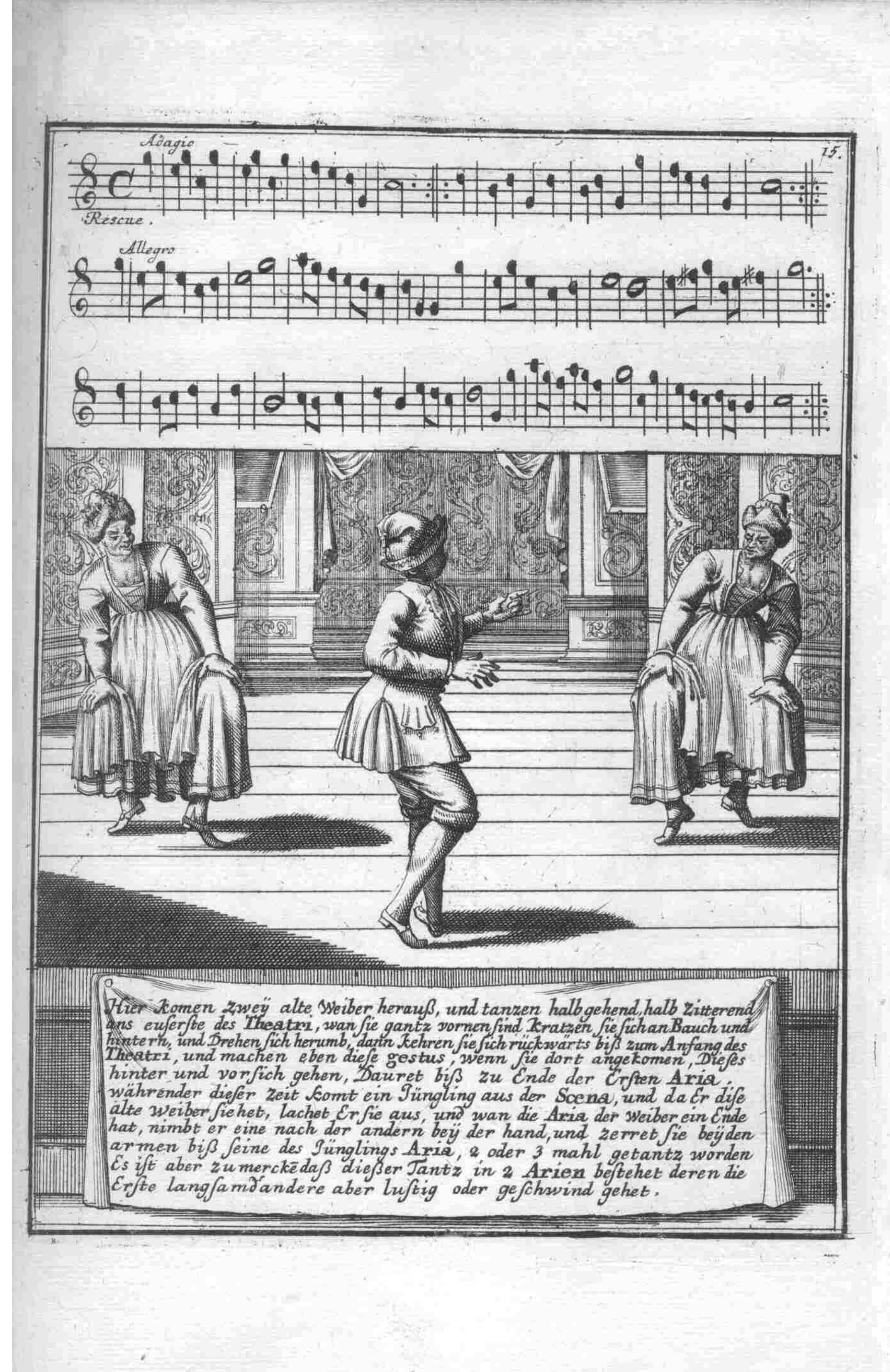
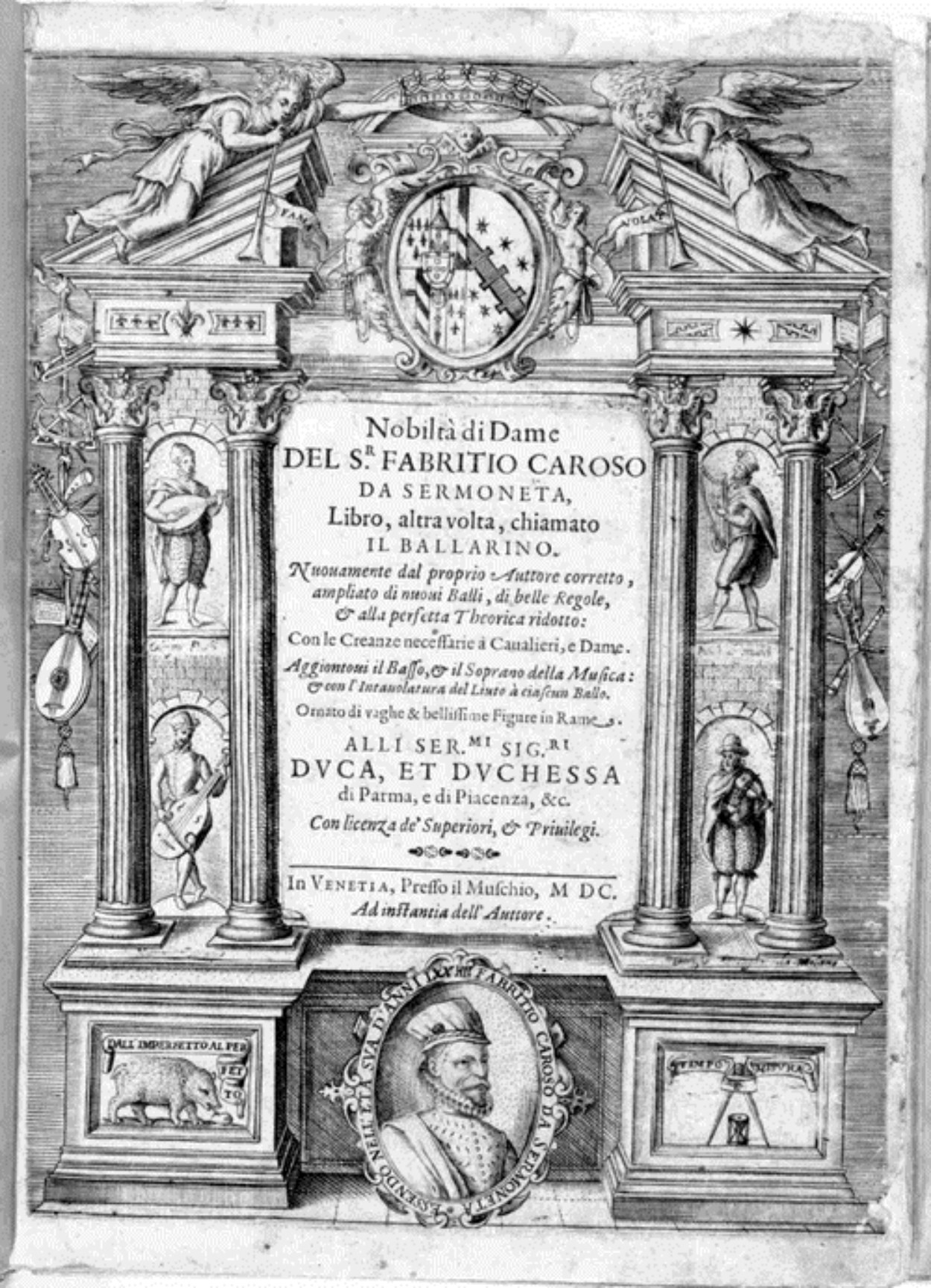
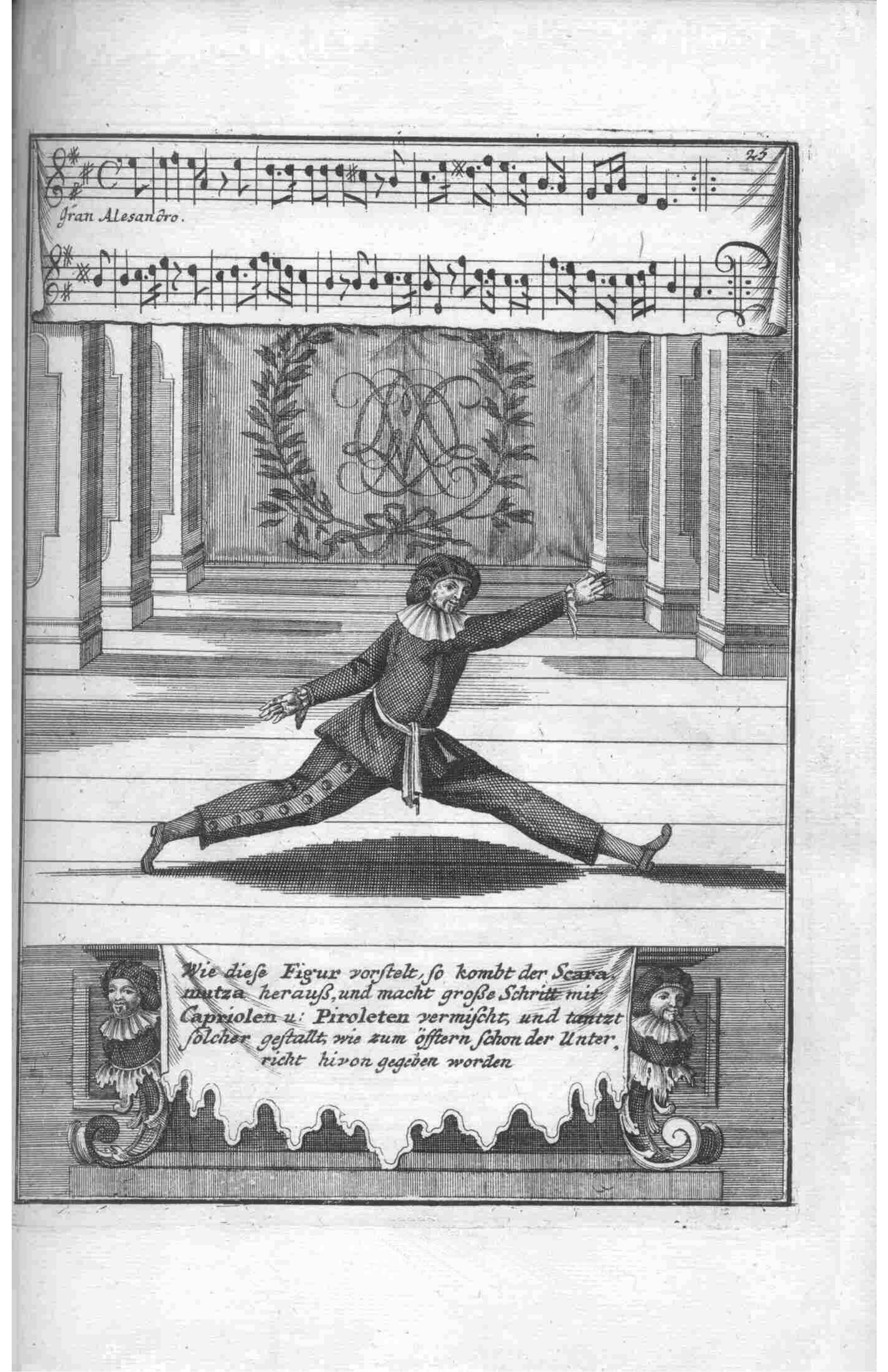
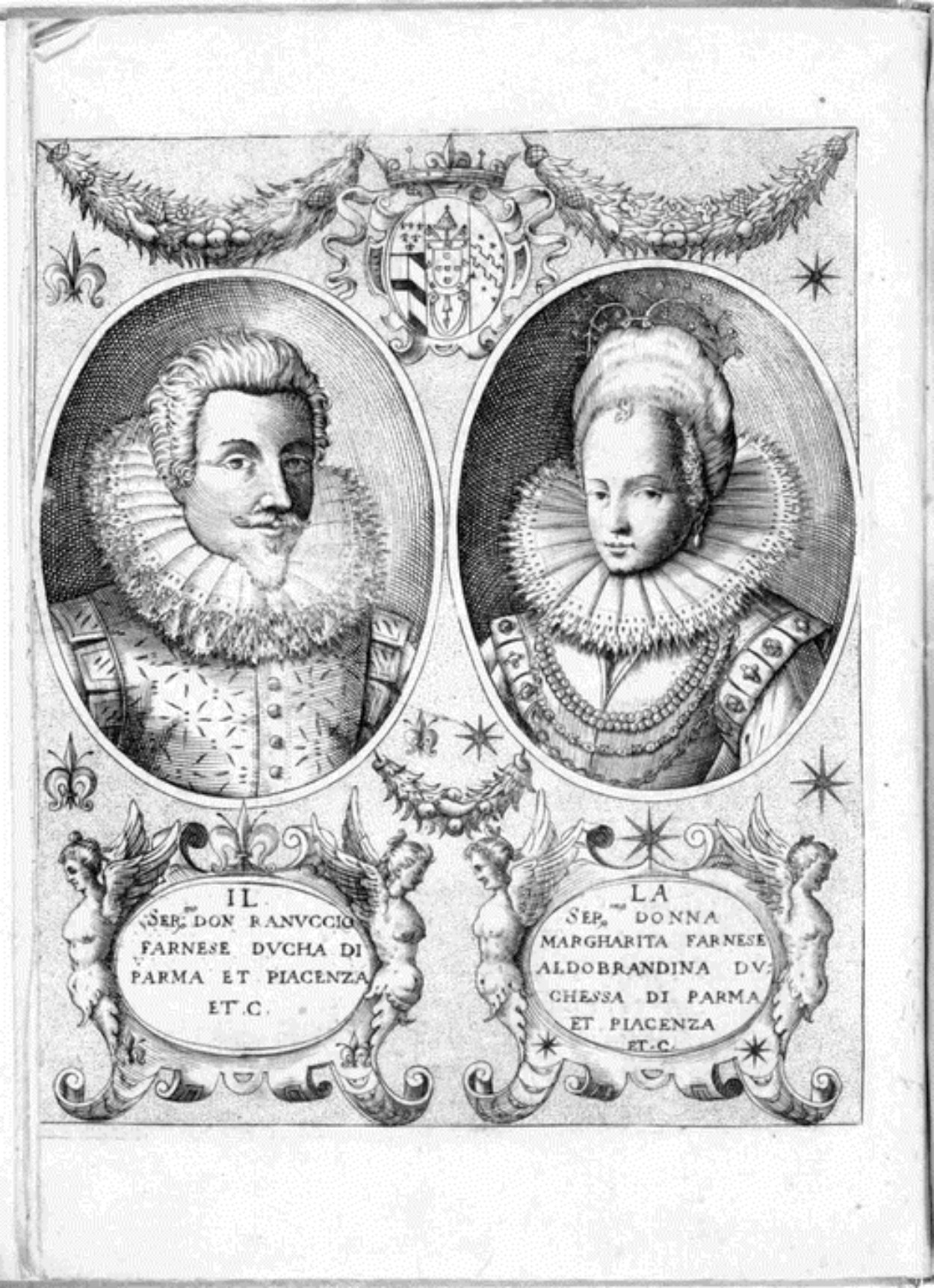
Caroso Nobiltà — Dance Plate (plate 15)
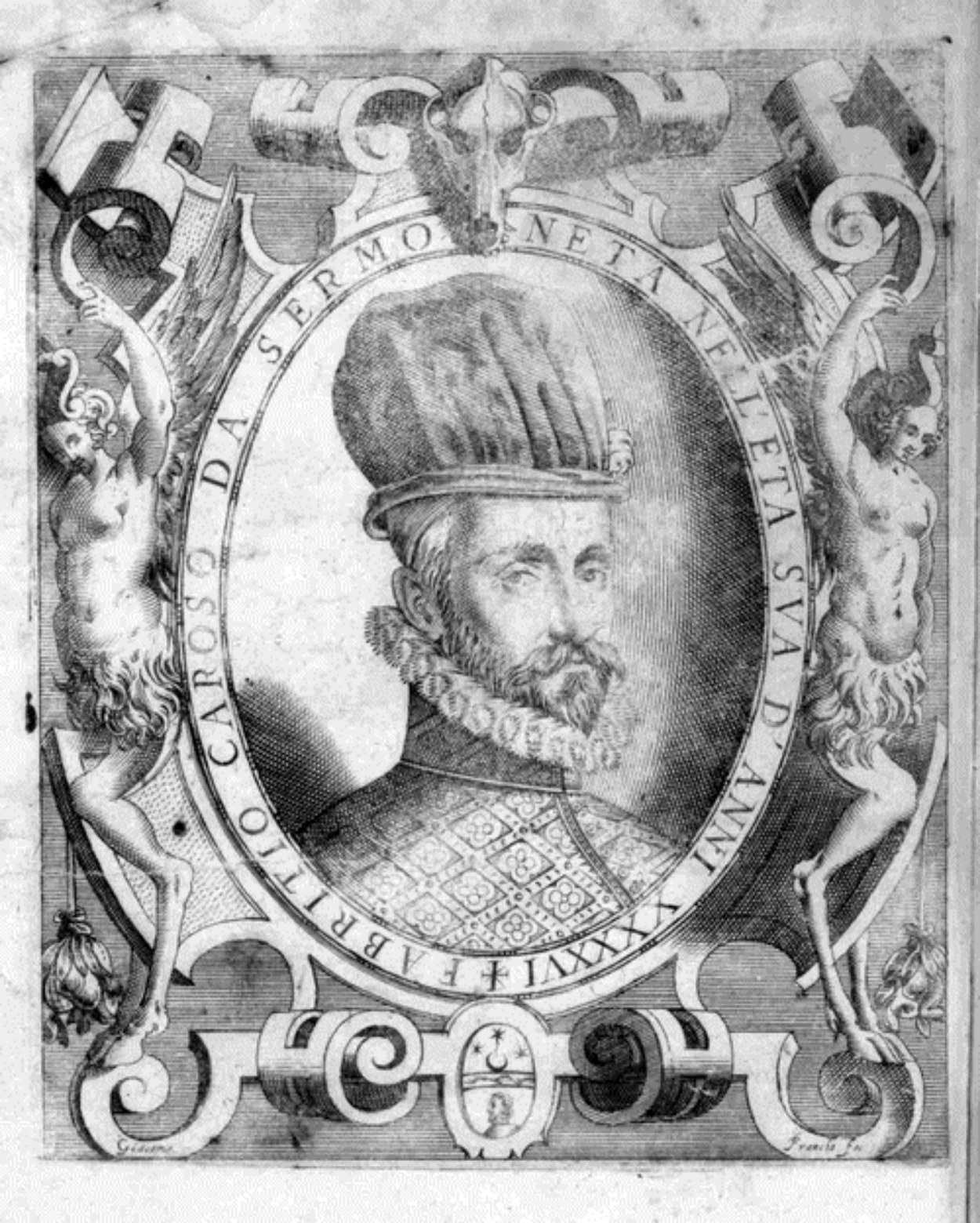
Fabritio Caroso da Sermoneta
- Medium:
- Woodcut
- Dance:
- Notation/Choreography
- Era:
- Pre-1700 (Renaissance/Baroque)
- Collection:
- Nobiltà di Dame (1600)
- Source:
- Library of Congress
- Rights:
- Public domain — free to use, share and adapt.
- Recorded as:
- Public Domain
Caroso's manual, and this plate in particular, is one of the earliest and most detailed surviving records of European court dance before the codification of ballet technique. The image preserves not only the steps and formations of Renaissance dances but the exact manner of dress, deportment, and social interaction that gave those dances their meaning—information that would be lost if only the text survived.
What you are looking at
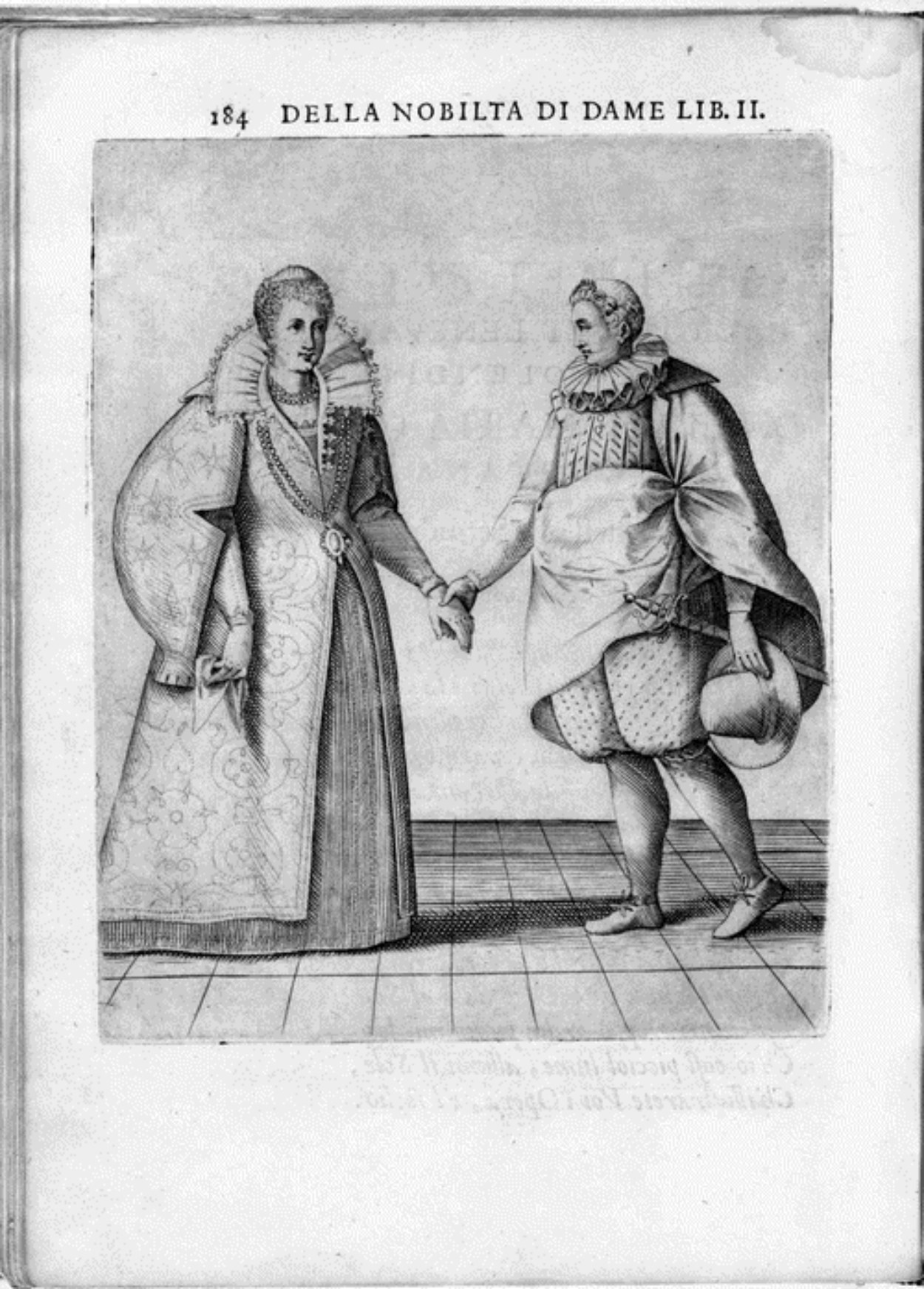
Two figures in Renaissance Italian court dress stand facing each other on a tiled floor, their right hands joined in greeting or salutation. The figure on the left wears an elaborate gown of patterned fabric with a high waistline, long sleeves, and a voluminous cloak or mantle lined with fur or pale material draped over the shoulders; a wide ruffled collar frames the face, and jeweled ornaments hang at the bodice. The figure on the right, smaller in stature, wears dark hose and a doublet with puffed sleeves, over which falls a short cloak similarly lined; the same style of ruffled collar is worn high and tight at the neck. Both figures wear their hair arranged in the fashion of the turn of the seventeenth century. The composition is spare and formal, set against a plain background with a geometric floor rendered in perspective. The engraving is finely hatched in the Northern European tradition, creating subtle modulation of light and shadow across the fabrics.
The dancing
The two dancers stand in a relatively upright, formal posture typical of Renaissance court choreography. Their right hands are clasped together at approximately waist height in what appears to be a hand-join or courtesy gesture rather than a closed ballroom hold. The larger figure on the left has weight evenly distributed on both feet; the smaller figure on the right appears to stand with slight weight forward. Neither figure displays the dramatic flexion or extension of limbs that would suggest an active step in progress; instead, the moment is one of formal presentation or greeting—the kind of paired figure that would open a choreographed dance or conclude one with mutual acknowledgment.
The dance depicted
This is almost certainly a *paired figure* from one of Caroso's own choreographies, illustrated in his manual. The image demonstrates the formal greeting or *riverenza* (reverence) and hand-hold position standard to the Italian Renaissance court dances that Caroso codified and taught—dances such as the pavane, galliard, and branle. The disparity in scale between the two figures is conventional in dance notation of the period and does not indicate actual height; it allowed the engraver to show the woman's elaborate skirts and the man's leg position without overlap. The hand-join shown here is the basic position from which a couple would begin a choreographed sequence, and the formality of the pose—frontal, symmetrical, without visible motion—marks this as a didactic moment rather than a snapshot of dance in progress.
How it was made
This is a woodcut, a relief-printing technique that allowed for sharp lines and bold contrasts suited to instructional illustration. Caroso's *Nobiltà di Dame* (1600) was printed in Venice, a major center for woodcut production, and the technique gave the manual wide circulation and reproducibility—each plate could be printed many times, making the choreographic instruction accessible to dance masters across Europe. The woodcut's linear clarity was ideal for showing the position and carriage of the body, the fall of fabric, and the ornamental detail of court dress; the technique's limitations in rendering subtle gradation of tone are overcome here through careful hatching and the convention of outline.
About this work
This is a pedagogical illustration from Fabritio Caroso's *Nobiltà di Dame* (Venice, 1600), one of the most influential dance manuals of the Renaissance and early Baroque. The print shows a male and female dancer in the formal paired position that opens or structures many of the bassedanze, pavanes, and galliards that Caroso codified. Caroso's manual was a compendium of the dance practice of the Italian Renaissance court and a record of how that practice evolved at the turn of the seventeenth century, particularly at the court of Catherine de' Medici and her descendants. This image is part of a sequence of plates that together constitute a choreographic notation in gestural form—each position, each hand-hold, each moment of alignment carries meaning within the system Caroso taught.
How to look at it
This is not a moment of motion but a moment of formation. The artist has chosen to freeze the dancers at the point of formal greeting, before the pattern of steps begins. Notice how Caroso's use of two figures of different scale allows the viewer to see the full silhouette of both dancers and to read the detail of the woman's skirts without foreshortening or overlap. The hand-join is the key detail: this is not a casual touch but a defined position within the choreography, and understanding its role requires reading Caroso's text alongside the image. The geometric floor beneath them establishes a stage and perspective, reminding us that this is a courtly performance, not an informal social moment.
The artist
Fabritio Caroso da Sermoneta (c. 1526–after 1605) was the most celebrated dance master of his time and the author of two major treatises: *Il Ballarino* (Venice, 1581) and the revised and expanded *Nobiltà di Dame* (Venice, 1600). He taught at the courts of Italy and France and is credited with systematizing the dance technique and vocabulary of the Renaissance, creating the first comprehensive written and illustrated account of court dance practice. His manuals were reprinted and translated throughout Europe and remained the standard reference for dance masters well into the seventeenth century. Caroso's approach combined practical instruction with assertions about the nobility and civility that correct dance technique conveyed—hence the title *Nobiltà di Dame*, the nobility of women.
The period
This plate was made at the turn of the seventeenth century, at a moment when Italian Renaissance court dance was reaching its culmination and beginning to be displaced by the emerging ballet de cour of France. The *Nobiltà di Dame* (1600) is Caroso's record of the dances and manner of his own lifetime and the generation before. The illustrated manual was itself a prestigious and expensive object, a gift book for patrons and a prestige item for dance masters; it asserts the dignity and learnability of dance at a moment when dance was transitioning from improvised social practice to choreographed theatrical spectacle. The woodcuts show dress, pose, and propriety at the cusp of the Renaissance and Baroque; within a generation, the formal pavane and galliard shown here would be museum pieces, preserved in prints and manuscripts.
Where it lives
This plate comes from the Library of Congress copy of *Nobiltà di Dame* (Venice, 1600), the revised and enlarged second edition of Caroso's treatise on dance. The work is held in the Library of Congress and is one of several copies of this edition surviving in research libraries.
Dance in this work
Questions about this work
What are they dancing?
We cannot say with certainty from the image alone. Caroso's manual contains many different dances—pavanes, galliards, branles, and others—each with its own step sequence. This image shows only the opening paired position, which was common to many of them. To know which specific dance this illustrates, you would need to read Caroso's text and trace which choreography this plate is assigned to in the original manual.
Why is one figure so much smaller than the other?
The difference in scale is a convention of dance notation from this period, not a reflection of actual height. It allowed the engraver to show the full silhouette and elaborate costume of both dancers without foreshortening or hiding details. The woman's skirts are the focal point of Renaissance court dress, and depicting them fully was more important to the illustration than anatomical accuracy.
How do we know this is from Caroso's book?
The plate appears in the catalogue record of the Library of Congress copy of *Nobiltà di Dame* (Venice, 1600). The style of dress, the format of the illustration, and the paired-figure composition are all consistent with Caroso's manual and distinct from other dance treatises of the period.
What was Caroso trying to teach with this image?
Caroso's manual was a method book for dance masters and aspiring courtiers. Each plate showed a specific position, hold, or formation that the reader should learn to recognize and reproduce. This plate teaches the formal greeting and hand-join that opens a choreographed dance and establishes the dancers' relationship to each other and to the space they occupy.
More Notation/Choreography artwork