32 works in this view — arrow keys or swipe to move between them.
Dance in Art
Mariinsky Ballet formerly Kirov Ballet Ballet Evening 11
Unknown artist
- Dance:
- Ballet
- Rights:
- Not recorded. Do not assume this image is free to reuse — check the source record.
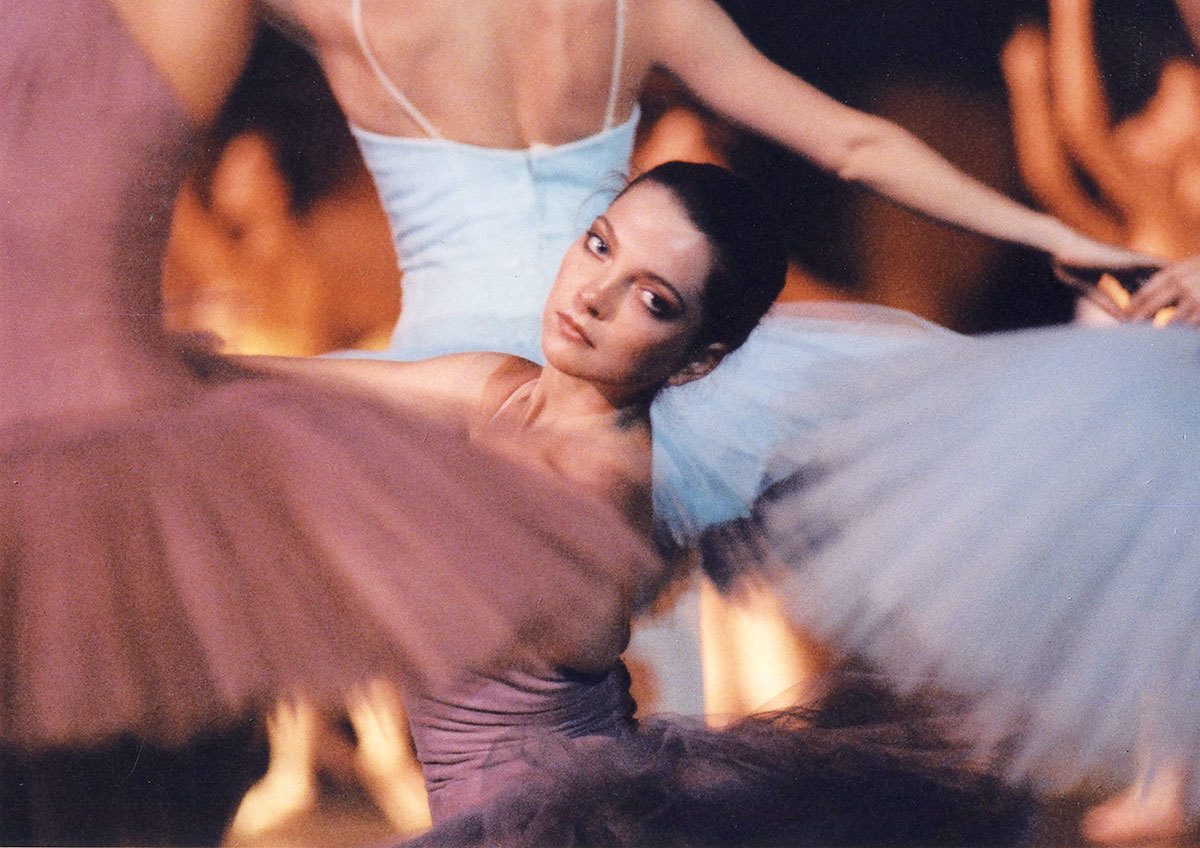
This photograph documents the Kirov Ballet at a moment when that company was the primary guardian and innovator of the classical repertory, and shows how classical technique was deployed to create psychological drama. For ballet historians and practitioners, it offers evidence of how a moment was staged—the grouping, the lighting design, the costume choice—in a major twentieth-century production.
What you are looking at
A ballet ensemble performs in a warm-lit interior space, the dancers arranged in a loose, intimate grouping around a central female dancer. The scene is dominated by warm amber and orange tones—perhaps candlelight or stage lighting—that cast the figures in shadow and highlight. The central dancer, wearing a pale blue costume, looks downward with a contemplative or melancholic expression. She is surrounded by male dancers in darker clothing, their bodies angled inward toward her. The composition creates a sense of drama or crisis: the gathering feels purposeful rather than ceremonial, with the dancers positioned as if attending to or encircling the central figure. The soft, warm wash of light and the muted color palette suggest either a rehearsal moment or a theatrically lit stage scene. The photograph's color saturation and quality suggest it is a professional theatrical or press photograph, possibly from the mid-20th century.
The dancing
The central female dancer is vertical and relatively still, her body held in upright ballet posture with a turned-out stance. The surrounding male dancers lean and reach toward her, their arms extended, some bent at the elbows in attitudes of concern or support. The frame is tight and compositional rather than showing full extensions; the heads and torsos dominate. The dancers' weight appears grounded and present rather than in flight. The positioning suggests classical ballet vocabulary—the men's bearing and the woman's carriage are consistent with academic training—but the spatial relationship is intimate and psychological rather than showing a lift, turn, or clear technical vocabulary.
The dance depicted
This appears to be a scene from a classical or romantic-era ballet, possibly from the Soviet or Russian imperial repertory given the Kirov/Mariinsky attribution. The composition—a woman alone or isolated with surrounding male dancers—recalls scenes from ballets such as *Swan Lake*, *The Sleeping Beauty*, or *Giselle*, where the central female character is attended by corps dancers or soloists. The theatrical lighting and the psychological intensity of the grouping suggest a dramatic or tragic moment rather than a classical ensemble variation. Without being able to identify the specific ballet or production from the image alone, it is reasonable to identify this as classical or romantic ballet performance. The date and specific production remain unknown.
How it was made
This is a color photograph, likely Kodachrome or Technicolor film stock given the warm, saturated palette and the photographic quality consistent with 1950s–1960s theatrical or press photography. The color has a slight grain and the exposure favors the lit faces and costumes while allowing the background to fall into shadow, a technique typical of professional stage photography. The photograph captures a single moment from a live or rehearsed performance, freezing a gesture and grouping that would otherwise be transient. The circulation as a press or archive photograph suggests it was made for documentation or promotional purposes.
About this work
This is a color stage photograph documenting a moment from a classical ballet performance, identified in the archive record as a Kirov/Mariinsky Ballet production. The work shows a ensemble scene built on the central drama of a single female dancer attended by male dancers, lit in warm, intimate tones that emphasize the psychological rather than technical content of the moment. The photograph is a record of theatrical practice and visual storytelling in 20th-century classical ballet, showing how academic ballet vocabulary was deployed to create emotional narrative on stage.
The work belongs in a gallery of dance because it documents not only the dancers' training and technique but also the choreographic and dramaturgical choices that shaped classical ballet in the Soviet tradition. It shows ballet as a collaborative, ensemble-based art form where lighting, costume, and spatial composition combine to create meaning.
How to look at it
Look first at the spatial relationship: the female dancer is positioned as a focal point, with the male dancers' bodies and gazes directed toward her. Notice how the warm lighting creates a visual frame that isolates this group from the surrounding space, suggesting a moment of drama or transition within a larger narrative. The stillness of the central figure—she is not in a grand arabesque or turning—combined with the attentive posture of the men suggests that the choreographer and director chose to show emotional content rather than technical virtuosity in this moment. The photograph stops time and allows you to read the body language and spatial relationships that would move quickly in performance.
The period
The Mariinsky (formerly Kirov) Ballet was the institutional home of classical ballet in the Soviet Union, inheriting the Imperial Russian Ballet tradition after 1917. In the mid-to-late twentieth century, the company maintained and performed the full classical repertory—*Swan Lake*, *The Sleeping Beauty*, *Giselle*—while also creating new works that engaged with Soviet ideology and aesthetics. Classical ballet in this period was understood as both an art form of international prestige and a symbol of Soviet cultural achievement. The warm, theatrical lighting and the intimate scale of this ensemble moment reflect post-war staging practices that emphasized psychological realism and emotional depth alongside technical display.
Where it lives
The work is identified in the record as belonging to the Europeana digital collection, a European aggregate archive that brings together digitized cultural works from museums, libraries, and archives across Europe. The specific holding institution, date of acquisition, and accession number are not recorded in the available metadata.
Dance in this work
Questions about this work
What ballet is this from?
The catalogue record identifies it as a Kirov/Mariinsky Ballet production but does not specify which ballet or which production. The composition—a central female dancer attended by male dancers in a moment of dramatic intensity—is consistent with scenes from *Swan Lake*, *The Sleeping Beauty*, *Giselle*, or other classical or romantic ballets in the standard repertory. The image alone does not contain enough visual information to identify the specific work.
When was this photograph taken?
The catalogue record gives no date. The color photographic technology, the style of the stage lighting, the costume design, and the aesthetic of the theatrical moment suggest a date in the mid-to-late twentieth century, likely 1950s–1970s, but this cannot be confirmed from the image alone.
Is this a real performance or a rehearsal?
The professional quality of the lighting and the theatrical intensity of the composition suggest this is either a performance or a staged rehearsal photograph made for documentation or promotional purposes. The lighting is too designed and the composition too intentional to be candid; this is a curated image made by a photographer who understood the choreography and the dramatic moment.
More Ballet artwork