45 works in this view — arrow keys or swipe to move between them.
Dance in Art
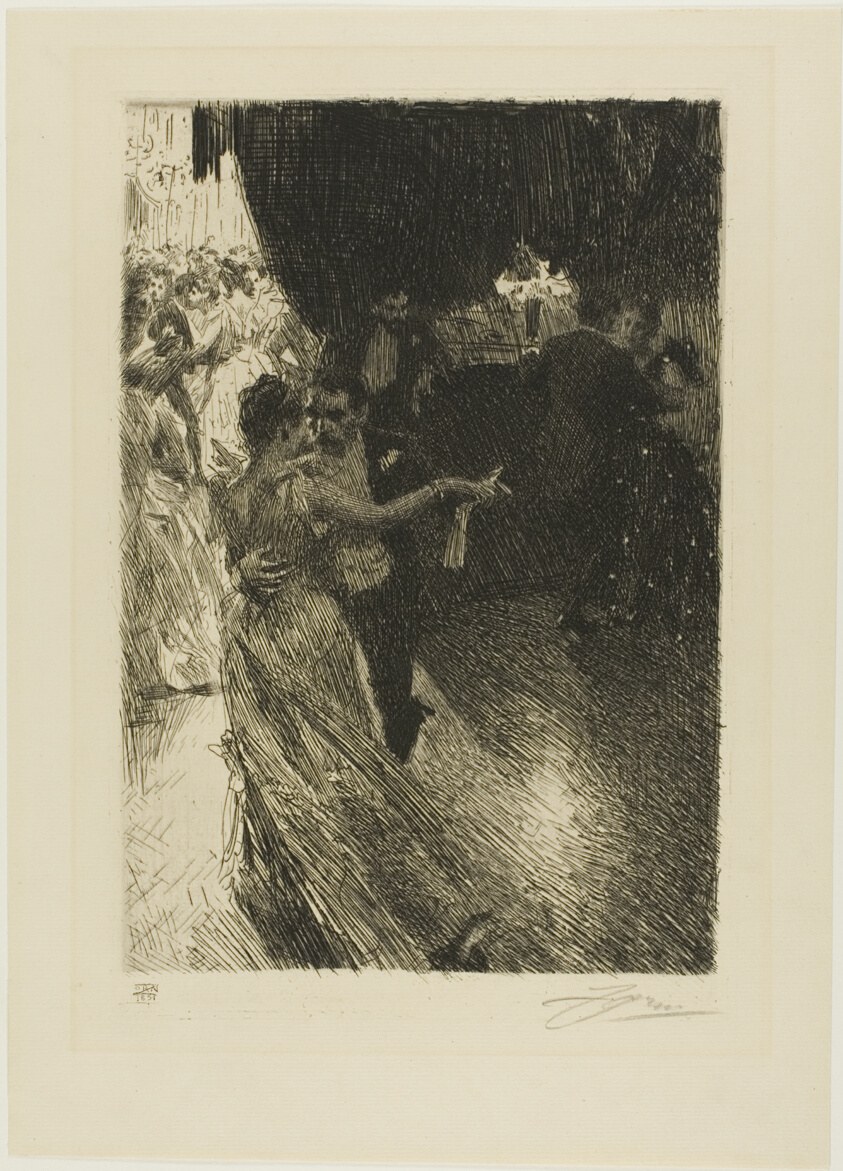
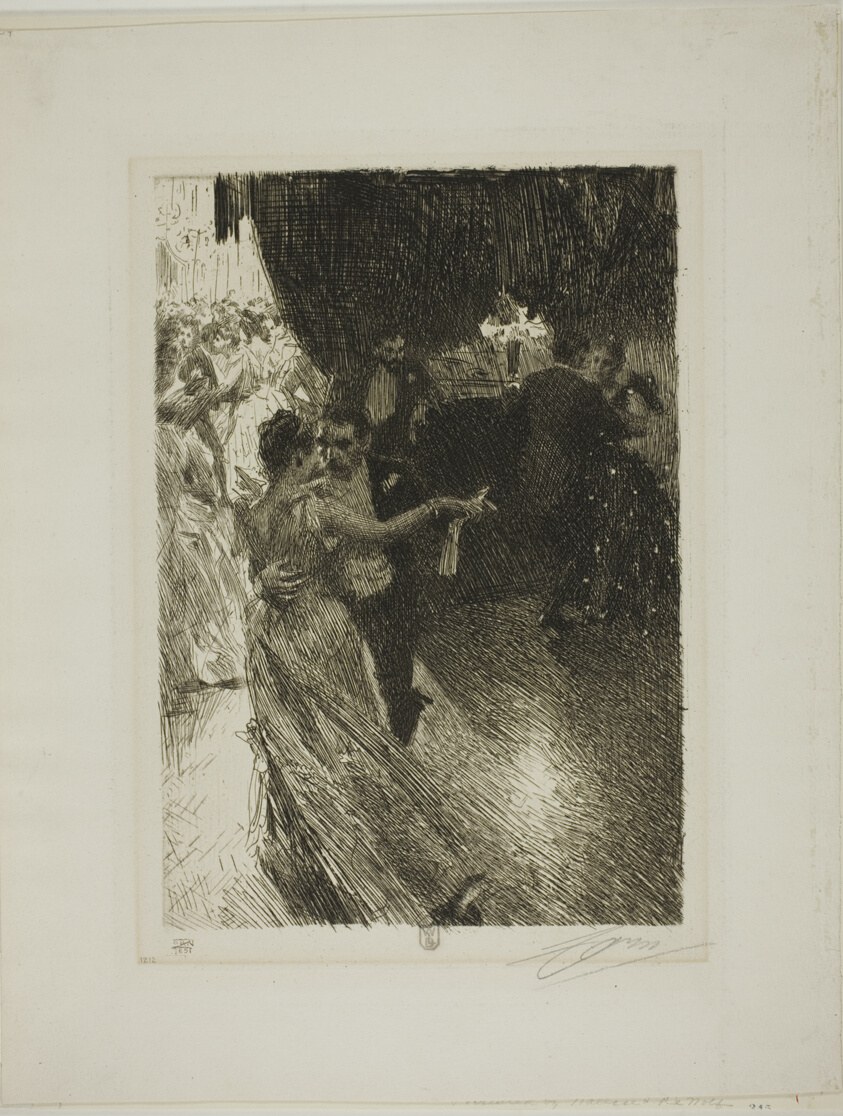
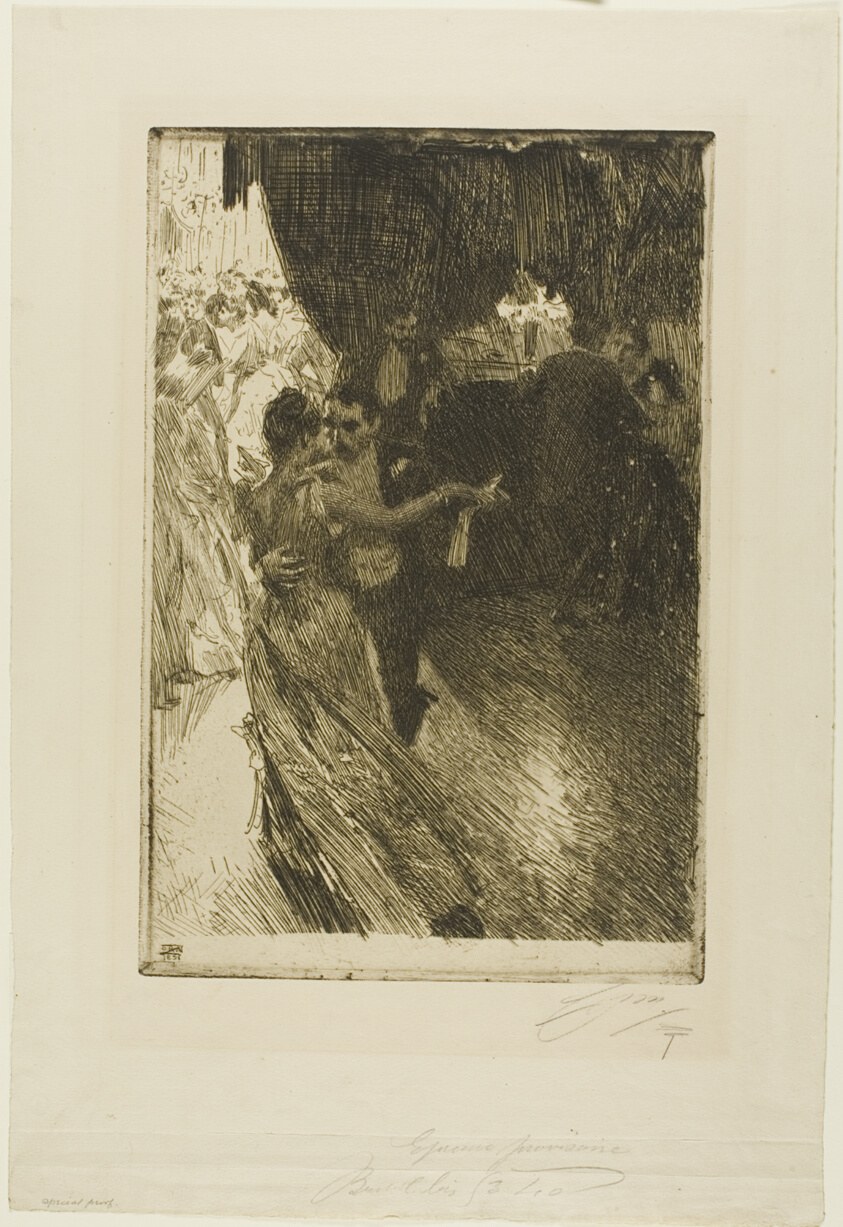
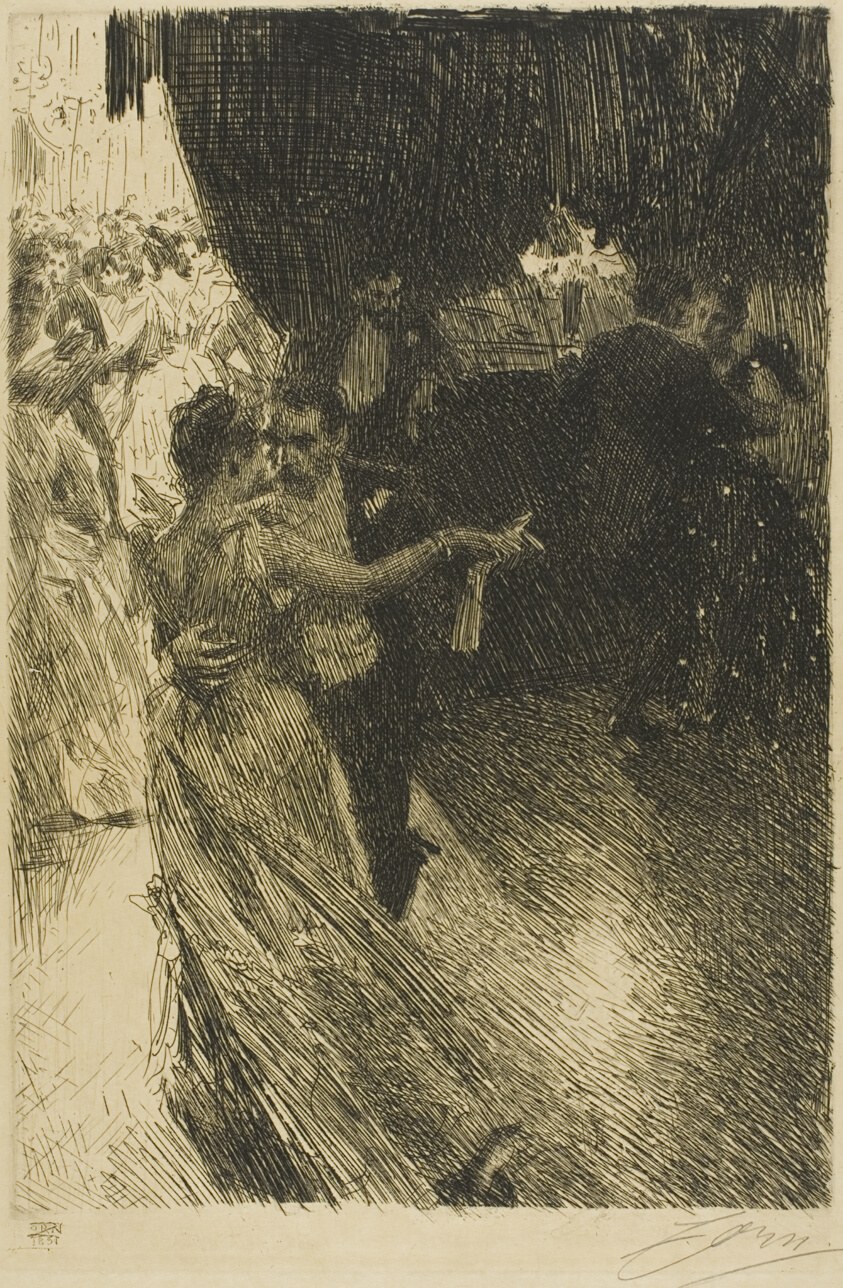
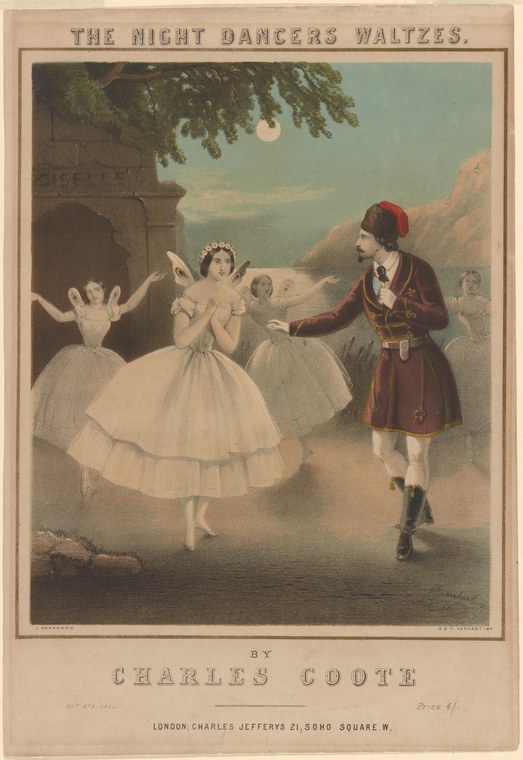
The night dancers waltzes
Unknown artist
- Medium:
- Lithograph
- Dance:
- Waltz
- Era:
- Early 1800s (Waltz Revolution)
- Source:
- New York Public Library
- Rights:
- Public domain — free to use, share and adapt.
- Recorded as:
- public_domain
This image preserves the visual aesthetic of Romantic ballet at its height, showing how the era's dancers and choreographers created illusions of weightlessness and otherworldliness through costume, body placement, and lighting—effects a lithograph could suggest but never fully capture. For historians, it documents the Sylph tradition that defined an entire era of dance and influenced ballet vocabulary for two centuries. The work demonstrates how Romantic ballet drew on contemporary social dance forms (the waltz) while transforming them into something supernatural and theatrical.
What you are looking at
A moonlit supernatural scene depicts a male figure in dark Romantic dress—a burgundy velvet jacket, cap, and boots—encountering a group of ethereal female dancers in a wild landscape. The women wear diaphanous white ballet skirts of mid-calf length and possess an otherworldly quality; some float or hover rather than stand firmly on the ground. The setting is a mountainous or rocky terrain with steep cliffs visible on the left and a moonlit sky above, evoking the Romantic period's fascination with the uncanny and the nocturnal. The composition suggests narrative drama: the male figure gestures toward or reaches for the nearest woman, who turns toward him with arms raised, while other figures drift in the middle distance. The mood is one of enchantment or danger—a mortal encountering supernatural beings. The lithograph's soft tonal gradations and atmospheric effect convey mist and shadow, heightening the otherworldly atmosphere.
The dancing
The nearest female dancer faces the male figure with her body in three-quarter view, both arms raised to shoulder height or above in a gesture of invitation or resistance. Her posture is upright but ethereal, without the grounded weight of a living dancer. The male figure leans forward in a lunge or reaching gesture, one leg advanced and body inclined toward her. The other women in the composition adopt similar vertical postures with raised or extended arms, creating a visual echo; their positioning suggests they are suspended or in mid-movement rather than planted on solid ground. The composition uses the classical ballet vocabulary of the era—raised arms, turned-out legs, and vertical alignment—but renders it uncanny through the figures' disembodied quality and the landscape's scale.
The dance depicted
This is a Romantic ballet image, almost certainly depicting a scene from *La Sylphide*, *Les Sylphides*, or a similar work from the Sylph tradition that dominated European dance in the 1830s–1850s. The title *The Night Dancers Waltzes* suggests a scene of supernatural female spirits dancing. The male figure is the mortal hero (the Sylph's lover), and the women are sylphs, naïads, or spirits—the fantastical beings central to Romantic ballet. The image captures the aesthetic of Romantic ballet: the ballet skirt at mid-calf or knee length, the pointe work suggested by the upright poses, and the ethereal, weightless quality emphasised through the lithograph's tonal softness. The waltz reference in the title indicates these supernatural beings danced in triple meter, a common feature of Romantic ballet's integration of social dance forms into theatrical narrative.
How it was made
This is a hand-coloured lithograph, a reproductive medium that allowed mass production and wide circulation of theatrical and literary imagery in the 19th century. The soft tonal qualities—the gradated greys and greens of the sky and landscape, the pale flesh tones, the delicate rendering of the dancers' skirts—are characteristic of lithography's ability to achieve atmospheric effects through crayon and stone. The colouring appears selective: the male figure's jacket in deep burgundy-brown draws the eye, while the women's skirts and skin remain pale, emphasizing their ethereal nature. The technique allowed theatregoers to own images of famous dancers and scenes, making ballet accessible as popular culture. The publication line visible at the base indicates commercial production and distribution through a London print seller.
About this work
This is a mid-19th-century lithograph documenting Romantic ballet's central fantasy: the encounter between a mortal man and supernatural female beings who exist outside time and nature. The work captures the visual language of the Sylph ballets that dominated European stages from the 1830s onward, translating the theatre's impossible effects—weightlessness, ethereal beings, moonlit enchantment—into a portable, collectible image. The composition emphasises the drama of desire and danger, the male figure's active reaching set against the women's passive, suspended beauty. It is both a document of theatrical practice and a Romantic artwork in its own right, using the waltz (a popular social dance imported into ballet) to anchor supernatural narrative in contemporary dance culture.
How to look at it
Attend to the contrast between the grounded, active male figure and the weightless, passive women: the male lunges and reaches while the women hover and turn, their skirts caught in folds that suggest movement without effort. Note how the lithographer uses soft atmospheric tone to create the illusion of mist and moonlight; the figures emerge from shadow rather than being sharply outlined. The composition's vertical emphasis—the raised arms and upright postures of all the female figures—creates a visual rhythm that conveys dance even in a still image. The landscape's inhospitable scale (the cliffs loom large) emphasises the supernatural nature of the encounter; these women do not belong to the material world.
The artist
The work credits Charles Coote and is published by Charles Jeffereys of London's Soho Square. Coote's practice appears to have been focused on theatrical and dance imagery for the popular market. Little is known of Coote beyond his lithographic work documenting stage scenes and performers of the 1830s–1850s, but his output places him among the commercial artists who made Romantic ballet accessible to middle-class audiences as collectible prints.
The period
This lithograph dates to the height of Romantic ballet in Europe, an era when supernatural narratives, moonlit landscapes, and ethereal female beauty dominated the stage. *La Sylphide* premiered in Paris in 1832 and became a template for the era; *Giselle* followed in 1841. The waltz, once a scandalous social novelty, had by this time become integrated into ballet narrative and court life across Europe. Lithographic production was booming, making theatrical imagery available to thousands. The aesthetic of the image—moonlight, weightlessness, the uncanny—reflects broader Romantic movement preoccupations with the supernatural and emotional intensity. The 1830s–1850s saw ballet move from court spectacle to commercial theatre, and prints like this one were a key part of that cultural shift, turning ballet into a consumer product.
Where it lives
The print is held in the New York Public Library collection and comes from commercial circulation via Charles Jeffereys' publishing house in London. It is a popular-market theatrical print, designed to be affordable and collectible, part of the mass reproduction of dance imagery that characterised mid-19th-century cultural consumption.
Dance in this work
Questions about this work
Is this from a real ballet?
Almost certainly. The imagery and title suggest a scene from the Sylph ballet tradition of the 1830s–1850s, likely *La Sylphide* or a similar work. However, without a specific attribution on the print or a dated performance record, we cannot identify the exact ballet or premiere. The visual language—the supernatural female beings, the male lover, the moonlit landscape, the waltz—was a formula repeated across European stages during this era.
What is a 'night dancer'?
In Romantic ballet, 'night dancers' typically refers to supernatural female spirits—sylphs, naïads, ghosts, or fairies—who danced at night or in liminal spaces (forests, graveyards, lakeshores). These beings were central to Romantic ballet's exploration of the unreal and dangerous. The title likely refers to the supernatural women in the image.
Why does the title mention a waltz?
By the 1830s–1850s, the waltz had become a standard feature of ballet. Choreographers incorporated the waltz's triple-meter rhythm into theatrical dance, often using it for corps de ballet scenes or supernatural sequences. A 'waltz' in a Romantic ballet would have been danced in the balletic style—with turned-out legs, raised arms, and ethereal quality—rather than as a social dance.
Who was Charles Coote?
Very little is documented about Coote beyond his work as a lithographer for theatrical and dance imagery in mid-19th-century London. He was one of many commercial artists producing affordable prints of famous dancers and stage scenes for the growing middle-class market. Such artists were essential to making ballet a popular consumer culture, but few records of their lives survive.
More Waltz artwork