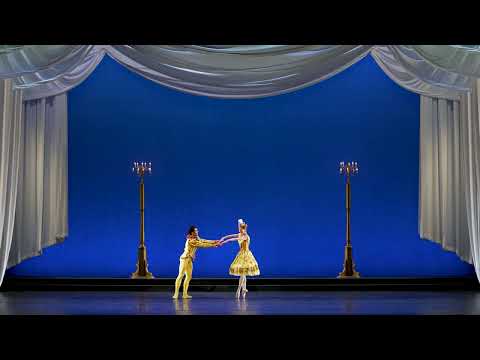
Birthday Offering is a plotless pièce d'occasion Frederick Ashton made for the Royal Ballet in 1956, using a score assembled from several Glazunov ballets and concert pieces (The Seasons, Scènes de ballet, Ruses d'amour, and the Valse de concert No. 1), arranged by Robert Irving. It belongs to the tradition of the occasional gala ballet: a single scene with no story, built to mark an institutional anniversary and to display a company's ranking dancers in a formal suite of entrance, variations, demonstration dance, pas de deux and finale.
What it contains
- Classical Ballet · the whole ballet, across the entrance, seven variations, mazurka, pas de deux and finale — Structured as a classical grand divertissement: a massed entrance of seven couples, seven individuated ballerina variations, a men's demonstration mazurka, a formal principal pas de deux, and an ensemble finale — the sequence of forms characteristic of 19th-century classical ballet suites rather than narrative choreography. Source: "In a sumptuous setting, seven couples make a grand entrance, then the women perform a series of seven solo variations."
- Mazurka — Mazurka, Op. 25 No. 3 (orchestrated by Robert Irving) · the Mazurka number danced by the men — A bravura, virtuosic mazurka performed collectively by the male dancers as a self-contained demonstration number, set apart from the women's variations and the principal pas de deux. Source: "The men dance a bravura mazurka"
What is danced
The ballet is built as a classical divertissement suite rather than a narrative. Seven couples open with a grand entrance; the seven women of those couples are then each given a solo variation, danced to separate excerpted numbers (several drawn from Glazunov's The Seasons, one titled "Marionettes" from Scènes de ballet, one from Ruses d'amour) so that each ballerina is shown in a distinct, self-contained set piece rather than a repeated formation. The men are given a collective bravura mazurka as a display number of their own, structurally separate from the women's variations. The principal couple is then singled out for a formal pas de deux (the "Grand pas des fiancées" from Ruses d'amour), and the whole ensemble closes with a reprise of the opening waltz.
Context
The work was made in 1956 to mark the 25th anniversary of the Royal Ballet, at a moment when the company was consolidating its identity around a classical, Petipa-descended repertory and around a generation of star ballerinas developed under Ashton and de Valois. Building a suite of solo variations, a mazurka and a grand pas de deux out of Glazunov concert and ballet music places the piece deliberately in the lineage of the 19th-century Imperial grand pas, the same idiom Glazunov's own scores (for Petipa/Raymonda-era ballet) had served; Ashton's use of it here for an anniversary gala rather than a narrative evening is itself the historical point of the piece.
How to watch it
Watch it as a formal suite, not a story: the interest is in how each of the seven women's variations is individuated in music and phrasing, how the men's mazurka is pitched as a separate display of virtuosity rather than support for the women, and how the principal pas de deux is set apart from the surrounding ensemble material. The opening and closing waltz frame the piece symmetrically, so the entrance and finale are worth comparing directly.
Structure
- Overture: "L'Eté" from The Seasons, Op. 67Orchestral overture opening the ballet, before the entrance of the cast.
- Valse de concert No. 1 / Pas d'action / Coda from Ruses d'amourSeven couples make a grand entrance.
- 1st variation: "Marionettes" from Scènes de balletFirst of the women's seven solo variations.
- 2nd variation: "La Givre" from The SeasonsSecond solo variation for one of the seven women.
- 3rd variation: "La Glace" from The SeasonsThird solo variation for one of the seven women.
- 4th variation: "La Grêle" from The SeasonsFourth solo variation for one of the seven women.
- 5th variation: "La Neige" from The SeasonsFifth solo variation for one of the seven women.
- 6th variation: "L'Eté" from The SeasonsSixth solo variation for one of the seven women.
- 7th variation: from Ruses d'amourSeventh and final of the women's solo variations.
- Mazurka, Op. 25 No. 3 (orchestrated by Robert Irving)The men dance a bravura mazurka.
- Pas de deux; "Grand pas des fiancées" from Ruses d'amourThe principal couple performs an elegant pas de deux.
- Finale: Valse de concert No. 1, repriseThe ballet ends with a final waltz for the entire ensemble.
Structure read from an encyclopaedia article, not from a libretto or score we hold. Confirm against a programme before treating the numbering as authoritative.
Credits
- composer: Alexander Glazunov
More from Frederick Ashton
Other staged works in the register connected to this one by author or lineage.
 SylviaBallet · 1876Ashton · video
 Les PatineursBallet · 1937Ashton · video
 Symphonic VariationsBallet · 1946Ashton · video
 Marguerite and ArmandBallet · 1963Ashton · video
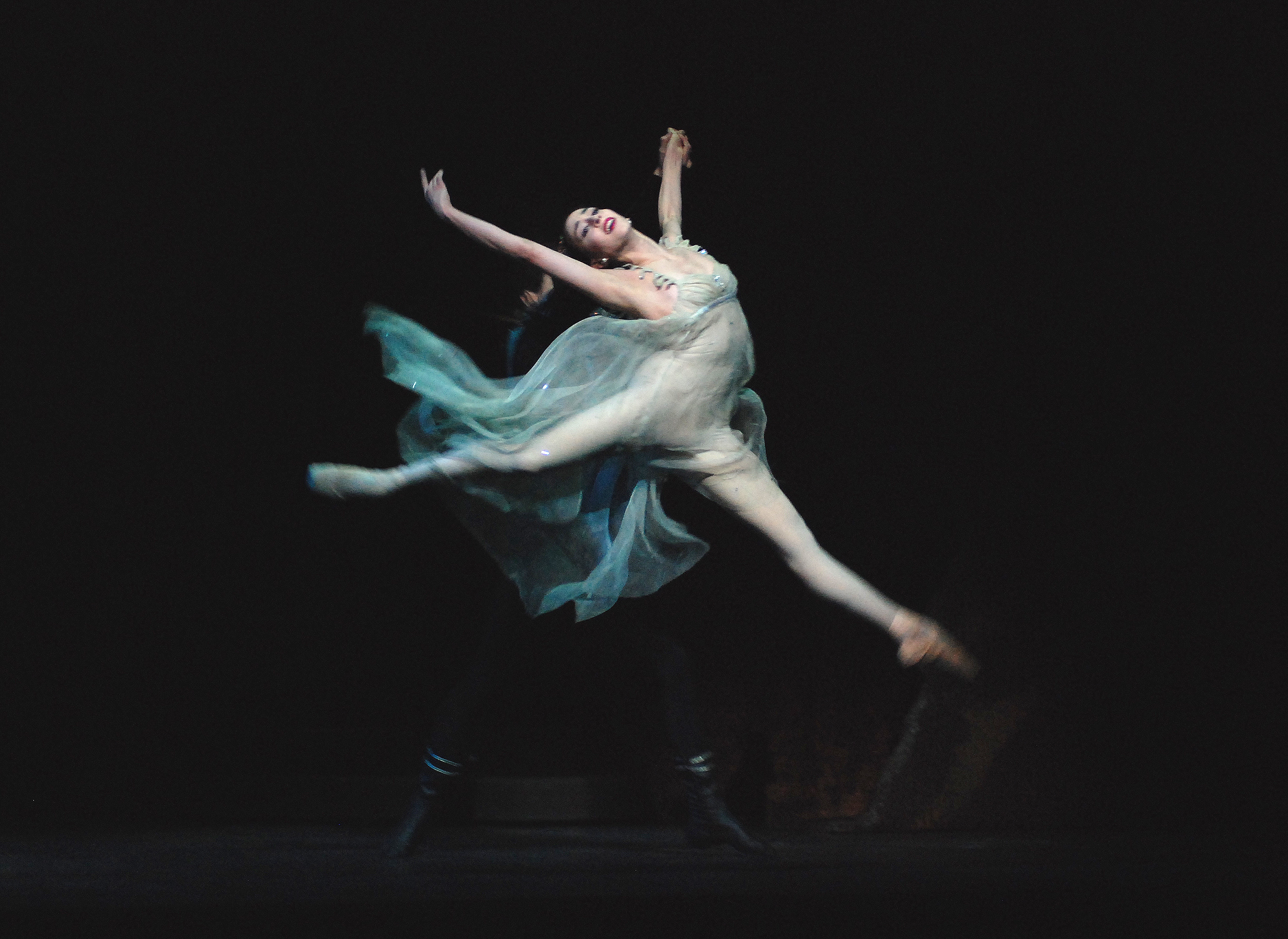 OndineBallet · 1958Ashton · video
 A Month in the CountryBallet · 1976Ashton · video
 L'Île EnchantéeBallet · 1864Same lineage
 Five Brahms Waltzes in the Manner of Isadora DuncanBallet · 1975Ashton · video