
Scillystuff · CC BY-SA 3.0
Jewels is a three-act plotless ballet made by George Balanchine for his own company, New York City Ballet, and first given at the New York State Theater on 13 April 1967. Each act — Emeralds, Rubies, Diamonds — is a self-contained ballet set to a different composer (Fauré, Stravinsky, Tchaikovsky) and unified only by Barbara Karinska's jewel-coloured costuming, which is why the work is often described as the first full-length abstract ballet rather than a narrative in three parts.
What it contains
- Balanchine Method · the whole work — This is Balanchine's own choreography made for the company he founded to realise his method; the article credits him as sole choreographer and 'founding choreographer' of NYCB. Source: "Jewels is a three-act ballet created for the New York City Ballet by co-founder and founding choreographer George Balanchine."
- Classical Ballet — Diamonds · Act III, Diamonds — Costumed in the flat classical tutu of the Imperial Russian Ballet, an explicit citation of Petipa-era grand classical vocabulary, danced to symphonic Tchaikovsky. Source: "the flat, classical tutu of the Imperial Russian Ballet for Diamonds"
- Neoclassical Ballet · all three acts — Described as plotless and abstract rather than narrative-mimetic, structured as three musically distinct movements rather than a story ballet; the Emeralds pas de deux is explicitly built on plain walking rather than virtuoso steps. Source: "Jewels has been called the first full-length abstract ballet."
- Romantic Ballet — Emeralds · Act I, Emeralds — Costumed in soft, calf-length romantic tulle explicitly labelled 'romantic' by the article, paired with Fauré's late-Romantic score and a slow walking pas de deux. Source: "romantic, calf-length tulle skirts for Emeralds"
What is danced
The article gives no step-by-step choreographic description, but it does anchor each act to a distinct visual and musical register that a dancer should recognise before approaching the material. Emeralds is built on Fauré's Pelléas et Mélisande and Shylock scores and includes a specifically named set piece, the Nocturne ('walking') pas de deux — a duet built on understated, unhurried walking phrases rather than bravura steps, danced originally by Mimi Paul, who later coached it onto other dancers including Sara Mearns. Rubies is set to Stravinsky's Capriccio for Piano and Orchestra and is costumed with fabric flared at the hips for both men and women, a design choice that signals freer hip and torso articulation than the other two acts. Diamonds, danced to movements from Tchaikovsky's Third Symphony, is dressed in 'the flat, classical tutu of the Imperial Russian Ballet,' an explicit costume citation of Petipa-era grand classicism.
Beyond these act-defining cues the source material is silent on specific steps, partnering or ensemble patterning, so a full technical breakdown cannot be built from it alone.
Context
Jewels arrived in 1967 at the height of Balanchine's authority over New York City Ballet, the company he had co-founded specifically to realise his own choreographic language outside the story-ballet tradition he had inherited from the Imperial Russian stage. Its significance in dance history rests on the claim reported here that it is 'the first full-length abstract ballet' — an evening-length work with no plot, structured instead as three musically and stylistically distinct ballets joined only by costume colour, at a moment when full-length ballet was still assumed to mean narrative.
Staging history
The ballet's costumes, by Karinska, were considered significant enough as objects that some pieces have been exhibited in museums and theatre lobbies rather than only worn onstage. The Royal Ballet gave its company premiere of the full-length work at the Royal Opera House with new scenic designs by Jean-Marc Puissant (Karinska's original costume designs retained) and won two 2008 Laurence Olivier Awards for it, for Best New Dance Production and Outstanding Achievement in Dance. The work has also been filmed and released by multiple companies — Paris Opéra Ballet (2000), New York City Ballet (1979, and again in 2019 for Rubies and Diamonds during the COVID-19 pandemic), the Mariinsky Ballet (2011), and the Royal Danish Ballet (Emeralds only) — and the article records planned stagings by Pacific Northwest Ballet (2025) and Oregon Ballet Theatre (2026).
How to watch it
Watch for the contrast Balanchine builds between the three acts rather than for a through-story: Emeralds trades on soft, walking, legato phrasing; Rubies on angular, syncopated attack matched to Stravinsky's Capriccio; Diamonds on the grand, symmetrical classicism of Imperial Russian tutu ballet set against Tchaikovsky. The costumes are a deliberate guide to the shift in vocabulary act to act, and companies sometimes present a single act as a stand-alone excerpt, so knowing which act you are seeing matters for what to expect technically.
Structure
- Act I · EmeraldsSet to Fauré, danced in romantic calf-length tulle skirts; includes the Sicilienne variation and the Nocturne ('walking') pas de deux.
- Act II · RubiesSet to Stravinsky's Capriccio for Piano and Orchestra, costumed in fabric flared at the hips for men and women.
- Act III · DiamondsSet to movements from Tchaikovsky's Symphony No. 3, danced in the flat classical tutu associated with the Imperial Russian Ballet.
Structure read from an encyclopaedia article, not from a libretto or score we hold. Confirm against a programme before treating the numbering as authoritative.
Credits
- composer: Gabriel Fauré
- composer: Igor Stravinsky
- composer: Pyotr Ilyich Tchaikovsky
More from George Balanchine
Other staged works in the register connected to this one by author or lineage.
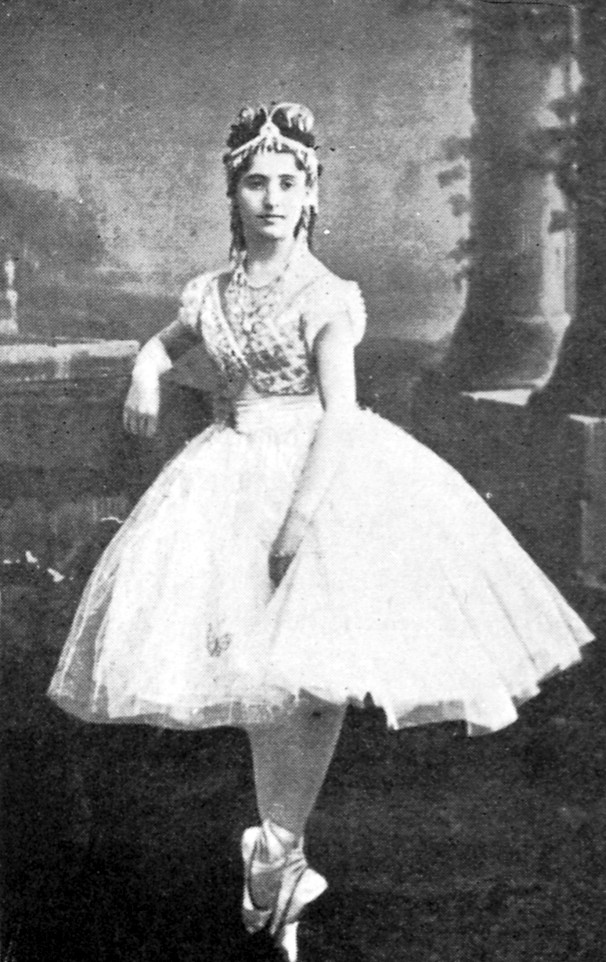 CoppéliaBallet · 1870Balanchine · video
 ApolloBallet · 1928Balanchine · video
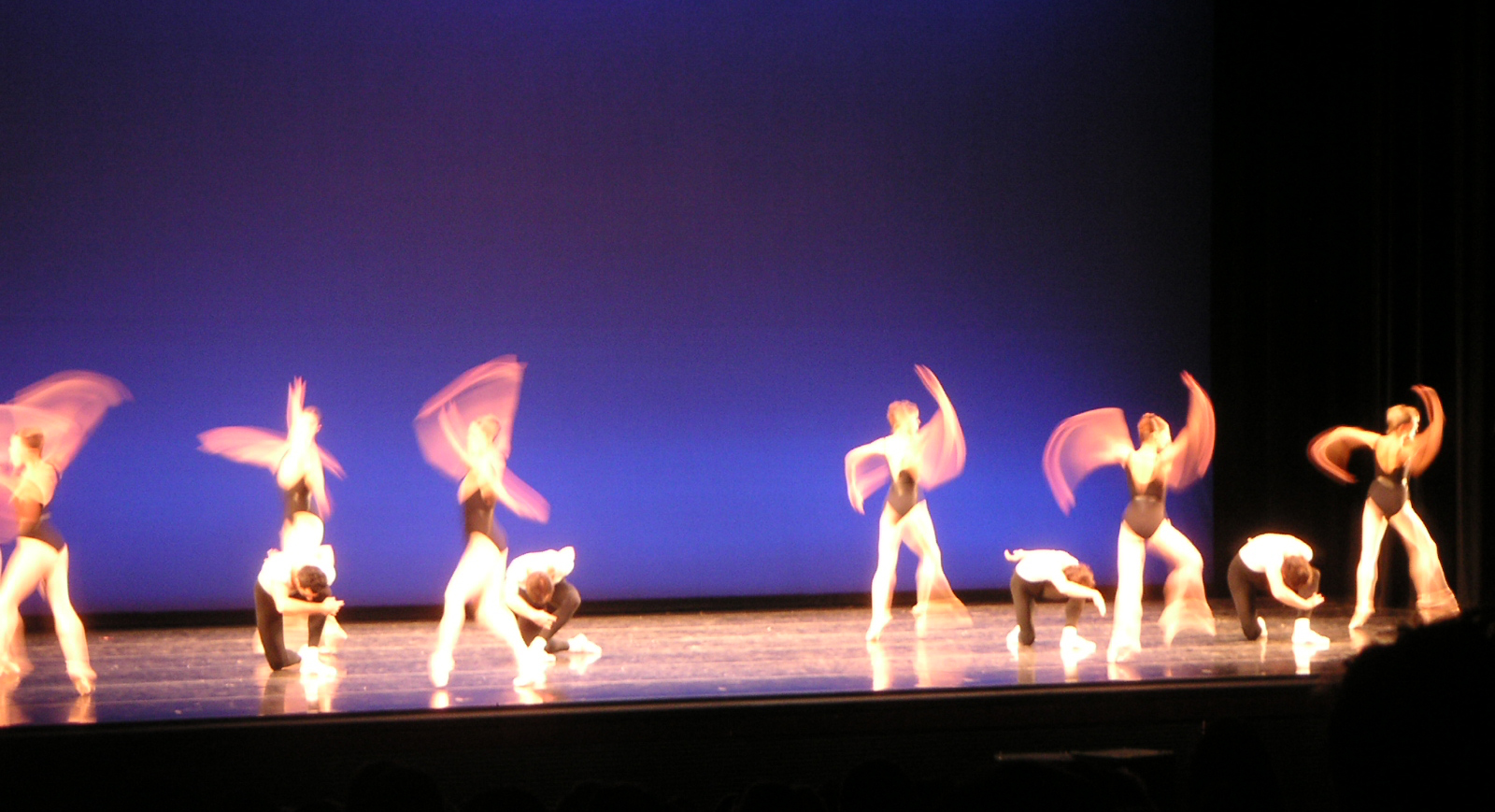 AgonBallet · 1957Balanchine · video
 Le chant du rossignolBallet · 1920Balanchine · video
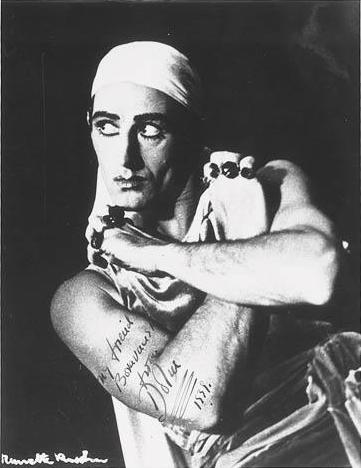 The Prodigal SonBallet · 1929Balanchine · video
 The Seven Deadly SinsBallet · 1933Balanchine · video
 Kammermusik No. 2Ballet · 1978Balanchine · video
 Divertimento No. 15Ballet · 1956Balanchine · video