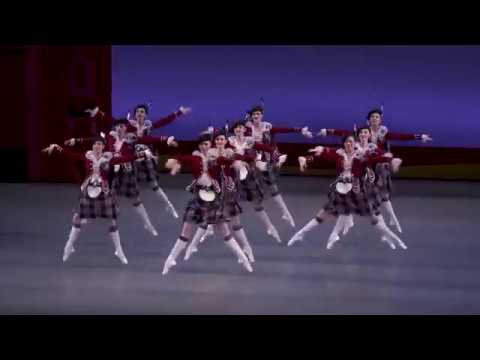
Union Jack is a plotless ensemble ballet George Balanchine made for New York City Ballet, premiered on 13 May 1976 at the New York State Theater as part of the American Bicentennial, using the occasion to salute British heritage rather than American independence. The score, arranged by Hershy Kay from traditional British tunes, hornpipe melodies and music-hall songs of roughly 1890 to 1914, gives the ballet its structure: Scottish tattoo and folk-dance material, a comic music-hall pas de deux for a costermonger 'Pearly King and Queen,' and a closing display built on sea songs, work chants and jigs.
What it contains
- Balanchine Method · the whole work — A full-company ensemble ballet built by Balanchine for New York City Ballet, using his ensemble ballet-vocabulary throughout rather than a narrative dramatic idiom. Source: "Union Jack is a ballet made by New York City Ballet co-founder and founding choreographer George Balanchine"
- Hornpipe · the whole work (score-driven, no single named section given) — The score is drawn in part directly from hornpipe melodies and hornpipes as a dance form, indicating a stylized sailor's-hornpipe idiom is danced somewhere in the piece, though the article does not describe the exact steps. Source: "The music includes Scottish military tattoos and folk-dance forms; a music-hall pas de deux for the costermonger Pearly King and Queen; hornpipes, sea songs, work chants and jigs."
- Jig · the whole work (score-driven, no single named section given) — Jigs are named as part of the score's dance-form basis alongside hornpipes and sea songs, implying jig-derived rhythmic footwork appears somewhere in the ballet's ensemble material. Source: "The music includes Scottish military tattoos and folk-dance forms; a music-hall pas de deux for the costermonger Pearly King and Queen; hornpipes, sea songs, work chants and jigs."
What is danced
The clearest set piece the article names is the Costermonger pas de deux, a music-hall turn for the costermonger Pearly King and Queen, distinct in tone from the rest of the ballet's more military and naval material — this is character-driven comic partnering rather than abstract classical adagio work, though the article gives no further detail on its steps. The score elsewhere draws on Scottish military tattoos and folk-dance forms, and on hornpipes, sea songs, work chants and jigs, meaning the choreography moves through several distinct national and vernacular idioms rather than sustaining one vocabulary throughout — a hallmark of Balanchine's 'occasional' ensemble ballets, which stylize identifiable folk and popular forms for a trained ballet company rather than reproducing them literally.
Context
Union Jack belongs to the wave of American commissions built around the 1976 Bicentennial, and it is characteristic of Balanchine's late style at New York City Ballet: an evening-length showpiece for the full company built from arranged popular and national music (as with his earlier Stars and Stripes) rather than from an original narrative score. Turning the Bicentennial into a tribute to Britain, rather than to the United States, is itself the ballet's central historical gesture, and its finale — spelling 'God Save the Queen' in semaphore as the flag unfurls — makes that gesture explicit and theatrical rather than incidental.
Staging history
The article documents reviews of the work across three decades (1976, 1980, 2005, 2008), indicating it stayed in or returned to New York City Ballet's active repertory well beyond its premiere. Principal dancer Jock Soto danced an excerpt from Union Jack in his farewell performance in June 2005, marking the ballet as repertory significant enough to be chosen for a retiring principal's send-off; a Playbill citation from a 27 June 2008 performance points to a continued staging at NYCB into that period.
How to watch it
Watch for the shift in tone between the ballet's more formal, drill-like ensemble sections (drawing on Scottish tattoo and military material) and the comic, character-based Costermonger pas de deux, since the piece is structured as a suite of contrasting British popular idioms rather than a single sustained style. The finale is the moment to watch most closely: the corps forms the words 'God Save the Queen' in semaphore code as the Union Jack unfurls, a piece of theatrical spectacle built directly into the choreography's closing formation.
Structure
- Costermonger pas de deuxA music-hall pas de deux for the costermonger Pearly King and Queen.
- finaleSet to Rule Britannia!, the ensemble spells 'God Save the Queen' in semaphore code as the Union Jack unfurls.
Structure read from an encyclopaedia article, not from a libretto or score we hold. Confirm against a programme before treating the numbering as authoritative.
More from George Balanchine
Other staged works in the register connected to this one by author or lineage.
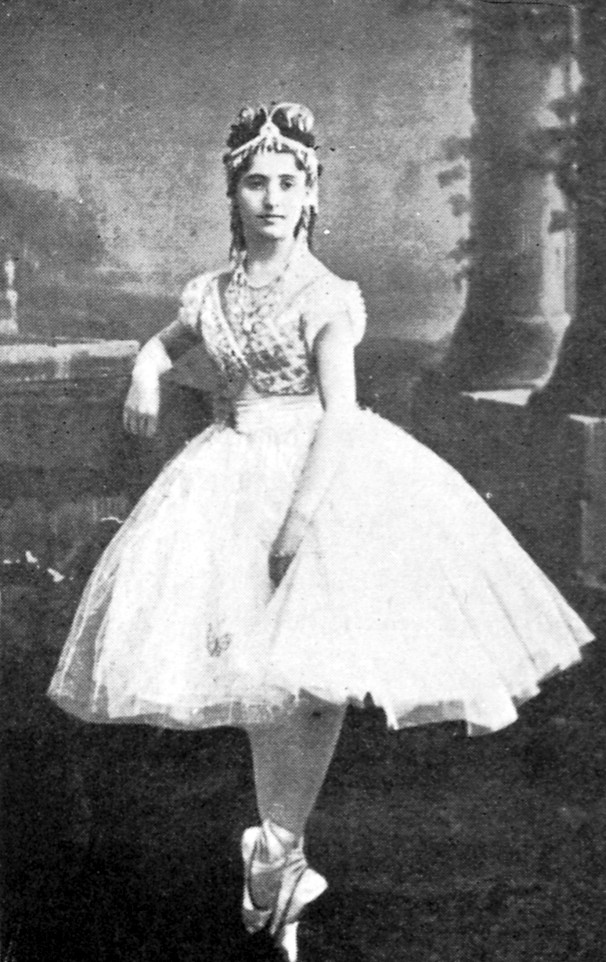 CoppéliaBallet · 1870Balanchine · video
 ApolloBallet · 1928Balanchine · video
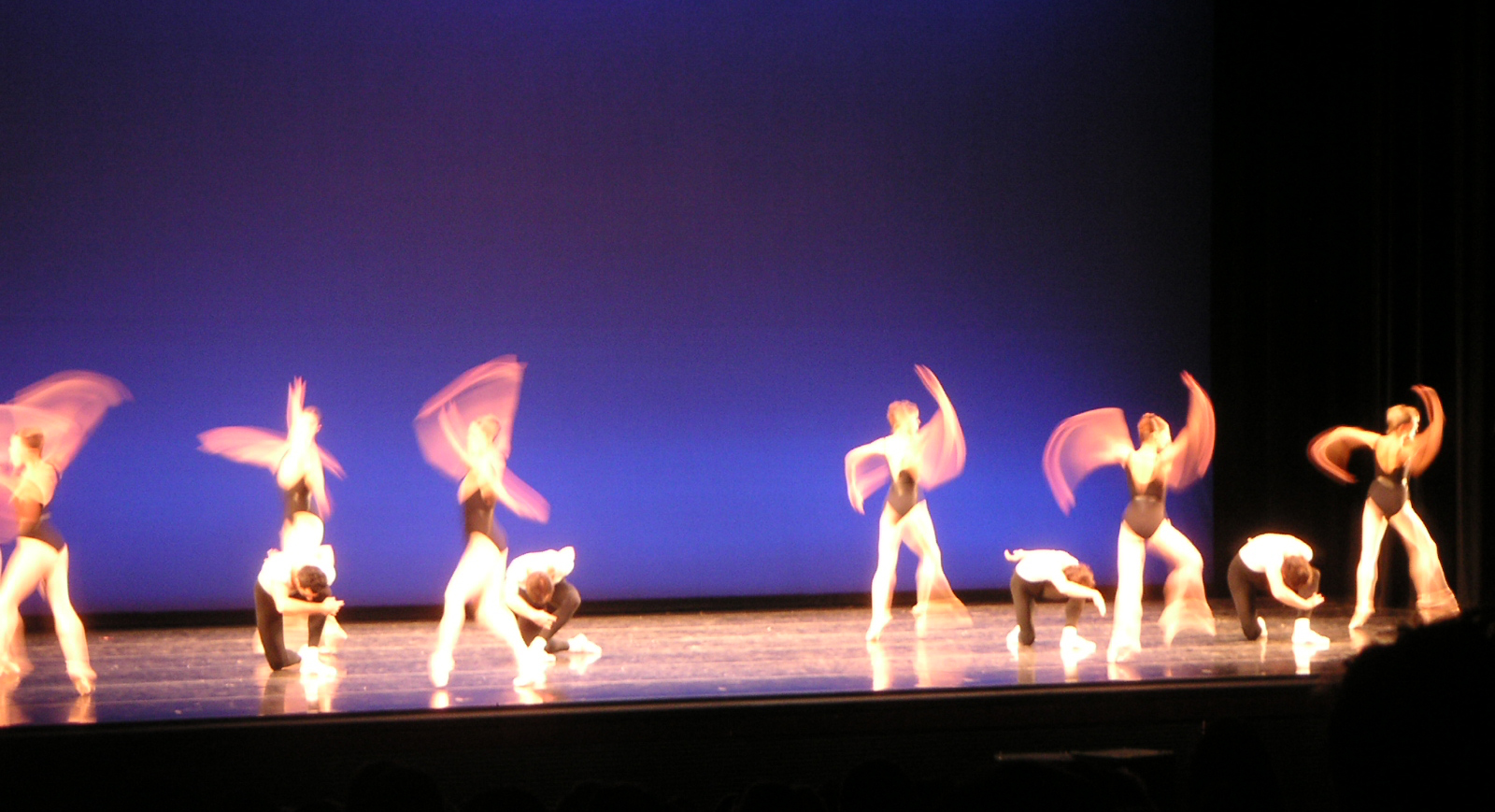 AgonBallet · 1957Balanchine · video
 Le chant du rossignolBallet · 1920Balanchine · video
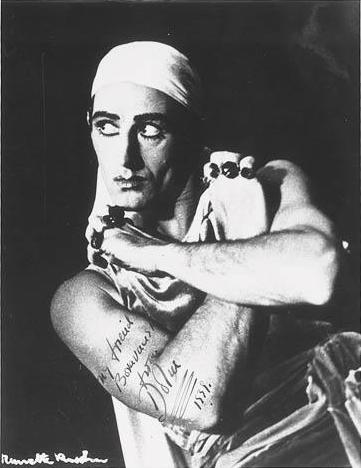 The Prodigal SonBallet · 1929Balanchine · video
 The Seven Deadly SinsBallet · 1933Balanchine · video
 MozartianaBallet · 1933Balanchine · video
 Divertimento No. 15Ballet · 1956Balanchine · video