Hornpipe
Also known as: Sailor's Hornpipe, Triple hornpipe, Clog hornpipe
- Origin
- England and Ireland, with the solo display form developed on the London stage
- Era
- 1600–1800
- Rhythm
- 4/4 with dotted, swung eighths; earlier English form in 3/2
- Tempo
- Roughly 110-150 BPM
- Character
- deliberate, weighty, rhythmic, controlled, buoyant, showy
History & Cultural Context
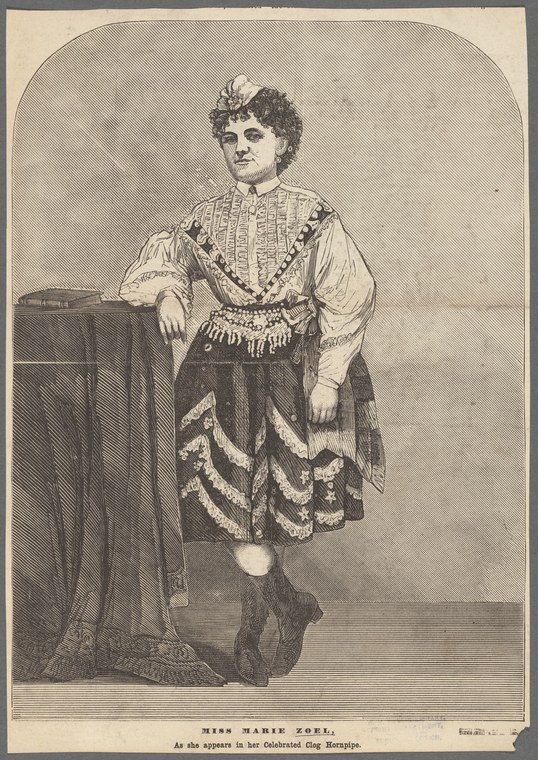
The name belongs first to a reed instrument, then from the sixteenth century to a family of tunes and dances; the earliest English hornpipes are in triple time, usually 3/2, and that older form survives in some regional fiddle repertoire. By the later eighteenth century the duple hornpipe in 4/4 with dotted rhythm had displaced it and became the standard, and this is the form that spread. The sailor association is mostly theatrical: solo hornpipes were a popular turn on the eighteenth-century London stage, and the mimed gestures now taken as definitive — hauling on a rope, rowing, shading the eyes to look out, arms folded across the chest — were stage business that fixed the dance in the public mind as a sailor's dance. It entered Irish step dancing as a hard-shoe dance where the emphasis is on clarity of sound and control at a moderate tempo, entered English clog as its core rhythmic material, and passed into Scottish Highland competition as a national dance and into American fiddle and variety repertoire. In every one of those settings it retained the same defining feature: a strong long-short lilt that the dancer marks with the feet.
Cultural Significance
As a stage dance it was popular entertainment, a self-contained turn that a single performer could take from theatre to theatre. Sailors did dance, and dancing was a genuine part of shipboard and dockside recreation, but the tidy image of a hornpipe drilled on deck by order of the captain owes more to theatre and to later illustration than to evidence. In Ireland it became a dancing-master's dance and then a competition dance, and in northern England it was the rhythmic bedrock of working-class clog dancing.
Characteristic Movement & Technique
The dance is performed in hard shoes and the sound is the substance of it, made by toe taps, heel drops, shuffles and rapid trebles worked into the dotted rhythm. Weight is carried high over the ball of the foot with the supporting leg strong and the free leg crossing and beating; steps travel little, since the interest is vertical and rhythmic rather than spatial. The Irish competitive form holds the upper body erect with arms at the sides, while the older theatrical sailor version uses the arms for mime and the English clog version keeps them loose and low. Accents fall on the long note of the dotted pair, which is what gives the hornpipe its characteristic rocking swing.
Partnering Dynamics
A solo dance in essentially all of its traditions. Irish and Highland competition forms are danced alone in front of judges, sometimes with several dancers on the platform at once but not interacting, and the theatrical sailor's hornpipe is a single-performer turn.
Competitive Context
The hornpipe is one of the standard hard-shoe dances at Irish feiseanna under the major governing bodies, danced at set competition tempos with fixed step counts, and it appears in Highland competition as one of the national dances. English clog competitions at folk festivals also use hornpipe tunes as the standard accompaniment. Judging in all of these turns on rhythmic accuracy, clarity and carriage rather than on travel or elevation.
Regional Variations
Irish hornpipes are the most codified, danced slower and heavier than reels with elaborate treble work. English clog hornpipes stay lower and closer to the floor, with intricate sound patterns and minimal upper-body movement. The Highland sailor's hornpipe keeps the mimetic gestures and adds Highland technique with turned-out legs and pointed feet, and the older triple-time hornpipe survives mainly as fiddle repertoire rather than as living dance.
Common Misconceptions
The belief that the hornpipe originated as a shipboard exercise is a nineteenth-century image rather than a documented practice, and the mime that supports it comes from the theatre. It is also wrong to assume hornpipes are always in 4/4; the older English form is in triple time and predates the duple one. Finally, hornpipe and reel are not interchangeable — the dotted rhythm and slower tempo are the whole distinction.
Peak Popularity
Signature Figures
- Trebles
- Shuffle
- Rocks
- Clicks
- Sailor mime gestures
Notable Codifiers
- An Coimisiún le Rincí Gaelacha (the Irish Dancing Commission)
- Scottish Official Board of Highland Dancing
Hornpipe Playlists
Curated collections on the LODance YouTube channel — performances to watch, lessons to learn from, and the right music to practice with. Tap a collection to play.
▶ Performances · Open on YouTube →
Hornpipe Music & Tempo
Drawn from 25 Hornpipe tracks in the LODance music library.
Example tracks at practice tempo
- Fiddler's Hornpipe — Gene Goforth
- College Hornpipe — Cyril Stinnett and Lena Hughes
- Dubuque Hornpipe — Dean Johnston
- Lonnie's Second Hornpipe — Lonnie Robertson
- Durang's Hornpipe — The Dillards with Byron Berline
- Greencastle Hornpipe — Cincinnati Area Traditional Musicians
Who governs Hornpipe
Federations, councils and examining bodies with a recorded role in this style. No single organisation can tell you this — each one knows only itself.
Hornpipe in performance
One staged work in the Limelight catalogue contains Hornpipe.
- Union Jack1976Ballet · George Balanchine
the whole work (score-driven, no single named section given) — The score is drawn in part directly from hornpipe melodies and hornpipes as a dance form, indicating a stylized sailor's-hornpipe idiom is danced somewhere in the piece, though the article does…
Every claim above is quoted from a cited source and names where in the work the style appears. Claims we could not place or could not quote are held back from this list and shown on the work’s own page instead. Browse the full performance catalogue →
Sources & Further Reading
Where This Dance Is Documented
An Coimisiun syllabi; folk tradition
An editor's note on where the technique for this dance is actually written down — sometimes a named book, sometimes the fact that no such book exists. A judgement, not a count of what we hold.
Cultural & Historical Context
Hornpipe emerged from England and Ireland, with the solo display form developed on the London stage during the 1600s—1800s. Understanding the cultural roots, musical traditions, and social circumstances of this era enriches appreciation for the dance's characteristics and significance.
Formative Influences
Codifiers & Standardizers:
An Coimisiún le Rincí Gaelacha (the Irish Dancing Commission), Scottish Official Board of Highland Dancing
Signature Movement Vocabulary:
Trebles, Shuffle, Rocks, Clicks, Sailor mime gestures
Primary Source Documents
The Library of Dance contains public-domain primary sources for dance history. Copyrighted modern syllabi are indexed with purchase links to their respective copyright owners. Search by dance name or codifier to discover primary source documents.
Last reviewed: September 2026 — This dance profile synthesizes historical research, cultural documentation, and contemporary practice knowledge to provide authoritative context.
Related Dances
More in Irish Step Dance
Sean-nós Dance
The older, improvised Irish solo step style—low to the floor, with relaxed arms and strong personal groove—surviving especially in the western Gaeltacht.
Competitive Irish Step Dance
The standardized, rigid-armed solo style codified through the Gaelic League and An Coimisiún le Rincí Gaelacha (1927), competed in the global feis system in soft and hard shoes.
Theatrical Irish Step (Riverdance era)
The theatrical hard-shoe spectacle—line ensembles, amplified rhythm, and staged production—popularized worldwide by Riverdance from 1994 and its successors.
Hornpipe in art
Browse the gallery →Works our catalogue identifies as depicting hornpipe.
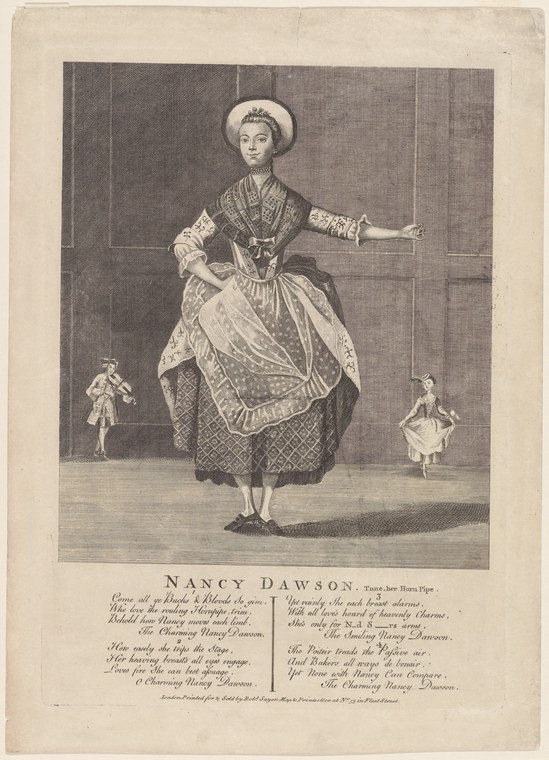
Nancy Dawson
Unknown artist
Public Domain
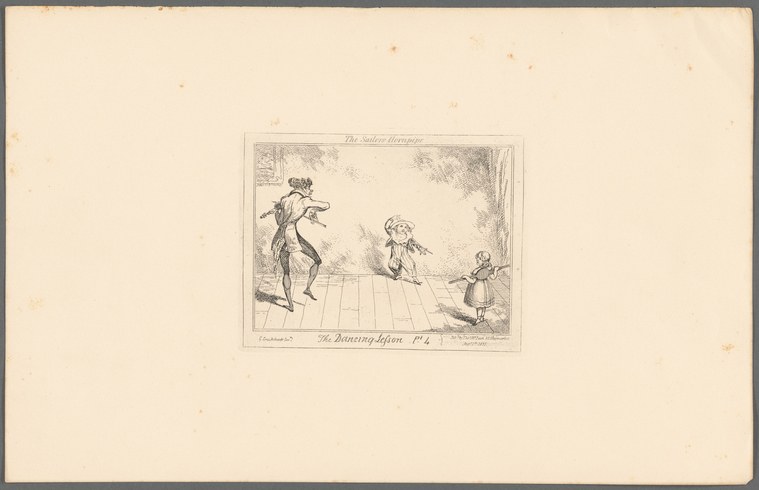
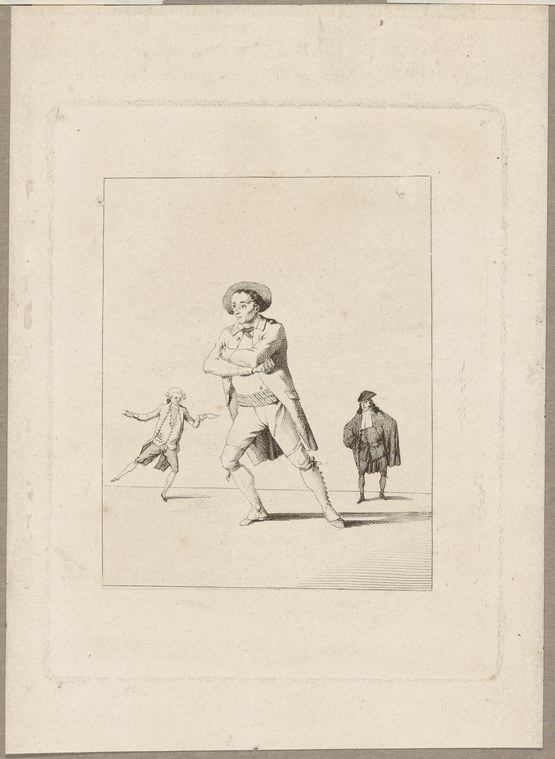
Theatrical hornpipe?
Unknown artist
Public Domain
Continue Exploring
Lineage of Dance
500 years of dance evolution
Champions of Dance
Winners of marquee national & world titles
Language of Dance
161 dance terms & translations
Listening of Dance
Tempo, timing & musicality tools
Gallery of Dance
5,700+ artworks from museum collections
Attire of Dance
Evolution of dance dress across eras
Keep the thread going
Dance history, technique, and the occasional rabbit hole — in your inbox. Thoughtful, infrequent, unsubscribe anytime.
Free. No spam. One click to leave.