One Step
Also known as: One-Step, Castle Walk
History & Cultural Context
It arrived with ragtime, at the moment when syncopated popular music displaced the march and the waltz on American dance floors, and it did the work that the animal dances such as the turkey trot had done without their disreputable associations. The whole technique is walking in time: forward for the leader, backward for the follower, with variations built from turning the walk, crossing it, or changing its direction. Vernon and Irene Castle taught a smooth, upright version and published it in 1914, and their endorsement gave the dance social legitimacy in exactly the circles that had been most anxious about ragtime; their bandleader James Reese Europe supplied the music that made it work. As the foxtrot introduced slow and quick steps at a walking tempo, the one step lost ground, because a mixed rhythm gave dancers more to do at a more comfortable speed. It survived in the United States as the Peabody, and its fast walking character carried forward into the quickstep.
Cultural Significance
The 1910s dance craze put social dancing into restaurants, cabarets, hotel tea dances and public halls, and the one step was its lingua franca because a beginner could join in within a minute. The music was largely the creation of Black composers and bandleaders, whose work reached white ballrooms through performers and orchestras rather than under their own names. Contemporary alarm about close holds and syncopation attached to the whole category, and much of the instructional literature of the decade was written to reassure rather than to instruct.
Characteristic Movement & Technique
The walk is taken on the balls of the feet with the legs fairly straight and the steps short and quick, without rise and fall and with only a slight sway. Turning is achieved by walking on a curve or by pivoting rather than by a figure with a set foot pattern. The Castle Walk keeps a slightly springing, elevated look with the couple travelling in a long curve around the room, the body carriage tall and the knees barely bending.
Partnering Dynamics
A conventional closed ballroom hold at moderate distance, less compact than the tango holds of the same period. The leader walks forward and the follower backward, so the follower is travelling blind at speed and the connection has to be steady and continuous. With no syllabus to fall back on, floorcraft and clear body lead matter more than figures.
Competitive Context
It is not a modern competitive dance in its own right, though its descendant the Peabody is danced competitively in American social dance circles. Today it belongs mainly to ragtime balls, vintage dance societies and historical dance classes, where it is usually reconstructed from 1910s manuals.
Regional Variations
American practice was the source, and British and continental ballrooms kept the one step on programmes into the 1920s in a somewhat more restrained form. The Castle Walk is best understood as one teacher's branded variant rather than a separate dance, and American ballrooms later reworked the same walking idea as the faster Peabody.
Common Misconceptions
It is not the same as the two step, which is an earlier and quite different march dance, and the similarity of the names causes constant confusion in period sources. The Castles popularised and refined it but did not invent it, and it is not simply an early name for the foxtrot: the foxtrot's defining feature, the mixture of slow and quick steps, is exactly what the one step lacks.
Peak Popularity
Signature Figures
- Castle Walk
- Grapevine
- Corté
Notable Codifiers
- Vernon and Irene Castle
Track Your One Step Progress
Practice One Step figures between lessons with Figure Focus — step-by-step breakdowns, floor diagrams, and progress tracking. Free to use.
One Step Playlists
Curated collections on the LODance YouTube channel — performances to watch, lessons to learn from, and the right music to practice with. Tap a collection to play.
▶ Practice Music · Open on YouTube →
Who governs One Step
Federations, councils and examining bodies with a recorded role in this style. No single organisation can tell you this — each one knows only itself.
Legends of One Step
Dancers, choreographers and teachers whose work shaped this style.
What to Wear
Attire guidance for One Step and other Historic Gilded Age Ballroom dances. Each card below is sized to the moment — class, practice, social, or competition — because the wardrobe shifts as the stakes do.
Reading the cards
In Class
Regular practice wear with smooth-soled shoes.
Social Dancing
Victorian/Edwardian ball events: women in corseted gowns with trains, men in white tie or period suits. Some events are less strict and welcome Edwardian-inspired modern formalwear.
Competition
Not competed; performed at Victorian balls and historical society events in period costume.
Shoes
Women: pointed-toe shoes with French heels (2"). Men: patent leather shoes or period boots. The era bridged between flat dancing and the heeled Latin shoes of the 20th century.
In Practice
Many Gilded Age groups practice corset-management — modern dancers underestimate how much the corset changes posture and breath.
Price Range
- Budget: Repurposed modern formalwear with period-adjacent silhouette; entry French-heel shoes $80–140.
- Mid: Reproduction Gilded Age gowns and white-tie pieces $400–1,500.
- Premium: Hand-tailored Edwardian costume $2,000–8,000+.
Quick Tips
- •Suede-soled shoes allow controlled sliding and pivoting — essential for most partner dances.
- •Avoid rubber soles on dance floors; they grip too much and can cause knee injuries.
- •Bring a separate pair of clean shoes for the dance floor to keep it in good condition.
Recommended Gear for One Step
Essential equipment and apparel selected for dancers learning One Step.


As an Amazon Associate, LODance earns from qualifying purchases. Affiliate disclosure
Sources & Further Reading
Where This Dance Is Documented
Vernon & Irene Castle, Modern Dancing (1914)
An editor's note on where the technique for this dance is actually written down — sometimes a named book, sometimes the fact that no such book exists. A judgement, not a count of what we hold.
Cultural & Historical Context
One Step emerged from United States during the 1910s—1919. Understanding the cultural roots, musical traditions, and social circumstances of this era enriches appreciation for the dance's characteristics and significance.
Formative Influences
Codifiers & Standardizers:
Vernon and Irene Castle
Signature Movement Vocabulary:
Castle Walk, Grapevine, Corté
Primary Source Documents
The Library of Dance contains public-domain primary sources for dance history. Copyrighted modern syllabi are indexed with purchase links to their respective copyright owners. Search by dance name or codifier to discover primary source documents.
Last reviewed: September 2026 — This dance profile synthesizes historical research, cultural documentation, and contemporary practice knowledge to provide authoritative context.
Related Dances
More in Historic Gilded Age Ballroom
Polka
The Polka was a lively, bouncy couple dance from Bohemia that became enormously popular across Europe and America during the 19th century, featuring characteristic hop and turn.
Mazurka
The Mazurka was a lively Polish couple dance with syncopated rhythm and characteristic accent patterns, becoming popular in European ballrooms during the 19th century.
Schottische
The Schottische was a moderate-tempo couple dance with a distinctive step-hop pattern, becoming popular in Victorian ballrooms and remaining part of folk traditions.
Galop
The Galop was a rapid, energetic couple dance with a distinctive galloping action, becoming a popular finish to Victorian ballroom evenings.
Victorian Waltz
Victorian waltz variations including the Redowa combined elements of waltz and polka with elaborate choreography, representing Gilded Age innovation in ballroom dancing.
Laendler
The Laendler was an Austrian peasant couple dance with turning action that influenced the development of the modern waltz and remains part of Alpine folk traditions.
Breakdown
A fast solo percussive dance created by enslaved African Americans, danced to fiddle and banjo tunes in quick duple time and often performed as a challenge between dancers. It carries one of the core movement vocabularies from which buck dancing, flatfooting and American tap descend. Its commercial spread in the 1840s and after ran through blackface minstrelsy, which took the material from Black dancers and sold it as caricature.
Clog
A percussive step dance performed in wooden-soled clogs, developed among mill and mine workers in northern England and built largely on hornpipe rhythms. It moved onto the music-hall stage as a championship solo turn in the nineteenth century and crossed to North America, where it fed both Appalachian step traditions and the variety stage. With African American percussive dance it is one of the two roots of American tap.
Hornpipe
A solo percussive dance in duple time, closely tied to a tune type of the same name and strongly associated with sailors through its long life on the theatrical stage. It is one of the three principal hard-shoe dances in Irish step dancing and the rhythmic basis of English clog. Its dotted, swung rhythm gives it a distinctly heavier and more deliberate feel than a reel.
Jig
A lively step dance in compound time, the central solo form of Irish dancing and a staple of Scottish and English fiddle repertoire. It exists in several distinct meters and shoe types, from the light 6/8 double jig to the slow, heavily percussive treble jig in hard shoes. The word has also served, in England and America, as a loose and sometimes derogatory label for percussive dance generally.
Reel
A fast dance in even duple time built on an alternation between an interweaving travelling figure and setting steps danced on the spot. It is one of the oldest continuously danced forms in the British Isles and the structural ancestor of a great deal of Scottish, Irish and North American social dance. The name refers at once to a tune type, a floor figure and a whole family of dances.
Strathspey
A Scottish dance and tune type in 4/4 distinguished by the Scotch snap, a short note on the beat followed by a longer dotted one, which gives it a jagged rhythm and a stately, sustained movement quality. It takes its name from the strath, or broad valley, of the River Spey. In both Highland and country dance it is conventionally paired with a reel, the slower dance setting up the faster one.
Country Dance
A figured set dance for groups of couples, worked through a repeating sequence of figures with the couples progressing to a new neighbour each time through the tune. It was the dominant social dance form in England for well over a century, and it is the root stock from which the French contredanse, the Cuban contradanza, the quadrille and the American contra dance all grew.
Habanera
A slow duple-time couple dance from Cuba, and the rhythmic cell that carries its name — a dotted first beat pulling against an even bass. It was made by Black and mixed-race Cuban musicians and dancers out of the imported contradanza, and it travelled back across the Atlantic into Spanish salons and stage music while also feeding Argentine tango and Brazilian maxixe.
Maxixe
A fast, syncopated close-hold couple dance from working-class Rio de Janeiro, built by Afro-Brazilian musicians and dancers who put the syncopation and body movement of lundu into the step patterns of the polka and the Cuban habanera. It was the first urban popular dance Brazil made for itself, and its rhythmic language runs directly into samba.
Redowa
A turning couple dance in three-four from the Czech lands, taken up in Paris ballrooms in the mid-1840s on the back of the polka craze. Its step leaps rather than glides, which gives it a springing, pursuing quality quite unlike the smooth continuous swing of the waltz.
Varsovienne
A slow triple-time couple dance in the mazurka family that appeared in Parisian ballrooms in the early 1850s and took its name from Warsaw. It is recognisable by the pause: the couple glides, then holds a pointed foot on an accented beat, so the dance alternates between travel and arrest.
Viennese Waltz
The rotary couple dance of nineteenth-century ballrooms: continuous turning in a closed hold at speed, danced socially and improvised rather than assembled from a syllabus. It emerged from alpine Ländler and Deutscher turning dances in the 1780s and defined social dancing through the Strauss era, and the modern competition dance of the same name is a twentieth-century codification of it rather than the same thing.
One Step in art
Browse the gallery →Works our catalogue identifies as depicting one step.
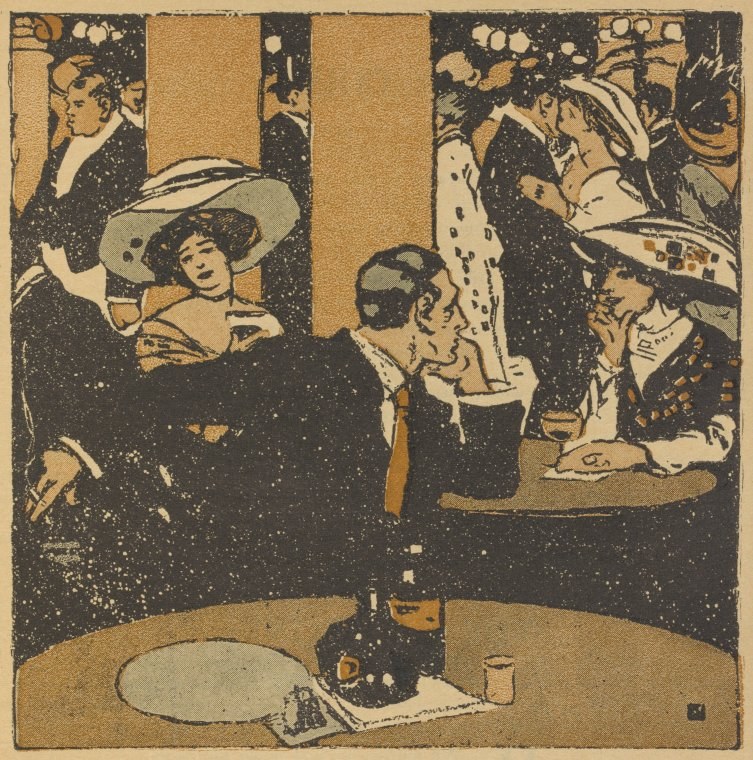
The lure of the dance
Unknown artist · 2021
public_domain
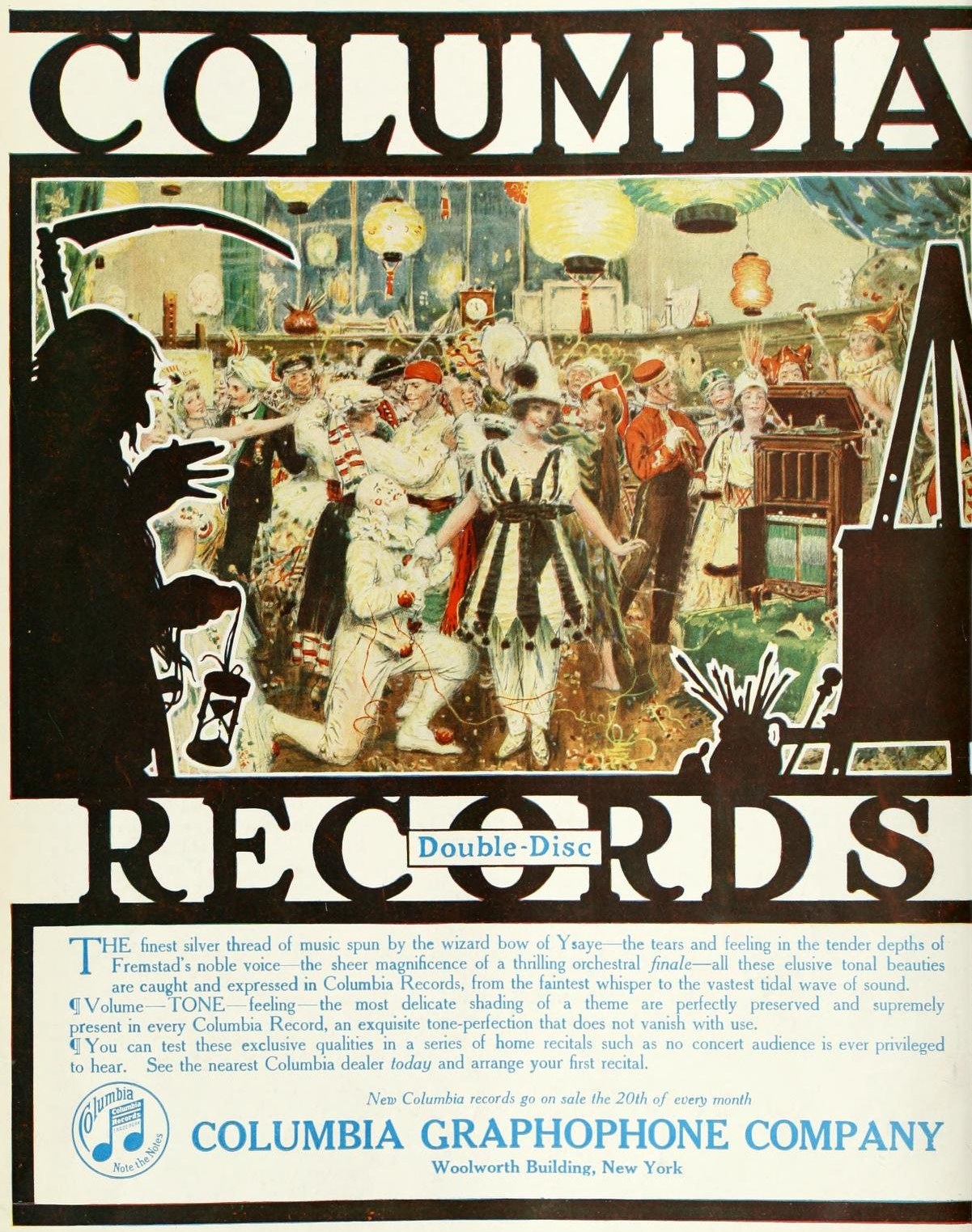
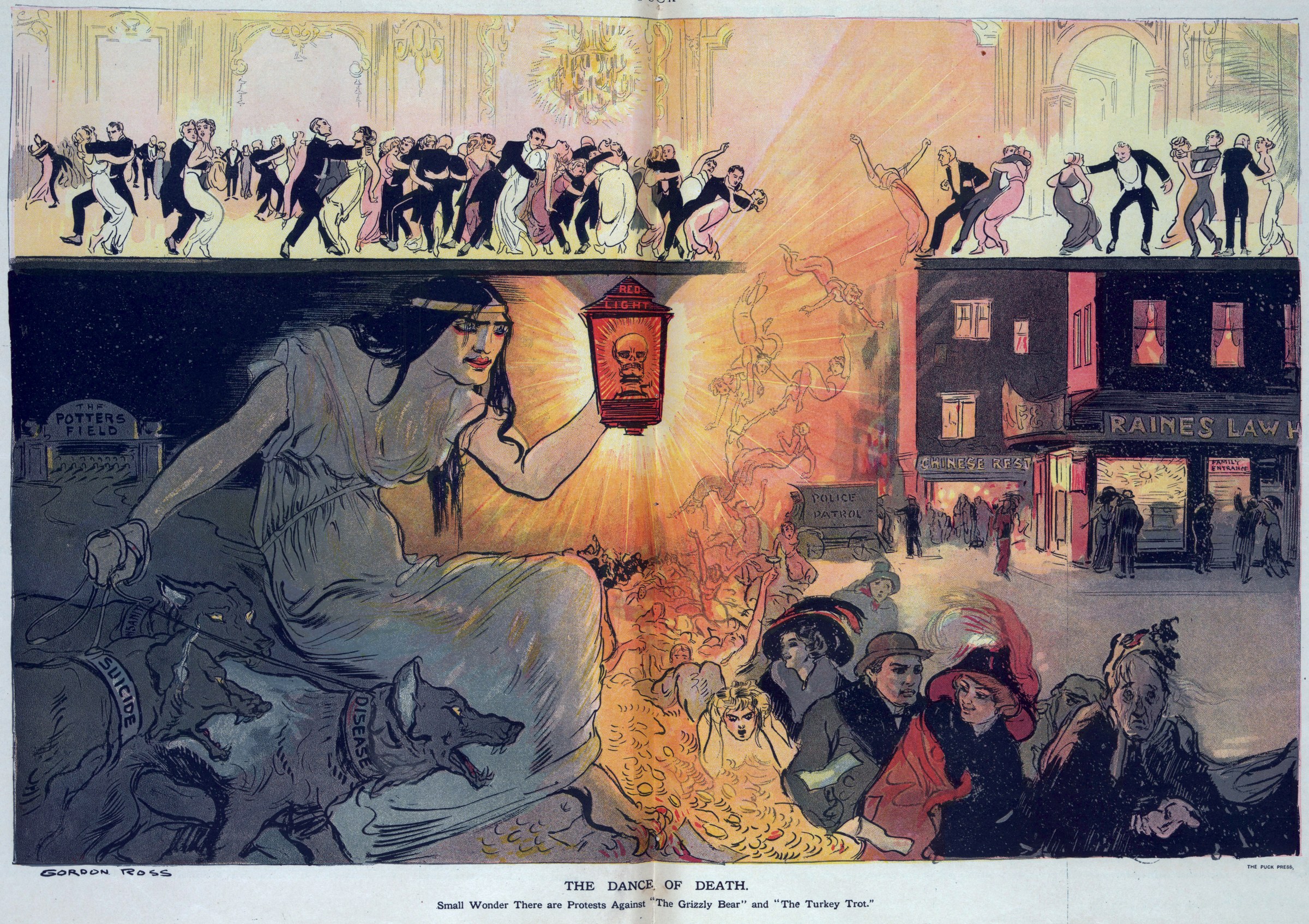
Dance of Death cropped
Gordon Ross · 1912
Public Domain
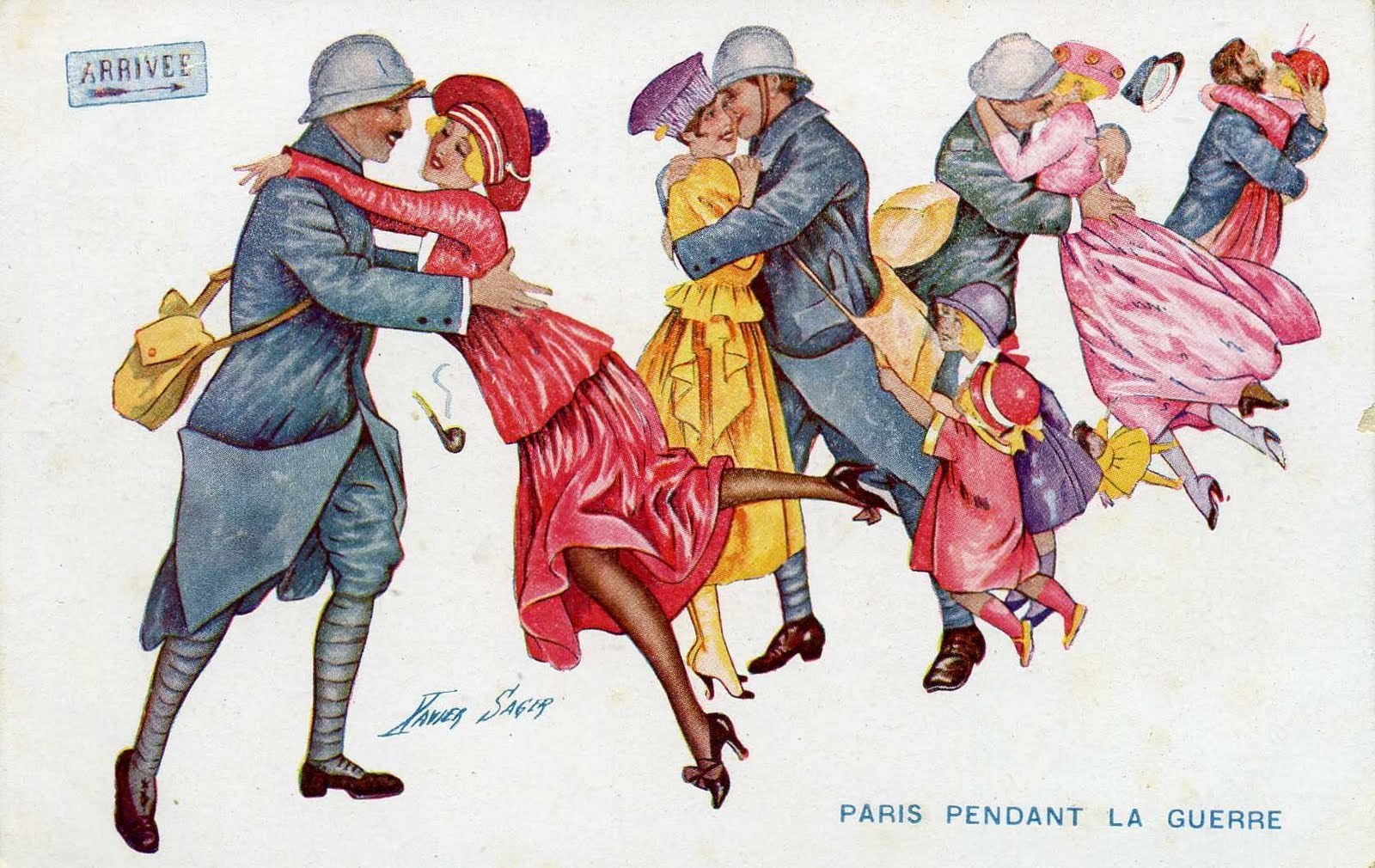
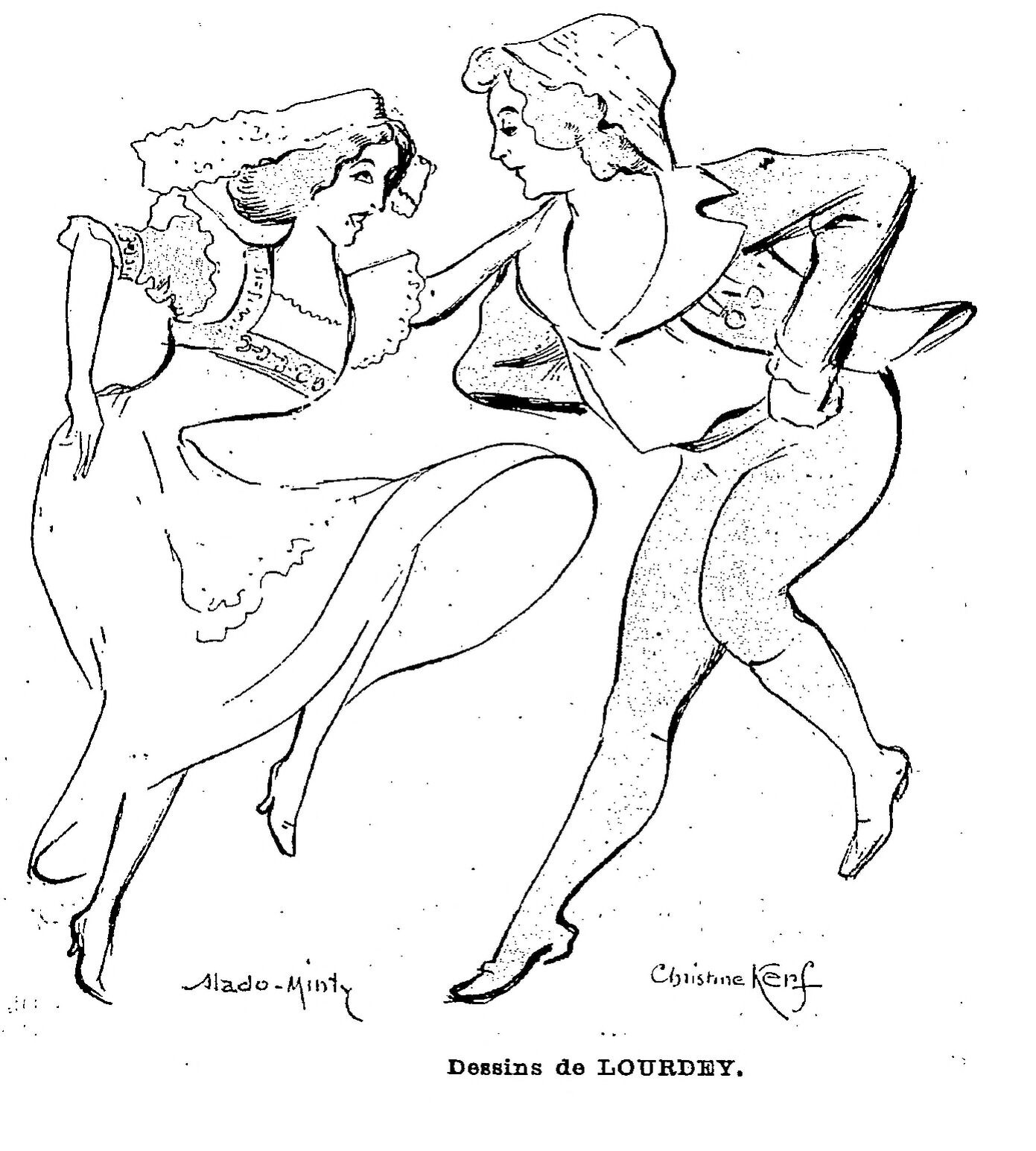
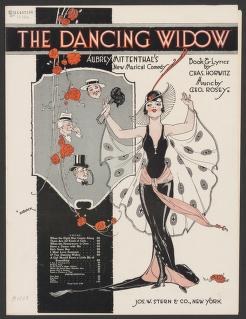
Oh you dancing widow
Unknown artist · 1919
Public Domain
Continue Exploring
Lineage of Dance
500 years of dance evolution
Champions of Dance
Winners of marquee national & world titles
Language of Dance
161 dance terms & translations
Listening of Dance
Tempo, timing & musicality tools
Gallery of Dance
5,700+ artworks from museum collections
Attire of Dance
Evolution of dance dress across eras
Keep the thread going
Dance history, technique, and the occasional rabbit hole — in your inbox. Thoughtful, infrequent, unsubscribe anytime.
Free. No spam. One click to leave.