49 works in this view — arrow keys or swipe to move between them.
Dance in Art
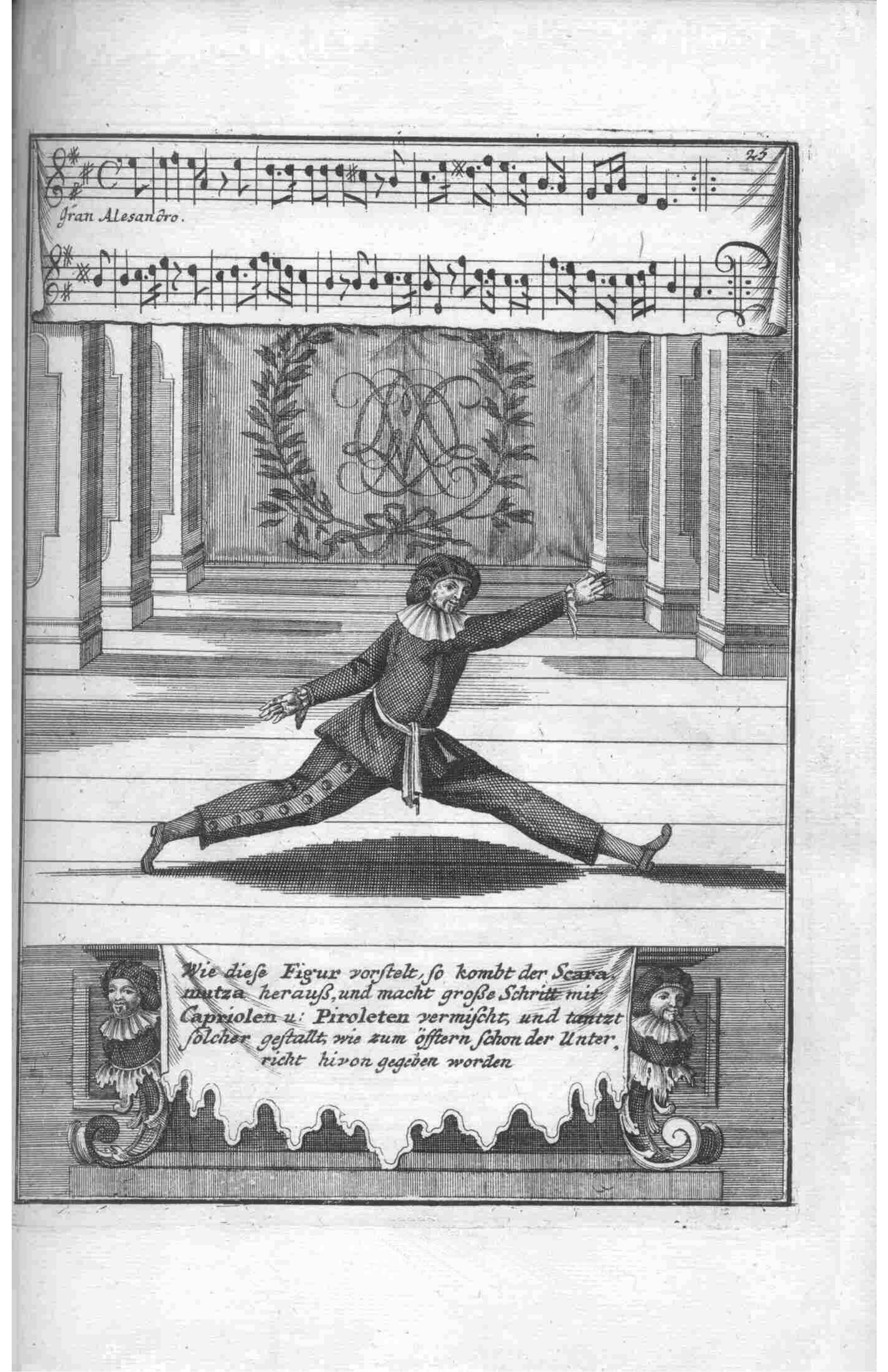
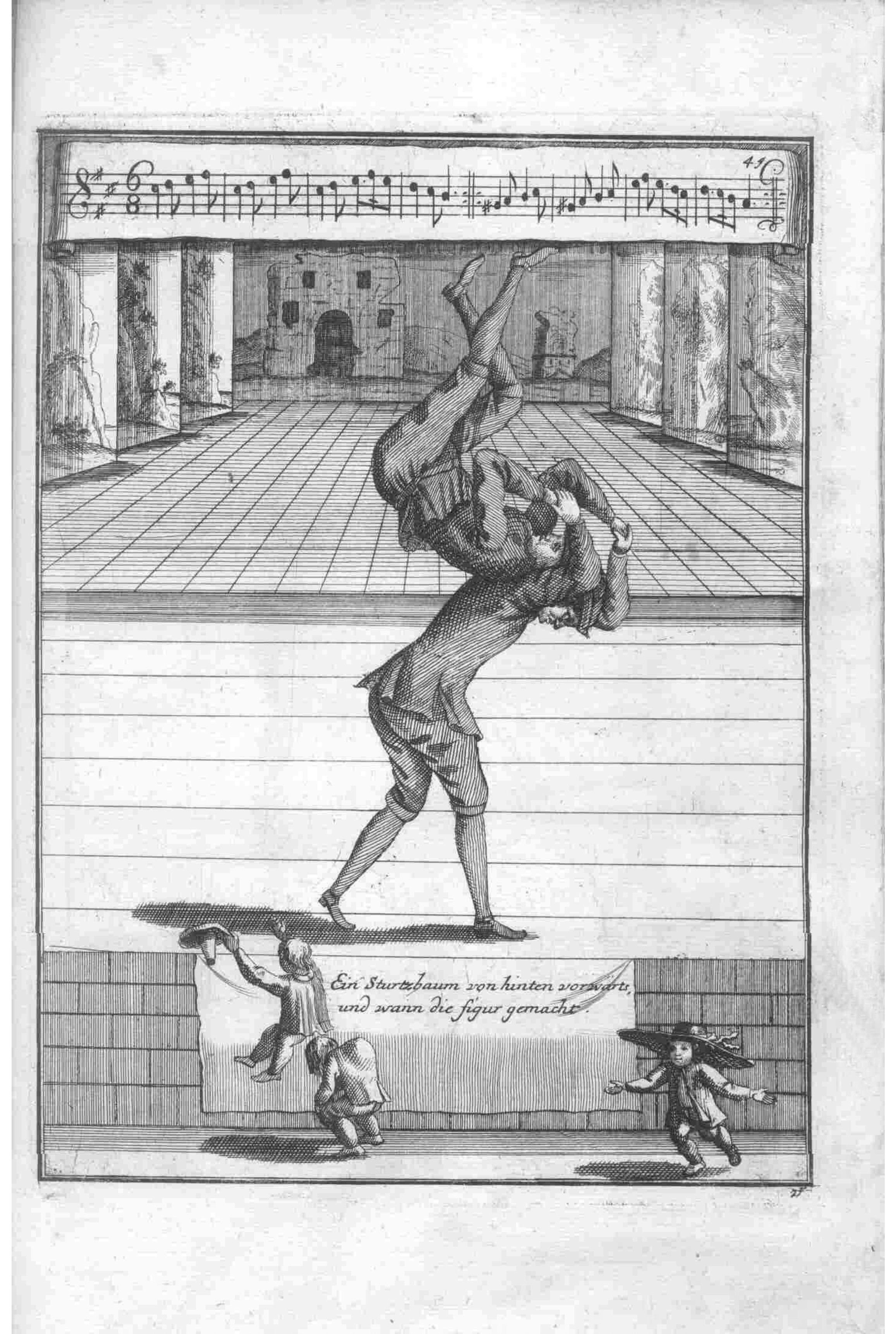
Grotesque — Plate 95
Gregorio Lambranzi
- Medium:
- Copper-plate engraving
- Dance:
- Notation/Choreography
- Era:
- 1700s (Enlightenment/Minuet Era)
- Collection:
- Nuova e curiosa scuola de' balli theatrali (1716)
- Source:
- Library of Congress
- Rights:
- Public domain — free to use, share and adapt.
- Recorded as:
- Public Domain
This plate documents an entire category of theatrical performance—acrobatic comedy—that has largely vanished from the historical record. Lambranzi's work is one of the only systematic archives of what stage performers actually did, rather than what elite dancing masters said they should do. For historians of physical theater and performers interested in historical repertoire, this is primary source material of the highest order.
What you are looking at
A solo male figure executes an extreme backbend on a tiled stage floor, his body arched dramatically with one leg extended upward and arms spread or positioned overhead. The setting is a formal theatrical interior with classical architecture: tall fluted columns frame the space on either side, and a distant curtained alcove or doorway is visible in the middle ground. The floor is rendered in careful perspective using a grid pattern. The figure wears period dress—breeches, coat, and shoes—and the engraving shows confident control of anatomy and spatial recession. Two smaller figures appear in the lower margin, apparently watching or reacting to the acrobatic display. Musical notation is engraved at the top of the plate. The composition freezes a moment of extreme physical virtuosity in a way that emphasizes both the performer's skill and the theatrical context in which such stunts were mounted.
The dancing
The primary dancer is captured mid-backbend with full body extension: the weight appears supported on the upper back and arms, with the legs thrown upward and backward in an inverted position. This is extreme flexibility performance rather than any organized dance form—the body is hyperextended and the positioning would be impossible in normal weight-bearing dance. The secondary figures at the base are small and observational, not engaged in the main action. The engraver has rendered musculature and the stretch of the pose with anatomical precision, showing understanding of how an extreme contortion actually distributes weight.
The dance depicted
This is acrobatic theater: specifically contortion or extreme flexibility performance of the kind that appeared in 17th and 18th-century theatrical entertainments and taught in dance academies. The 'grotesque' in the title indicates this was a comic or burlesque character type, not classical dance—it emphasizes dexterity and surprise over grace. These physical stunts were part of the broader theatrical vocabulary that performers in commedia dell'arte and stage comedies drew upon. The notation at the top suggests this was keyed to music, making it a choreographed spectacle rather than mere gymnastics.
How it was made
Copper-plate engraving, a reproductive print medium that allowed multiple impressions from a single carved plate. The fine parallel line-work (hatching) creates tone and volume; the careful perspective grid of the floor demonstrates the printmaker's technical skill. This medium was ideal for spreading dance notation and staged choreography across Europe: a teacher or performer could own a printed copy of complex figures without access to a living master. The fact that this appears in a bound treatise means it was one of many such plates—a systematic, teachable archive.
About this work
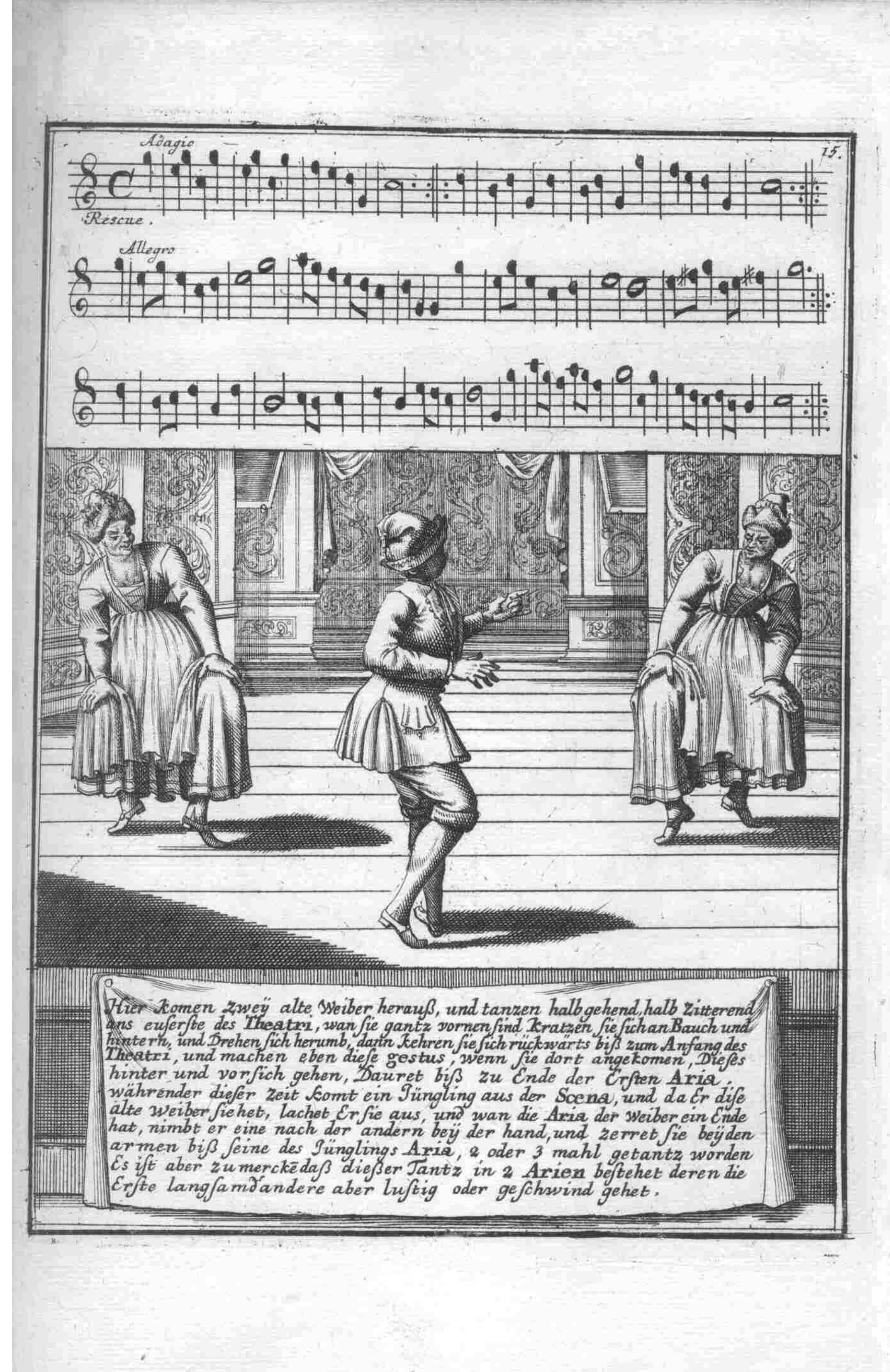
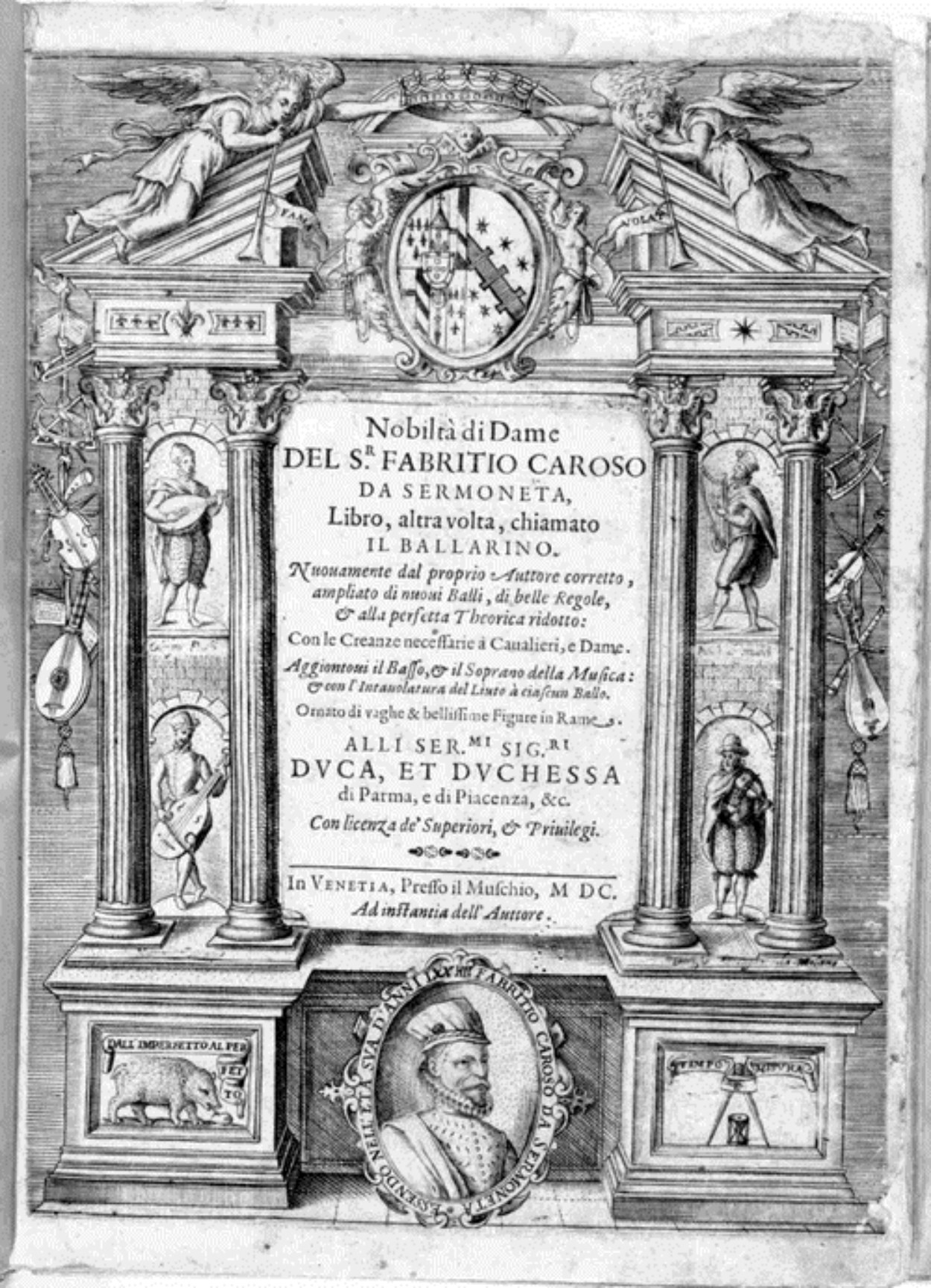
This is one plate from Gregorio Lambranzi's *Nuova e curiosa scuola de' balli theatrali* (*New and Curious School of Theatrical Dances*), published in Nuremberg in 1716. The work is a compendium of stage dances and comic character pieces, each plate pairing musical notation with a single figure or small group caught mid-movement on a theater stage. This plate shows an acrobatic 'grotesque' figure—a comic or burlesque character type defined by extreme physical feats. Lambranzi's manual was one of the most systematic and influential attempts to capture and notate theatrical dance before the 20th century, and it stands as crucial evidence for what 18th-century theater looked like in motion.
How to look at it
Pay attention to the extreme arch of the spine and the inversion of the body—this is not a movement you would see in a minuet or even a modern ballet. The artist has chosen the moment of maximum extension, which emphasizes both the performer's virtuosity and the shocking nature of the feat. Notice also the theatrical setting: the columns, the distant stage, the watching figures below. This tells us that such acrobatics were professional stage entertainments, not parlor tricks. The musical notation at the top reminds us this was choreographed and timed to music, not improvised.
The artist
Gregorio Lambranzi was an Italian theatrical dancing master and choreographer active in the early 18th century. He is known almost entirely through this single published treatise, which represents a lifetime of accumulated choreographic knowledge. The book was published simultaneously in German and Italian editions, indicating its intended reach across Central Europe. Lambranzi's method—pairing notation with engraved figures—was influential and imitated, but his own biographical details remain sparse.
The period
In the 1710s, theatrical dance was in active development across Europe. The court dances (minuet, gavotte) coexisted with stage comedy that drew heavily on physical virtuosity and character types inherited from commedia dell'arte. Acrobatics and extreme flexibility were not separate from 'dance' as a category—they were fully integrated into theatrical performance. This was the world just before ballet d'action and before the strict codification of ballet technique; the theatrical vocabulary was still broad and inclusive. Lambranzi's book captures a moment when stage dancing encompassed everything from dignified courtly movement to burlesque backbends.
Where it lives
This plate comes from *Nuova e curiosa scuola de' balli theatrali*, published by Lambranzi in Nuremberg in 1716. The book exists in two simultaneous editions (German and Italian), and multiple copies survive in libraries and archives. This copy is held by the Library of Congress.
Dance in this work
Questions about this work
What is a 'grotesque' in 18th-century theater?
A grotesque (or 'grotesco') was a character type in theatrical dance and commedia dell'arte defined by physical exaggeration, comic intent, and often extreme acrobatic skill. It was the opposite of the 'serious' or noble style and appeared in comedies, farces, and intermezzi. Grotesques could include contortionists, tumblers, and comic character dancers.
How was choreography preserved before video?
Lambranzi's book is one of the earliest systematic attempts to do this. The plates pair musical notation with engraved figures, allowing a trained dancer to reconstruct the movement. Earlier systems (like Beauchamp-Feuillet notation) focused on floor patterns; Lambranzi added full-body positions. Neither captured movement as completely as video does, but both allowed knowledge to circulate in print.
Did 18th-century performers really do backbends like this?
Yes. Acrobatics and extreme flexibility were regular features of theatrical entertainment. Performers trained in these skills from childhood, much as modern circus artists do. Lambranzi's inclusion of such figures in a formal dance manual confirms they were considered a legitimate part of stage dance vocabulary, not separable tricks.
Why is this in a dance gallery?
Because it documents what people actually danced on stage in the early 18th century. Modern dance history often privileges court dances and ballet as 'serious' forms, but theaters were full of acrobatic comedy. Lambranzi's book is a corrective: it shows the full range of theatrical movement that existed before ballet became dominant.
More Notation/Choreography artwork