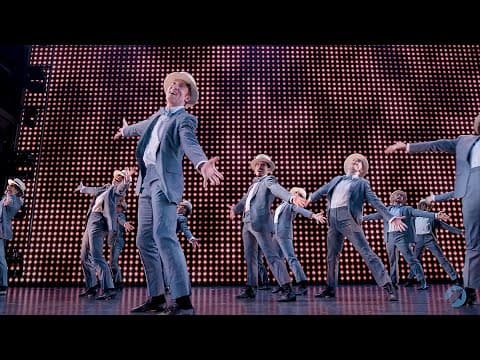
Dancin' is a plotless Broadway revue conceived, directed and choreographed almost entirely by Bob Fosse, first produced in 1978. It has no book and no original score: instead it is built as a sequence of self-contained dance numbers set to pre-existing music ranging from Bach and Mozart to George M. Cohan, Neil Diamond and Melissa Manchester, with Fosse explicitly using choreography rather than dialogue as the show's language.
It belongs in a dance catalogue less as a piece of musical-theatre storytelling than as a display case for a single choreographer's vocabulary at the height of his powers: Fosse deliberately worked without collaborators, treating the evening as an alternative to the 'legitimising' full-length ballet he had long wanted but never completed for Harkness or Joffrey. The result won him the 1978 Tony Award for choreography and was, by his own account and the show's producing structure, his biggest commercial success in the theatre.
What it contains
- Fosse Style · The whole revue, structured as a sequence of self-contained dance numbers — Precise, restrained ensemble unison and isolation-based movement running through the numbers, described by critics as 'precision and style' and, in the 2023 revival, as work where 'a wiggle is worth a thousand words' — a description of Fosse's characteristic hip/shoulder isolation and understatement rather than large athletic dancing. Source: "precision and style mark the evening at its best"
- Disco Dance · The finale, 'Yankee Doodle Disco' — The closing number, choreographed separately from the rest of the show, fuses an American patriotic-song reference with disco dance idiom, per its title, functioning as an up-tempo ensemble finale. Source: "the finale, "Yankee Doodle Disco", which was choreographed by cast member Christopher Chadman."
- Dream Ballet · The number 'The Dream Barre' — A duet for Ann Reinking and an American Ballet Theatre principal, framed as a suggestive dream sequence built around barre-derived movement, per the number's title, rather than an abstract social or theatrical-jazz number. Source: "Jacobs also objected to "The Dream Barre", another more risqué number featuring Ann Reinking and Charles Ward."
- Musical Theatre Character Dance · The number 'Big City Mime' — A narrative, pantomimic number in which a tourist encounters prostitutes, massage-parlor workers and dance-hall figures in Times Square — story-driven character dance rather than the abstract revue vocabulary used elsewhere in the show. Source: "the old-fashioned, literal minded Broadway-style ballet "Big City Mime", which depicted a tourist in Time Square coming in contact with prostitutes, massage parlors, and dance halls."
- Classical Ballet · The number 'The Dream Barre' — The duet's partner, Charles Ward, was a principal with American Ballet Theatre; a number titled around a ballet 'barre' danced by a classically trained principal implies classical-ballet vocabulary reworked for a Broadway context. Source: "Charles Ward, a principal dancer with the American Ballet Theatre"
What is danced
The article gives movement detail only through a handful of named numbers rather than a synopsis, and the show is structured as a suite of these rather than a plotted sequence. 'Big City Mime' was an 'old-fashioned, literal minded Broadway-style ballet' depicting a tourist's encounter with prostitutes, massage parlors and dance halls in Times Square — a narrative, pantomimic piece rather than an abstract dance-for-dance's-sake number, and controversial enough that the show's co-producer forced its removal out of town in Boston (it was restored only in the 2023 revival). 'The Dream Barre' was a more overtly sensual duet for Ann Reinking and Charles Ward, an American Ballet Theatre principal, its title pointing to a classroom-barre vocabulary reworked as a dream sequence; Fosse refused to cut it despite the producer's objection. The finale, 'Yankee Doodle Disco' (choreographed not by Fosse but by cast member Christopher Chadman), fused a patriotic American-songbook reference with contemporary disco dance. A further number, 'Fourteen Feet', had dancers' shoes literally nailed to the floor, forcing all movement to happen within a fixed, confined footprint — a constraint-based device typical of Fosse's interest in isolating specific body parts.
Beyond these set pieces, contemporary reviews describe the choreography in general terms — 'precision and style mark the evening at its best' — and the 2023 revival's reception singles out the same restrained, isolation-driven idiom, summarised as 'a wiggle is worth a thousand words'. That phrase is a fair shorthand for what a dancer should expect throughout: understated hip and shoulder isolation, tight ensemble unison, and a vaudeville-inflected showmanship rather than large-scale athletic dancing, delivered by a company that (uniquely for the time) held principal Equity contracts because the physical demands were considered exceptional even by Fosse's standards.
Context
Dancin' arrived in 1978 in direct response to Michael Bennett's A Chorus Line, whose success Fosse admired while pointedly noting it contained comparatively little actual dancing set against its book scenes. Fosse's answer was to strip out narrative and collaborators entirely and build an evening from choreography alone set to found music, a format distinct from the integrated book musical that had dominated Broadway since Rodgers and Hammerstein, and distinct too from the star-vehicle revue tradition — it was conceived instead as Fosse's substitute for the 'serious' full-length ballet he had spent a decade failing to make happen with Robert Joffrey.
Its commercial and labour impact on Broadway dance was as significant as its choreographic content: it was the first Broadway show to place its entire company on principal-level Equity contracts, a direct acknowledgment that the physical demands placed on the ensemble exceeded normal chorus expectations.
Staging history
The original production opened at the Broadhurst Theatre on March 27, 1978, transferred to the Ambassador Theatre, and ran to 1,774 performances before closing in 1982; it was nominated for seven Tony Awards, winning for Fosse's choreography and for Jules Fisher's lighting. Two national tours followed (1979–1980 and 1980–1983), and a limited London season played the Theatre Royal, Drury Lane from November 1983 to January 1984, still directed by Fosse. After that the full show was not revived for decades because of the choreography's physical demands, though individual numbers — 'Crunchy Granola Suite', 'I Wanna Be a Dancin' Man', 'Percussion V', 'Mr. Bojangles' and 'Sing Sing Sing' — were folded into the 1999 compilation revue Fosse; a planned Roundabout Theatre Company revival for 2009 was postponed indefinitely.
A full Broadway revival, billed as Bob Fosse's Dancin' and directed by original cast member Wayne Cilento with Nicole Fosse's involvement, tried out at San Diego's Old Globe in summer 2022 and opened at the Music Box Theatre on March 19, 2023. This staging restored the previously cut 'Big City Mime' and added material from Fosse's late musical Big Deal (1986) and film-era pieces such as the 'Alley Dance' from My Sister Eileen and a number from Kiss Me, Kate. It closed on May 14, 2023 after being shut out of the Tony Awards that year.
How to watch it
Watch for the show's refusal of narrative logic: numbers are juxtaposed by mood and music rather than story, so the interest is in how each piece isolates a different aspect of Fosse's vocabulary — restrained hip/shoulder isolation and unison precision in the ensemble numbers, versus the literal pantomime of 'Big City Mime' or the physical constraint gimmick of 'Fourteen Feet'. In the 2023 revival, compare the restored numbers and film-era interpolations against the leaner 1978 structure to see how the piece has been reframed as a retrospective of Fosse's whole career rather than a single new revue.
In the same lineage
Other staged works in the register connected to this one by author or lineage.
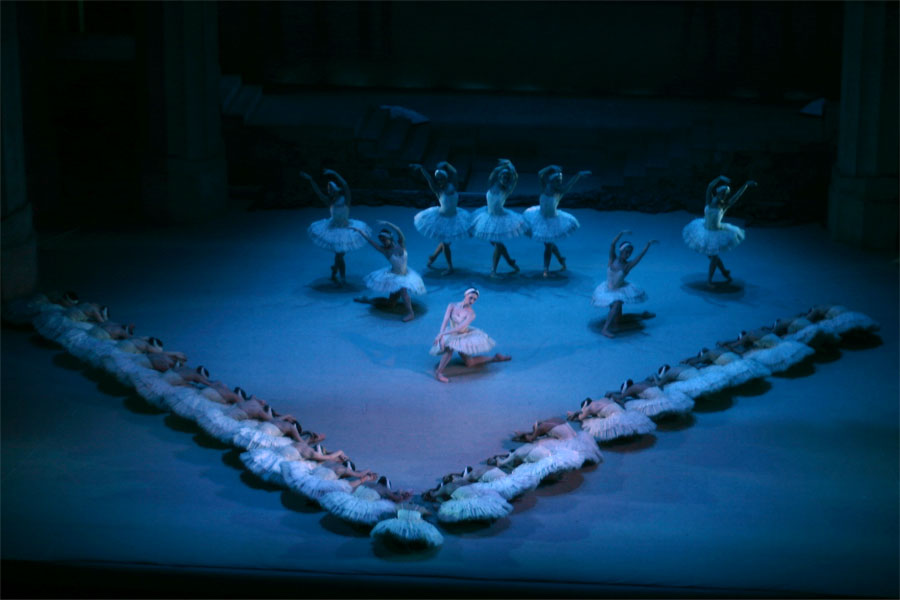 Swan LakeBallet · 1877Same lineage · video
 The NutcrackerBallet · 1892Same lineage · video
 West Side StoryMusical theatre · 1957Same lineage · video
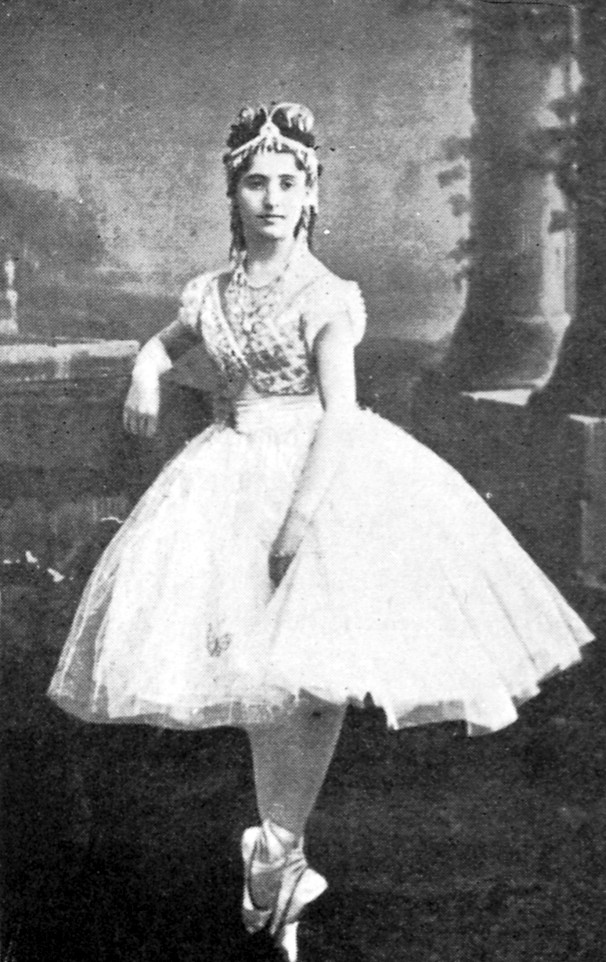 CoppéliaBallet · 1870Same lineage · video
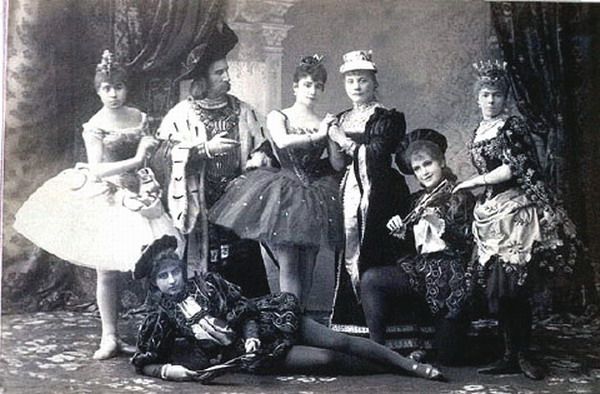 The Sleeping BeautyBallet · 1890Same lineage · video
 The FirebirdBallet · 1910Same lineage · video
 Allegro BrillanteBallet · 1956Same lineage · video
 Tschaikovsky Piano Concerto No. 2Ballet · 1941Same lineage · video