Fosse Style
Also known as: Fosse Technique, Fosse Jazz, Bob Fosse Style
History & Cultural Context
Bob Fosse (1927-1987) built the only fully codified movement signature in American musical theatre. Working from the isolation-based grammar of Jack Cole, who trained Fosse's wife and muse Gwen Verdon, and from his own vaudeville and burlesque apprenticeship, he assembled a vocabulary of turned-in knees, rolled and hunched shoulders, isolated hip rolls, sideways shuffles, splayed gloved fingers, jazz hands and the crouched cluster his dancers called the Fosse amoeba. Props are structural rather than decorative: bowler hats, canes and gloves, the hats adopted partly because Fosse was self-conscious about his thinning hair. The style enters the record with the 'Steam Heat' trio in The Pajama Game (1954) and runs through Damn Yankees (1955), Redhead, Little Me, Sweet Charity (1966), Pippin (1972), Chicago (1975), Dancin' (1978) and Big Deal (1986). He won eight Tony Awards for choreography, and in 1973 became the only person to take an Academy Award, an Emmy and a Tony in the same year. The vocabulary was preserved deliberately: Fosse, conceived by Richard Maltby Jr., Chet Walker and Ann Reinking with Gwen Verdon as artistic advisor, opened at the Broadhurst Theatre on January 14, 1999.
Cultural Significance
Fosse's movement carries the moral atmosphere of the burlesque houses and nightclubs he came up in, and his later shows use showbusiness itself as an image of exploitation. Cabaret (1972) and Chicago (1975) made that reading explicit.
Characteristic Movement & Technique
Turned-in knees and pigeon-toed stances, rolled shoulders, isolated pelvis and rib work, sideways shuffles, finger snaps, splayed hands, extreme stillness broken by a single sharp isolation, all performed with the weight low and the effort concealed.
Partnering Dynamics
Ensemble unison and tight trios dominate over couple work. Where partnering appears it is transactional and often coercive in tone, matching the material rather than displaying lift technique.
Competitive Context
Fosse combinations are a standard audition ask for Chicago, Pippin and Sweet Charity companies, and appear constantly in studio-competition jazz routines, where the surface mannerisms are frequently reproduced without the underlying weight and restraint.
Regional Variations
The vocabulary travels through licensed productions worldwide, but transmission has been guarded by dancers who worked with Fosse directly, including Ann Reinking and Chet Walker, and by the Verdon Fosse Legacy organization founded to preserve it.
Common Misconceptions
Jazz hands and a bowler hat do not make Fosse; the style is defined by weight, restraint and exact placement, and most of its power sits in stillness. It is also often treated as an invention from nothing, when much of its isolation-based grammar descends from Jack Cole.
Peak Popularity
Signature Figures
- Bob Fosse
- Gwen Verdon
- Ann Reinking
- Chet Walker
- Carol Haney
- Jack Cole
Notable Codifiers
- Bob Fosse
- Gwen Verdon
- Ann Reinking
- Chet Walker
Dance Lineage
Fosse Style Music & Tempo
Drawn from 18 Fosse Style tracks in the LODance music library.
Example tracks at practice tempo
- Rich Man's Frug — Fosse Ensemble138 BPM
- Crunchy Granola Suite — Brad Anderson
- Mr. Bojangles — Original Broadway Cast of Fosse
- Nowadays — Valarie Pettiford; Jane Lanier; Alex Sanchez
- Life Is Just a Bowl of Cherries - Reprise — Original Broadway Cast of Fosse
- I Wanna Be a Dancin' Man — Fosse Ensemble
Who governs Fosse Style
Federations, councils and examining bodies with a recorded role in this style. No single organisation can tell you this — each one knows only itself.
Legends of Fosse Style
Dancers, choreographers and teachers whose work shaped this style.
Fosse Style on screen
Films and television where Fosse Style appears, with the sequences worth watching for.
 Chicago (2002)7 sequences indexedAll That Jazz at the Onyx Club · 00:02:34 · chor. Rob Marshall; John DeLuca (choreographic supervisor)Funny Honey · 00:11:57 · chor. Rob Marshall; John DeLuca (choreographic supervisor)Cell Block Tango · 00:23:47 · chor. Rob Marshall; John DeLuca (choreographic supervisor)
 All That Jazz (1979)5 sequences indexedBye Bye Life finale · chor. Bob FosseTake Off With Us / Air-otica rehearsal · chor. Bob FosseEverything Old Is New Again · chor. Bob Fosse
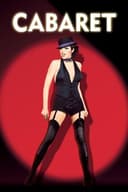 Cabaret (1972)5 sequences indexedWillkommen · 00:02:20 · chor. Bob FosseMein Herr · 00:11:27 · chor. Bob FosseMoney · 00:57:12 · chor. Bob Fosse
 Fosse/Verdon (2019)5 sequences indexedBig Spender filming and on-set correction · chor. Andy Blankenbuehler (series reconstruction); Bob Fosse (original choreography)Mein Herr Kit Kat Klub recreation · chor. Andy Blankenbuehler (series reconstruction); Bob Fosse (original choreography)Whatever Lola Wants rehearsal · chor. Andy Blankenbuehler (series choreography); Bob Fosse and Gwen Verdon (dramatized creative process)
Poster artwork from TMDB.
 This site uses TMDB and the TMDB APIs but is not endorsed, certified, or otherwise approved by TMDB.
Fosse Style in performance
2 staged works in the Limelight catalogue contain Fosse Style, 1975–1978.
- Chicago1975Musical theatre · defining style
Entire production, original and subsequent stagings — Isolations, turned-in positions, hat and glove work, and the added finger-snap gesture in 'Razzle Dazzle' are cited as staging conventions that became identified with the show and its choreographer. Sour…
- Dancin'1978Musical theatre · Bob Fosse · defining style
The whole revue, structured as a sequence of self-contained dance numbers — Precise, restrained ensemble unison and isolation-based movement running through the numbers, described by critics as 'precision and style' and, in the 2023 revival, as work where '…
Every claim above is quoted from a cited source and names where in the work the style appears. Claims we could not place or could not quote are held back from this list and shown on the work’s own page instead. Browse the full performance catalogue →
What to Wear
Attire guidance for Fosse Style and other Musical Theatre Dance dances. Each card below is sized to the moment — class, practice, social, or competition — because the wardrobe shifts as the stakes do.
Reading the cards
In Class
Fitted enough that the teacher can see your line, because this style is judged on shape and storytelling from the neck down: leggings or jazz pants, a fitted top or leotard, hair pinned off the face so it doesn't break the focus of a head snap. Jazz shoes cover most classes; bring character shoes when the class works in heels, and expect Fosse-derived material to ask for turned-in, isolated positions your shoes must let you pivot in. Add knee pads or thicker leggings for classes with floorwork or knee slides.
Social Dancing
There is no social floor for musical theatre — the public-facing equivalent is the audition room, and it has its own conventions. Wear something solid-coloured and form-fitting that shows your body clearly and hints at the show you're auditioning for without being a costume; carry both jazz shoes and character shoes in your bag and change to whatever the choreographer calls. Keep jewellery minimal, avoid logos, and never wear brand-new shoes to an audition.
Competition
Musical Theatre is a scored category on the studio competition circuits (as opposed to a separate governing body), judged on character and storytelling as much as technique, so costume is expected to read the number from the back row. Whatever the design, it has to survive the choreography: straps secured, nothing that can slip during lifts or floorwork, and shoes broken in and taped well before the event. In professional work the costume is assigned by the production and your job is to arrive with your own well-fitted shoes and dance belt.
Shoes
Leather character shoes with a secure strap and a leather or suede sole. Around 2–2.5" is the workhorse height for anything with turns and leaps; 3" only when the number is mostly walking and kick lines, since a higher heel puts you in relevé before you start and raises the odds of rolling an ankle. Soft soles let you point the foot and land jumps; hard soles give support under a heavy costume. Jazz shoes cover most class work, with tap and ballet shoes as the show demands — Capezio, Só Dança and Bloch at the affordable end, LaDuca and Miller & Ben as the Broadway premium tier.
In Practice
Rehearsal wear is fitted so the choreographer can see shape and alignment: leggings or jazz pants, a fitted top, hair fully secured. Rehearse in the shoe you will perform in, from as early as possible — heel height changes your balance point, and tech week is the wrong time to discover it. Period shows call for a rehearsal skirt in roughly the weight of the costume, and anything with floorwork or knee slides calls for pads under the leggings.
Common Pitfalls
- ✗Wearing brand-new character shoes to an audition or performance — they need breaking in and a broken-in shoe is a safer shoe.
- ✗Jumping to 3" heels before the ankles are conditioned; rolled ankles come from height, not from choreography.
- ✗Baggy layers that hide the line — this style is scored on shape, so the shape has to be visible.
- ✗Arriving at an audition with only one type of shoe when the choreographer may call for either jazz or character.
- ✗Dancing in socks on marley, which is genuinely slippery, rather than in proper shoes or bare feet.
Price Range
- Budget: Capezio or Só Dança character shoes roughly $40–80, jazz shoes $30–60, leggings and fitted tops you already own.
- Mid: Bloch character shoes roughly $70–120, a dance belt $25–40, knee pads $20–40, a rehearsal skirt $40–80.
- Premium: LaDuca or Miller & Ben, made in Italy and often custom-fitted, at several hundred dollars a pair — the professional standard for eight shows a week, and worth it only once you are dancing that much.
Key Terms
- Character shoe
- Strapped leather heel built for dancing rather than walking — flexible shank, suede or leather sole, heights typically 1.5–3".
- Dance belt
- Supportive undergarment worn under tights or fitted trousers; standard, expected, and not optional in professional rehearsal rooms.
- Rehearsal skirt
- Weighted practice skirt approximating the costume, so the choreography is learned with the fabric rather than against it.
- Sole tape / rosin
- Tape or rosin applied to soles to adjust grip on an unfamiliar stage — too slick and you skid, too tacky and you catch.
- Look like the show
- Audition convention: solid colour, form-fitting, a hint of the era or character — suggestion rather than costume.
Quick Tips
- •Suede-soled shoes allow controlled sliding and pivoting — essential for most partner dances.
- •Avoid rubber soles on dance floors; they grip too much and can cause knee injuries.
- •Bring a separate pair of clean shoes for the dance floor to keep it in good condition.
Sources & Further Reading
Cultural & Historical Context
Fosse Style emerged from New York City, United States (Broadway) during 1954—1987. Understanding the cultural roots, musical traditions, and social circumstances of this era enriches appreciation for the dance's characteristics and significance.
Formative Influences
Codifiers & Standardizers:
Bob Fosse, Gwen Verdon, Ann Reinking, Chet Walker
Signature Movement Vocabulary:
Bob Fosse, Gwen Verdon, Ann Reinking, Chet Walker, Carol Haney, Jack Cole
Primary Source Documents
The Library of Dance contains public-domain primary sources for dance history. Copyrighted modern syllabi are indexed with purchase links to their respective copyright owners. Search by dance name or codifier to discover primary source documents.
Last reviewed: September 2026 — This dance profile synthesizes historical research, cultural documentation, and contemporary practice knowledge to provide authoritative context.
More in Musical Theatre Dance
Golden Age Broadway Jazz
The show-dance idiom of the integrated book musical from Oklahoma! to Fiddler on the Roof, in which jazz, ballet and character steps were welded directly to plot and score.
Dream Ballet
The extended wordless narrative ballet inside a musical, entered from a character's mind, revealing desire or dread that the script and lyrics cannot state aloud.
Precision Kickline
Precision chorus dancing in which a long line executes identical steps and eye-high kicks in exact unison, descended from Russell Markert's Rockettes at Radio City Music Hall.
Contemporary Broadway
The Broadway idiom from the 1990s onward, fusing ballet, hip-hop, street and contemporary technique into character-specific storytelling, usually authored by a choreographer who also directs.
Musical Theatre Character Dance
Period and character styling for the stage, in which folk, social and national dance is stylized in character shoes to establish a show's time, place and social world.
Musical Theatre Dance in art
Browse the gallery →Works from the wider Musical Theatre Dance tradition — we have not yet identified enough that depict Fosse Style specifically.
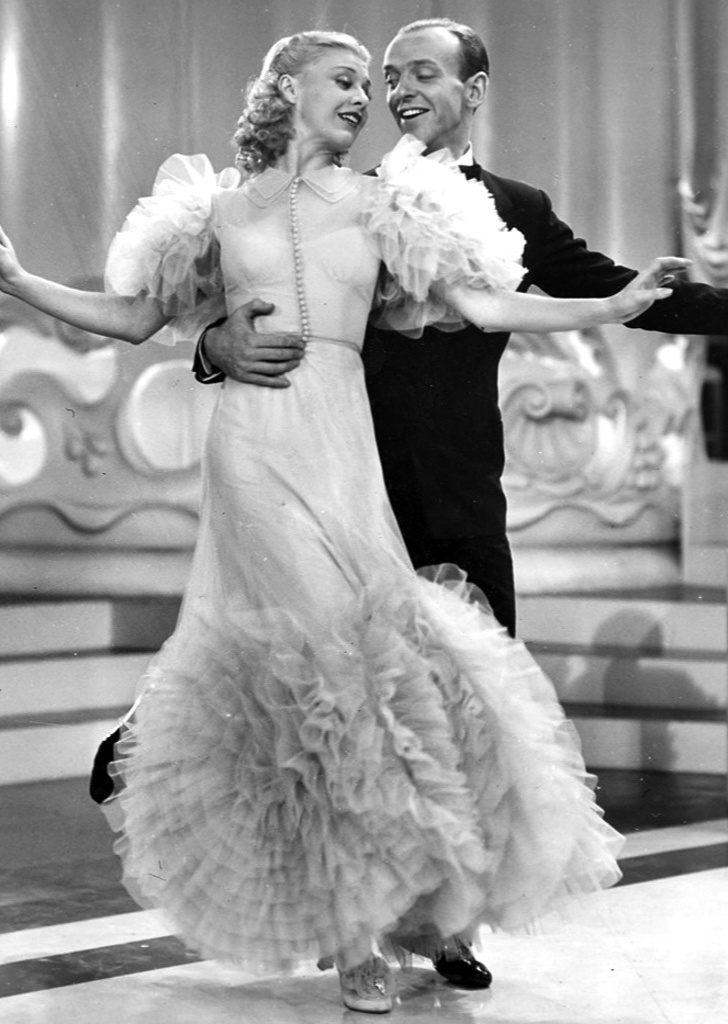
Fred Astaire and Ginger Rogers
Unknown artist
public_domain
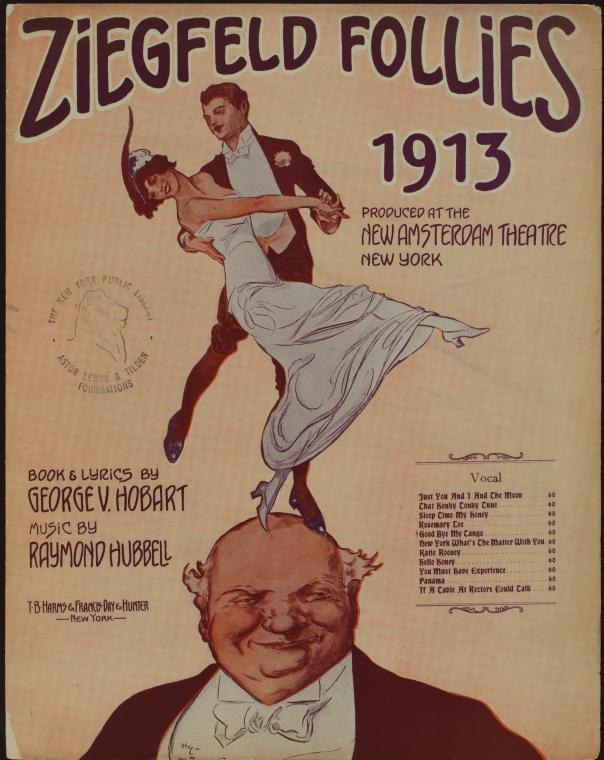
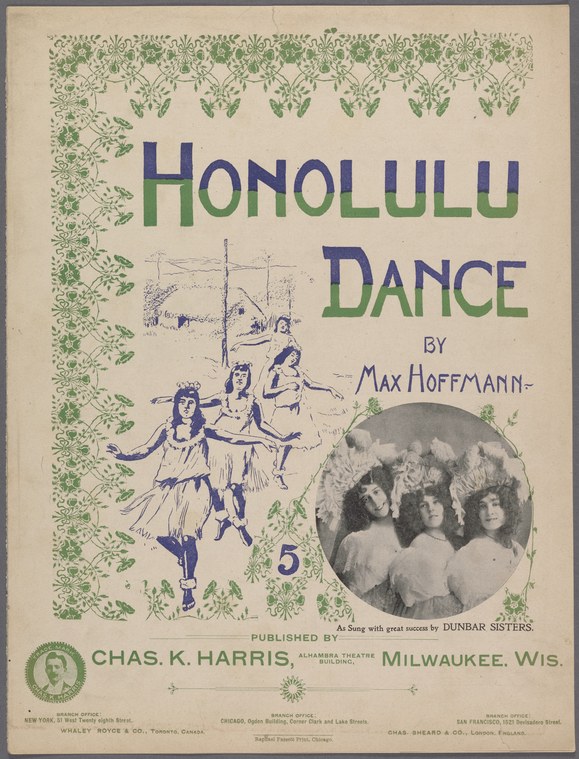
Honolulu dance
Unknown artist
public_domain
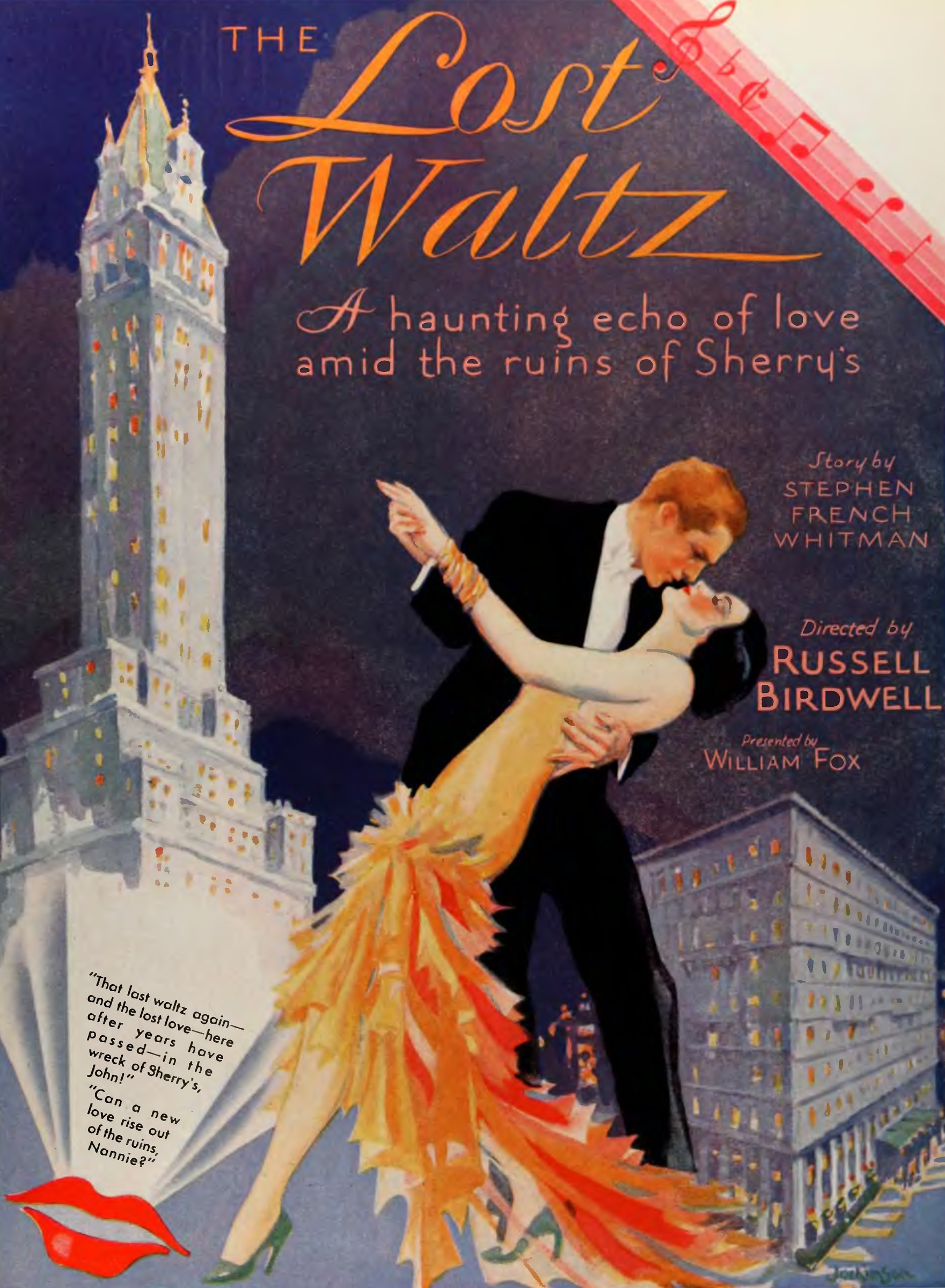
The Lost Waltz ad in The Film Daily, Jan-Jun 1929 (page 1479 crop)
New York, Wid's Films and Film Folks, Inc. · 1929
Public Domain
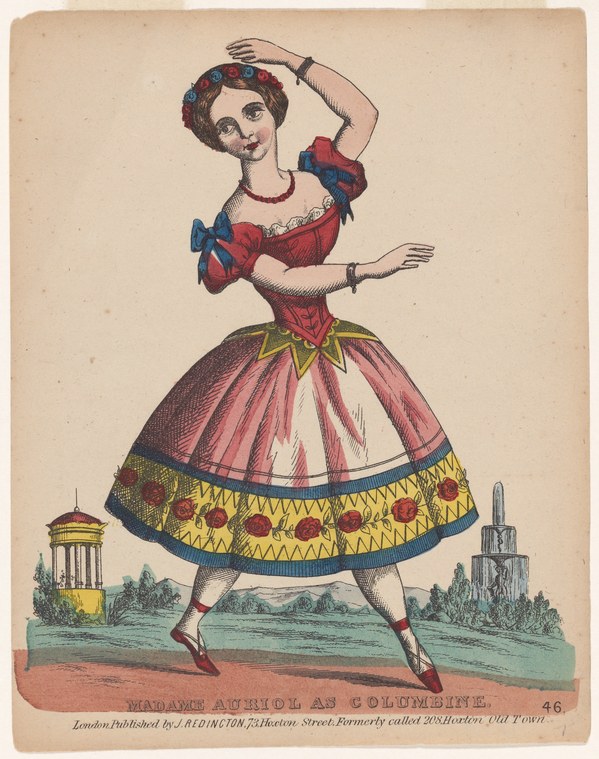
Madame Auriol as Columbine
Unknown artist
Public Domain
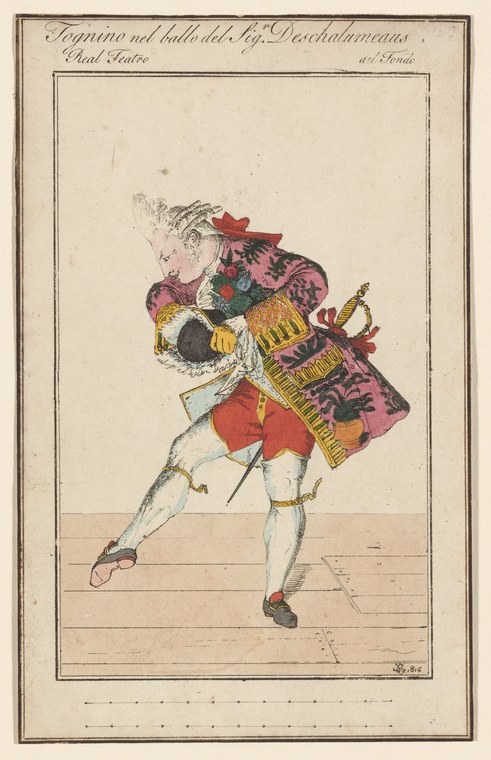
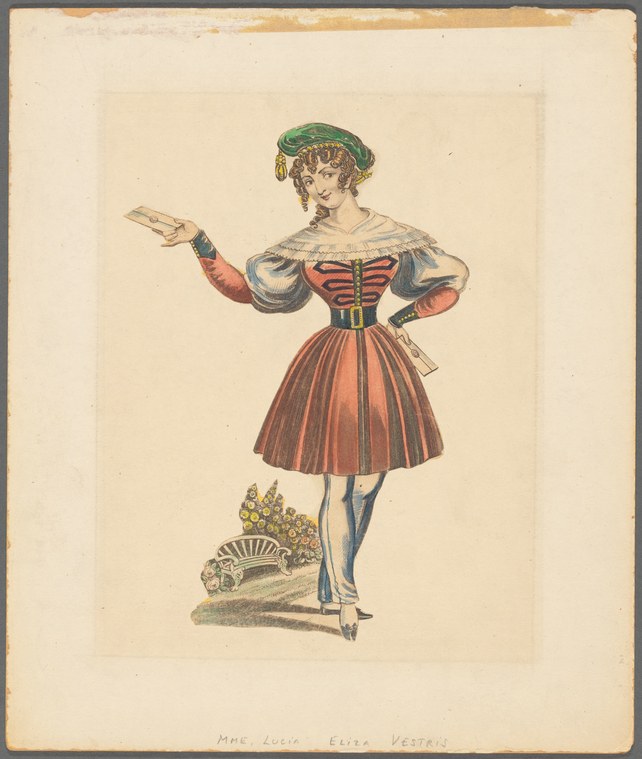
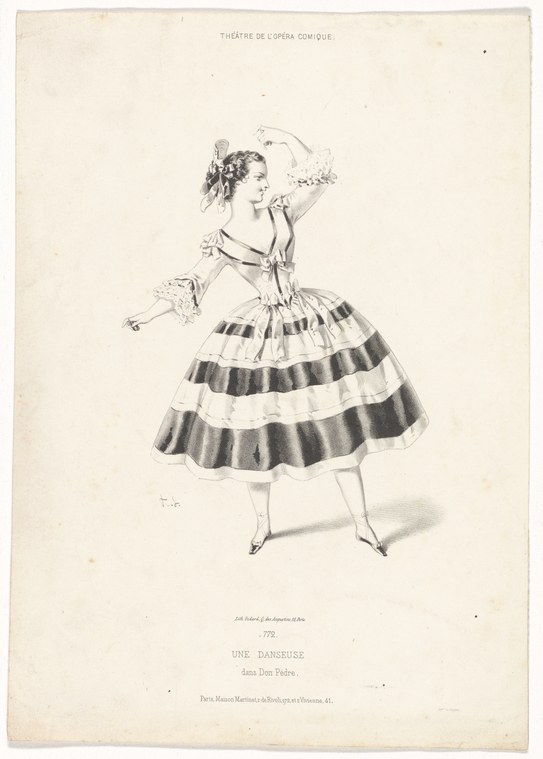
Theatrical portraits
Unknown artist
Public Domain
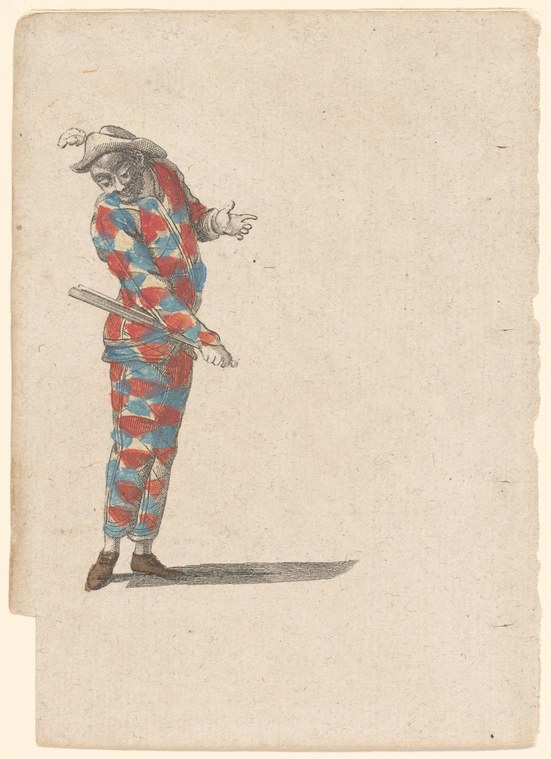
Harlequin
Unknown artist
Public Domain
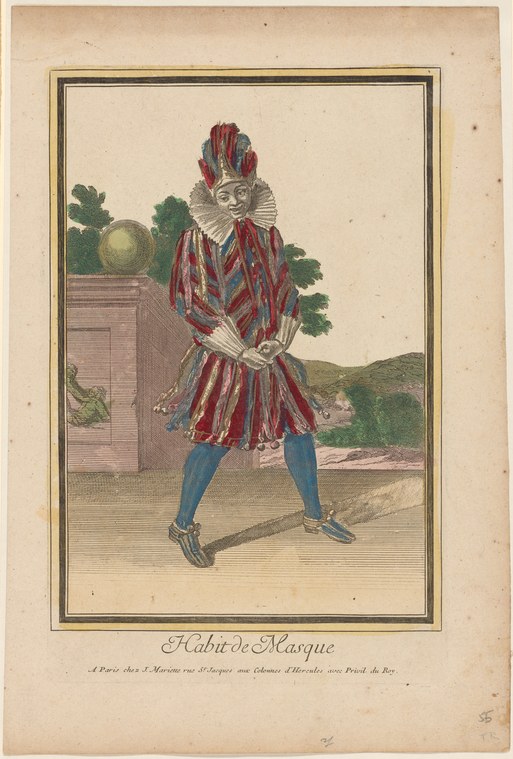
Habit de masque
Unknown artist
Public Domain
Continue Exploring
Lineage of Dance
500 years of dance evolution
Champions of Dance
Winners of marquee national & world titles
Language of Dance
161 dance terms & translations
Listening of Dance
Tempo, timing & musicality tools
Gallery of Dance
5,700+ artworks from museum collections
Attire of Dance
Evolution of dance dress across eras
Keep the thread going
Dance history, technique, and the occasional rabbit hole — in your inbox. Thoughtful, infrequent, unsubscribe anytime.
Free. No spam. One click to leave.