Reggaeton (Perreo)
Also known as: Perreo, Reggaeton Dance, Reguetón, Sandungueo
- Origin
- Panama City, Panama and San Juan, Puerto Rico
- Era
- 1985–Present
- Rhythm
- 4/4 dembow: a 3-3-2 kick pattern with the snare landing on the off-beat
- Tempo
- Roughly 85-105 BPM
- Character
- Low, heavy and insistent; sustained hip motion over a relentless dembow pulse
History & Cultural Context
Reggaeton's dance culture is inseparable from the music's two-country origin story. The genre began in Panama City in the early 1980s, where descendants of West Indian canal workers created reggae en espanol; MCs including Leonardo Renato Aulder and El General translated Jamaican dancehall into Spanish, with Renato's 1985 El D.E.N.I. addressing discrimination faced by Black English-speaking Panamanians. Through the 1990s that sound converged with Spanish-language hip-hop in Puerto Rico as underground, incubated at DJ Negro's club The Noise, where Ivy Queen and Daddy Yankee developed the style and lyrics addressed racism and life in the caserios. Perreo, the grounded, hip-rolling, largely back-to-front couple dance, became the scene's signature movement, and both the music and the dance were targeted during Puerto Rican anti-crime crackdowns in the 1990s, which only strengthened the form's standing as music of resistance. Daddy Yankee's Gasolina in 2004 carried the genre worldwide. Contemporary perreo has been substantially reclaimed by women and queer dancers, a shift that has reframed who leads the dance and on whose terms.
Cultural Significance
Reggaeton carries an Afro-diasporic lineage running from Jamaican dancehall through Panama to Puerto Rico, and perreo has been a persistent target of respectability politics, moral panic and state censorship throughout its history.
Characteristic Movement & Technique
Continuous hip circles and figure-eights over bent knees with the weight low and grounded, the pelvis marking the dembow's 3-3-2 pattern. Footwork stays small while the hips carry the phrase.
Partnering Dynamics
Most commonly danced back-to-front with the follower's hips driving against the partner, without any formal lead-and-follow system. Solo and facing-partner perreo are equally standard, and consent is negotiated on the floor.
Competitive Context
Social and club-based rather than federated. Competition appears through club contests, festival battles and choreographic showcases rather than through any governing body or ranked circuit.
Regional Variations
Panamanian and Puerto Rican styles differ in feel and phrasing, and Dominican dembow, Colombian reggaeton and the Chilean and Spanish scenes have each produced distinct movement dialects and working tempos.
Common Misconceptions
Reggaeton is often described as purely Puerto Rican, but the genre's roots run through Panama's reggae en espanol. Perreo is also frequently reduced to sexual provocation, which erases its dancehall lineage and its history as music of resistance.
Peak Popularity
Signature Figures
- El General
- Leonardo 'Renato' Aulder
- DJ Negro
- Ivy Queen
- Daddy Yankee
Reggaeton (Perreo) Music & Tempo
Drawn from 15 Reggaeton (Perreo) tracks in the LODance music library.
Example tracks at practice tempo
- Lo Que Pasó, Pasó — Daddy Yankee97 BPM
- Dale Don Dale — Don Omar95 BPM
- Pam Pam — Wisin & Yandel95 BPM
- Gata Fiera — Trebol Clan95 BPM
- Pa' Que Retozen — Tego Calderón92 BPM
- Ven Bailalo - Reggaeton Mix — Angel Y Khriz97 BPM
Reggaeton (Perreo) on screen
Films and television where Reggaeton (Perreo) appears, with the sequences worth watching for.
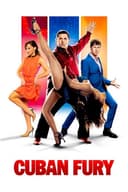
Poster artwork from TMDB.
 This site uses TMDB and the TMDB APIs but is not endorsed, certified, or otherwise approved by TMDB.
What to Wear
Attire guidance for Reggaeton (Perreo) and other Club & Social Latin dances. Each card below is sized to the moment — class, practice, social, or competition — because the wardrobe shifts as the stakes do.
Reading the cards
In Class
Casual and breathable. Tank tops, T-shirts, comfortable pants. You will sweat in salsa class. Avoid very loose clothing that obscures body movement.
Social Dancing
Stylish and vibrant. Women: dresses, fitted jeans with a nice top, or dance pants. Men: well-fitted shirts (avoid baggy), dark jeans or chinos. Bright colors and personality are encouraged.
Competition
Women: flashy dresses or outfits with Latin flavor — often more street-fashion inspired than ballroom. Men: tailored shirts and pants. Bachata: often all-black or monochromatic.
Shoes
Women: Latin dance shoes or heeled boots with suede soles (2–3"). Men: Latin shoes or clean dress shoes with smooth soles. Salsa dancers need shoes that allow spinning on the ball of the foot.
In Practice
Bring two shirts to a salsa workshop — the second one is for the social after. Practice wear is fitted enough to read body lead but breathable enough for two-hour sessions.
By Role
Leaders
Class: Fitted athletic shirt or moisture-wicking T-shirt with comfortable trousers. Avoid baggy fits — followers can't read your lead through extra fabric.
Competition: Tailored shirt (often slim-cut button-down or fitted dance shirt), dark trousers. Bachata competitors frequently wear all-black or monochromatic palettes.
Followers
Class: Fitted tank or top with comfortable pants. Hair pulled back. Ankle-strap heels for class; flats acceptable for early levels.
Competition: Short or fitted dresses with stretch and movement. Salsa dresses skew street-fashion expressive; Bachata skews monochromatic and sleek.
Common Pitfalls
- ✗Sneakers with grippy rubber soles — turn injuries are the #1 social-Latin urgent-care visit.
- ✗Baggy clothing that hides body lead — leaders especially.
- ✗New leather-soled shoes worn straight to a sticky club floor — break shoes in on a clean studio floor first.
Price Range
- Budget: Entry Latin shoes $80–130; club-appropriate clothing repurposed from existing wardrobe.
- Mid: Dedicated salsa shoes $150–250; performance dresses or shirts $80–250.
- Premium: Premium salsa shoes (Yuliana, Ray Rose) $250–400; bachata performance kit $300–800.
Key Terms
- Suede sole
- The standard sole material for Latin dance shoes — provides controlled friction on wood and tile floors, allowing spins without sticking.
- Ankle strap
- A strap securing the shoe around the ankle — essential for salsa spinning in heels, preventing the foot from leaving the shoe mid-turn.
- Spin technique shoe
- A club-Latin shoe optimized for fast turns — lightweight, snug fit, suede or chrome sole, reinforced ball of foot.
Quick Tips
- •Suede-soled shoes allow controlled sliding and pivoting — essential for most partner dances.
- •Avoid rubber soles on dance floors; they grip too much and can cause knee injuries.
- •Bring a separate pair of clean shoes for the dance floor to keep it in good condition.
Recommended Gear for Reggaeton (Perreo)
Essential equipment and apparel selected for dancers learning Reggaeton (Perreo).


As an Amazon Associate, LODance earns from qualifying purchases. Affiliate disclosure
Sources & Further Reading
Cultural & Historical Context
Reggaeton (Perreo) emerged from Panama City, Panama and San Juan, Puerto Rico during 1985—present day. Understanding the cultural roots, musical traditions, and social circumstances of this era enriches appreciation for the dance's characteristics and significance.
Formative Influences
Signature Movement Vocabulary:
El General, Leonardo 'Renato' Aulder, DJ Negro, Ivy Queen, Daddy Yankee
Primary Source Documents
The Library of Dance contains public-domain primary sources for dance history. Copyrighted modern syllabi are indexed with purchase links to their respective copyright owners. Search by dance name or codifier to discover primary source documents.
Last reviewed: September 2026 — This dance profile synthesizes historical research, cultural documentation, and contemporary practice knowledge to provide authoritative context.
More in Club & Social Latin
Salsa
Salsa is a vibrant Latin partner dance developed from Cuban son traditions and popularized in New York during the 1960s-1970s. It features Cuban motion, rhythmic patterns, and lively musicality.
Bachata
Bachata is a romantic Latin couple dance that emerged in the Dominican Republic, characterized by smooth movements, hip motion, and gentle turns with close partnership and intimate character.
Merengue
Merengue is a fast, energetic Latin couple dance from the Dominican Republic, featuring characteristic hip motion driven by knee action and syncopated rhythm patterns. A related méringue tradition exists in Haiti.
Cumbia
Cumbia is a Colombian couple dance with African-influenced rhythms and hip motion, featuring rotating movement patterns and steady rhythmic pulse. It remains central to Colombian and Latin American culture.
Zouk
Zouk is a Caribbean couple dance developed in Guadeloupe and Martinique during the 1970s-1980s, featuring fast footwork, smooth body motion, and contemporary styling with African-influenced rhythms.
Kizomba
Kizomba is an Angolan couple dance with romantic, close-connection character, featuring smooth steps and hip motion influenced by Brazilian and Caribbean traditions.
Forró
Forró is a Brazilian couple dance with accordion-driven rhythm, bouncy hip action, and celebratory character, popular for festivals and social gatherings throughout Brazil.
Lambada
Lambada is a contemporary Latin couple dance with sensual, close-connection character and hip-driven motion that emerged in Brazil during the 1980s and became a global phenomenon.
Lambazouk
Lambazouk is a contemporary fusion dance blending lambada and zouk traditions, emerging in the 1990s as dancers synthesized Caribbean and contemporary styles.
Casino & Rueda de Casino
Cuba's circular partner dance, in which multiple couples dance casino simultaneously and swap partners on a caller's shouted and hand-signalled commands.
Bachata Sensual
A Spanish-developed bachata style built on body waves, isolations and extended partner shapes, danced closer and often slower than traditional Dominican bachata.
Sertanejo Universitário
The close-embrace Brazilian couple dance danced to sertanejo universitário, a pop-inflected country music that swept Brazilian university party culture from the mid-2000s.
Bachata Dominican
The original Dominican form of bachata, danced socially to guitar-led music in a close or open hold with small steps, footwork improvisation and a tap or hip accent on the fourth beat. It was the music and dance of the Dominican rural and urban poor, dismissed and excluded from respectable media for decades before becoming a national and then international export.
Salsa NY
Linear salsa danced with the break on counts two and six, aligned to the tumbao of the conga rather than to the first beat of the bar. It descends from the Palladium mambo of the 1950s and was codified for teaching in New York by Eddie Torres, and it remains the reference style for on2 dancing worldwide.
Club & Social Latin in art
Browse the gallery →Works from the wider Club & Social Latin tradition — we have not yet identified enough that depict Reggaeton (Perreo) specifically.
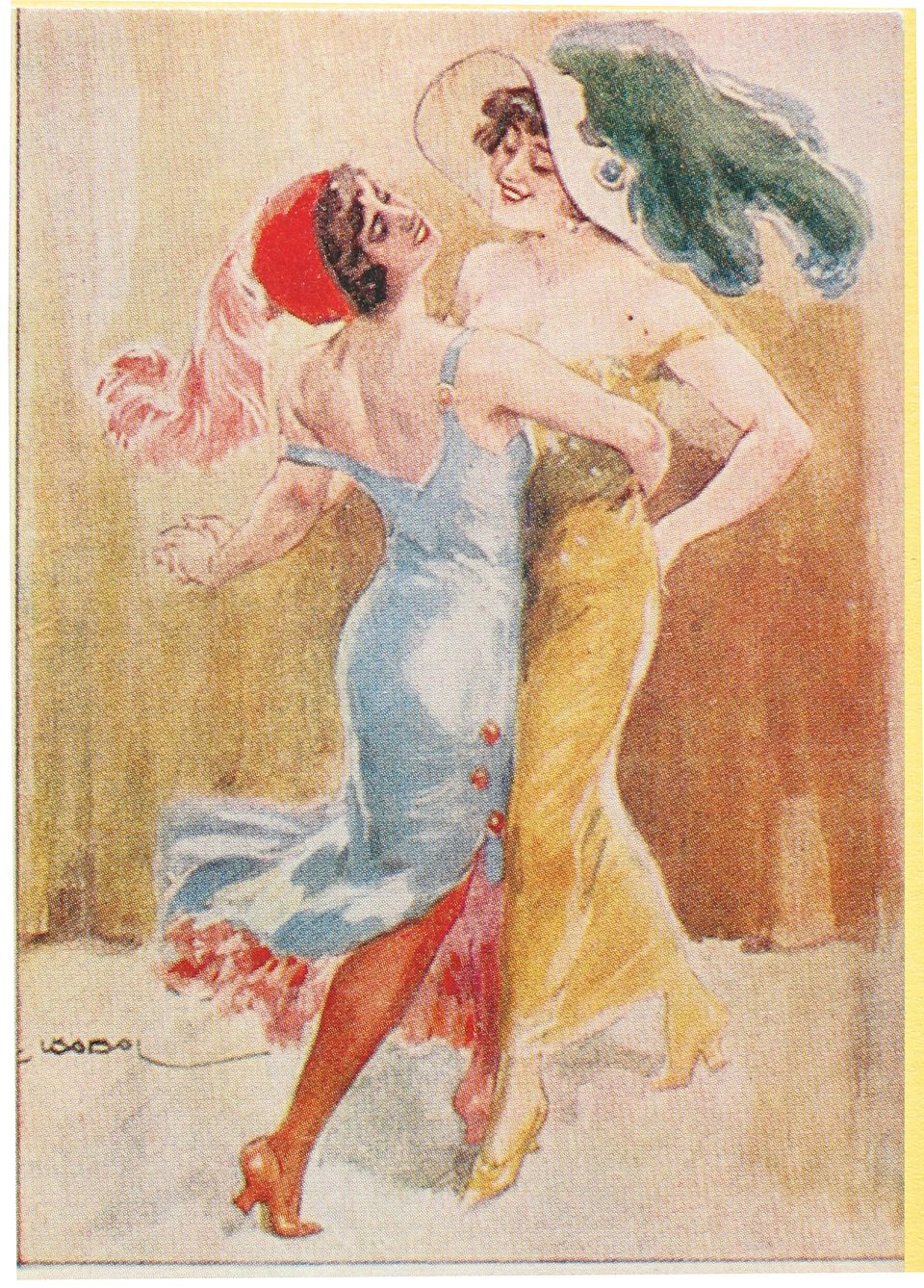
Tango at the Street Cafe
Unknown
public_domain
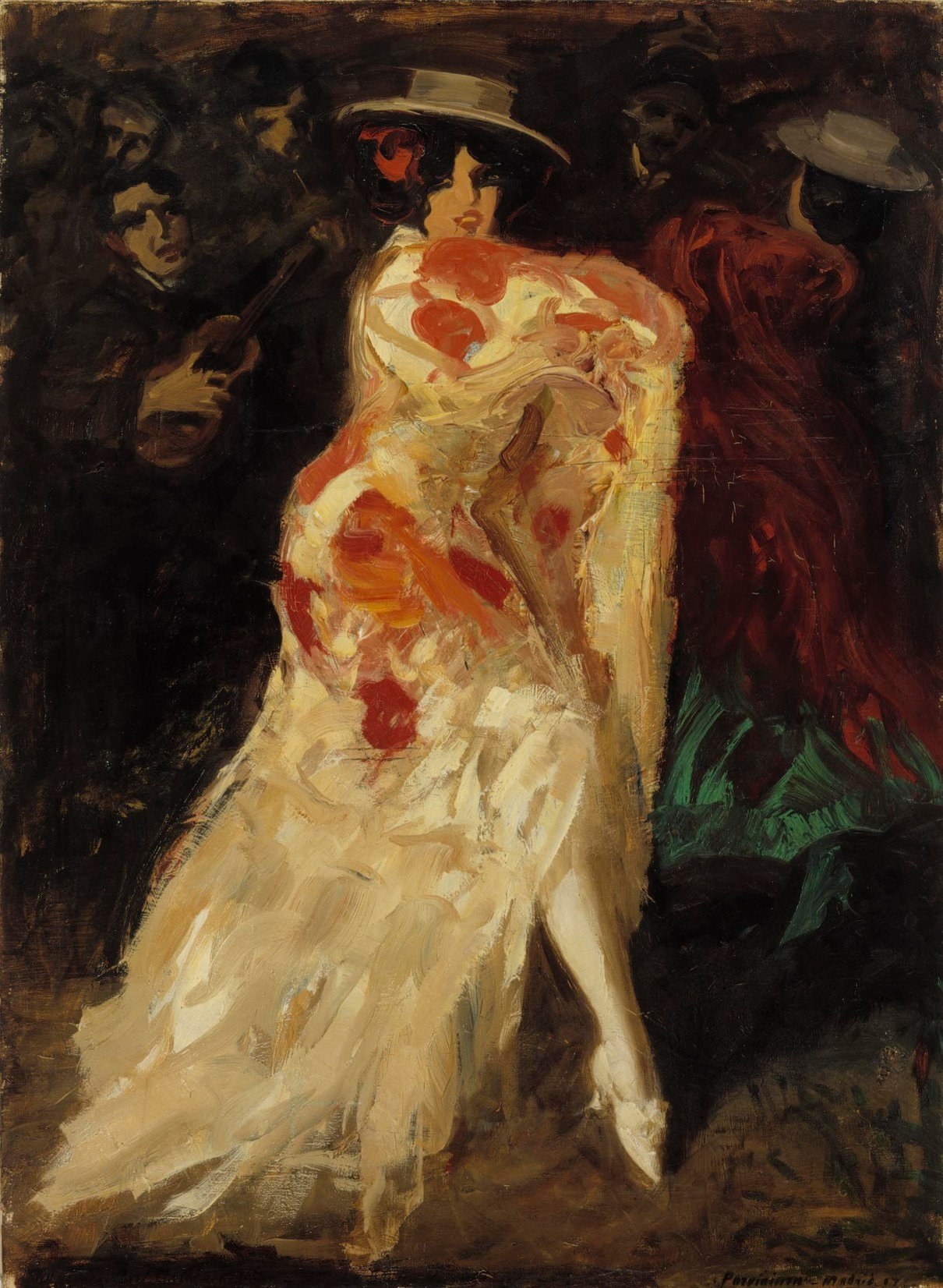
Oscar Parviainen - Espanjalainen tanssijatar (Tango) - A III 1792 - Finnish National Gallery
Oscar Parviainen · 1907
Public Domain
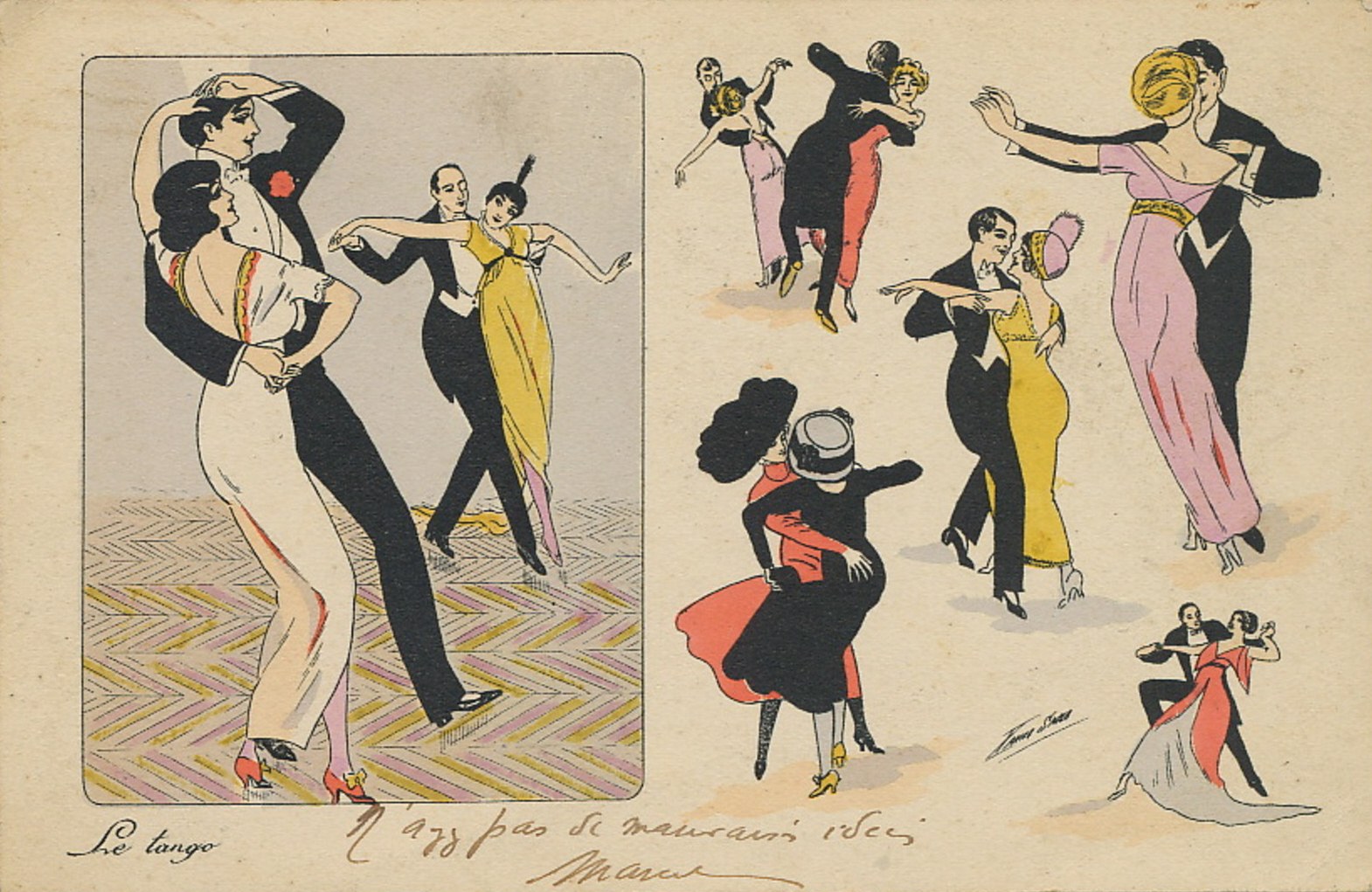
Xavier Sager Le Tango 4
Xavier Sager · 1930
Public Domain
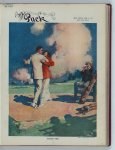
Tango tee
Unknown artist · 1914
Public Domain
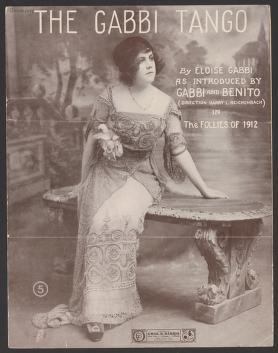
The Gabbi tango
Unknown artist · 1912
Public Domain
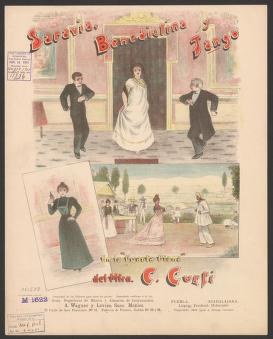
Tango
Unknown artist · 1901
Public Domain
Continue Exploring
Lineage of Dance
500 years of dance evolution
Champions of Dance
Winners of marquee national & world titles
Language of Dance
161 dance terms & translations
Listening of Dance
Tempo, timing & musicality tools
Gallery of Dance
5,700+ artworks from museum collections
Attire of Dance
Evolution of dance dress across eras
Keep the thread going
Dance history, technique, and the occasional rabbit hole — in your inbox. Thoughtful, infrequent, unsubscribe anytime.
Free. No spam. One click to leave.