Salsa NY
Also known as: New York Style Salsa, Salsa On2, Mambo On2, Eddie Torres Style, On2
- Origin
- New York City
- Era
- 1980–Present
- Rhythm
- 8 counts over two bars of 4/4, quick-quick-slow twice, with the break falling on 2 and 6 and counts 4 and 8 held, timed to the conga tumbao
- Tempo
- Roughly 180-210 BPM in four, about 45 to 52 measures per minute
- Character
- precise, elegant, linear, musical, controlled, spin-heavy
History & Cultural Context
Its lineage runs from the mambo danced by Puerto Rican, Cuban and African American dancers at the Palladium Ballroom in New York in the 1950s, through the Fania-era salsa of the 1970s, to the studio-taught form that Eddie Torres codified and spread from the 1980s onward. Torres built a teachable structure around a timing that had previously been transmitted by ear on social floors, and the result is that on2 is the one salsa style with a clear codification, a named lineage and a consistent vocabulary across cities. The style is linear: the couple works along a slot, with the leader clearing the line for the follower to travel through it, a structure that suits crowded club floors and reads clearly on stage. It spread internationally through congresses, performance teams and touring instructors from the late 1990s, and it is now danced everywhere, though it remains a minority timing relative to on1. New York remains its centre of gravity and its point of reference for what counts as correct.
Cultural Significance
It belongs to New York's Puerto Rican and Cuban communities and to the Black and Latino dance culture of the city, from the Palladium era through the salsa boom of the 1970s and the studio and club scene that followed. The move from social transmission to formal instruction happened in New York studios in the 1980s and 1990s and is why the style travelled as a coherent thing rather than a local habit. Its social home is still the club and the congress social floor, not the competition floor.
Characteristic Movement & Technique
Steps are taken with the weight over the balls of the feet and a straight, quiet upper body, with contra-body movement supplying the rotation and hip motion arising from weight transfer rather than being pushed. The dance travels along a slot, with the cross-body lead as its structural centre, and the leader steps aside to open the line each time the follower passes. Spins are spotted and often multiple, and shines, the sections where the partners separate and dance solo footwork, are a formal part of the style rather than an interruption.
Partnering Dynamics
The hold is open more often than closed, with a light, responsive hand connection and a clear frame that stays consistent through turns. Leading is mostly directional and preparatory, giving the follower the line and the time to travel it, and the follower is expected to complete her own turns and manage her own axis rather than being turned. The timing itself is a shared responsibility: on2 falls apart quickly if either partner drifts to on1.
Competitive Context
On2 is contested at international salsa competitions in couples, team and cabaret divisions, at events including the World Latin Dance Cup and the World Salsa Summit, and at the competition programmes attached to major salsa congresses; on1 and on2 are frequently judged as separate categories. Salsa is also a Nightclub category dance in American pro-am and studio competition under NDCA rules. Competitive routines are far more lift-and-trick heavy than anything danced socially.
Regional Variations
Within on2 there is a real split between the Eddie Torres convention and the older Palladium or power-on2 convention, which places the leader's forward break differently; dancers from the two conventions can dance together but describe the timing differently. Puerto Rico has its own on2 tradition that developed alongside New York's. Outside the United States, on2 scenes in Europe, Japan and Latin America have added local styling while keeping the timing and the slot.
Common Misconceptions
The most common error is treating on2 as on1 shifted by a beat; the break, the weight distribution and the relationship to the percussion are different, and it is a distinct style rather than a counting preference. LA style on1 is also linear and shares much of the pattern vocabulary but breaks on 1 and grew out of a 1990s Los Angeles performance scene. Cuban casino is a separate lineage altogether, circular rather than slotted, and it is not a regional accent of New York salsa.
Peak Popularity
Signature Figures
- Basic step
- Cross-body lead
- Cross-body lead with inside turn
- Copa
- Hammerlock
- Shines
Notable Codifiers
- Eddie Torres
Salsa NY Playlists
Curated collections on the LODance YouTube channel — performances to watch, lessons to learn from, and the right music to practice with. Tap a collection to play.
▶ Lessons · Open on YouTube →
Salsa NY Music & Tempo
Drawn from 22 Salsa NY tracks in the LODance music library.
Example tracks at practice tempo
- Llorarás — Oscar D'León100 BPM
- Cali Pachanguero — Grupo Niche100 BPM
- Something Wild — Lindsey Stirling feat. Andrew McMahon in the Wilderness106 BPM
- Angels We Have Heard on High — Lindsey Stirling109 BPM
- Prism — Lindsey Stirling108 BPM
- Aguanilé — Héctor Lavoe96 BPM
Legends of Salsa NY
Dancers, choreographers and teachers whose work shaped this style.
What to Wear
Attire guidance for Salsa NY and other Club & Social Latin dances. Each card below is sized to the moment — class, practice, social, or competition — because the wardrobe shifts as the stakes do.
Reading the cards
In Class
Casual and breathable. Tank tops, T-shirts, comfortable pants. You will sweat in salsa class. Avoid very loose clothing that obscures body movement.
Social Dancing
Stylish and vibrant. Women: dresses, fitted jeans with a nice top, or dance pants. Men: well-fitted shirts (avoid baggy), dark jeans or chinos. Bright colors and personality are encouraged.
Competition
Women: flashy dresses or outfits with Latin flavor — often more street-fashion inspired than ballroom. Men: tailored shirts and pants. Bachata: often all-black or monochromatic.
Shoes
Women: Latin dance shoes or heeled boots with suede soles (2–3"). Men: Latin shoes or clean dress shoes with smooth soles. Salsa dancers need shoes that allow spinning on the ball of the foot.
In Practice
Bring two shirts to a salsa workshop — the second one is for the social after. Practice wear is fitted enough to read body lead but breathable enough for two-hour sessions.
By Role
Leaders
Class: Fitted athletic shirt or moisture-wicking T-shirt with comfortable trousers. Avoid baggy fits — followers can't read your lead through extra fabric.
Competition: Tailored shirt (often slim-cut button-down or fitted dance shirt), dark trousers. Bachata competitors frequently wear all-black or monochromatic palettes.
Followers
Class: Fitted tank or top with comfortable pants. Hair pulled back. Ankle-strap heels for class; flats acceptable for early levels.
Competition: Short or fitted dresses with stretch and movement. Salsa dresses skew street-fashion expressive; Bachata skews monochromatic and sleek.
Common Pitfalls
- ✗Sneakers with grippy rubber soles — turn injuries are the #1 social-Latin urgent-care visit.
- ✗Baggy clothing that hides body lead — leaders especially.
- ✗New leather-soled shoes worn straight to a sticky club floor — break shoes in on a clean studio floor first.
Price Range
- Budget: Entry Latin shoes $80–130; club-appropriate clothing repurposed from existing wardrobe.
- Mid: Dedicated salsa shoes $150–250; performance dresses or shirts $80–250.
- Premium: Premium salsa shoes (Yuliana, Ray Rose) $250–400; bachata performance kit $300–800.
Key Terms
- Suede sole
- The standard sole material for Latin dance shoes — provides controlled friction on wood and tile floors, allowing spins without sticking.
- Ankle strap
- A strap securing the shoe around the ankle — essential for salsa spinning in heels, preventing the foot from leaving the shoe mid-turn.
- Spin technique shoe
- A club-Latin shoe optimized for fast turns — lightweight, snug fit, suede or chrome sole, reinforced ball of foot.
Quick Tips
- •Suede-soled shoes allow controlled sliding and pivoting — essential for most partner dances.
- •Avoid rubber soles on dance floors; they grip too much and can cause knee injuries.
- •Bring a separate pair of clean shoes for the dance floor to keep it in good condition.
Recommended Gear for Salsa NY
Essential equipment and apparel selected for dancers learning Salsa NY.


As an Amazon Associate, LODance earns from qualifying purchases. Affiliate disclosure
Sources & Further Reading
Where This Dance Is Documented
Studio pedagogy; mambo lineage
An editor's note on where the technique for this dance is actually written down — sometimes a named book, sometimes the fact that no such book exists. A judgement, not a count of what we hold.
Cultural & Historical Context
Salsa NY emerged from New York City during the 1980s—present day. Understanding the cultural roots, musical traditions, and social circumstances of this era enriches appreciation for the dance's characteristics and significance.
Formative Influences
Codifiers & Standardizers:
Eddie Torres
Signature Movement Vocabulary:
Basic step, Cross-body lead, Cross-body lead with inside turn, Copa, Hammerlock, Shines
Primary Source Documents
The Library of Dance contains public-domain primary sources for dance history. Copyrighted modern syllabi are indexed with purchase links to their respective copyright owners. Search by dance name or codifier to discover primary source documents.
Last reviewed: September 2026 — This dance profile synthesizes historical research, cultural documentation, and contemporary practice knowledge to provide authoritative context.
More in Club & Social Latin
Salsa
Salsa is a vibrant Latin partner dance developed from Cuban son traditions and popularized in New York during the 1960s-1970s. It features Cuban motion, rhythmic patterns, and lively musicality.
Bachata
Bachata is a romantic Latin couple dance that emerged in the Dominican Republic, characterized by smooth movements, hip motion, and gentle turns with close partnership and intimate character.
Merengue
Merengue is a fast, energetic Latin couple dance from the Dominican Republic, featuring characteristic hip motion driven by knee action and syncopated rhythm patterns. A related méringue tradition exists in Haiti.
Cumbia
Cumbia is a Colombian couple dance with African-influenced rhythms and hip motion, featuring rotating movement patterns and steady rhythmic pulse. It remains central to Colombian and Latin American culture.
Zouk
Zouk is a Caribbean couple dance developed in Guadeloupe and Martinique during the 1970s-1980s, featuring fast footwork, smooth body motion, and contemporary styling with African-influenced rhythms.
Kizomba
Kizomba is an Angolan couple dance with romantic, close-connection character, featuring smooth steps and hip motion influenced by Brazilian and Caribbean traditions.
Forró
Forró is a Brazilian couple dance with accordion-driven rhythm, bouncy hip action, and celebratory character, popular for festivals and social gatherings throughout Brazil.
Lambada
Lambada is a contemporary Latin couple dance with sensual, close-connection character and hip-driven motion that emerged in Brazil during the 1980s and became a global phenomenon.
Lambazouk
Lambazouk is a contemporary fusion dance blending lambada and zouk traditions, emerging in the 1990s as dancers synthesized Caribbean and contemporary styles.
Reggaeton (Perreo)
The club dance of reggaeton, centred on perreo: a grounded, hip-driven couple dance most often danced back-to-front and phrased to the dembow rhythm.
Casino & Rueda de Casino
Cuba's circular partner dance, in which multiple couples dance casino simultaneously and swap partners on a caller's shouted and hand-signalled commands.
Bachata Sensual
A Spanish-developed bachata style built on body waves, isolations and extended partner shapes, danced closer and often slower than traditional Dominican bachata.
Sertanejo Universitário
The close-embrace Brazilian couple dance danced to sertanejo universitário, a pop-inflected country music that swept Brazilian university party culture from the mid-2000s.
Bachata Dominican
The original Dominican form of bachata, danced socially to guitar-led music in a close or open hold with small steps, footwork improvisation and a tap or hip accent on the fourth beat. It was the music and dance of the Dominican rural and urban poor, dismissed and excluded from respectable media for decades before becoming a national and then international export.
Club & Social Latin in art
Browse the gallery →Works from the wider Club & Social Latin tradition — we have not yet identified enough that depict Salsa NY specifically.
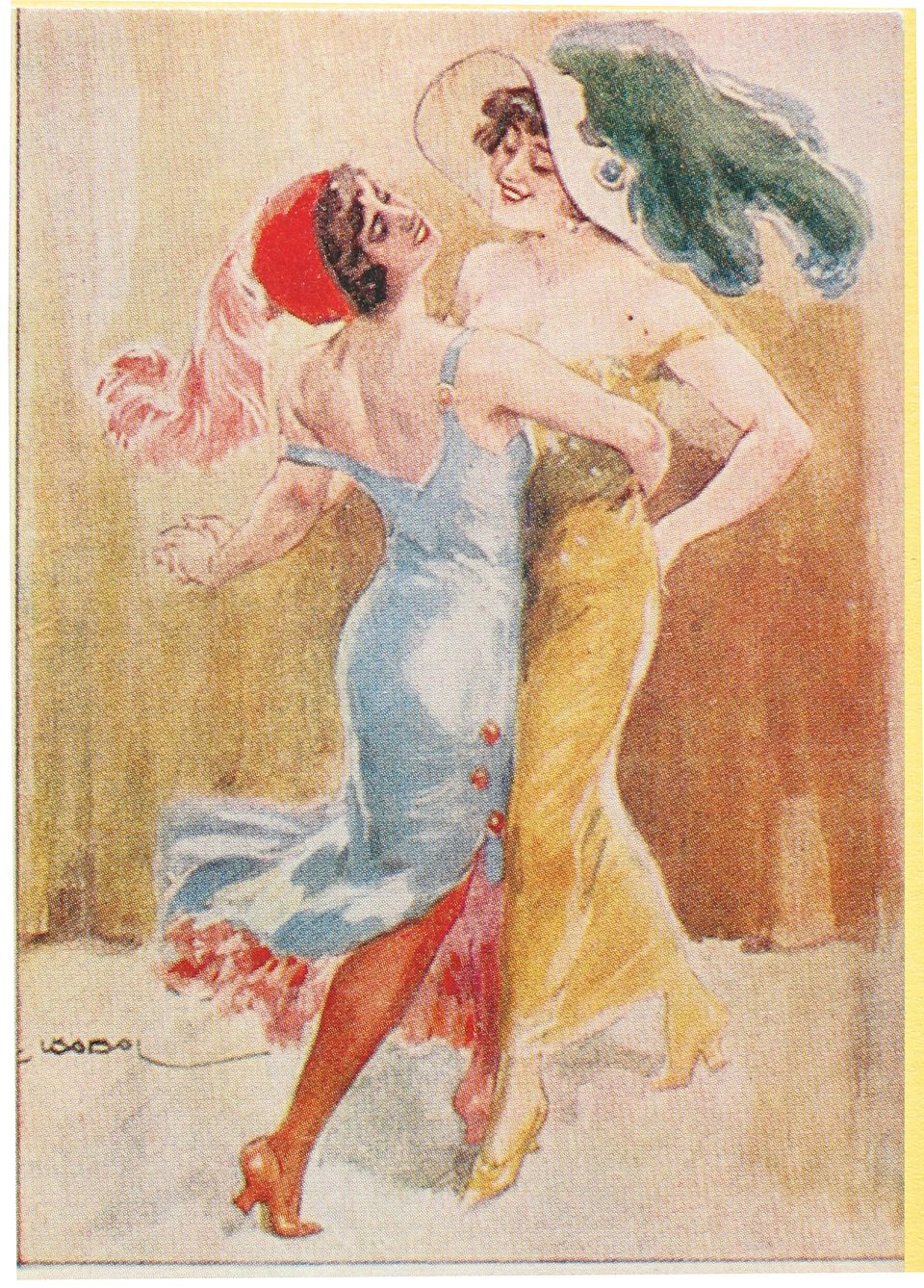
Tango at the Street Cafe
Unknown
public_domain
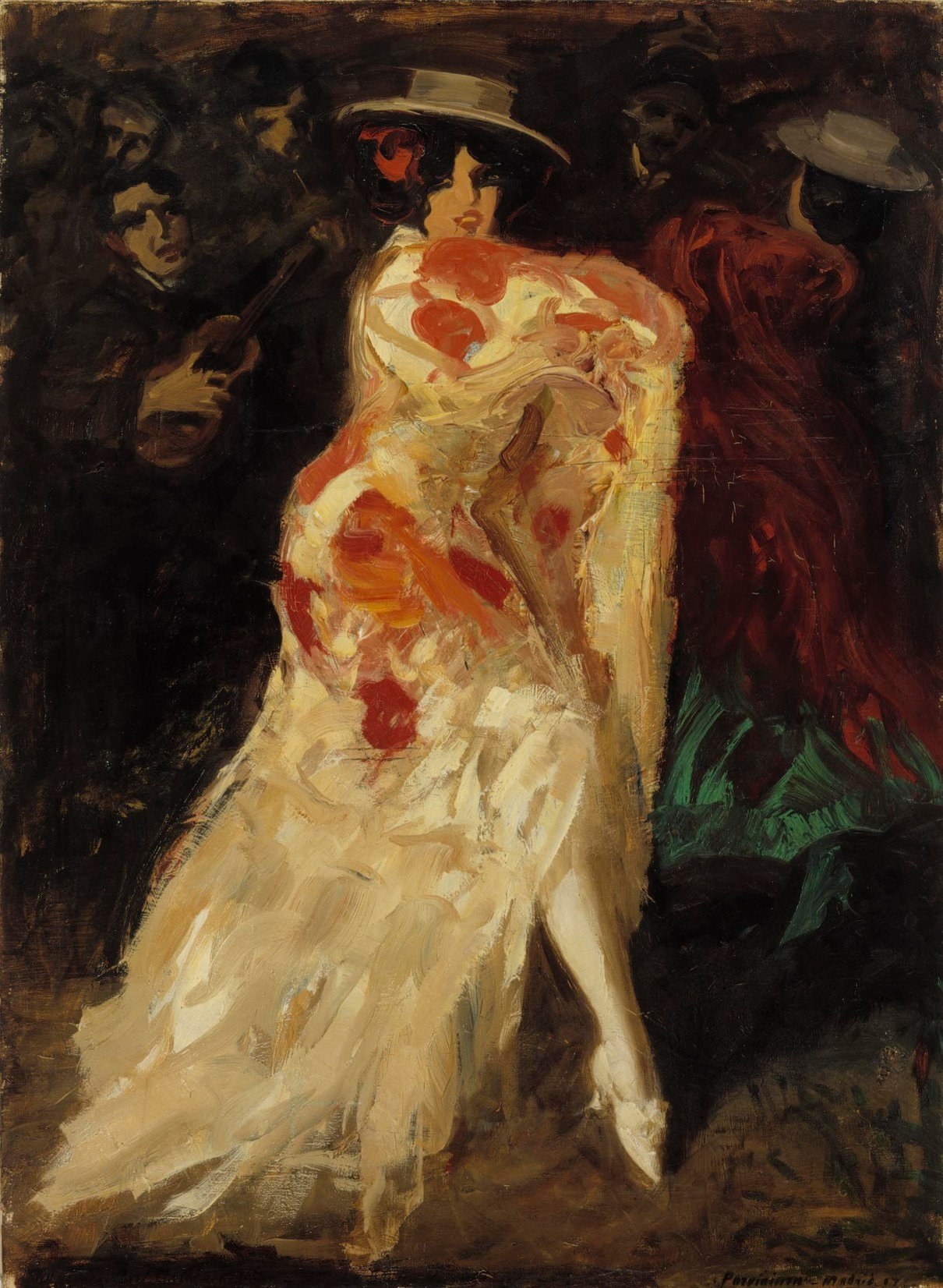
Oscar Parviainen - Espanjalainen tanssijatar (Tango) - A III 1792 - Finnish National Gallery
Oscar Parviainen · 1907
Public Domain
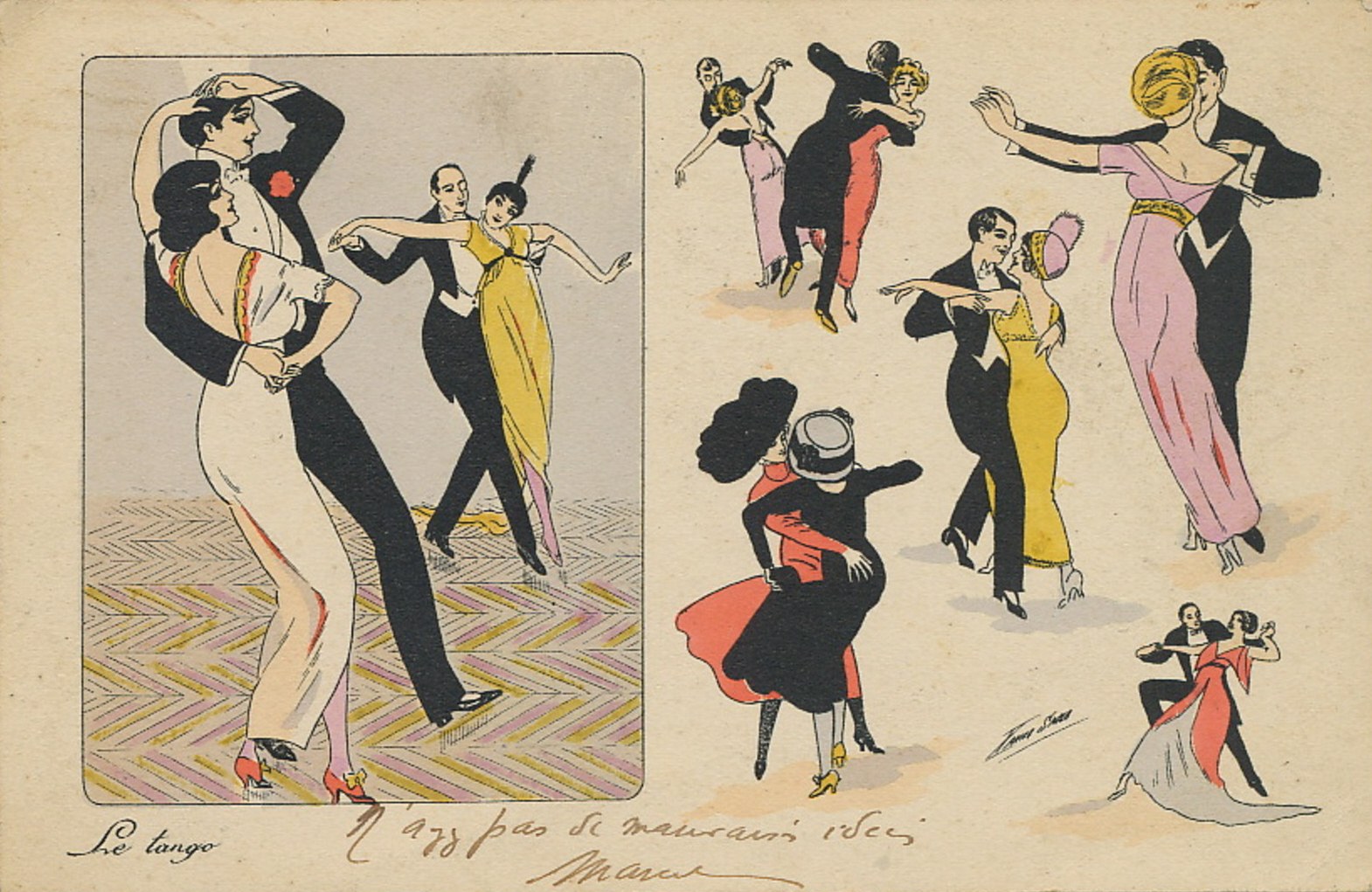
Xavier Sager Le Tango 4
Xavier Sager · 1930
Public Domain
Tango tee
Unknown artist · 1914
Public Domain
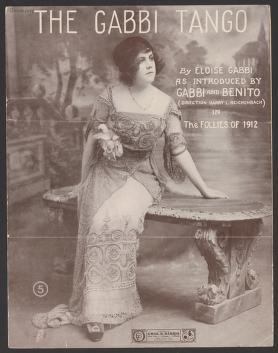
The Gabbi tango
Unknown artist · 1912
Public Domain
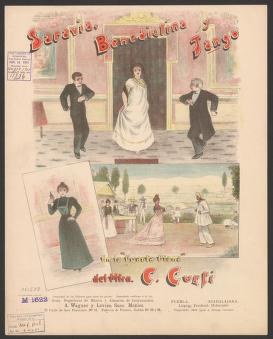
Tango
Unknown artist · 1901
Public Domain
Continue Exploring
Lineage of Dance
500 years of dance evolution
Champions of Dance
Winners of marquee national & world titles
Language of Dance
161 dance terms & translations
Listening of Dance
Tempo, timing & musicality tools
Gallery of Dance
5,700+ artworks from museum collections
Attire of Dance
Evolution of dance dress across eras
Keep the thread going
Dance history, technique, and the occasional rabbit hole — in your inbox. Thoughtful, infrequent, unsubscribe anytime.
Free. No spam. One click to leave.