Afrobeats Dance
Also known as: Afro Dance, Naija Dance, Afropop Dance, Afro Beats Dance
History & Cultural Context
Afrobeats, the West African pop genre that emerged in Nigeria and Ghana in the early 2000s blending highlife, dancehall, soca and hip-hop, carries with it a continuously renewing catalogue of named social steps. Lagos street culture supplied galala and alanta in the 2000s; the 2010s brought shoki, skelewu, azonto from Accra, shaku shaku from Agege, and zanku or legwork, which Zlatan Ibile carried to the mainstream through Chinko Ekun's 2018 'Able God' video and his own 'Zanku (Leg Work)', produced by Rexxie. The label Afrobeats was applied from London rather than Lagos and is commonly credited to Ghanaian-British radio DJ Abrantee Boateng around 2011, though that attribution is contested. Professionalisation followed the music. Kafayat Oluwatoyin Shafau, known as Kaffy, led a group to a 2006 Guinness World Record for the longest dance party at 55 hours and 40 minutes and founded Imagneto Dance Company; Rwandan-born British choreographer Sherrie Silver, born 1994, won the 2018 MTV Video Music Award for Best Choreography for Childish Gambino's 'This Is America'. Lagos dancers such as Poco Lee moved from street corners to arena stages, and Afrobeats classes are now standard on commercial studio timetables from London to Los Angeles.
Cultural Significance
Afrobeats dance is the social vernacular of Nigerian and Ghanaian youth culture and of the West African diaspora, learned in streets, schoolyards, clubs and on phones rather than in institutions. Its steps are usually authored and dated, and the failure of international pop to credit those authors is a recurring grievance within the scene.
Characteristic Movement & Technique
Grounded, springy knees under a mobile pelvis, with rapid shuffling or stomping footwork answered by independent shoulder pops, chest isolations and expressive hand gestures. Each named step is a short, repeatable motif designed to be recognised instantly.
Partnering Dynamics
Essentially a solo and group form. Dancers face the circle, the camera or one another rather than holding a partner, though playful call-and-response duets and tightly synchronised crew unison are both common.
Competitive Context
Competition runs through informal street battles, club face-offs, televised talent formats and online dance challenges rather than any graded syllabus or federation. Crews and individual dancers build reputations on viral videos and artist bookings.
Regional Variations
Nigerian steps such as shaku shaku, shoki and zanku are footwork-heavy and Lagos-centred; Ghanaian azonto and alkayida are more gestural and mime-based; the UK diaspora developed its own Afroswing-inflected club styling.
Common Misconceptions
Afrobeats, the 2000s Nigerian and Ghanaian pop genre, is not Fela Kuti's Afrobeat, the 1960s and 1970s Nigerian political jazz-funk form; the added 's' marks a completely different music and a completely different dance culture. Nor is Afrobeats dance interchangeable with traditional African dance such as adowa or agbadza, which are ceremonial repertoires with their own protocols.
Peak Popularity
Signature Figures
- Kaffy (Kafayat Oluwatoyin Shafau)
- Sherrie Silver
- Poco Lee
- Zlatan Ibile
- Olamide
Notable Codifiers
- Kaffy (Kafayat Oluwatoyin Shafau)
- Sherrie Silver
- Imagneto Dance Company
Dance Lineage
Afrobeats Dance Music & Tempo
Drawn from 20 Afrobeats Dance tracks in the LODance music library.
Example tracks at practice tempo
- Finesse — Pheelz feat. BNXN102 BPM
- Lonely at the Top — Asake105 BPM
- Terminator — King Promise113 BPM
- Infinity — Olamide feat. Omah Lay102 BPM
- Essence — Wizkid feat. Tems104 BPM
- Love Me JeJe — Tems104 BPM
Afrobeats Dance on screen
Films and television where Afrobeats Dance appears, with the sequences worth watching for.
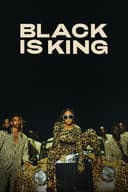
Poster artwork from TMDB.
 This site uses TMDB and the TMDB APIs but is not endorsed, certified, or otherwise approved by TMDB.
What to Wear
Attire guidance for Afrobeats Dance and other Afro-Diaspora Popular Dance dances. Each card below is sized to the moment — class, practice, social, or competition — because the wardrobe shifts as the stakes do.
Reading the cards
In Class
These are club and street dances, so ordinary clothes are correct — joggers or leggings, a tee, layers you can shed, and clean indoor sneakers, since afrobeats, amapiano and their relatives are grounded in the feet, ankles and knees. Some teachers work sections barefoot, especially for more traditional vocabulary; ask rather than assume. Nothing restrictive at the waist or hips, because most of the vocabulary lives there. This is not a costume genre: printed cloth is real clothing and real ceremonial dress in the cultures it comes from, and wearing it as a novelty costume to a beginner class reads badly.
Social Dancing
Parties, clubs, weddings and family occasions are where these dances actually live, and you wear what you'd wear out — the dance is not separate from the night. The only practical concern is shoes you can move in for hours, since these are stamina dances and you will be up much longer than you plan. For an occasion where guests do dress up, dress for the occasion, not for the dance.
Competition
There are battles and competitions — regional Afro dance battles across Europe and Africa, and Afro categories inside broader street-dance events — but no assigned costume: dancers compete in their own street looks or crew kit, and personal style is read as part of the performance. Practical rules are the same as any battle: a visible number, shoes that won't mark the stage, and nothing that can come loose mid-round. Choreography showcases and music-video work do use styled looks, chosen by the choreographer or artist rather than by convention.
Shoes
Clean, flexible, indoor-only sneakers. Afrobeats, amapiano and the Ghanaian and Nigerian vocabulary that feeds them are driven from the ankles, knees and ball of the foot, so a thin sole you can feel the floor through beats a cushioned running shoe, which flattens the bounce and grabs on pivots. Some teachers work sections barefoot, particularly with more traditional material — ask what the class expects rather than guessing. Nothing tight or high through the ankle, since a lot of the footwork happens right there.
In Practice
Training looks like class, with one real addition: film yourself. This is a movement culture that lives on video, and the reason to wear something fitted at the waist is so you can see whether the isolation is actually happening or whether the fabric is doing it for you. Knee sleeves are worth it if you are drilling grounded, bent-knee material for hours. The rest of practice is listening — the steps are built on specific songs and specific drums, not on counts.
Common Pitfalls
- ✗Turning up in African print bought as a costume for a beginner class — these are real garments with real meaning, and worn as novelty it reads as caricature.
- ✗Cushioned running shoes, which deaden the bounce these styles are built on.
- ✗Stiff jeans or a restrictive waistband; nearly all the vocabulary passes through the hips and waist.
- ✗Outdoor shoes on a studio floor.
- ✗Over-dressing for a party or wedding where the dance itself is the point and comfort matters more than the outfit.
Price Range
- Budget: Effectively nothing — clothes you own plus a flexible indoor sneaker at roughly $60–100. This is one of the cheapest genres to enter.
- Mid: A second indoor pair to rotate, knee sleeves $20–40, technical fabric for high-sweat classes.
- Premium: There is no premium gear tier. The money worth spending goes to workshops and intensives with the choreographers and communities who originated the steps — which is also where credit belongs.
Key Terms
- Indoor-only sneakers
- A pair kept for the studio. Street grit destroys marley and most studios enforce this at the door.
- Ankara / kente
- Real clothing and, in kente’s case, cloth with specific ceremonial meaning. Worn meaningfully in performance; not a class costume and not a novelty.
- Street look
- What dancers actually compete and perform in — personal clothing, read as part of the performance rather than assigned by an organiser.
- Crew kit
- Coordinated clothing worn by a group at battles and showcases; identity, not uniform, and never required of a solo entrant.
- Knee sleeve
- Compression sleeve worn for extended grounded work — the only piece of protective gear this genre commonly needs.
Quick Tips
- •Suede-soled shoes allow controlled sliding and pivoting — essential for most partner dances.
- •Avoid rubber soles on dance floors; they grip too much and can cause knee injuries.
- •Bring a separate pair of clean shoes for the dance floor to keep it in good condition.
Sources & Further Reading
Cultural & Historical Context
Afrobeats Dance emerged from Nigeria and Ghana, with a major secondary development hub in London during the 2000s—present day. Understanding the cultural roots, musical traditions, and social circumstances of this era enriches appreciation for the dance's characteristics and significance.
Formative Influences
Codifiers & Standardizers:
Kaffy (Kafayat Oluwatoyin Shafau), Sherrie Silver, Imagneto Dance Company
Signature Movement Vocabulary:
Kaffy (Kafayat Oluwatoyin Shafau), Sherrie Silver, Poco Lee, Zlatan Ibile, Olamide
Primary Source Documents
The Library of Dance contains public-domain primary sources for dance history. Copyrighted modern syllabi are indexed with purchase links to their respective copyright owners. Search by dance name or codifier to discover primary source documents.
Last reviewed: September 2026 — This dance profile synthesizes historical research, cultural documentation, and contemporary practice knowledge to provide authoritative context.
More in Afro-Diaspora Popular Dance
Amapiano Dance
South Africa's amapiano club and street dance idiom, built on fast bacardi legwork and low crouching moves such as the pouncing cat, spread globally through short-form video challenges.
Shaku Shaku
A Lagos street step danced with crossed wrists and a dragging half-gallop, which spread from Agege to national and then international Afrobeats culture between 2016 and 2018.
Gwara Gwara
A South African step credited to producer DJ Bongz, danced with a hinged, sweeping leg and winding arms, which reached global audiences via Rihanna's 2018 Grammy Awards performance.
Dancehall
Jamaica's sound-system dance culture and its tradition of individually authored, individually named steps, created by dancers such as Bogle, John Hype, Ice and Ding Dong from the 1980s onward.
Dancehall Queen Style
The women's competitive performance idiom of Jamaican dancehall, combining wining, bruk-out, splits, headtops and acrobatic drops in elaborate costume, founded by Carlene Smith in the early 1990s.
Soca / Bacchanal (Carnival) Dance
The Carnival movement culture of Trinidad and Tobago and the Anglophone Caribbean, centred on wining, chipping and jump-and-wave, danced on the road and in the fete.
Kompa (Konpa)
Haiti's national popular partner dance, a close-embrace, economical couple form danced to the steady konpa direk pulse created by Nemours Jean-Baptiste in 1955.
Coupe-Decale
The Ivorian club style built in Parisian nightclubs around 2002 by Douk Saga and La Jet Set, danced with gestural upper body, fast small footwork and a new named step per hit record.
Ndombolo
The hip-driven Congolese club dance that grew out of soukous in 1990s Kinshasa and dominated African dancefloors for a decade, cued by the atalaku during the sebene.
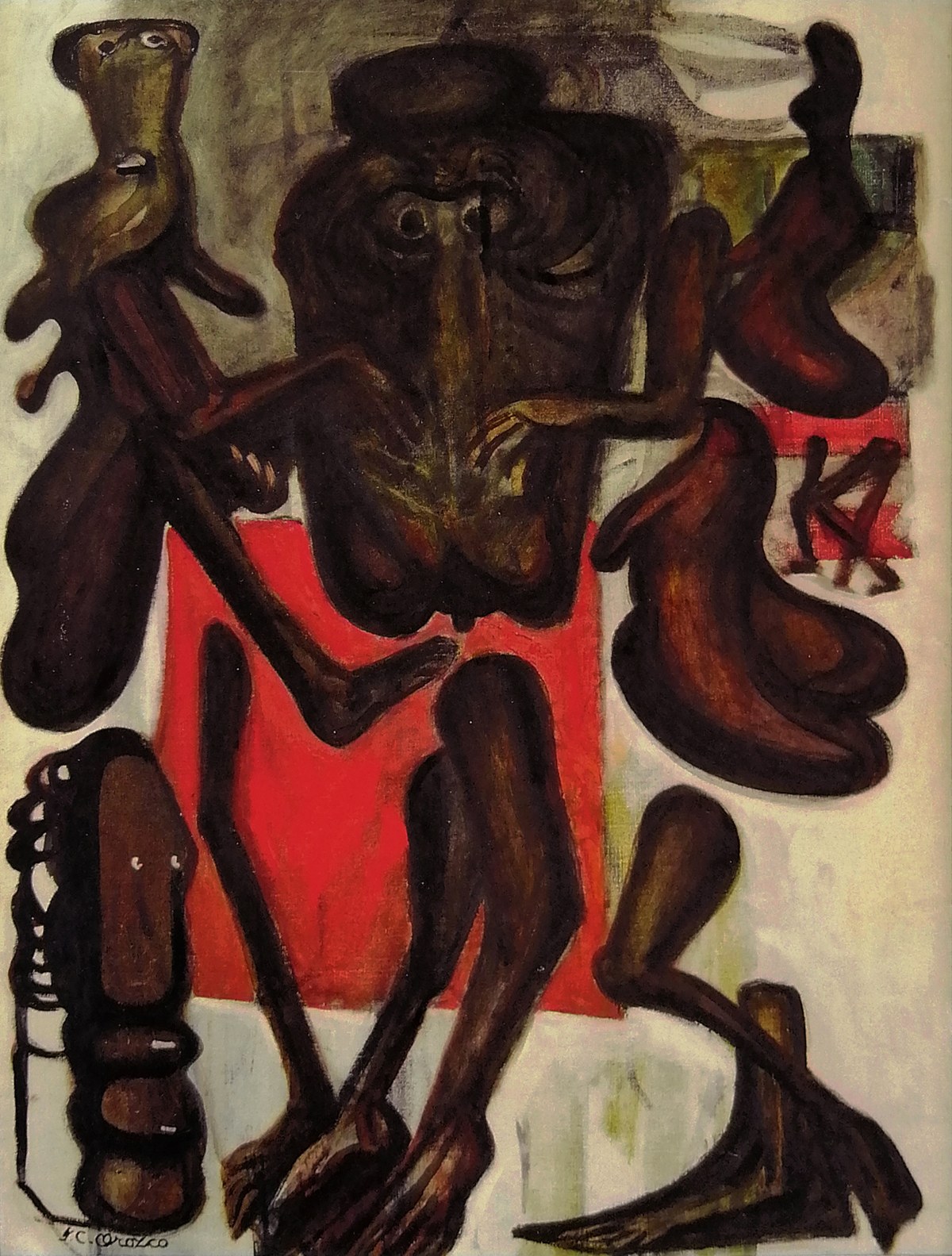
Afro-Diaspora Popular Dance in art
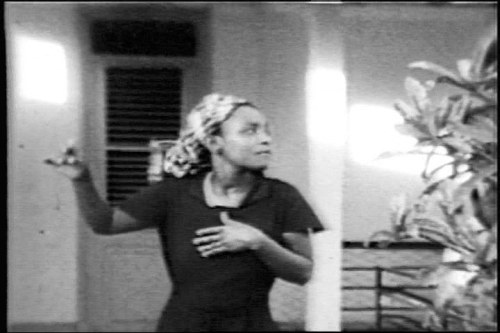
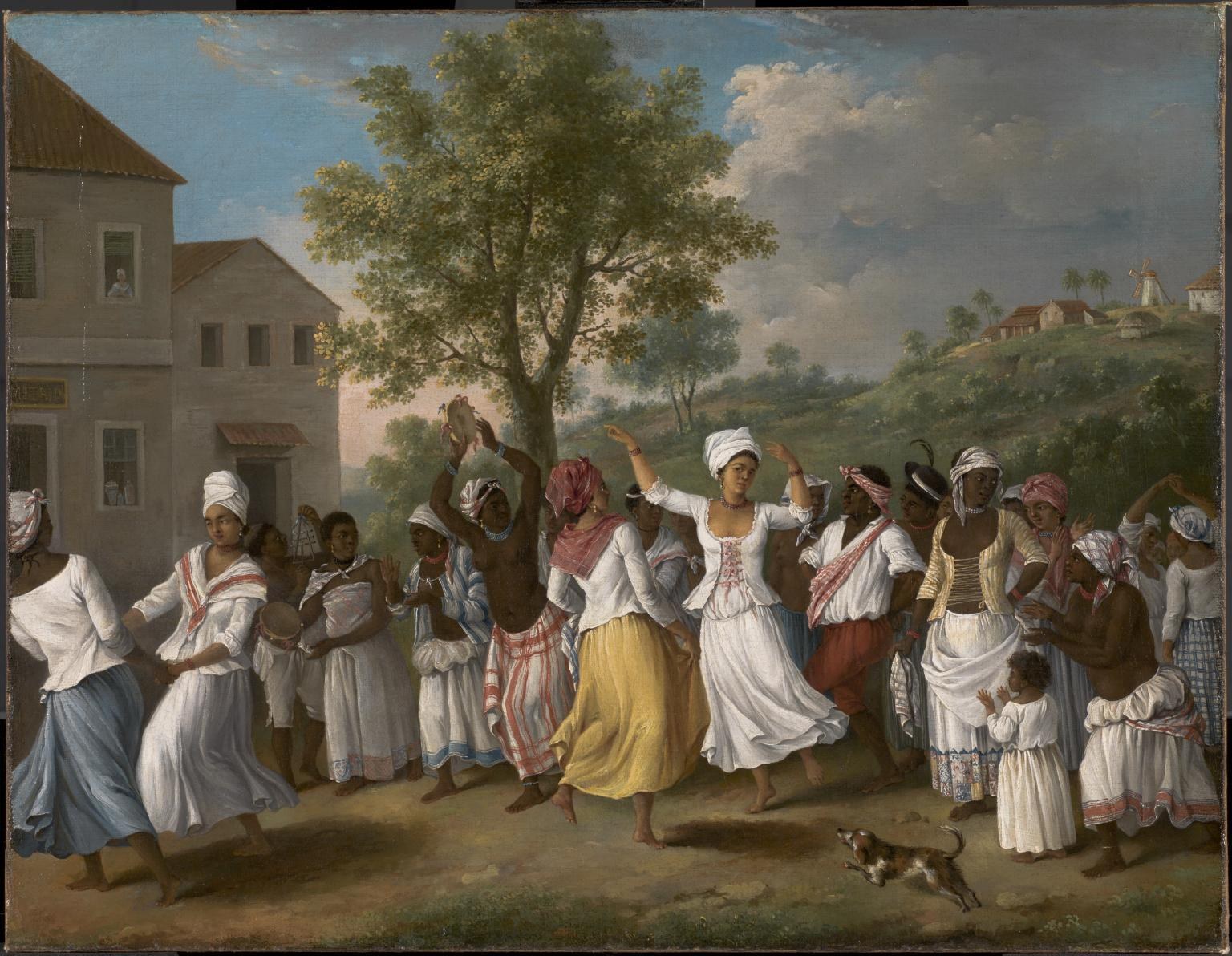
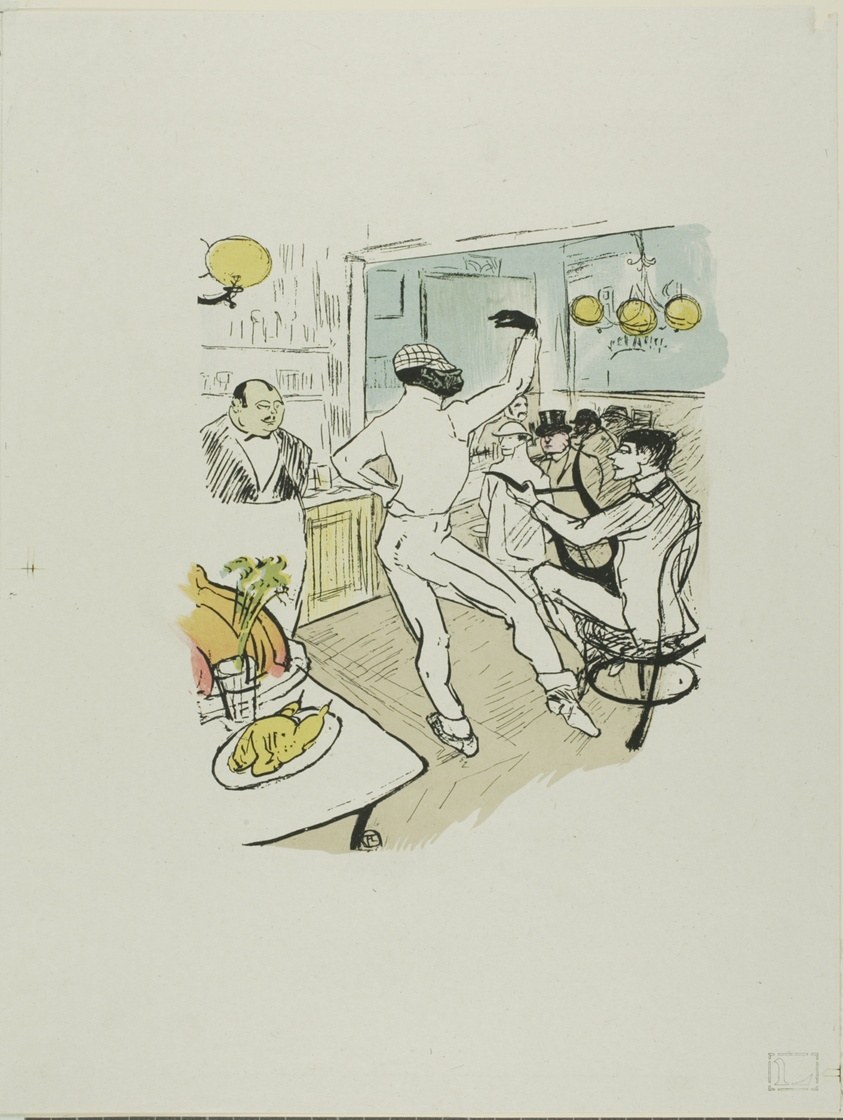
Browse the gallery →Works from the wider Afro-Diaspora Popular Dance tradition — we have not yet identified enough that depict Afrobeats Dance specifically.
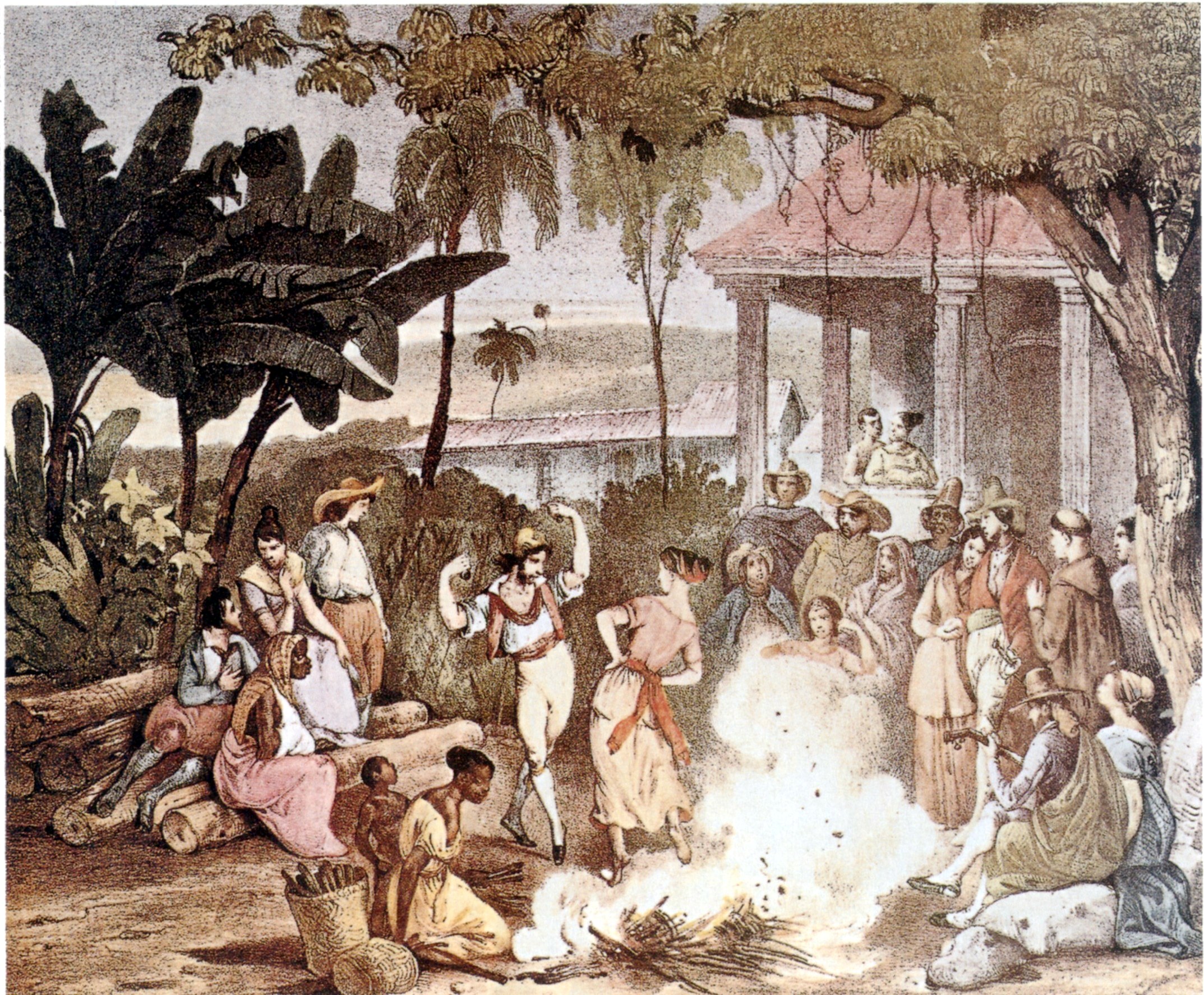
Rugendas lundu 1835
Johann Moritz Rugendas · 1835
Public Domain
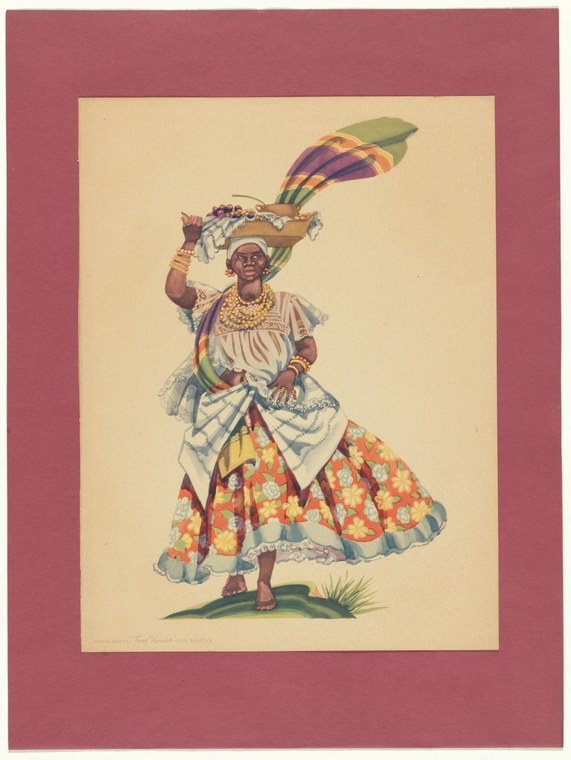
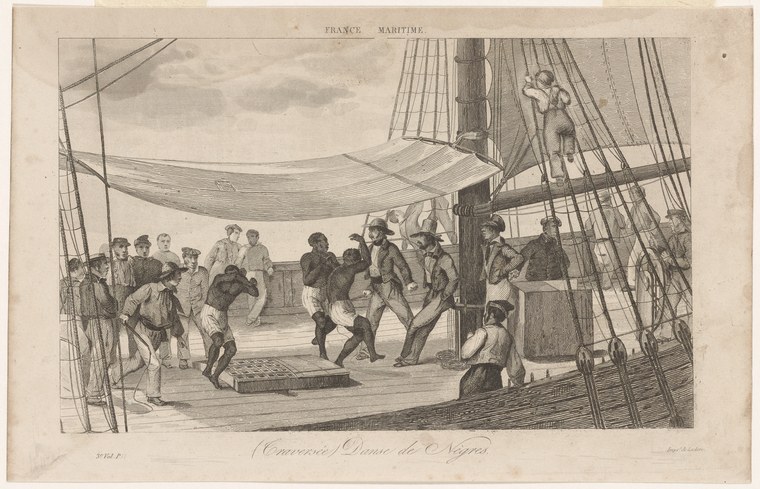
Traversée: danse de nègres
Unknown artist
Public Domain
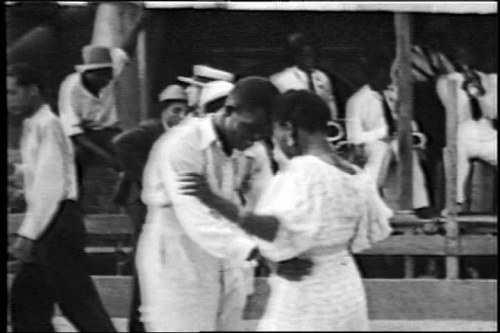
Urban Social Dance, Jamaica Fieldwork
Unknown artist
Public Domain
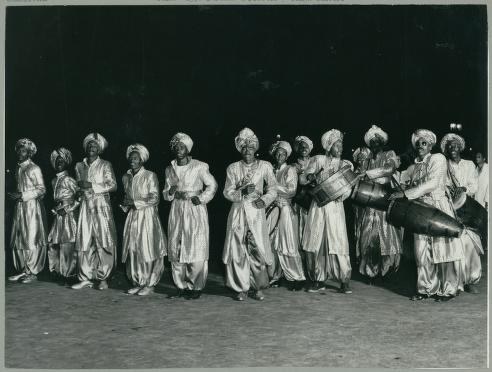
Conga Dancers.
Unknown artist · 1956
Public Domain
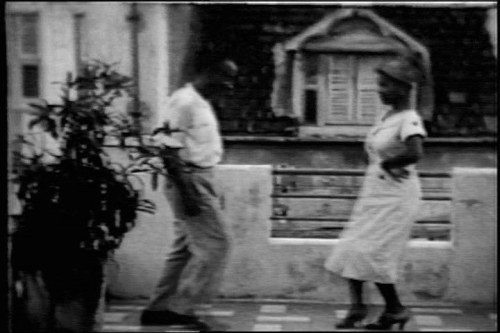
Urban Social Dance, Jamaica Fieldwork
Unknown artist
Public Domain
Urban Social Dance, Jamaica Fieldwork
Unknown artist
Public Domain
Continue Exploring
Lineage of Dance
500 years of dance evolution
Champions of Dance
Winners of marquee national & world titles
Language of Dance
161 dance terms & translations
Listening of Dance
Tempo, timing & musicality tools
Gallery of Dance
5,700+ artworks from museum collections
Attire of Dance
Evolution of dance dress across eras
Keep the thread going
Dance history, technique, and the occasional rabbit hole — in your inbox. Thoughtful, infrequent, unsubscribe anytime.
Free. No spam. One click to leave.