Afro-Diaspora Popular Dance
Contemporary African and Caribbean popular and social dance: the club, street and internet forms carried by Afrobeats, amapiano, dancehall, soca, kompa, coupe-decale and ndombolo. Distinct from the ceremonial and traditional repertoires catalogued under global-african, these are living urban idioms with named steps and named originators.
10 dance styles in this genre
Historical Origins
These forms grew out of twentieth-century urban Black Atlantic music economies rather than village ritual. Nemours Jean-Baptiste founded Ensemble Aux Callebasses in 1955 and gave Haiti konpa direk; Garfield Blackman, known as Lord Shorty, fused calypso with Indo-Trinidadian rhythm into soca across 1973 to 1975; Kingston sound systems turned dancehall into a named-step culture after King Jammy's digital 'Sleng Teng' in 1985. Congolese soukous produced ndombolo in the 1990s, Ivorian migrants in Paris built coupe-decale around 2002, and Nigerian, Ghanaian and South African studios produced Afrobeats and amapiano from the 2000s onward.
Cultural Significance
Each of these dances belongs to an identifiable community and, very often, to identifiable people. Bogle, Carlene Smith, Douk Saga, DJ Bongz, Zlatan Ibile and the five Tshwane teenagers behind the John Vuli Gate challenge are not anonymous folk sources but named creators whose work travelled worldwide, frequently without credit. The forms carry political weight too: coupe-decale grew as escapism during Cote d'Ivoire's crisis, ndombolo's very name is read as commentary on Congolese political leaders, and dancehall queen culture asserted working-class women's authority over their own bodies and their own image. Attribution here is not a footnote; it is the point.
Musical Characteristics
Tempos run roughly 85 to 165 BPM. Afrobeats layers a syncopated, clave-derived pattern over about 100 to 120 BPM; amapiano sits near 112 BPM around the log drum, a bending sub-bass percussion sound associated with producers including MDU aka TRP and Kabza De Small. Dancehall riddims have been sparse, digital and heavily syncopated since 1985; soca drives Carnival brass at up to 165 BPM. Kompa's hallmark is a steady, unhurried two-beat pulse. Ndombolo accelerates into the sebene, a guitar-driven breakdown where the atalaku shouts the dance cues, and coupe-decale loops Congolese-derived guitar under Ivorian Nouchi vocals.
Core Movement Principles
Weight sits low and the pelvis is mobile: rotation initiates at the waistline and travels down through flexed knees into an articulate, grounded foot. Most steps are polycentric, so footwork, hips, shoulders and hands can each answer a different layer of the rhythm. The repertoire is modular and named: a step has a title, usually an author, and a record that launched it, and dancers stack titles rather than build long phrases. Social improvisation and the circle matter more than fixed sequences, and the camera, whether video light, music video or TikTok, is now part of the form rather than incidental to it.
Modern Usage
These are the dominant social dances of African and Caribbean nightlife and of the global diaspora, from Kingston street dances and Trinidad's Carnival road to Lagos clubs, Johannesburg yanos parties, Abidjan maquis and Haitian bal in Miami, Brooklyn, Montreal and Paris. Since roughly 2018 short-form video has become the primary distribution channel, which accelerates circulation and erases credit at the same rate. Studio classes labelled Afro dance, Afrobeats, amapiano or dancehall now appear on almost every commercial urban-dance timetable worldwide, and choreographers such as Sherrie Silver and Kaffy have carried the vocabulary into pop video and stadium production.
Dance Styles
Afrobeats Dance
Also known as: Afro Dance, Naija Dance, Afropop Dance, Afro Beats Dance
The named-step social dance culture that travels with Nigerian and Ghanaian Afrobeats pop, from early-2000s Lagos street steps to the studio and short-video choreography exported worldwide.
Amapiano Dance
Also known as: Yanos dance, Piano dance, Amapiano moves
South Africa's amapiano club and street dance idiom, built on fast bacardi legwork and low crouching moves such as the pouncing cat, spread globally through short-form video challenges.
Shaku Shaku
Also known as: Shaku, Shaku Shaku dance
A Lagos street step danced with crossed wrists and a dragging half-gallop, which spread from Agege to national and then international Afrobeats culture between 2016 and 2018.
Gwara Gwara
Also known as: Gwarra Gwarra, Gwara
A South African step credited to producer DJ Bongz, danced with a hinged, sweeping leg and winding arms, which reached global audiences via Rihanna's 2018 Grammy Awards performance.
Dancehall
Also known as: Jamaican dancehall, Bashment, Dancehall steps
Jamaica's sound-system dance culture and its tradition of individually authored, individually named steps, created by dancers such as Bogle, John Hype, Ice and Ding Dong from the 1980s onward.
Dancehall Queen Style
Also known as: DHQ, Dancehall Queen, Queen style
The women's competitive performance idiom of Jamaican dancehall, combining wining, bruk-out, splits, headtops and acrobatic drops in elaborate costume, founded by Carlene Smith in the early 1990s.
Soca / Bacchanal (Carnival) Dance
Also known as: Soca dance, Carnival dance
The Carnival movement culture of Trinidad and Tobago and the Anglophone Caribbean, centred on wining, chipping and jump-and-wave, danced on the road and in the fete.
Kompa (Konpa)
Also known as: Konpa, Compas, Compas direct, Konpa direk, Kompa direk
Haiti's national popular partner dance, a close-embrace, economical couple form danced to the steady konpa direk pulse created by Nemours Jean-Baptiste in 1955.
Coupe-Decale
Also known as: Coupe Decale, Coupe-decale, Couper-decaler
The Ivorian club style built in Parisian nightclubs around 2002 by Douk Saga and La Jet Set, danced with gestural upper body, fast small footwork and a new named step per hit record.
Ndombolo
Also known as: Dombolo, Soukous ndombolo
The hip-driven Congolese club dance that grew out of soukous in 1990s Kinshasa and dominated African dancefloors for a decade, cued by the atalaku during the sebene.
Legends of Afro-Diaspora Popular Dance
Dancers, choreographers and teachers whose work shaped the styles in this genre.
Afro-Diaspora Popular Dance on screen
Films and television where afro-diaspora popular dance appears, with the sequences worth watching for.
 Dancehall Queen (1997)3 sequences indexedMarcia's first visit to the dancehallMystery Lady performs with Beenie ManFinal showdown with Olivine
 Black Is King (2020)1 sequence indexedALREADY — Beyoncé and Stephen Ojo Afro-dance duet · chor. Stephen Ojo
Poster artwork from TMDB.
 This site uses TMDB and the TMDB APIs but is not endorsed, certified, or otherwise approved by TMDB.
Afro-Diaspora Popular Dance FAQs
Afro-Diaspora Popular Dance in art
Browse the gallery →Works our catalogue identifies as depicting afro-diaspora popular dance.
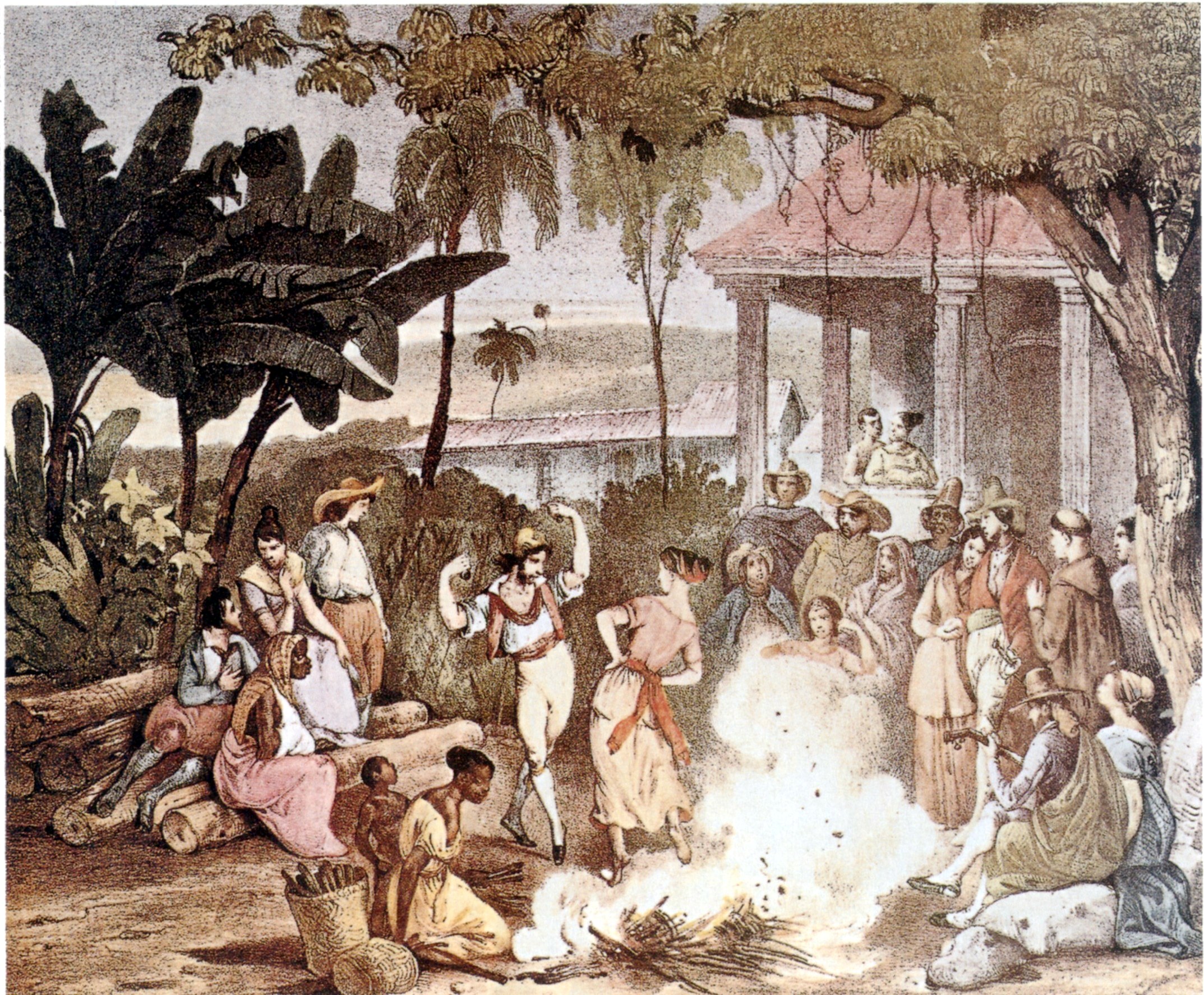
Rugendas lundu 1835
Johann Moritz Rugendas · 1835
Public Domain
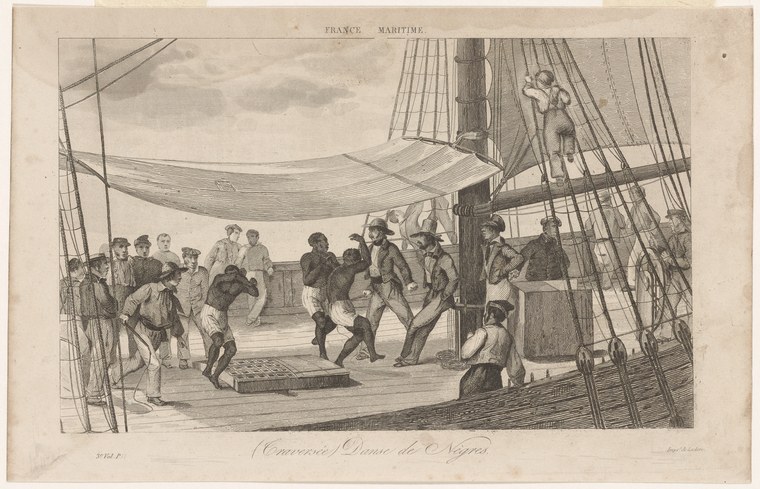
Traversée: danse de nègres
Unknown artist
Public Domain
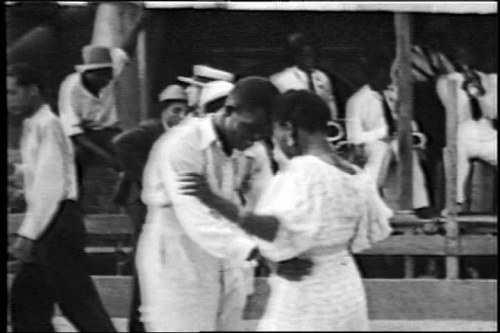
Urban Social Dance, Jamaica Fieldwork
Unknown artist
Public Domain
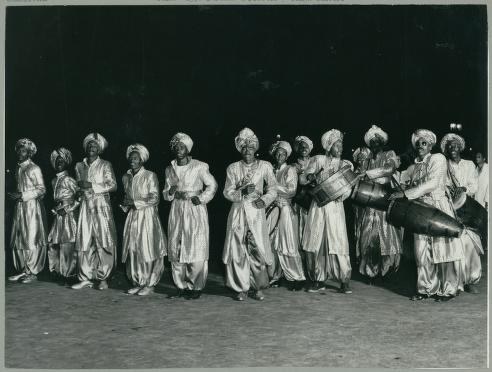
Conga Dancers.
Unknown artist · 1956
Public Domain
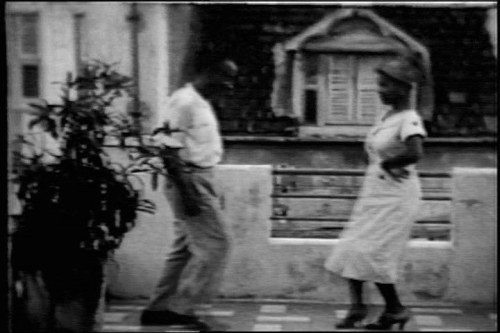
Urban Social Dance, Jamaica Fieldwork
Unknown artist
Public Domain
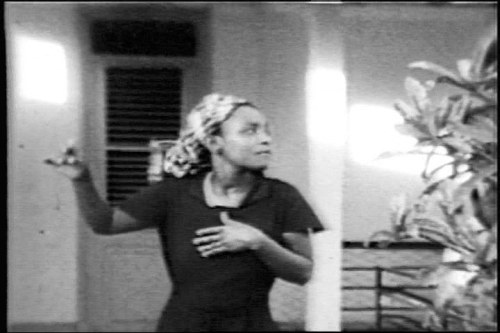
Urban Social Dance, Jamaica Fieldwork
Unknown artist
Public Domain