Nightclub Two-Step
Also known as: NC2S, Two-Step (Nightclub), Buddy Schwimmer Two-Step
- Origin
- United States
- Era
- 1965–1970
- Rhythm
- 4/4 time
- Tempo
- 72-92 BPM (per dance historian Richard Powers; UCWDC competitive range 54-64 BPM)
- Character
- Smooth, romantic, flowing, connected
History & Cultural Context
Nightclub Two-Step (NC2S, also called California Two-Step or Disco Two-Step) was developed by Buddy Schwimmer around 1965, when Schwimmer was approximately fifteen years old. According to a published interview with Phil Seyer, Schwimmer derived the basic step by modifying the "Surfer Stomp," a 1960s side-together-side-touch pattern, to give social dancers a partnered option for slow ballad music in 4/4 time. The dance uses a quick-quick-slow rhythm and is danced in close hold. Schwimmer opened a studio in Costa Mesa, California in 1978 and taught the dance there, which is one reason it is associated with Southern California. The United Country Western Dance Council (UCWDC) competes Nightclub as one of eight recognized partner dances; competitive material exists from Newcomer IV through advanced levels. Reported tempo ranges vary by authority: UCWDC publishes a 54-64 BPM range, while Richard Powers (Stanford Social Dance) cites 72-92 BPM; common practice falls in the 60-90 BPM range.
Cultural Significance
Nightclub Two-Step is one of the few widely-taught social partner dances with a documented single originator and a specific founding date, rather than gradual codification from earlier folk or vernacular forms. It is used at social events for slow and mid-tempo contemporary music, particularly in US and Canadian social-dance and country-western communities.
Characteristic Movement & Technique
The dance has a gentle rocking quality with subtle rise and fall. Movement is compact and travels minimally, suiting crowded floors.
Partnering Dynamics
Nightclub Two-Step features an intimate, close-hold partnership with strong body connection. The leader guides through subtle body movements and frame adjustments rather than arm leads. Partners maintain constant contact through the torso, creating a connected, romantic quality. The dance emphasizes mutual responsiveness and musical interpretation shared between partners. Turn patterns and variations emerge from the close connection, with the follower's styling complementing the leader's directional choices.
Competitive Context
Nightclub Two-Step is competed in various circuits including UCWDC (as CW Nightclub Two-Step), some swing dance organizations, and social dance competitions. Judges evaluate smoothness, musicality, connection quality, and partnership. The dance appears in both strictly-judged and showcase divisions, with competitive styling ranging from compact social dancing to more theatrical presentation.
Regional Variations
Because Nightclub Two-Step traces to a single originator, its technique is relatively consistent across teaching lineages. The UCWDC country-western adaptation (often labeled CW Nightclub Two-Step) interprets the same basic to country ballads and is governed by UCWDC syllabus material. Reported regional or studio-level stylistic preferences are anecdotal and not formally documented.
Common Misconceptions
Many dancers confuse Nightclub Two-Step with Country Two-Step; they are entirely different dances with different timing, character, and musical contexts. Another misconception is that Nightclub Two-Step is the same as slow dancing or 'swaying'—it has specific technique, timing, and structure. Some assume the dance is too simple for advanced dancers; skilled NC2S dancers demonstrate sophisticated musicality, connection quality, and stylistic variation within the dance's seemingly simple framework.
Peak Popularity
Signature Figures
- Buddy Schwimmer
Notable Codifiers
- Buddy Schwimmer
- UCWDC
- USA Dance
Nightclub Two-Step Playlists
Curated collections on the LODance YouTube channel — performances to watch, lessons to learn from, and the right music to practice with. Tap a collection to play.
▶ Performances · Open on YouTube →
Nightclub Two-Step Music & Tempo
Drawn from 653 Nightclub Two-Step tracks in the LODance music library.
Example tracks at practice tempo
- Don't Dream It's Over — Crowded House82 BPM
- I Hope You Dance — Lee Ann Womack76 BPM
- Goodbye To You — Michelle Branch81 BPM
- Long Drive — Jason Mraz74 BPM
- Lucky Devil — Glenn Crytzer80 BPM
- Fancy Like — Walker Hayes80 BPM
Legends of Nightclub Two-Step
Dancers, choreographers and teachers whose work shaped this style.
What to Wear
Attire guidance for Nightclub Two-Step and other Swing & Jazz dances. Each card below is sized to the moment — class, practice, social, or competition — because the wardrobe shifts as the stakes do.
Reading the cards
In Class
Comfortable, casual clothing. T-shirts, stretchy pants or shorts. Vintage-inspired looks are popular but not required. Expect to sweat.
Social Dancing
Casual to retro-chic. Jeans, swing skirts, Hawaiian shirts — the swing community is relaxed and playful. Vintage 1940s–50s looks are celebrated but not expected.
Competition
Varies by style. West Coast Swing: fashion-forward and polished. Lindy Hop: often vintage-inspired. East Coast: energetic and fun. Higher levels feature coordinated outfits with partner.
Shoes
Flat or low-heel dance sneakers or vintage-style shoes with suede soles. Women: Keds-style flats, character shoes (1.5" heel max), or dance sneakers. Men: Bleyer, Aris Allen, or similar retro shoes. Pivoting ability is key.
In Practice
Lindy Hop and East Coast practice run aerobic — bring a change of shirt. WCS practice can be more polished, often in stretchy fitted pants and a fitted top to let an instructor read body lead and frame.
By Role
Leaders
Class: T-shirt and stretchy pants or athletic shorts. Light layers in cooler months — swing rooms heat up fast.
Competition: WCS leans modern and fashion-forward (slim trousers, fitted shirts, sometimes vests). Lindy Hop leans vintage (high-waisted trousers, suspenders, 1940s shirts). East Coast leans energetic and casual.
Followers
Class: Fitted top, comfortable pants or knee-length skirt that twirls. Bring a hair tie.
Competition: WCS: short fitted dresses, jumpsuits, modern lines. Lindy Hop: 1940s swing dresses with full skirts, character shoes. East Coast: playful and bright. Higher levels coordinate with partner.
Common Pitfalls
- ✗Showing up to Lindy Hop in modern Latin shoes — the heel and construction work against the bounce.
- ✗Wearing rubber-soled sneakers — pivots become impossible and knees take the load.
- ✗Overdressing for a casual swing dance — swing culture runs unpretentious; modest casual fits in faster than full vintage.
Price Range
- Budget: Entry dance sneakers (Aris Allen, Bleyer-knockoffs) $50–100; thrifted vintage clothing $20–80.
- Mid: Authentic vintage or vintage-styled dancewear $80–250; mid-tier dance sneakers $100–180.
- Premium: Curated reproduction 1940s pieces $200–600; competition WCS wardrobe $400–1,500.
Key Terms
- Dance sneakers
- Shoes designed for swing dancing — flat or low-heel, split sole for flexibility, suede or spin-spot on the ball of the foot for pivots.
- Spin spot
- Smooth reinforced circle on the sole under the ball of the foot — lets the dancer pivot without gripping the floor.
- Triple step
- The foundational swing timing pattern (step-step-step) that demands shoes allowing quick directional changes without floor drag.
Quick Tips
- •Suede-soled shoes allow controlled sliding and pivoting — essential for most partner dances.
- •Avoid rubber soles on dance floors; they grip too much and can cause knee injuries.
- •Bring a separate pair of clean shoes for the dance floor to keep it in good condition.
Recommended Gear for Nightclub Two-Step
Essential equipment and apparel selected for dancers learning Nightclub Two-Step.

Leo Dance Shoe Torri 2 cognac nubuck with Swing Heel - Womens Dance Shoes
Blue Moon Ballroom Dance Supply
$100–$200

Style DEFY by Patty Vo Beige Leather with mesh Swing Heel - Womens Dance Shoes
Blue Moon Ballroom Dance Supply
$50–$100

Women's Salsa, Rumba, Swing, American Rhythm Practice, Competition Dance Shoes
Lets Dance Store
$100–$200

Style DEFY Black Leather mesh Swing Heel Womens
Blue Moon Ballroom Dance Supply
$50–$100

Men's Latin, American Rhythm, Bachata, Social Dance, Rumba, Swing Dance Shoes
Lets Dance Store
$100–$200

Style DEFY by Patty Vo Copper Leather with no mesh Swing Heel - Womens Dance Shoes
Blue Moon Ballroom Dance Supply
$100–$200
As an Amazon Associate, LODance earns from qualifying purchases. Affiliate disclosure
Sources & Further Reading
Cultural & Historical Context
Nightclub Two-Step emerged from United States during 1965—1970s. Understanding the cultural roots, musical traditions, and social circumstances of this era enriches appreciation for the dance's characteristics and significance.
Formative Influences
Codifiers & Standardizers:
Buddy Schwimmer, UCWDC, USA Dance
Signature Movement Vocabulary:
Buddy Schwimmer
Primary Source Documents
The Library of Dance contains public-domain primary sources for dance history. Copyrighted modern syllabi are indexed with purchase links to their respective copyright owners. Search by dance name or codifier to discover primary source documents.
Last reviewed: October 2026 — This dance profile synthesizes historical research, cultural documentation, and contemporary practice knowledge to provide authoritative context.
More in Swing & Jazz
Lindy Hop
Lindy Hop was an African-American swing dance developed in 1920s-1930s Harlem, featuring aerials, swing-outs, and partner exchanges. It became the defining dance of the swing era and influenced all subsequent swing traditions.
West Coast Swing
West Coast Swing emerged from Los Angeles–area Lindy Hop in the late 1930s–1950s. Arthur Murray national dance director Lauré Haile documented the local style as "Western Swing" in 1951, and California organizations led by Skippy Blair renamed it "West Coast Swing" in 1959. The dance is distinguished by a linear slot pattern, an elastic stretch-and-compression connection, and a syncopated triple-step rhythm performed to a wide range of contemporary popular music.
Triple Swing
Triple Step Swing is a simpler swing variation with a basic 8-count pattern, making it accessible to beginners while maintaining authentic swing character and musicality.
Boogie-Woogie
Boogie-Woogie is a partner dance derived from Jitterbug and Lindy Hop and standardised in continental Europe in the second half of the 20th century. It is governed competitively by the World Rock'n'Roll Confederation (WRRC), separately from ballroom federations such as WDSF and WDC.
Jitterbug
Jitterbug is a fast, energetic partner swing dance with aerials and rapid footwork, developed during the 1930s-1940s swing era and popularized through dance competitions and entertainment.
Slow Swing
Slow Swing is a slower, more intimate swing variation allowing for musical interpretation and partner connection, developed as an alternative to faster swing styles.
Balboa
Balboa is a close-position swing dance that crystallized in the early 1930s at the Rendezvous Ballroom on the Balboa Peninsula (Newport Beach, California). Dancers kept torsos in contact and let the rhythm travel through the feet, producing rapid eight-count footwork patterns within a small floor footprint.
Disco Hustle
Disco Hustle is a partner dance originated in the South Bronx in late 1972 by Puerto Rican teenagers and adopted into the wider disco-club scene of the mid-1970s. It is danced to disco music (typically 100-128 BPM) and uses a syncopated &1-2-3 6-beat basic with spins, turns, and partner connection patterns.
Contemporary Swing
Contemporary swing represents modern innovations in swing dancing, incorporating contemporary music, freestyle movement, and artistic expression within swing traditions.
Charleston
The Charleston entered mainstream American popular culture in October 1923 through the Broadway musical Runnin' Wild and is widely regarded as the signature social dance of the Jazz Age. It is characterised by forward-and-back kicks, turned-in knees, and arms swinging in opposition to the legs.
Single Swing
Single Swing is a simplified swing dance using single-step timing rather than the triple-step pattern, making it accessible to beginners and practical for very fast tempos where triple steps become difficult.
Disco Fox
DiscoFox is a European partner dance blending Foxtrot basics with disco-era freestyle, becoming the most popular social partner dance in Germany and widely danced across Northern Europe.
Club Swing
Club Swing is a modern social swing style adapted for contemporary club and social settings, blending swing fundamentals with club dance sensibilities and contemporary music.
Carolina Shag
A six-count partner swing dance done to mid-tempo rhythm and blues, built on smooth gliding footwork kept low to the floor while the upper body stays quiet. It grew out of the beach club and jukebox culture of the Carolina coast in the 1940s and 1950s and remains a living social dance with its own clubs and events. South Carolina named it the state's official popular dance in 1984.
Collegiate Shag
A fast, bouncy six-count swing dance held in a close, high-handed frame, danced to hot jazz at tempos where most other swing dances become unworkable. It was widespread in the 1930s, largely disappeared by the 1950s, and was reconstructed from film and surviving dancers during the swing revival.
St Louis Shag
A compact, fast six-count swing dance built almost entirely on kick-step patterns, danced low to the floor with the partners close and often side by side. It stayed a local St. Louis dance for most of its life and reached a wider audience only through the swing revival.
Foxtrot Social
The plain, non-competitive foxtrot danced in American social ballrooms, hotel ballrooms and function rooms, built on slow-slow-quick-quick over 4/4 in a small, adaptable pattern that does not require the room to itself. It is the form most people mean when they say they learned foxtrot for a wedding, and it is the direct survivor of the 1920s and 1930s ballroom practice from which the competitive versions were later refined.
Hustle
A fast, continuously rotating partner dance counted over three beats against 4/4 music, driven by the follower travelling through the leader's centre and by elastic tension in the arms. It came out of Puerto Rican and African American youth culture in New York in the early 1970s, and the three-count form is the version taught and danced today.
Swing & Jazz in art
Browse the gallery →Works from the wider Swing & Jazz tradition — we have not yet identified enough that depict Nightclub Two-Step specifically.
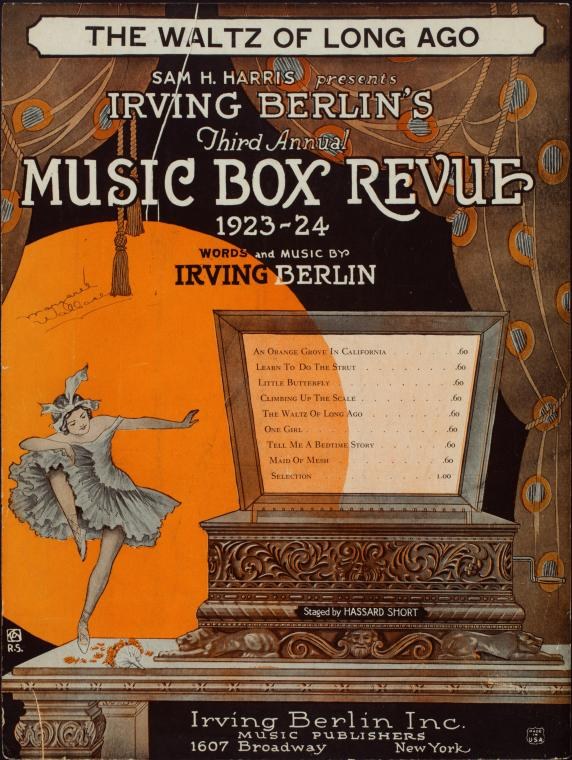
The waltz of long ago
Unknown artist
public_domain
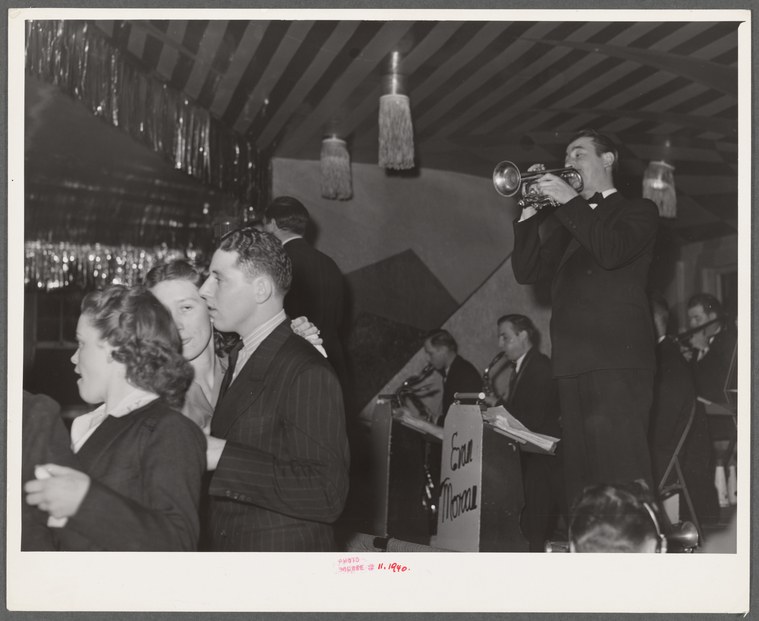
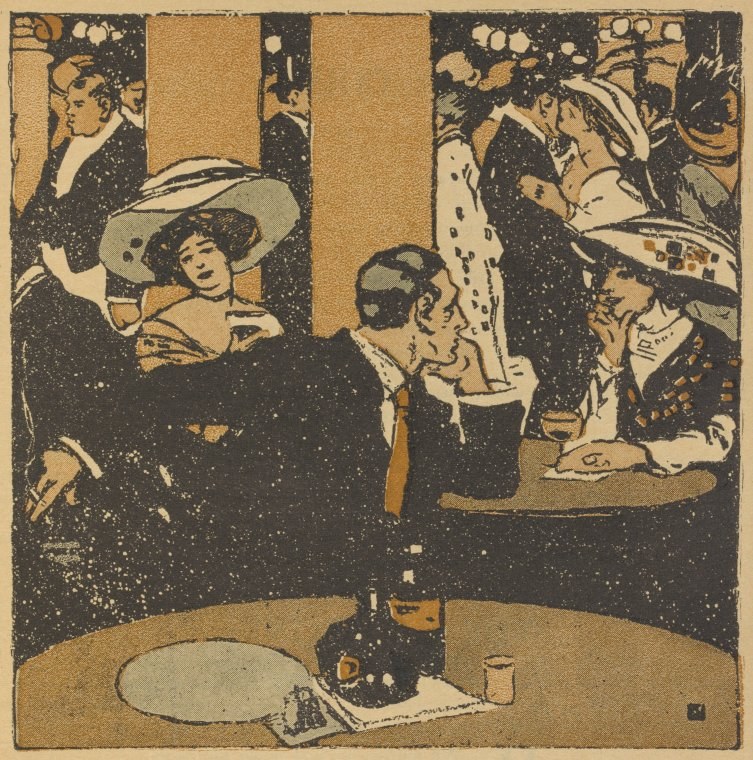
The lure of the dance
Unknown artist · 2021
public_domain
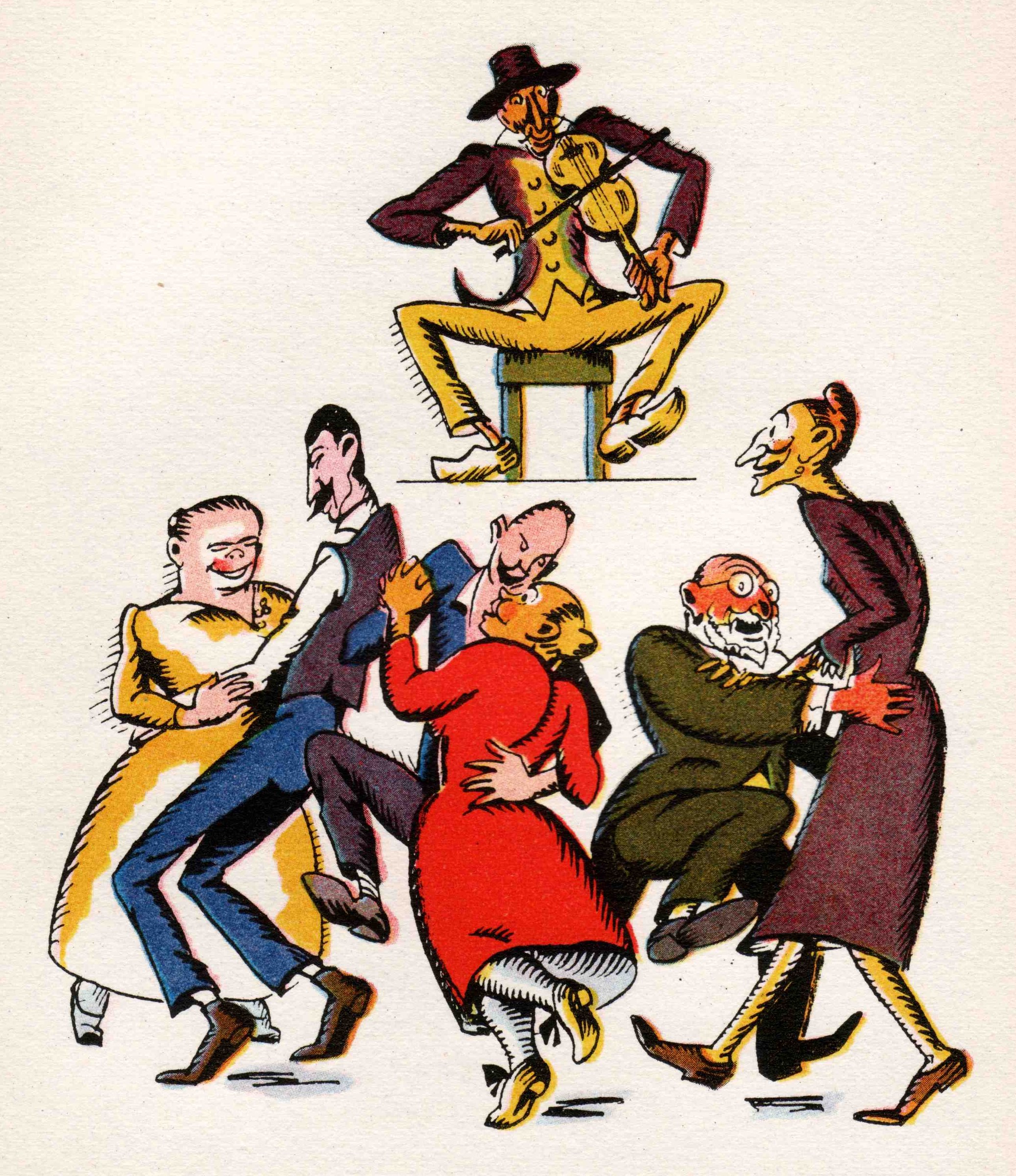
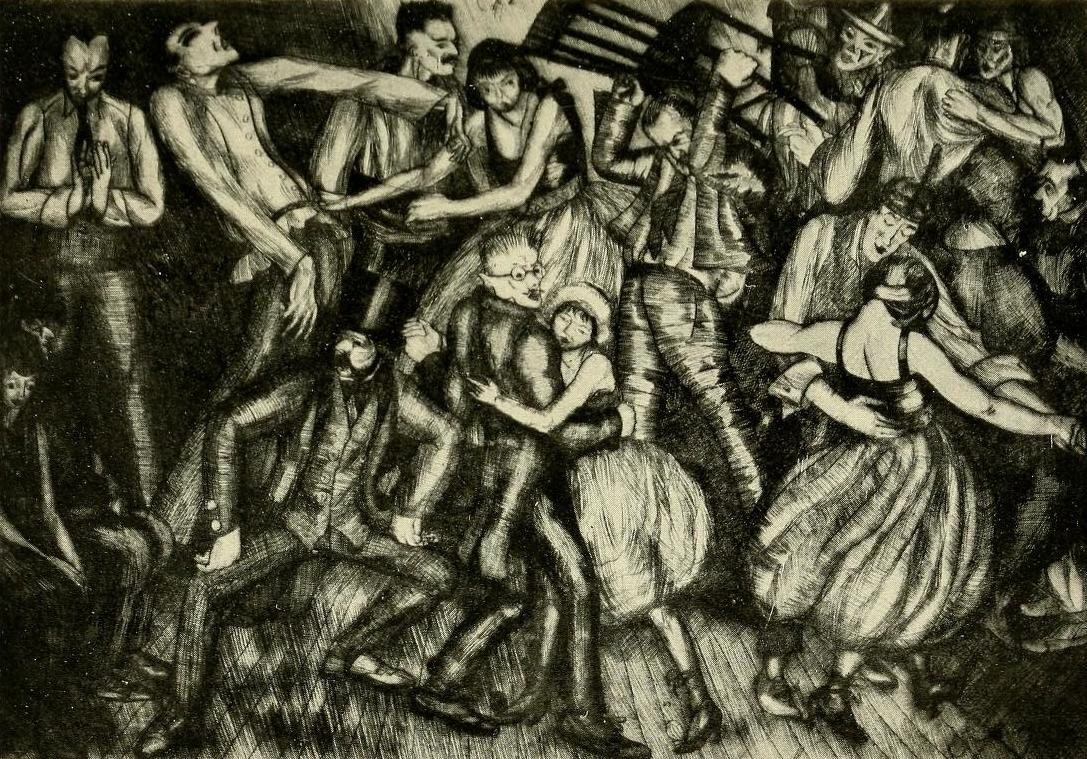
Peggy Bacon - Dance at the League
Peggy Bacon · 1922
Public Domain
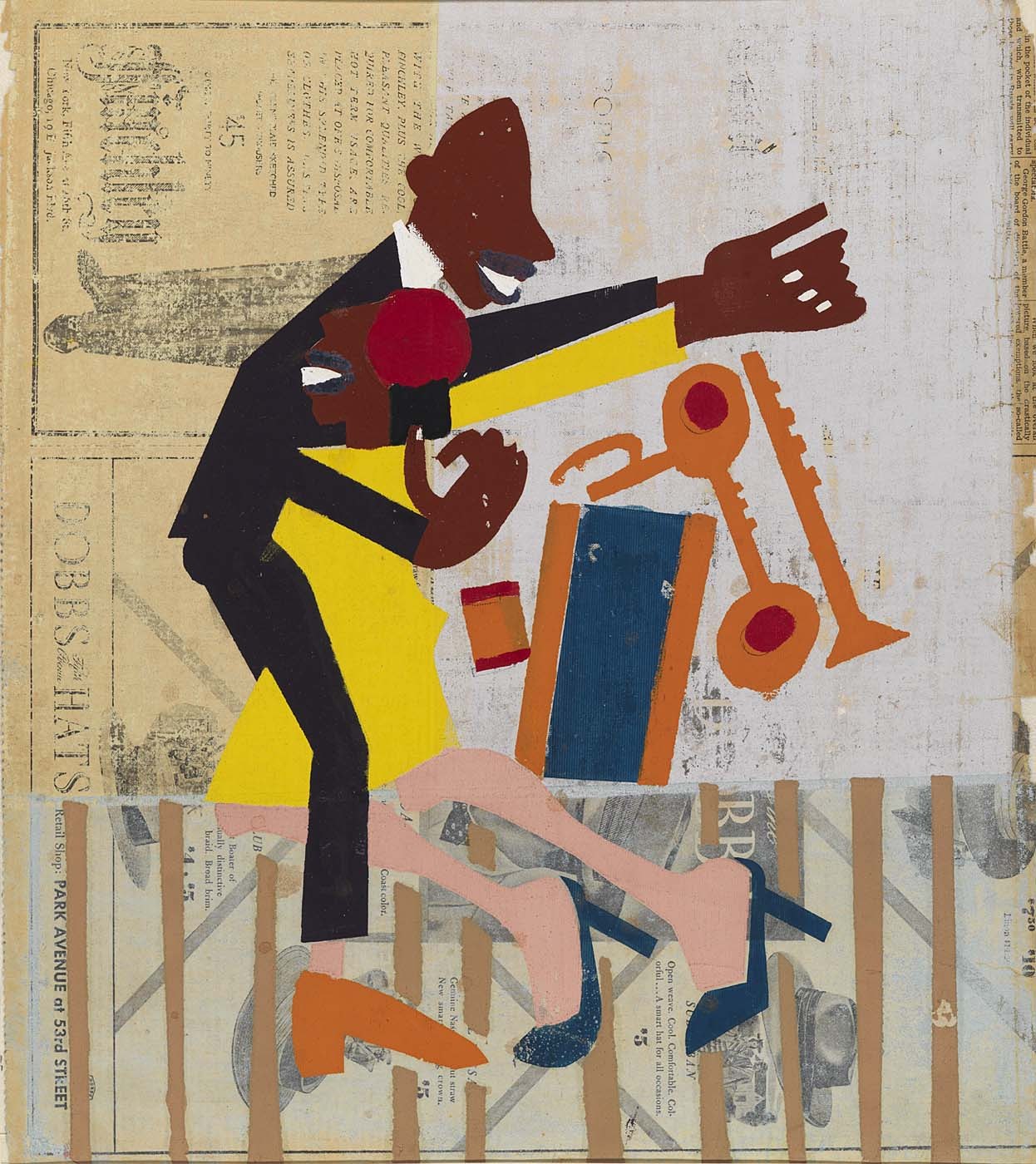
William H. Johnson - Jitterbugs (II) Smithsonian American Art Museum
William H. Johnson · 1939
Public Domain
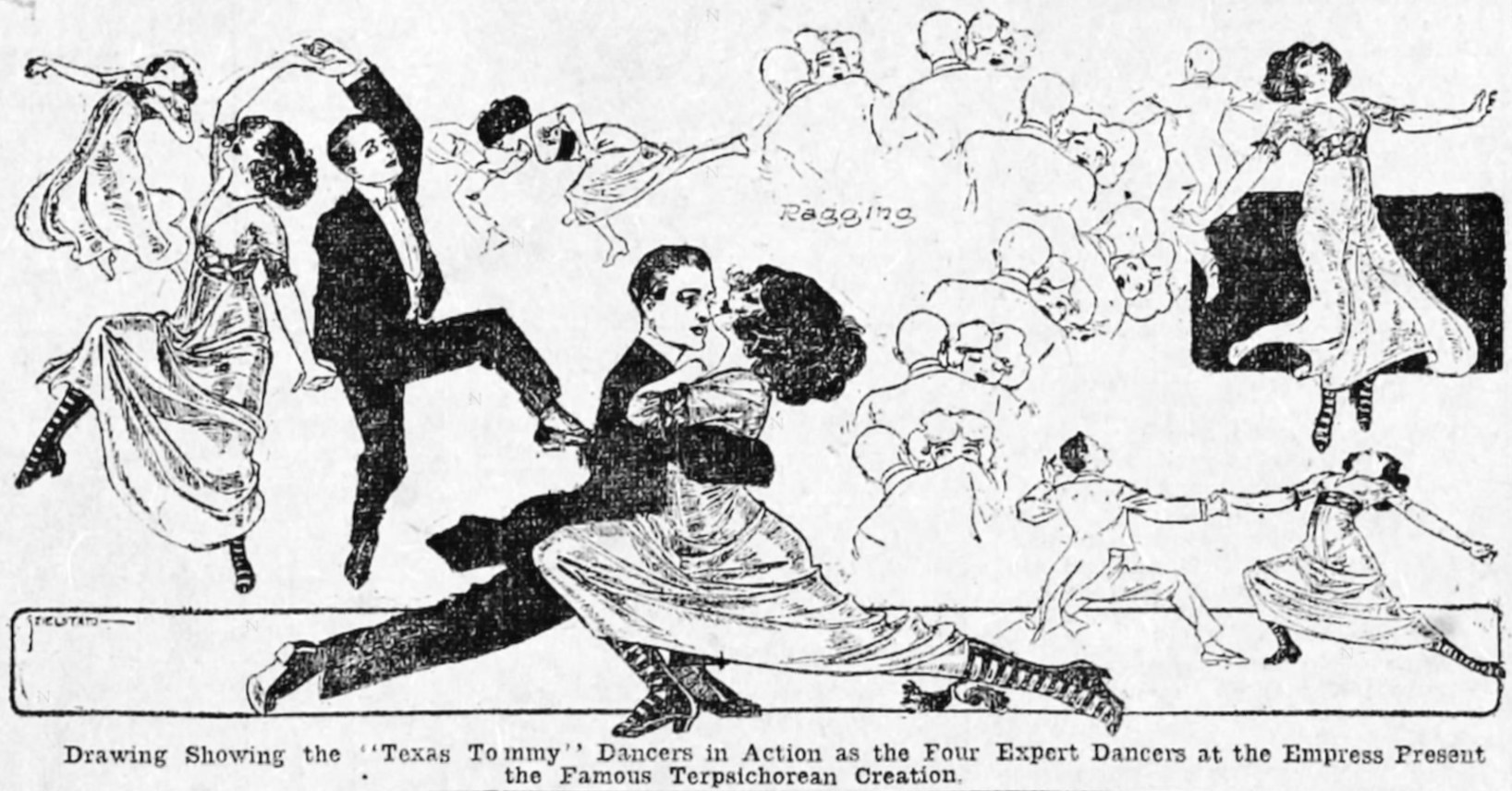
Texas Tommy dancers in Action - 1912
undetermined, published in The Salk Lake Tribune (Feb 25th, 1912) · 1912
Public Domain
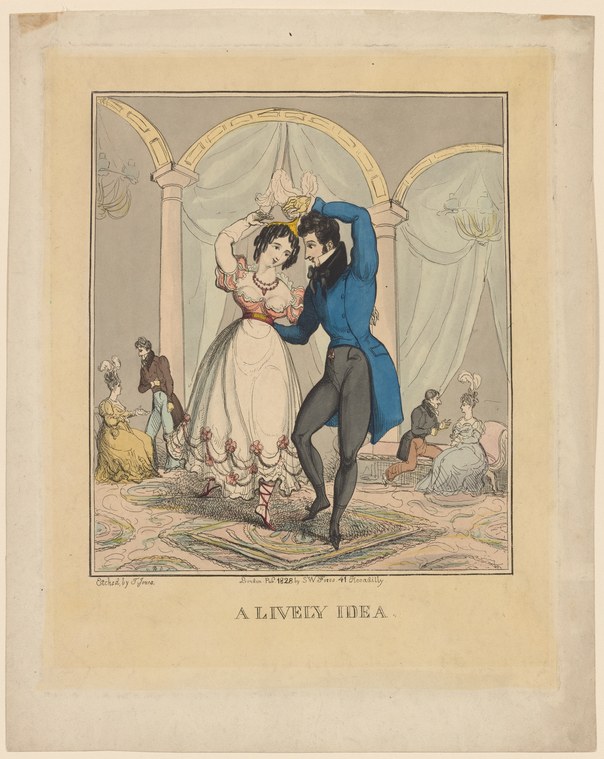
A lively idea
Unknown artist
Public Domain
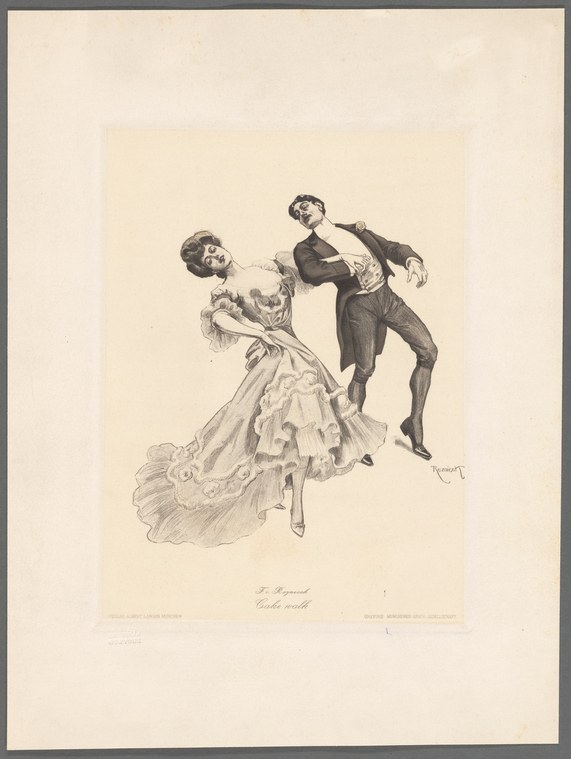
Cake walk
Unknown artist
Public Domain
Oh you dancing widow
Unknown artist · 1919
Public Domain
Continue Exploring
Lineage of Dance
500 years of dance evolution
Champions of Dance
Winners of marquee national & world titles
Language of Dance
161 dance terms & translations
Listening of Dance
Tempo, timing & musicality tools
Gallery of Dance
5,700+ artworks from museum collections
Attire of Dance
Evolution of dance dress across eras
Keep the thread going
Dance history, technique, and the occasional rabbit hole — in your inbox. Thoughtful, infrequent, unsubscribe anytime.
Free. No spam. One click to leave.