Scottish Reel
Also known as: Reel, Scottish Reel
- Origin
- Scotland
- Era
- 1650–1850
- Rhythm
- 2/2 time
- Tempo
- 160-200 BPM
- Character
- Rapid, turning, energetic, folk
History & Cultural Context
The Reel emerged in Scotland during the 17th century as a rapid turning dance performed by couples or groups. Reels featured continuous turning and rapid footwork distinct from English country dances. The reel became deeply embedded in Scottish culture and spread throughout the UK and to America. Contemporary Scottish and English folk traditions maintain reel dancing.
Cultural Significance
The reel remains central to Scottish cultural identity and folk traditions. Contemporary Scottish and English folk dance communities maintain reel traditions.
Peak Popularity
Signature Figures
- Turning
- Crossing Steps
Notable Codifiers
- Scottish tradition
Dance Lineage
Track Your Scottish Reel Progress
Practice Scottish Reel figures between lessons with Figure Focus — step-by-step breakdowns, floor diagrams, and progress tracking. Free to use.
Scottish Reel Playlists
Curated collections on the LODance YouTube channel — performances to watch, lessons to learn from, and the right music to practice with. Tap a collection to play.
▶ Practice Music · Open on YouTube →
Scottish Reel Music & Tempo
Drawn from 20 Scottish Reel tracks in the LODance music library.
Example tracks at practice tempo
- Mrs Macpherson of Inveran (8x32 Reel) - Live — Muriel Johnstone & Keith Smith
- Circassian Circle (8x32 Reel) — Bobby Crowe and his Scottish Dance Band
- The Sailor (8x32 Reel) — Muriel Johnstone's Scottish Country Dance Band
- Captain Macdonald's Fancy (8x32 Reel) — David Cunningham and his Scottish Dance Band
- Lady Mary Menzies' Reel (8x32 Reel) — David Cunningham and his Scottish Dance Band
- The Kissing Bridge (8x32 Reel) — Gordon Shand and his Scottish Country Dance Band
Who governs Scottish Reel
Federations, councils and examining bodies with a recorded role in this style. No single organisation can tell you this — each one knows only itself.
What to Wear
Attire guidance for Scottish Reel and other Historic Regency Country dances. Each card below is sized to the moment — class, practice, social, or competition — because the wardrobe shifts as the stakes do.
Reading the cards
In Class
Soft-soled shoes, comfortable clothing. Long skirts optional but helpful for learning to manage period movement.
Social Dancing
Regency balls are popular: women in Empire-waist gowns and long gloves, men in breeches and tailcoats or period-adjacent formalwear. Jane Austen societies maintain active social dance calendars.
Competition
Not competed; performed at historical events in full Regency costume.
Shoes
Women: flat ballet-style slippers or character shoes without heel. Men: flat dress shoes or period boots. The dances were designed for flat shoes on polished wood floors.
In Practice
The dances were built for flat shoes on polished wood floors — heels work against the geometry of the figures.
Price Range
- Budget: Flat ballet slippers or oxford-style flats $40–90; modern formal-adjacent clothing.
- Mid: Period-styled Empire-waist gown $200–600; men's tailcoat and breeches $250–700.
- Premium: Bespoke Regency reproduction costume $1,200–4,500.
Quick Tips
- •Suede-soled shoes allow controlled sliding and pivoting — essential for most partner dances.
- •Avoid rubber soles on dance floors; they grip too much and can cause knee injuries.
- •Bring a separate pair of clean shoes for the dance floor to keep it in good condition.
Recommended Gear for Scottish Reel
Essential equipment and apparel selected for dancers learning Scottish Reel.


As an Amazon Associate, LODance earns from qualifying purchases. Affiliate disclosure
Sources & Further Reading
Where This Dance Is Documented
Royal Scottish Country Dance Society published dance manuals; Scottish Official Board of Highland Dancing competition syllabi
An editor's note on where the technique for this dance is actually written down — sometimes a named book, sometimes the fact that no such book exists. A judgement, not a count of what we hold.
Cultural & Historical Context
Scottish Reel emerged from Scotland during the 1650s—1850s. Understanding the cultural roots, musical traditions, and social circumstances of this era enriches appreciation for the dance's characteristics and significance.
Formative Influences
Codifiers & Standardizers:
Scottish tradition
Signature Movement Vocabulary:
Turning, Crossing Steps
Primary Source Documents
The Library of Dance contains public-domain primary sources for dance history. Copyrighted modern syllabi are indexed with purchase links to their respective copyright owners. Search by dance name or codifier to discover primary source documents.
Last reviewed: September 2026 — This dance profile synthesizes historical research, cultural documentation, and contemporary practice knowledge to provide authoritative context.
Related Dances
More in Historic Regency Country
English Country Dance
English Country Dances were group dances in line or square formations, performed to lively music and featured alternating partner exchanges and figures. They became enormously popular in 17th-18th century England and influenced American colonial dance.
Longways Set
Longways set dances were English line dances performed in two parallel lines, featuring partner exchanges and figures typical of Regency-era dancing.
Cotillion
The Cotillion was a square dance for four couples that emerged in 18th-century France as the contredanse française. Its memorized figures alternated with a set of "changes," and it spread to English and American ballrooms in the later 18th century.
Quadrille
The Quadrille was a highly structured square dance for four couples, systematized with five figures and remaining popular throughout the 19th century in aristocratic society.
Round Dance
Round dance was the 19th-century ballroom category for closed-position couple dances — waltz, polka, schottische, galop, mazurka — that travel counterclockwise around the room, distinguishing them from the era's square dances (quadrille, cotillion) and country dances. Origins are debated; see Sources.
Grand March
A processional in march time used to open a formal ball, in which the assembled couples form a single column and are then divided and recombined into twos, fours and eights as they travel the room. It is less a dance than an organising device: it presents everyone in the room to everyone else and delivers a crowded floor into order for the dancing that follows.
Lancers
A five-figure quadrille set with its own distinct figure content, including a visiting figure in which couples call on each other in turn and a closing figure built on a grand chain danced to march time. After an initial vogue it faded, was revived around the middle of the nineteenth century, and became the set that outlasted every other in the ballroom.
Plain Quadrille
The standard five-figure set of Le Pantalon, L'Ete, La Poule, La Trenis or La Pastourelle, and the Finale, danced by four couples in a square. This was the default set of the nineteenth-century ballroom, the one a dancer was assumed to know, and the frame against which every other quadrille set was described.
What did dancers wear?
Scottish Reel belongs to the Regency & Victorian (1800s) era. See how attire shaped the choreography — and the other way around.
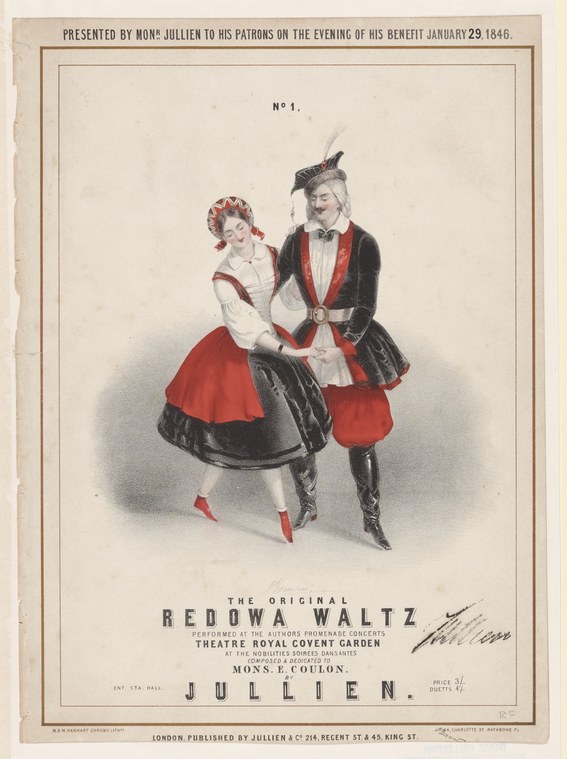
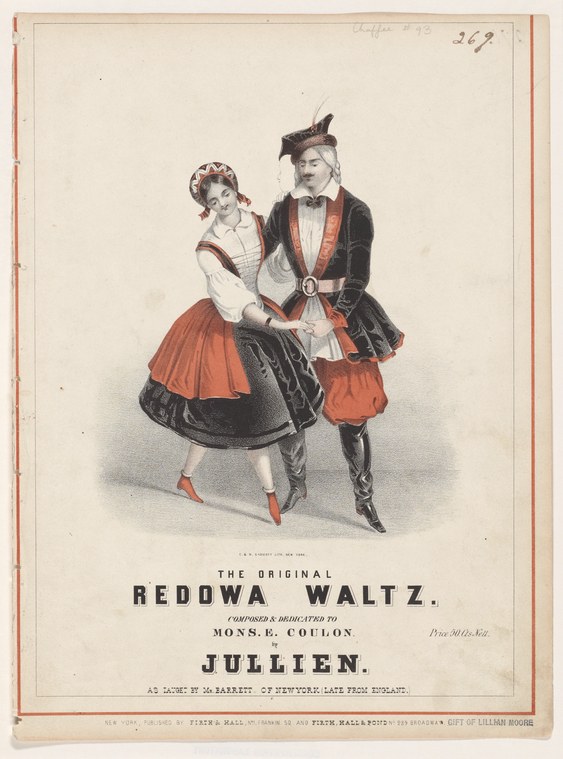
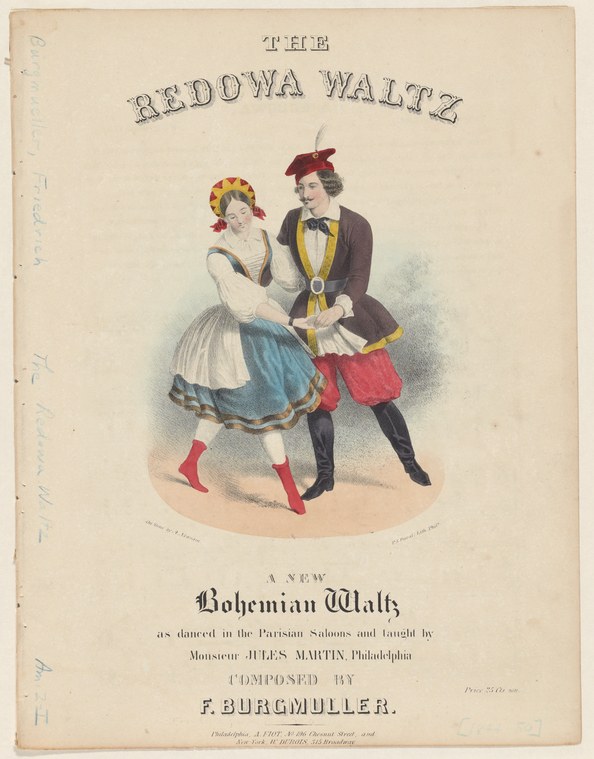
Explore Regency & Victorian attire →Scottish Reel in art
Browse the gallery →Works our catalogue identifies as depicting scottish reel.
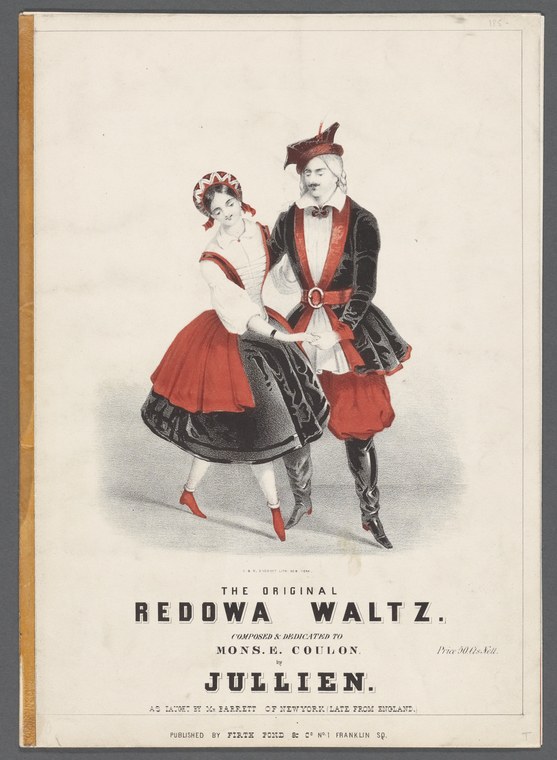
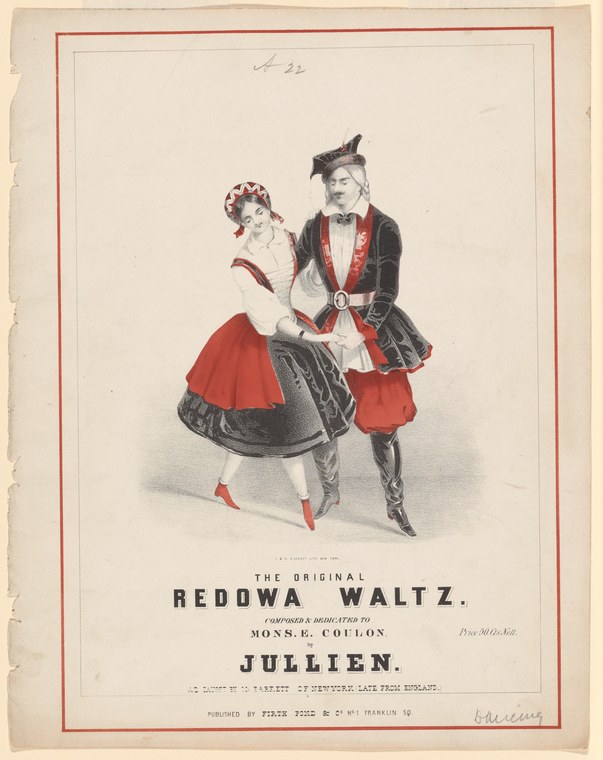
The original Redowa waltz
Unknown artist
public_domain
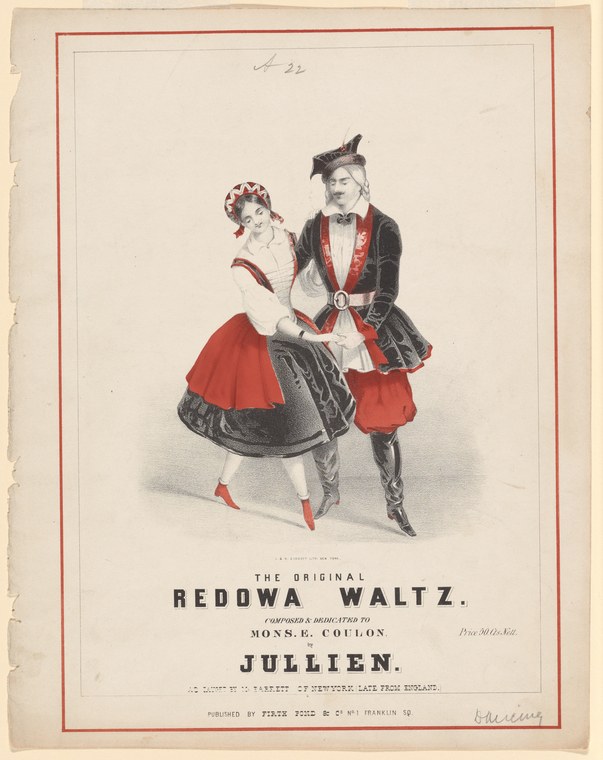
The original Redowa waltz
Unknown artist · 2019
public_domain
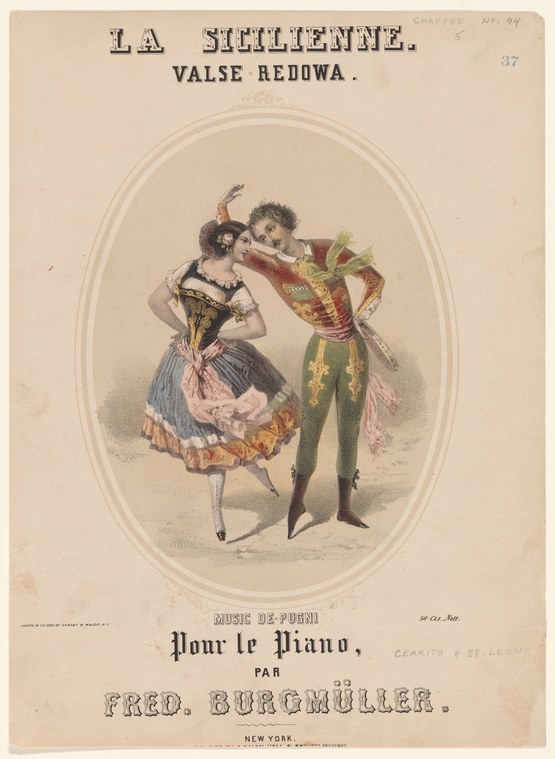
La sicilienne. Valse redowa.: Music de Pugni. Pour le piano, par Fred. Burgmüller
Unknown artist
Public Domain
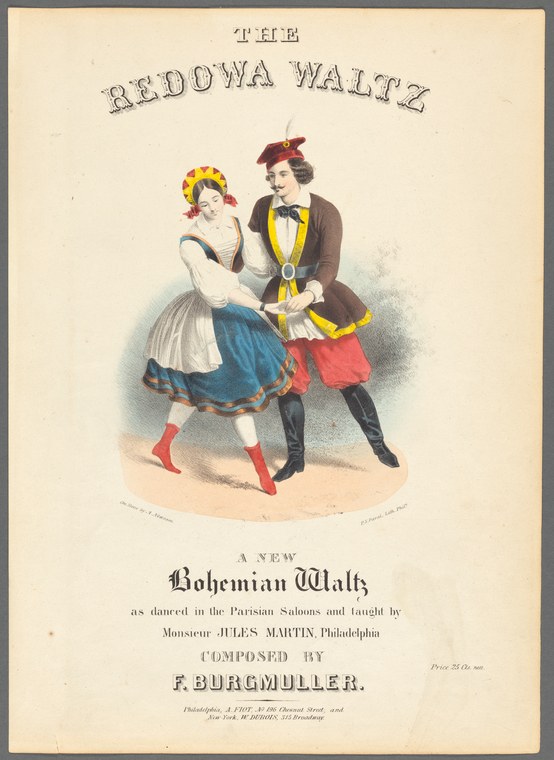
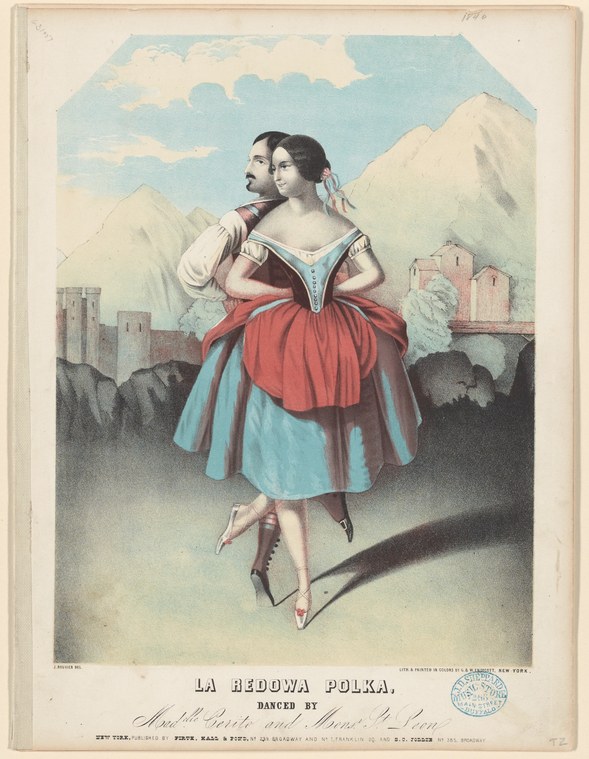
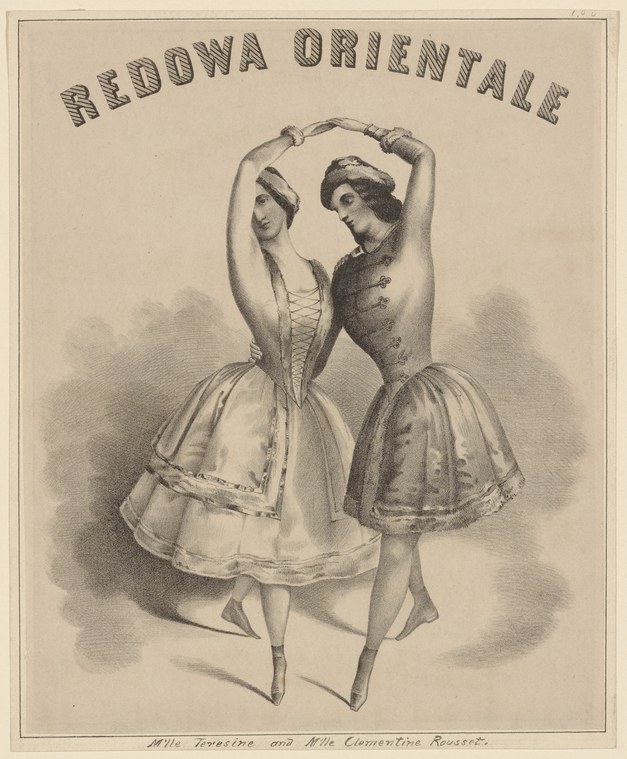
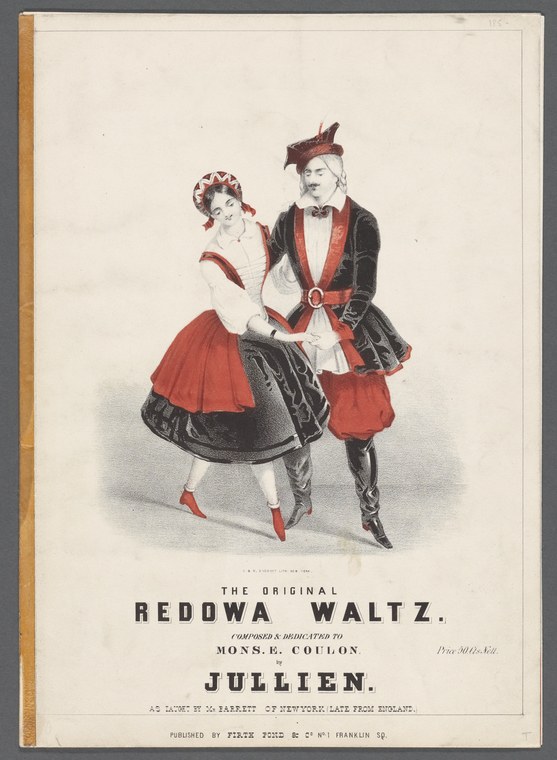
The original Redowa waltz...by Jullien
Unknown artist
Public Domain
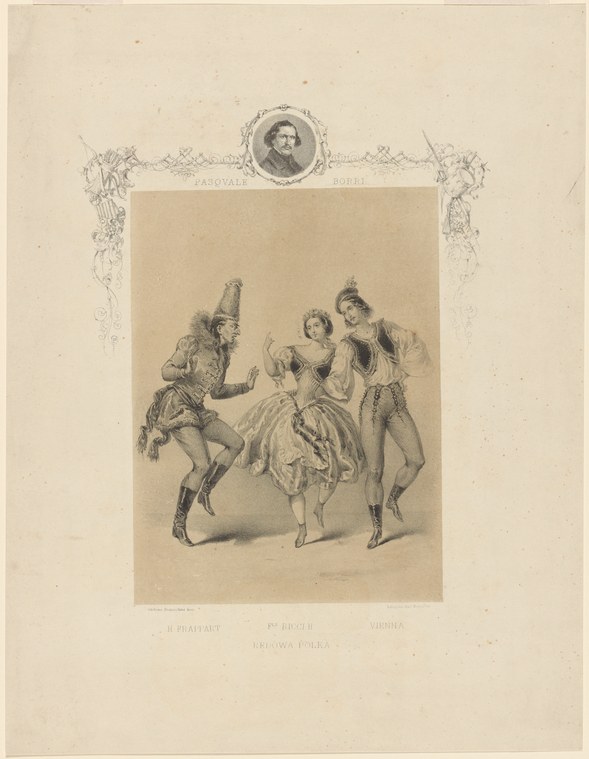
Redowa polka
Unknown artist
Public Domain
Continue Exploring
Lineage of Dance
500 years of dance evolution
Champions of Dance
Winners of marquee national & world titles
Language of Dance
161 dance terms & translations
Listening of Dance
Tempo, timing & musicality tools
Gallery of Dance
5,700+ artworks from museum collections
Attire of Dance
Evolution of dance dress across eras
Keep the thread going
Dance history, technique, and the occasional rabbit hole — in your inbox. Thoughtful, infrequent, unsubscribe anytime.
Free. No spam. One click to leave.