Bournonville Method
Also known as: Danish school, Bournonville school, Bournonville tradition, Royal Danish Ballet training
- Origin
- Copenhagen, Denmark
- Era
- 1830–1877
- Rhythm
- Six set classes, one for each day from Monday to Saturday, each a fixed sequence of enchaînements rather than a syllabus of separate exercises. The barre is brief and the class moves quickly into centre and travelling steps; the sequences are long, continuous and physically relentless, with very little standing still.
- Tempo
- Brisk and springy throughout, with allegro predominating and adagio comparatively short; the tempi are set by the music of the enchaînements and are unforgiving, since the steps must be beaten cleanly and landed silently at speed.
- Character
- buoyant, light, unshowy, quick-footed, warm, contained
History & Cultural Context
August Bournonville (1805-1879) studied in Paris with Auguste Vestris, danced at the Opera, then returned to Copenhagen where he directed and choreographed for the Royal Danish Ballet from 1830 until the late 1870s, with intervals in Vienna and Stockholm. He wrote about training, notably in his Études chorégraphiques, but the six daily class sequences known today as the Bournonville Schools were assembled in the 1890s by Hans Beck from enchaînements taken out of the ballets and the classroom, and how faithfully Beck represented his teacher is a live scholarly question. The tradition survived because Denmark was small, its company continuous and its repertoire unusually stable, so ballets from the 1830s and 1840s stayed in performance rather than being reconstructed. It reached wider attention in the twentieth century through Harald Lander, through Erik Bruhn and the Danish male dancers who joined foreign companies, and through the Bournonville festivals in Copenhagen. Today it is taught in Denmark alongside international technique and elsewhere mainly as a specialist supplement, which means most dancers meet it as a style to learn rather than as their daily training.
Cultural Significance
Bournonville worked for a court theatre in a small country and wrote ballets with a moral and social frame, in which dancing expresses character rather than displaying the dancer. His insistence on serious male dancing runs against the mid-nineteenth-century European trend, where male roles elsewhere were being reduced or given to women, and the Danish tradition has produced male dancers out of proportion to the country's size ever since. The training exists to serve a specific repertoire, including La Sylphide, Napoli, A Folk Tale and Konservatoriet, and that repertoire is the reason it was preserved.
Characteristic Movement & Technique
Arms are held low and softly rounded, frequently near bras bas, with the elbow relaxed and no reaching for line; the épaulement is constant and diagonal, with the head inclined so that the dancer is almost never square to the audience. The back stays upright and calm while the legs execute rapid batterie, so that entrechats, brisés, cabrioles and ballonnés happen below a torso that gives nothing away. Ballon is the central quality: the plié is deep and elastic, the landing is absorbed silently, and the jump is timed to appear to hang without effort. Extensions stay low by modern standards and the dancer does not present positions to the front.
Partnering Dynamics
Pas de deux is conversational rather than displayed, with the man supporting simply and the two dancers addressing each other rather than the audience. Lifts are modest in scale and integrated into travelling phrases, and the famous duets from Napoli and the Flower Festival in Genzano are built on shared allegro rather than on sustained supported balances. The style asks the man to dance fully in his own right, not to function only as a support.
Competitive Context
There is no Bournonville examination board; the tradition is transmitted in company classes and in specialist coaching. Bournonville male variations are competition staples, particularly at the Prix de Lausanne, because they expose beats, ballon and clean landings with nowhere to hide. Competitors are often marked down on them for lifting the arms too high or over-presenting, which is exactly the fault the style is designed to eliminate.
Regional Variations
In Copenhagen the schools are maintained by coaches with direct lineage and are taught as living material, whereas abroad they are usually taught as a short course or a stylistic workshop attached to staging a ballet. The Danish company's own training changed permanently after Vera Volkova arrived in 1951 and brought Russian technique into the school, so what Danish dancers do now is a blend rather than a pure line. Different Danish coaches have also produced differing versions of the same enchaînements.
Common Misconceptions
Low arms and small extensions are frequently mistaken for a gentle or undemanding style, when the sequences are among the most punishing in classical training and demand exceptional stamina and precise beaten footwork. What is taught as Bournonville is Hans Beck's 1890s compilation as further edited by twentieth-century coaches, not a direct transcript of the 1830s classroom. And it is a training method with a repertoire attached, not a period genre of dance, though the two are constantly conflated because the repertoire is Romantic.
Peak Popularity
Signature Figures
- The six daily schools
- Ballon and silent landings
- Extensive batterie
- Low, rounded arms and constant épaulement
- Serious male dancing
Notable Codifiers
- August Bournonville
- Hans Beck
- Valborg Borchsenius
- Harald Lander
- Kirsten Ralov
- Hans Brenaa
Who governs Bournonville Method
Federations, councils and examining bodies with a recorded role in this style. No single organisation can tell you this — each one knows only itself.
Legends of Bournonville Method
Dancers, choreographers and teachers whose work shaped this style.
Bournonville Method in performance
5 staged works in the Limelight catalogue contain Bournonville Method, 1842–1858 — 4 of them in a named act or number.
- Napoli1842Ballet · August Bournonville · defining styleAct III · The Wedding
Whole ballet, most concentrated in the Act III wedding solos — Choreographed by Bournonville himself, and the article credits the piece's male solo work in particular as exceptional - the technical hallmark of the school that bears his name. Source: "the ex…
- Le Conservatoire1849Ballet · August Bournonville · defining styleAct I · The Dancing School (Pas d'école)
Act I, the Pas d'école divertissement ('The Dancing School') — A staged recreation of a classical ballet class (in the Vestris/Paris Conservatoire tradition Bournonville trained in) built specifically to display 'the basics of his style' as concert-worthy d…
- Ballet · August Bournonville · defining styleAct I · Pas de deux (Carelis and Eleonore)
Act I, the pas de deux between Carelis and Eleonore — A romantic pas de deux built and later refined by Bournonville himself, described as one of his finest dance compositions expressing a declaration of love; this is the signature choreographic set piece o…
- Ballet · August Bournonville · defining styleFlower Festival in Genzano pas de deux
The surviving pas de deux (originally made for Napoli, later grafted onto this ballet) — Small gargouillade, petit manège with four grand jetés into first arabesque, fast repeated relevés on pointe in the second solo, brilliant small batterie in the man's s…
- A Folk Tale1854Ballet · August Bournonville · defining style
whole work — Choreographed by Bournonville for the Royal Danish Ballet in his own idiom, later transmitted generation to generation by named Bournonville stagers as core repertory technique. Source: "the Danish ballet master and choreographer August Bournon…
Every claim above is quoted from a cited source and names where in the work the style appears. Claims we could not place or could not quote are held back from this list and shown on the work’s own page instead. Browse the full performance catalogue →
Sources & Further Reading
Cultural & Historical Context
Bournonville Method emerged from Copenhagen, Denmark during the 1830s—1877. Understanding the cultural roots, musical traditions, and social circumstances of this era enriches appreciation for the dance's characteristics and significance.
Formative Influences
Codifiers & Standardizers:
August Bournonville, Hans Beck, Valborg Borchsenius, Harald Lander, Kirsten Ralov, Hans Brenaa
Signature Movement Vocabulary:
The six daily schools, Ballon and silent landings, Extensive batterie, Low, rounded arms and constant épaulement, Serious male dancing
Primary Source Documents
The Library of Dance contains public-domain primary sources for dance history. Copyrighted modern syllabi are indexed with purchase links to their respective copyright owners. Search by dance name or codifier to discover primary source documents.
Last reviewed: September 2026 — This dance profile synthesizes historical research, cultural documentation, and contemporary practice knowledge to provide authoritative context.
More in Ballet
Ballet de Cour (Court Ballet)
The aristocratic court spectacle from which ballet grew, danced by nobles (including Louis XIV) and codified into the five positions and turnout under Beauchamp at the Académie Royale de Danse (1661).
Romantic Ballet
The early-19th-century era that introduced pointe work, the ethereal 'white ballet,' and the ballerina as central figure, exemplified by La Sylphide (1832) and Giselle (1841).
Classical Ballet
The full-evening story-ballet style perfected by Marius Petipa in Imperial Russia—Swan Lake, The Sleeping Beauty, The Nutcracker—that defines the core ballet repertory and codified virtuoso classical technique.
Neoclassical Ballet
The 20th-century style—pioneered by George Balanchine with Apollo (1928)—that retained classical technique while stripping narrative and scenery for speed, line, extension, and pure response to music.
Contemporary Ballet
The late-20th-century-onward fusion of classical ballet technique with modern and contemporary dance, associated with choreographers such as William Forsythe and Jiří Kylián.
Pre-Ballet & Creative Movement
The early-childhood foundation class that introduces rhythm, spatial awareness and basic ballet vocabulary through imaginative, imagery-led movement rather than formal syllabus work.
Vaganova Method
A pedagogical system for training classical ballet dancers, not a choreographic style or a period repertoire. Agrippina Vaganova built it by analysing what the French, Italian and older Russian teachers of the Imperial school had each done well, and fixing the result as a progressive year-by-year course. It is the training behind the Kirov and Bolshoi companies and, in diluted or borrowed form, behind a large share of ballet teaching worldwide.
Cecchetti Method
A training method rather than a style of choreography, built on a fixed weekly cycle of set exercises so that the whole vocabulary is covered every six days and no muscle group is overworked. Enrico Cecchetti taught it to a generation that included Pavlova, Nijinsky and Karsavina; it was written down by his London pupils and admirers in the 1920s. Its concern is anatomical economy: strength built without strain, and the same effort available on the sixth day as on the first.
Royal Academy of Dance (RAD) Method
A graded teaching and examination syllabus rather than a technical school descended from one master, assembled in 1920 by teachers of five different national traditions who wanted a common standard for ballet teaching in Britain. Its structure is a ladder of examined levels, each with set exercises, taken by children and by vocational students. It is now the most widely examined ballet syllabus in the world.
Balanchine Method
A way of training dancers for a specific body of choreography, developed by George Balanchine at the School of American Ballet from 1934 and refined over five decades to serve New York City Ballet. It prizes speed, clarity at high tempo, extreme range of movement and a willingness to go off the vertical and recover. Unlike the older European schools it was never written into a syllabus by its founder, and is transmitted by teachers who danced for him.
Ballet in art
Browse the gallery →Works from the wider Ballet tradition — we have not yet identified enough that depict Bournonville Method specifically.
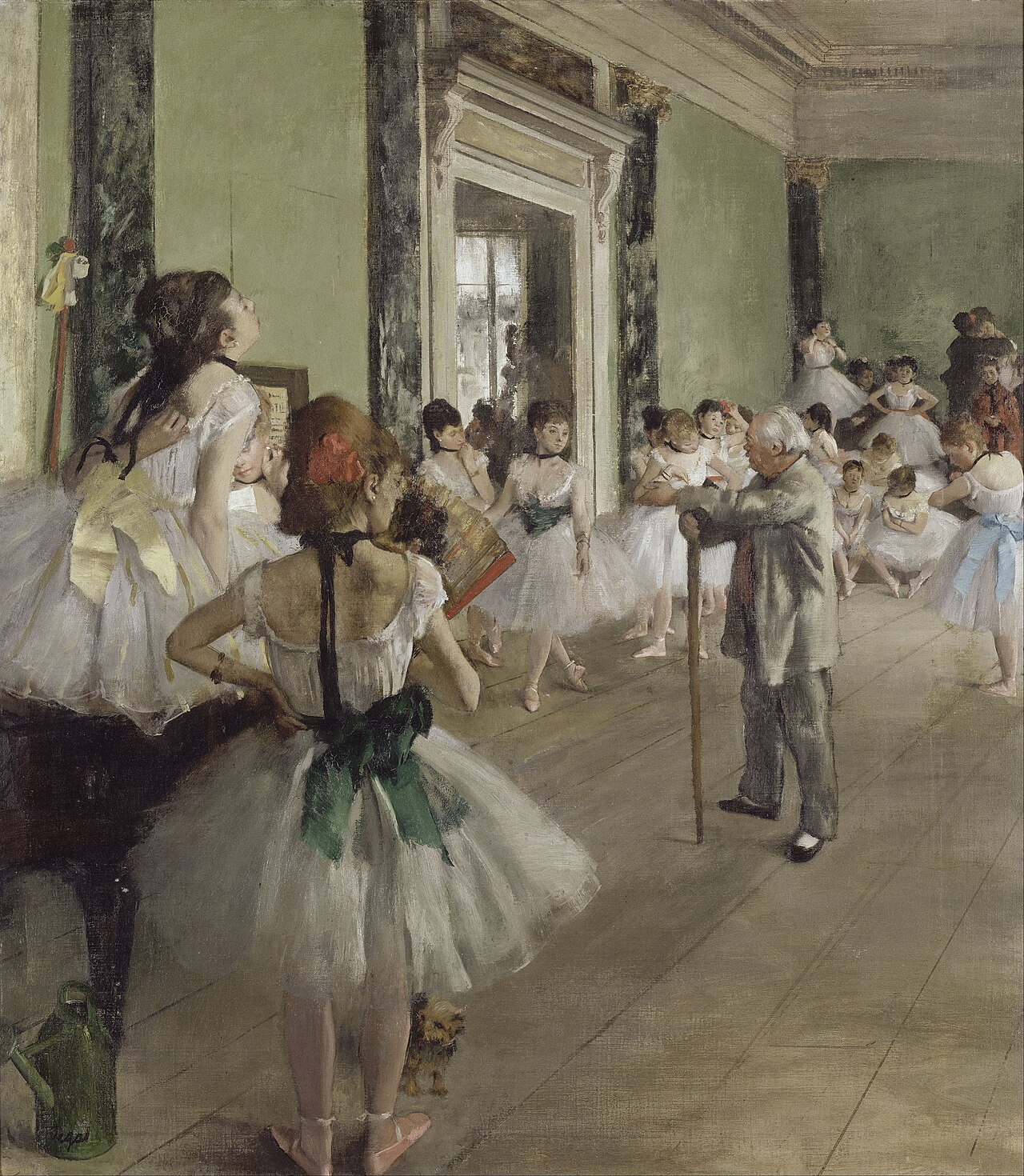
The Dance Class
Edgar Degas
public_domain
Morlacchi's Ballet Troupe
Unknown artist · 2019
public_domain
Dance cartoons
Unknown artist · 2019
public_domain
Ballet dancer
Unknown artist
public_domain
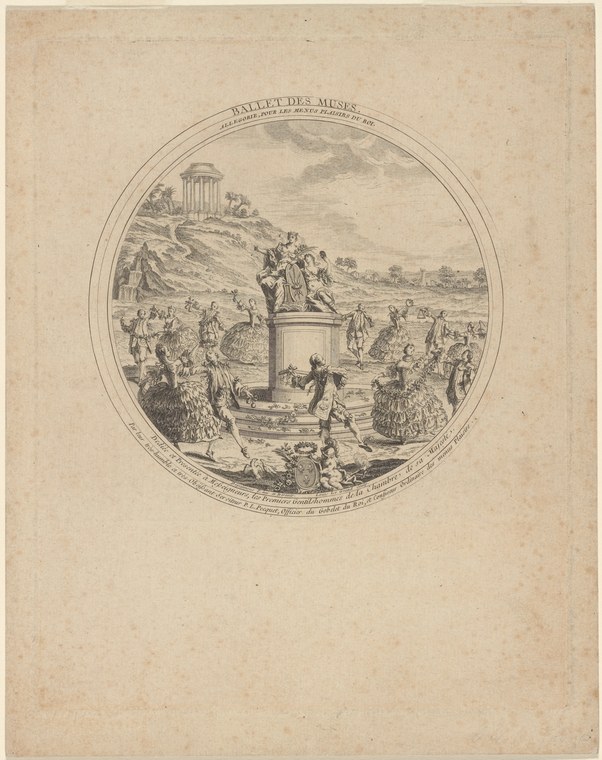
Ballet des muses
Unknown artist
public_domain
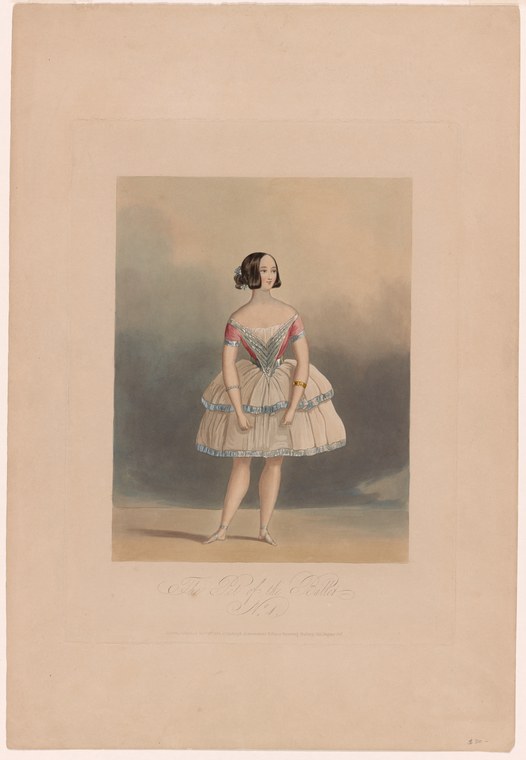
The Pet of the Ballet
Unknown artist · 2023
public_domain
Ballet des muses
Unknown artist · 2013
public_domain
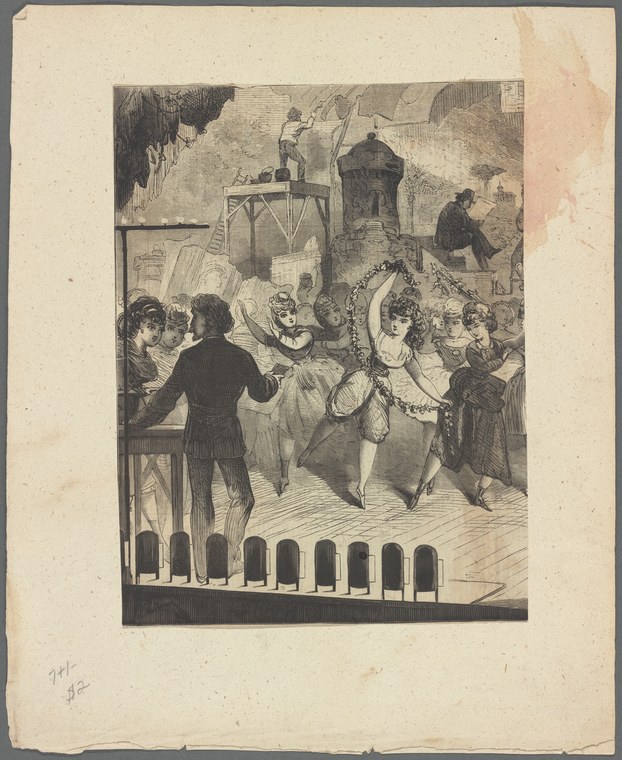
Ballet rehearsal onstage
Unknown artist
public_domain
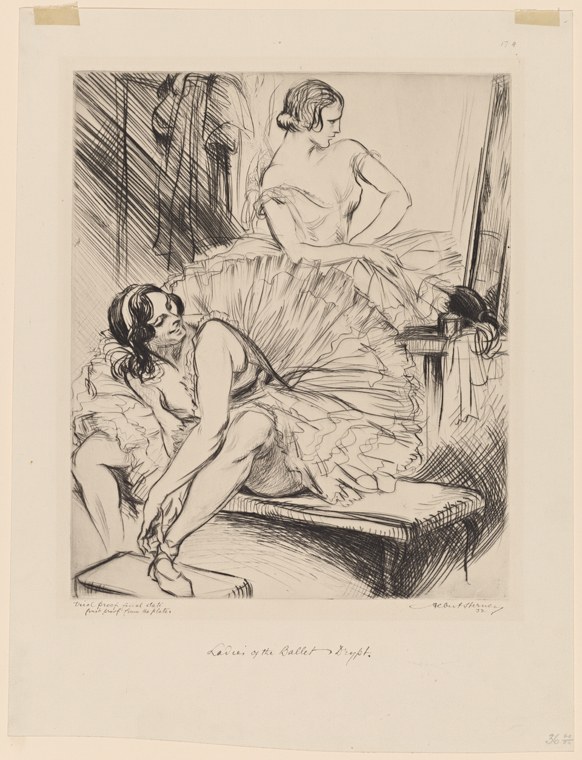
Ladies of the ballet
Unknown artist
public_domain
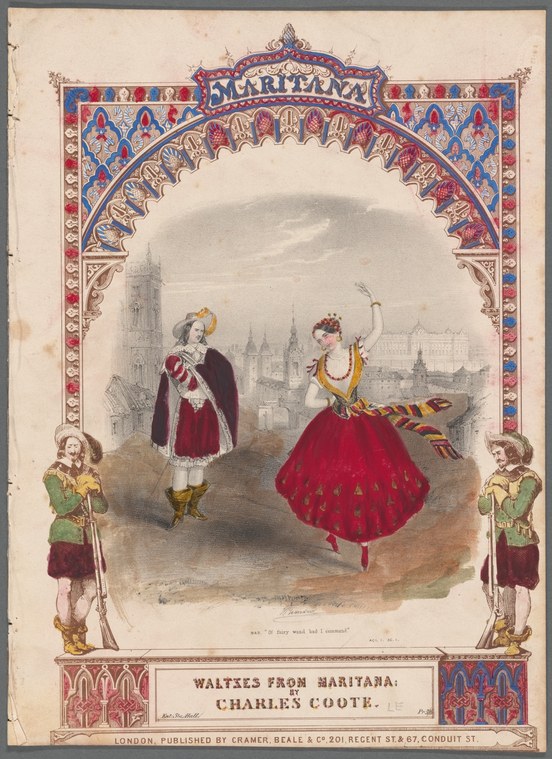
Waltzes from Maritana
Unknown artist
public_domain
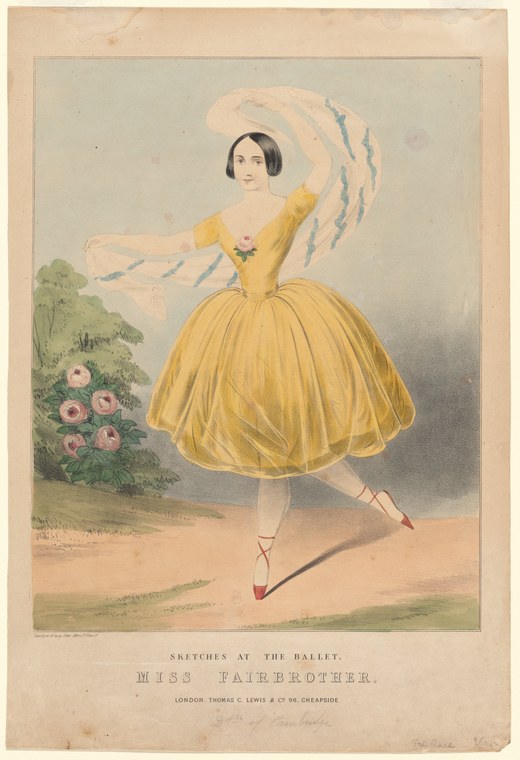
Sketches at the ballet
Unknown artist · 2019
public_domain
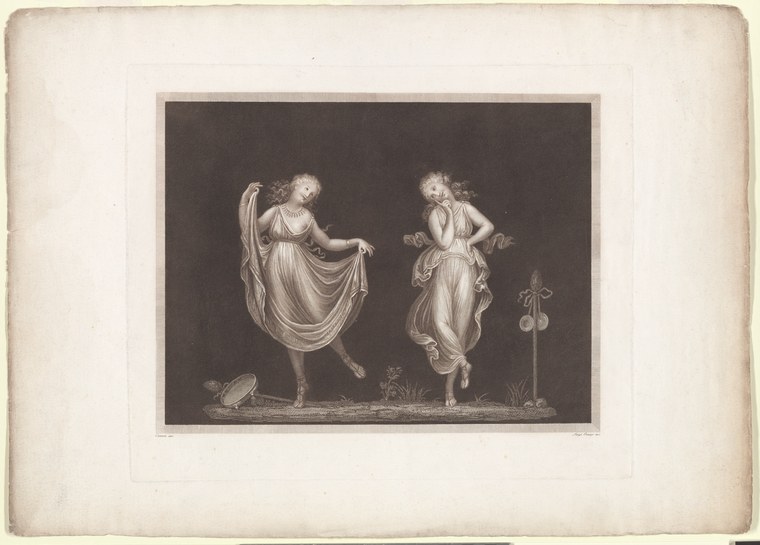
Ancient dancing
Unknown artist · 2019
public_domain
Continue Exploring
Lineage of Dance
500 years of dance evolution
Champions of Dance
Winners of marquee national & world titles
Language of Dance
161 dance terms & translations
Listening of Dance
Tempo, timing & musicality tools
Gallery of Dance
5,700+ artworks from museum collections
Attire of Dance
Evolution of dance dress across eras
Keep the thread going
Dance history, technique, and the occasional rabbit hole — in your inbox. Thoughtful, infrequent, unsubscribe anytime.
Free. No spam. One click to leave.