New Style Hip-Hop
Also known as: Hip-Hop Freestyle, New York Style, Hip-Hop Choreography, Studio Hip-Hop
History & Cultural Context
New Style Hip-Hop is the freestyle-into-choreography form that grew directly out of the party dances, and its name is an export. After the 1992 video documentary Wreckin' Shop Live From Brooklyn circulated abroad, French and Japanese dancers began calling the New York social dancing they saw in it 'new style' — shorthand for New York style. At home the same vocabulary was being formalised for classrooms and stages. Buddha Stretch (Emilio Austin Jr.) began teaching hip-hop classes at Broadway Dance Center in New York in 1989. In 1992, on the set of Michael Jackson's 'Remember the Time,' he, Henry Link (Henry McMillan) and Loose Joint (Jamel Brown) founded Elite Force Crew, adding Twelve, Brooklyn Terry and Mileage between 1995 and 1998. Their work on videos and tours for Michael Jackson, Mariah Carey, Will Smith and TLC established hip-hop choreography as a profession while keeping freestyle at its centre. New style keeps bounce, rock and groove as its foundation, then layers isolations, textures, musicality and eight-count phrasing on top — a structure Toni Basil had earlier brought to street dance when she introduced counting to locking.
Cultural Significance
New style is where hip-hop's social vocabulary met the class, the audition and the world tour. It made careers possible for street dancers, and it also created the transmission problem originators still argue about — the form travels faster than the culture that produced it.
Characteristic Movement & Technique
A continuous bounce or rock in the torso and knees underneath everything, with party-dance steps recombined and re-timed, chest and shoulder isolations, sharp accents, sudden stillnesses and shifts between hard-hitting and liquid texture.
Partnering Dynamics
Primarily solo freestyle in a cypher; in choreographed settings dancers work in unison formations and small-group counterpoint, with Elite Force specifically known for unified group flow that still leaves room for individual freestyle.
Competitive Context
Contested in freestyle battle formats — Juste Debout in Paris, Red Bull Dance Your Style, World of Dance for choreographed crews — judged on groove, musicality, vocabulary and originality rather than tricks.
Regional Variations
New York emphasises groove and foundation; France, through the Juste Debout circuit, and Japan built enormous 'new style' scenes with their own battle etiquette; Los Angeles developed a commercial, choreography-forward strand oriented to video and touring.
Common Misconceptions
'New style' is not a European invention — it is a foreign name for New York social dancing seen in Wreckin' Shop Live From Brooklyn. And studio hip-hop is not automatically the same thing: Buddha Stretch himself has criticised much commercial class material as 'completely watered down' when taught without the underlying cultural knowledge.
Peak Popularity
Signature Figures
- Buddha Stretch (Emilio Austin Jr.)
- Henry Link (Henry McMillan)
- Loose Joint (Jamel Brown)
- Brooklyn Terry
- Toni Basil
- Moncell Durden
Notable Codifiers
- Elite Force Crew
- MOP TOP
- Broadway Dance Center
- Wreckin' Shop Live From Brooklyn (1992)
Dance Lineage
New Style Hip-Hop Music & Tempo
Drawn from 25 New Style Hip-Hop tracks in the LODance music library.
Example tracks at practice tempo
- Electric Relaxation — A Tribe Called Quest98 BPM
- Drop It Like It's Hot — Snoop Dogg feat. Pharrell Williams92 BPM
- Return of the Mack — Mark Morrison95 BPM
- Intergalactic - Remastered 2009 — Beastie Boys106 BPM
- How We Do — The Game feat. 50 Cent98 BPM
- No Diggity — Blackstreet feat. Dr. Dre & Queen Pen89 BPM
Who governs New Style Hip-Hop
Federations, councils and examining bodies with a recorded role in this style. No single organisation can tell you this — each one knows only itself.
New Style Hip-Hop on screen
Films and television where New Style Hip-Hop appears, with the sequences worth watching for.
 Honey (2003)8 sequences indexedCommunity class — Letitia's recovery becomes choreography · 00:08:29 · chor. Luther Brown; Laurieann GibsonCommunity-center Ginuwine audition preparation · 00:48:43 · chor. Luther Brown; Laurieann GibsonGinuwine rehearsal — Raymond and the Shaker Boys · 01:02:09 · chor. Luther Brown; Laurieann Gibson
 Step Up (2006)5 sequences indexedOpening cross-cut — Baltimore street-party crew · chor. Anne FletcherTyler's party duet before the fight · 00:03:14 · chor. Anne Fletcher; Jamal Sims; Rosero McCoyParking-lot freestyle — Tyler borrows Nora's steps · 00:18:30 · chor. Anne Fletcher; Jamal Sims; Rosero McCoy
 High Strung (2016)4 sequences indexedSwitchSteps apartment roll call · 00:14:28 · chor. Dave ScottKillarney’s pub dance takeover · 00:40:43 · chor. Dave ScottGala violin duel and SwitchSteps intervention · chor. Dave Scott
 Take the Lead (2006)4 sequences indexedLaRhette's after-hours basement solo · chor. Rich Talauega; Tone TalauegaOpening cross-cut — John Drake school dance · 00:04:10 · chor. Rich Talauega; Tone TalauegaDetention students answer with their own freestyle · chor. Rich Talauega; Tone Talauega
 Save the Last Dance (2001)3 sequences indexedDerek teaches Sara hip-hop · chor. Fatima RobinsonLesson One in the furniture showroom · 00:42:41 · chor. Fatima RobinsonSecond Stepps visit and Nikki's cut-in · 01:06:02 · chor. Fatima Robinson
 Dance Monsters (2022)2 sequences indexedRepresentative anchor — Jam vs. Roberta dance-off to Beautiful MonsterRepresentative anchor — Hammer / Cake by the Ocean
 High Strung: Free Dance (2018)2 sequences indexedAlex's Times Square rap-dance · 00:33:50 · chor. Phillip ChbeebCorps returns to the hip-hop section · 00:44:28 · chor. Phillip Chbeeb
 World of Dance (2017–2020)2 sequences indexedRepresentative anchor — Some MindsRepresentative anchor — Les Twins qualifier
 Dance Moms (2011–2019)1 sequence indexedRepresentative anchor — Boss Ladies
 So You Think You Can Dance (2005–present)1 sequence indexedRepresentative anchor — Bleeding Love · chor. Tabitha D'umo; Napoleon D'umo
Poster artwork from TMDB.
 This site uses TMDB and the TMDB APIs but is not endorsed, certified, or otherwise approved by TMDB.
What to Wear
Attire guidance for New Style Hip-Hop and other Hip-Hop & Street Dance dances. Each card below is sized to the moment — class, practice, social, or competition — because the wardrobe shifts as the stakes do.
Reading the cards
In Class
Street clothes you can sweat in and move fully in: joggers, sweats or loose jeans in thin denim, a tee or hoodie, layers you can shed. The one hard rule at most studios is a dedicated indoor sneaker that has never been worn outside — grit tracked in from the street scratches marley and wrecks the floor for everyone. For breaking, add a flat vulcanized sole (Sambas, Chucks, Gazelles) rather than a cushioned running shoe, cover your knees and elbows, and skip slick nylon or heavy zippers that catch on the floor. Long hair tied back, and take rings and bracelets off before floorwork.
Social Dancing
Jams, cyphers and club nights have no dress code — you dance in what you would wear on the street, and that is the point of the form. Practical constraints only: clean sneakers you can pivot and drop in, nothing so oversized that a judge or the circle can't read your movement, and pockets emptied before you go to the floor. Bring a second shirt if you plan to be in the cypher all night.
Competition
Battles and championships (Red Bull BC One, Juste Debout, World of Dance, the Olympic breaking format) generally have no prescribed costume — dancers wear their own street look or crew kit, and personal style is part of what gets judged. Practical rules do apply: a visible competitor bib or number, nothing that can fall off mid-round, and shoes that won't mark the stage. Breakers competing in power moves usually add a spin beanie or headspin cap and taped wrists.
Shoes
Flat, thin, minimally cushioned soles — vulcanized rubber rather than a built-up foam or air heel. Adidas Sambas and Gazelles, Converse Chuck Taylors, Puma Suedes and Vans are the perennial choices because you can feel the floor through them and pivot on the ball of the foot without the sole grabbing. Running shoes are the common beginner mistake: the raised heel and aggressive tread lock the foot mid-turn and blunt every slide and glide. Whichever pair you choose, keep it indoor-only.
In Practice
Training alone or with a crew sits between class and battle — wear what you would battle in, so you know how it moves before it counts. Fitted enough to read your own lines in the mirror while drilling isolations, since popping and locking are invisible inside an oversized hoodie, with the hoodie back on between rounds. Breakers add knee pads and a long sleeve under the top for floor sessions, and empty their pockets: keys and a phone in a pocket are the classic cause of a bruised hip.
Common Pitfalls
- ✗Wearing the shoes you walked in on — street grit scratches marley and most studios will stop you at the door.
- ✗Cushioned running shoes for breaking or footwork: the tread grabs on turns and the raised heel kills ground feel.
- ✗Clothing so oversized that isolations and body lines disappear — the teacher and the judges cannot see what you are doing.
- ✗Attempting headspins or windmills without a spin cap or padding.
- ✗Keys, phone or a belt buckle still on you when you go to the floor.
Price Range
- Budget: You likely already own the clothes. An indoor-only sneaker at roughly $60–100 (Chuck Taylors, Puma Suede) is the only real purchase.
- Mid: Adidas Samba or Gazelle around $100–120, knee pads $20–40, a spin beanie roughly $25–50.
- Premium: A purpose-built spin cap (Spincontrol and similar) at roughly $60–100, wrist supports, and multiple indoor pairs rotated for different surfaces. Beyond that the money goes into workshops and travel to jams, not gear.
Key Terms
- Vulcanized sole
- Thin, flexible rubber sole bonded flat to the upper — gives ground feel and a predictable pivot, unlike a cushioned running sole.
- Spin cap
- Padded cap or doubled beanie worn for headspins and halos; protects the scalp and reduces friction and hair loss.
- Floor burn
- Friction abrasion from footwork and floor rocks — the reason breakers wear long sleeves and durable fabrics rather than thin jersey.
- Indoor-only sneakers
- A pair that never goes outside; grit carried in from the street scratches marley and ruins the floor for the whole studio.
- Crew kit
- Matching or coordinated crew clothing worn at battles — identity rather than costume, and never required of an individual entrant.
Quick Tips
- •Suede-soled shoes allow controlled sliding and pivoting — essential for most partner dances.
- •Avoid rubber soles on dance floors; they grip too much and can cause knee injuries.
- •Bring a separate pair of clean shoes for the dance floor to keep it in good condition.
Recommended Gear for New Style Hip-Hop
Essential equipment and apparel selected for dancers learning New Style Hip-Hop.


As an Amazon Associate, LODance earns from qualifying purchases. Affiliate disclosure
Sources & Further Reading
Cultural & Historical Context
New Style Hip-Hop emerged from New York City, USA during 1989—present day. Understanding the cultural roots, musical traditions, and social circumstances of this era enriches appreciation for the dance's characteristics and significance.
Formative Influences
Codifiers & Standardizers:
Elite Force Crew, MOP TOP, Broadway Dance Center, Wreckin' Shop Live From Brooklyn (1992)
Signature Movement Vocabulary:
Buddha Stretch (Emilio Austin Jr.), Henry Link (Henry McMillan), Loose Joint (Jamel Brown), Brooklyn Terry, Toni Basil, Moncell Durden
Primary Source Documents
The Library of Dance contains public-domain primary sources for dance history. Copyrighted modern syllabi are indexed with purchase links to their respective copyright owners. Search by dance name or codifier to discover primary source documents.
Last reviewed: September 2026 — This dance profile synthesizes historical research, cultural documentation, and contemporary practice knowledge to provide authoritative context.
More in Hip-Hop & Street Dance
Breaking (B-Boying / B-Girling)
The foundational dance of hip-hop culture, built in the Bronx on looped drum breaks and organised into toprock, footwork, power moves and freezes.
Hip-Hop Party Dances (Old School Social)
The social layer of hip-hop: named, repeatable party steps such as the Wop, Cabbage Patch, Running Man, Roger Rabbit and Steve Martin, learned by watching rather than counting.
Memphis Jookin
Memphis's gliding, toe-standing street dance, evolved from 1980s gangsta walking at the city's skating rinks into a balance-driven form danced in sneakers.
Chicago Footwork (Juke)
Chicago's double-time battle dance, danced almost entirely from the knees down inside a ring at 150–165 BPM over ghetto-house-derived footwork tracks.
Turfing
Oakland's storytelling street dance, mixing gliding, waving, tutting, contortion and bone-breaking with pantomime, named T.U.R.F. by Jeriel Bey in the early 2000s.
Flexing (Bone Breaking / Bruk Up)
Brooklyn's contortionist street dance, descended from Jamaican bruk up and danced to reggae-rooted Flex Dance Music rather than hip-hop breakbeats.
Litefeet
Harlem's fast, buoyant, trick-driven street dance of named steps, hat and shoe tricks, performed to purpose-built 100–110 BPM tracks and on subway 'Showtime' sets.
Detroit Jit
Detroit's high-speed footwork dance, created by the McGhee brothers as The Jitterbugs in the 1970s and later fused with electro, techno and ghettotech.
Bounce
New Orleans' call-and-response party music and its hip-driven dance culture, built on the looping 'Triggerman' beat and neighbourhood roll calls.
Hip-Hop & Street Dance in art
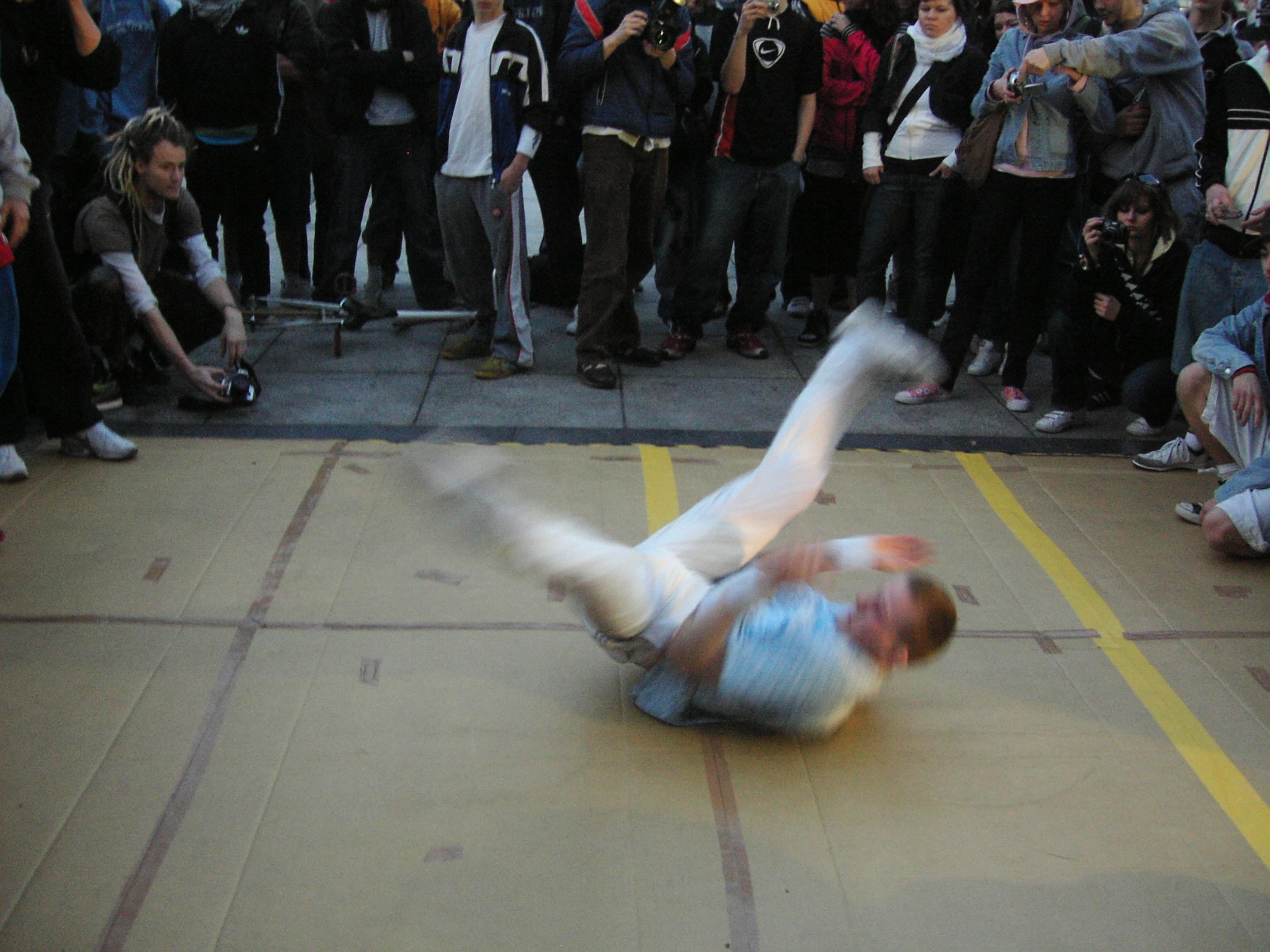
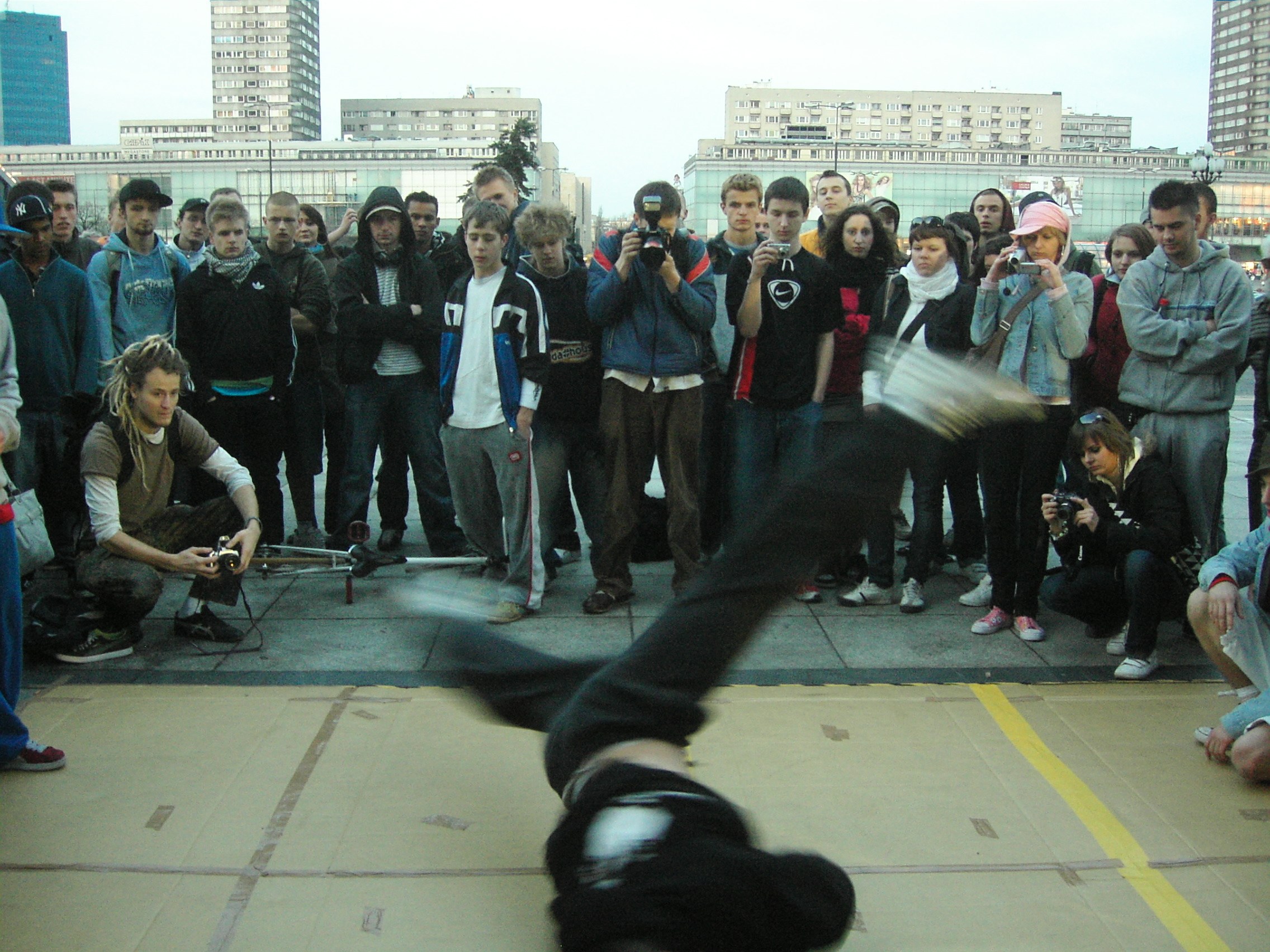
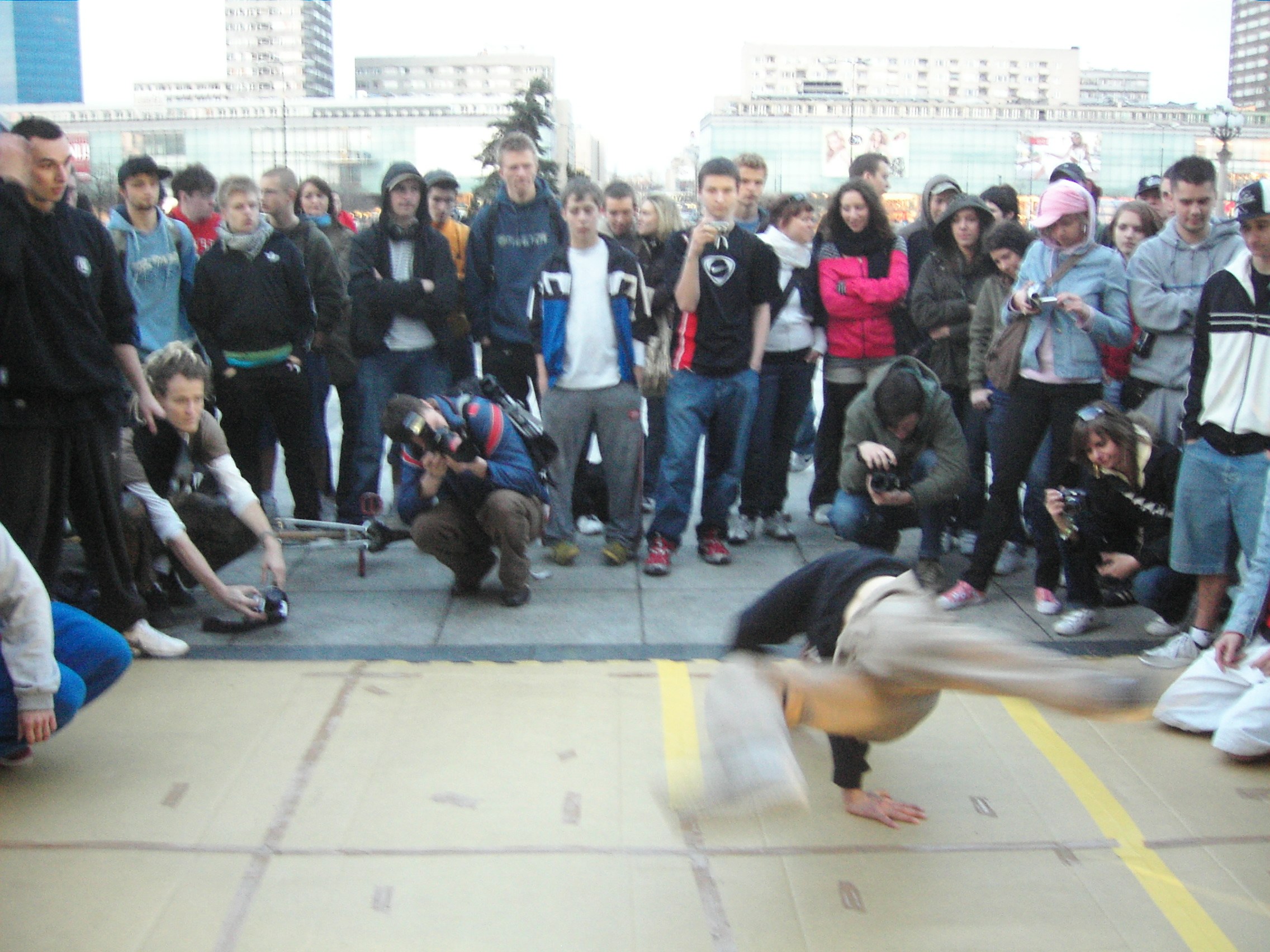
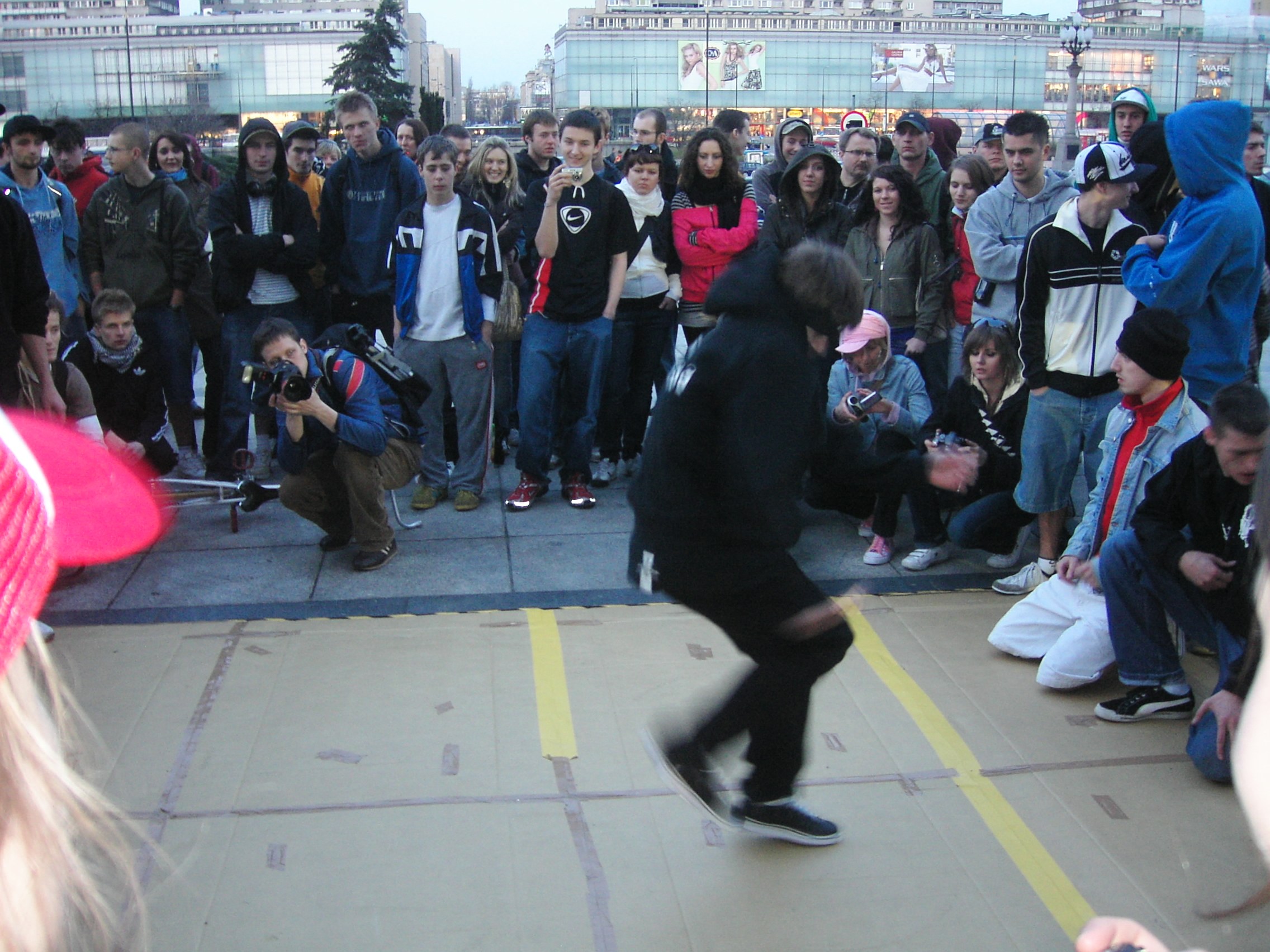
Browse the gallery →Works from the wider Hip-Hop & Street Dance tradition — we have not yet identified enough that depict New Style Hip-Hop specifically.
Continue Exploring
Lineage of Dance
500 years of dance evolution
Champions of Dance
Winners of marquee national & world titles
Language of Dance
161 dance terms & translations
Listening of Dance
Tempo, timing & musicality tools
Gallery of Dance
5,700+ artworks from museum collections
Attire of Dance
Evolution of dance dress across eras
Keep the thread going
Dance history, technique, and the occasional rabbit hole — in your inbox. Thoughtful, infrequent, unsubscribe anytime.
Free. No spam. One click to leave.