History & Cultural Context
Singkil is a folk dance of the Maranao people of Lake Lanao in Mindanao, Philippines. Its name comes from the Maranao word for entangling or shackling the feet, describing the dancer's task of stepping in and out of crisscrossed bamboo poles that are clapped together and against the floor in syncopated rhythm. A female dancer, often manipulating a pair of fans or scarves, leads; in many stagings a male dancer accompanies her with a sword and shield.
The dance dramatizes an episode from the Darangen, the Maranao epic inscribed on UNESCO's Representative List of the Intangible Cultural Heritage of Humanity in 2008. In that episode, Princess Gandingan moves through a forest shaken by an earthquake attributed to diwata (spirits), avoiding the falling trees represented by the clashing poles.
The age of the dance is debated. The Darangen epic it draws on is centuries old, but scholars generally regard the staged bamboo-pole dance as a comparatively recent practice; some accounts trace its spread to the early twentieth century, when folk dance entered the physical-education curriculum of public schools in the Lanao region. The Bayanihan dance company later adapted Singkil for the stage and helped popularize it internationally.
Singkil — In Depth
Singkil is a dance of the Maranao people of the Lake Lanao region of Mindanao, Philippines, in which dancers step in and out of "crisscrossed bamboo poles clapped in syncopated rhythm" [1]. Much of what is now taken as its tradition was shaped by the Bayanihan dance company in the 1950s [1]; this page separates the two where its sources allow.
The name The dance is named for the ankle rings of the lead dancer. Wikipedia's lead calls them "the belled accessory worn on the ankles of the Maranao princess" (uncited); its cited account, from Kanami Namiki's research, says the dance "was subsequently named Singkil after the brass anklets worn by the original dancer, Princess Tarhata" [1]. Wikipedia's Darangen article agrees that the name "derives from the ankle rings worn by the lead female dancer" [2]. The explanation sometimes printed, that the word means "entangling the feet," is not supported by any source read for this page.
The story In the staged version the dance retells an episode of the Darangen, the Maranao epic. Princess Gandingan is trapped in a forest during an earthquake caused by diwata (forest spirits), and Prince Bantugan rescues her; one account adds that the spirits took the princess "to teach Prince Bantugan a lesson for his philandering ways" (Hullett 2017, cited in [1]). The crisscrossed poles stand for the falling trees [1]. The Darangen itself, a chanted epic whose name means "that which is narrated by song or chant," was proclaimed a Masterpiece of the Oral and Intangible Heritage of Humanity by UNESCO in 2005 and inscribed on the Representative List in 2008 [2]. The link between the epic and the dance was made by the Bayanihan company, which "incorporated the Singkil dance into a storyline based on an episode from the Maranao epic, Darangen" (Namiki 2011, cited in [1]).
Origins The dance's age is uncertain. Wikipedia reports, from Namiki's thesis, that Sani (1979) placed its origin in the Basak area, spreading to other villages in the 1930s; that de los Santos (1979) gave no date; and that the spread may have come when folk dance entered the physical-education curriculum of Lanao's public schools in the early 1900s [1]. Neither Sani nor de los Santos was read for this page. Wikipedia's summary, uncited, is that "it is mostly agreed upon that it is a relatively new practice by the Maranao people" [1]. The same source records that the researcher Hofer-Ele found no evidence that the dance was originally a royal dance, although the Bayanihan staging presents it as one [1].
The dance In the staged form, Princess Gandingan "makes a graceful entrance, manipulating two elaborately designed fans called apir," followed by an attendant; at one point "she dances alone between the slow clapping of the bamboo poles, without any musical accompaniment"; a male dancer as Prince Bantugan dances around and through the poles "wielding a shield and a sword"; and other dancers handle apir fans, "symbolizing auspicious winds" (Panaraag and Inte 2015, cited in [1]). The Bayanihan version of the early 1950s added multiple fan dancers, warriors with swords and shields, and an attendant with a royal umbrella (Namiki 2011; Ellorin 2016, cited in [1]).
Music Wikipedia's lead says a kulintang and agung ensemble "always accompanies the dance," but that sentence is uncited and its own cited history says that "originally, there was no musical accompaniment, except for the sounds of clanking brass anklets and clashing bamboo poles" [1]. The Darangen epic is accompanied by kulintang gong ensembles, drums and kudyapi lutes (Escueta, ICHCAP, cited in [2]). No source read gives a meter or a tempo, so none is stated here.
Variants and disputes Wikipedia records criticism that the Bayanihan popularized a more elaborate Maguindanao version while presenting it as the Maranao dance (uncited), and notes that "Maranao customs prohibit males and females from dancing together," which the staged prince-and-princess duet does not observe (Jarales and Gealogo 2013, cited in [1]). The Philippine Barangay Folkdance Troupe has the prince dance with scarves instead of sword and shield (Namiki 2017, cited in [1]).
The dance today The Bayanihan reworking of the early 1950s was taken on world tour from the Brussels Expo of 1958 (Namiki 2011; Ellorin 2016, cited in [1]).
Uncertainties - The date and place of origin: the sources disagree and the 1979 studies were not read. - The royal character of the dance is a staging choice; no evidence of royal origin was found by Hofer-Ele [1]. - Whether music always accompanies the dance: Wikipedia contradicts itself. - No sourced meter or tempo. - The UNESCO page for the Darangen did not return its text for this page; the 2005 and 2008 dates are cited through [2].
Sources [1] Wikipedia, "Singkil." https://en.wikipedia.org/wiki/Singkil - read 2026-11-14. Its references cited at second hand here: Kanami Namiki, Dancing in the Margins (thesis, National University of Singapore, 2016) and "Hybridity and National Identity" (2011); Bernard Ellorin, "Staging Autonomous Ethnicities" (ICTM, 2016); Arthur Hullett, Pieces of Southeast Asia (2017); Jiamila E. Panaraag and Geldolin L. Inte, The Metamorphosis of Selected Maranao Stories into Dances (2015); Jarales and Gealogo (2013). [2] Wikipedia, "Darangen." https://en.wikipedia.org/wiki/Darangen - read 2026-11-14. Its references cited at second hand here: Carla Michaela Escueta, "Darangen, the Maranao Epic," ICH Courier (ICHCAP); The Philippine Star, December 13, 2005.
Singkil Playlists
Curated collections on the LODance YouTube channel — performances to watch, lessons to learn from, and the right music to practice with. Tap a collection to play.
▶ Performances · Open on YouTube →
Singkil Music & Tempo
Drawn from 19 Singkil tracks in the LODance music library.
Example tracks at practice tempo
- SINGKIL - Mindanao Suite — Leyte Dance Theater
- SINGKIL - Philippine Folk Dance — Ramon Obusan Folkloric Group
- Ka-singkil — Traditional, Fiesta Filipina
- Bayanihan Philippine Dance Company - Singkil — Bayanihan Philippine Dance Company
- Singkil (Intergenerational) — Folklorico Filipino Canada
- SINGKIL - Bayanihan Alumni Association — Bayanihan Alumni Association
What to Wear
Attire guidance for Singkil and other Global Southeast Asian Court & Folk dances. Each card below is sized to the moment — class, practice, social, or competition — because the wardrobe shifts as the stakes do.
Reading the cards
In Class
Comfortable practice wear. Some traditions emphasize bare feet and specific hand positioning that requires unencumbered arms.
Social Dancing
Traditional attire specific to each culture's dance tradition for performances and cultural events.
Competition
Full traditional costume — Thai classical: ornate gold headdress and fitted costume; Balinese: elaborate wrapped fabrics and gold accessories.
Shoes
Traditionally barefoot across most Southeast Asian classical and folk forms. The connection to earth and precise foot placement are integral to the art forms.
In Practice
Most forms practice barefoot from day one — the foot's contact with the floor is part of the technique, not removable equipment.
Price Range
- Budget: Loose practice clothing from existing wardrobe; no shoes needed.
- Mid: Practice-grade traditional pieces $100–400.
- Premium: Full court-tradition costumes (Thai classical, Balinese, Javanese) $1,000–6,000+ depending on goldwork and accessories.
Quick Tips
- •Suede-soled shoes allow controlled sliding and pivoting — essential for most partner dances.
- •Avoid rubber soles on dance floors; they grip too much and can cause knee injuries.
- •Bring a separate pair of clean shoes for the dance floor to keep it in good condition.
Sources & Further Reading
Cultural & Historical Context
Singkil emerged from Philippines (Mindanao) during the 1800s—present day. Understanding the cultural roots, musical traditions, and social circumstances of this era enriches appreciation for the dance's characteristics and significance.
Primary Source Documents
The Library of Dance contains public-domain primary sources for dance history. Copyrighted modern syllabi are indexed with purchase links to their respective copyright owners. Search by dance name or codifier to discover primary source documents.
Last reviewed: November 2026 — This dance profile synthesizes historical research, cultural documentation, and contemporary practice knowledge to provide authoritative context.
More in Global Southeast Asian Court & Folk
Khon
Masked classical dance-drama based on Ramayana epic; features slow, controlled movements and elaborate costumes.
Legong
Graceful classical dance traditionally performed by young girls, depicting stories from Balinese-Javanese courtly literature such as the Malat; characterized by synchronized hand, eye, and body movements.
Kecak
Balinese "monkey chant": a seated male chorus chants interlocking "cak" rhythms while dancers enact Ramayana episodes.
Pendet
Young women's offering dance performed to purify temples; uses graceful arm movements and temple props.
Topeng
Masked dance-drama form depicting various social characters; combines storytelling with intricate footwork.
Reog
A centuries-old Javanese dance-drama from Ponorogo, East Java, Indonesia, built around the Dadak Merak — a massive mask combining a tiger's (or lion's) head with a towering fan of peacock feathers, balanced by a single performer. Staged at festivities, weddings, and community ceremonies.
Gandrung
Folk dance with swaying movements and flirtation between dancers; performed at celebrations.
Jaipong
Contemporary Javanese dance fusion combining traditional movements with modern music.
Baris
Warrior dance performed by men depicting martial prowess; features sharp, energetic movements.
Sanghyang
Sacred trance dance ritual believed to invoke spirits; performed to protect villages.
Tinikling
Folk dance depicting rice bird movements; performed with two people manipulating bamboo poles.
Maglalatik
Men's folk dance performed with coconut shell armor depicting warrior movements.
Cariñosa
Courtship dance for couples blending Spanish and Filipino movements; performed with fan and handkerchief.
Zapin
Folk dance with Arab influences performed in pairs with hip and leg movements.
Joget
Social dance for couples combining Portuguese and Malay traditions; performed to lively music.
Robam Tep Apsara
Celestial nymph dance based on Angkor temple carvings; UNESCO Masterpiece of Intangible Heritage (2003).
Ramvong
Social circle dance performed at celebrations; blends traditional and modern movements.
Ramthai
Thai classical court and theatrical dance — khon, lakhon and ram/rabam — built on codified hand gestures and slow, gliding movement, accompanied by the piphat ensemble.
Morlam
Traditional Lao folk performance incorporating song, speech, and dance movements.
Global Southeast Asian Court & Folk in art
Browse the gallery →Works from the wider Global Southeast Asian Court & Folk tradition — we have not yet identified enough that depict Singkil specifically.
[Pictures] Cambodia Folk Dance | Aspara
cambodia
https://creativecommons.org/licenses/by-sa/4.0/
La Siamoise
Unknown artist
Public Domain
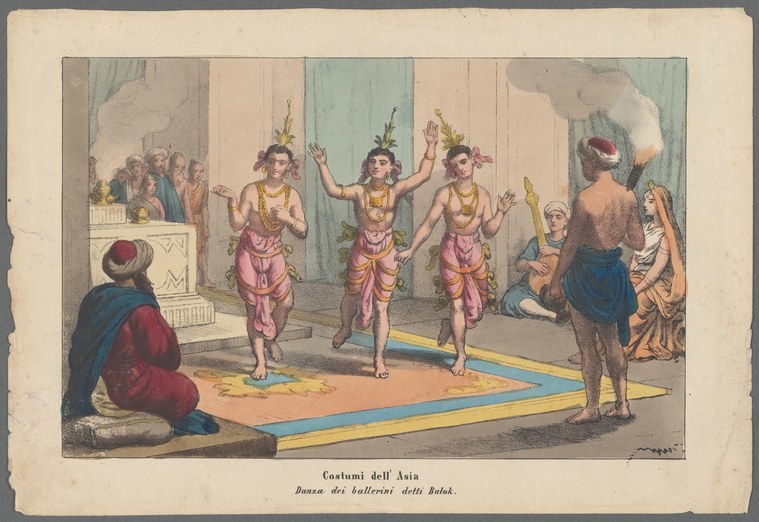
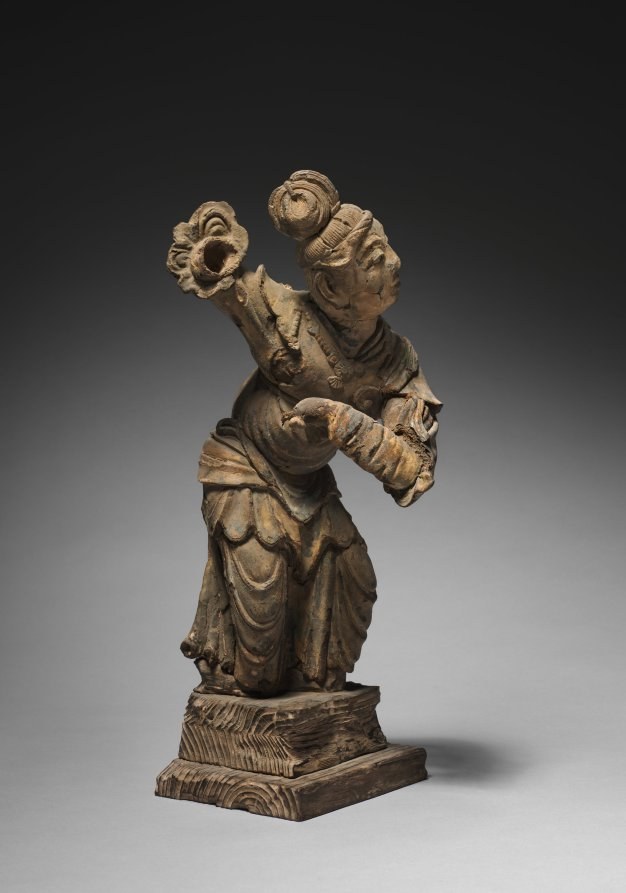
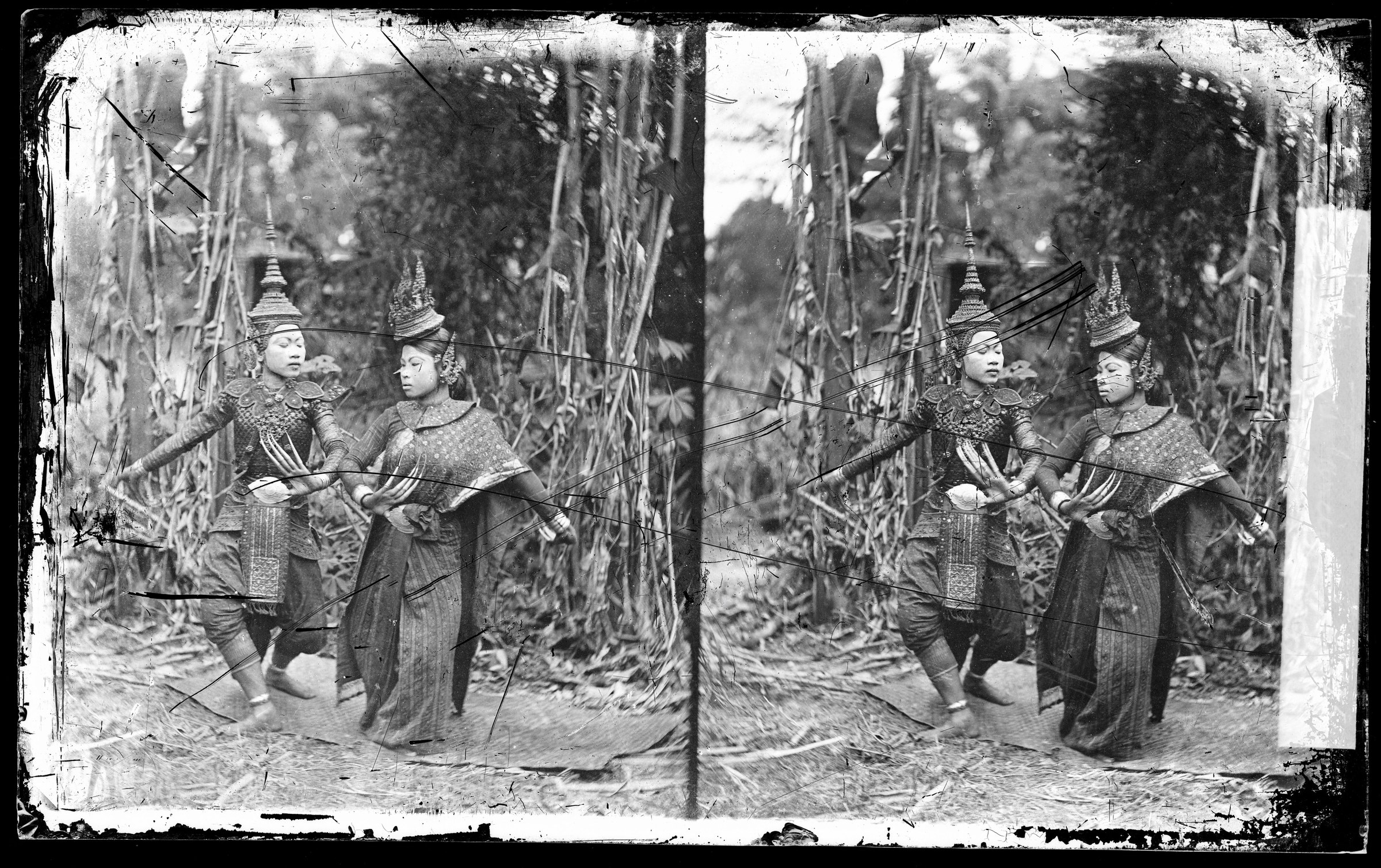
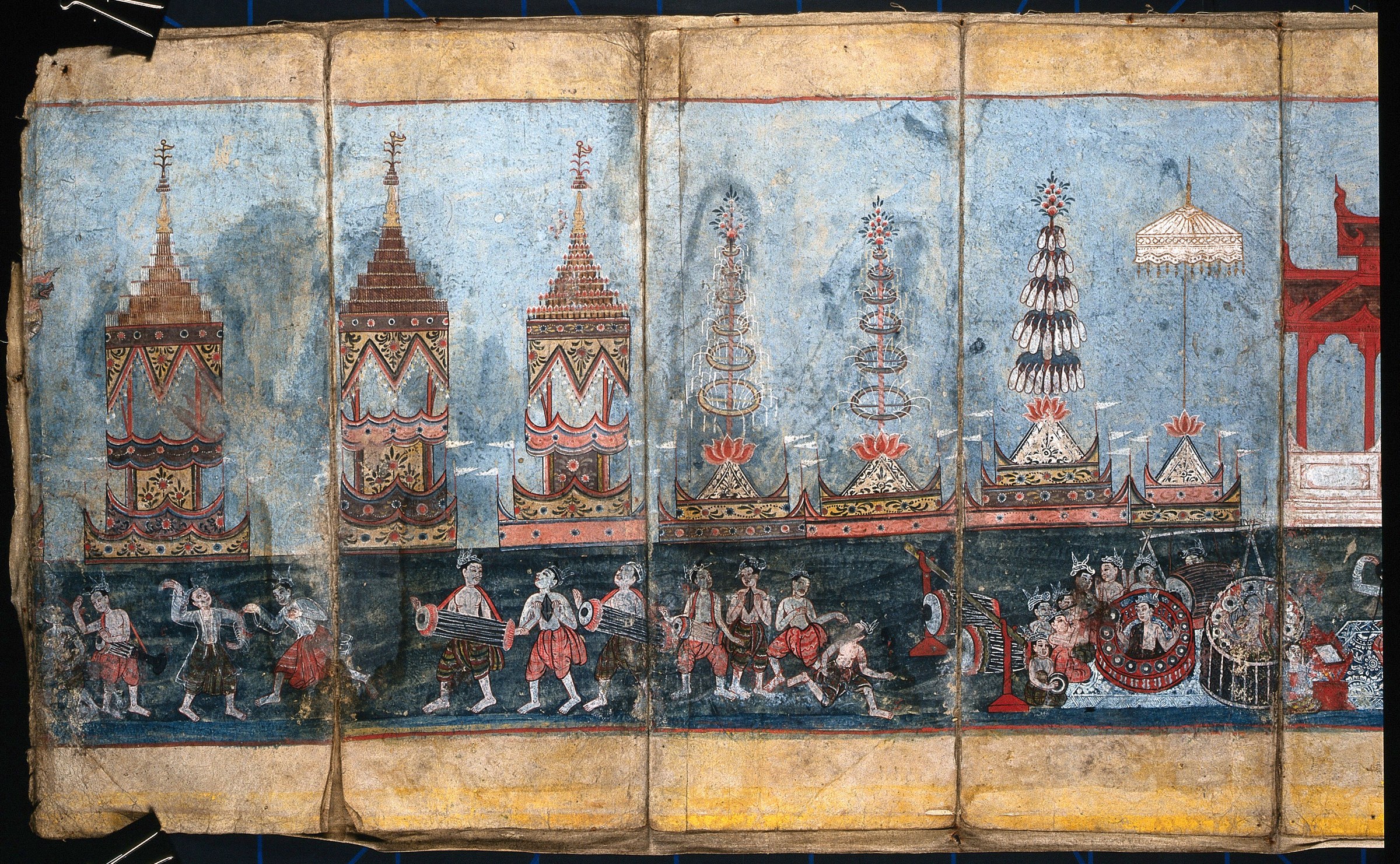
Burma: a sanctuary (?) with towers, temples, musicians and dancers. Gouache painting.
Unknown artist
Public Domain Mark
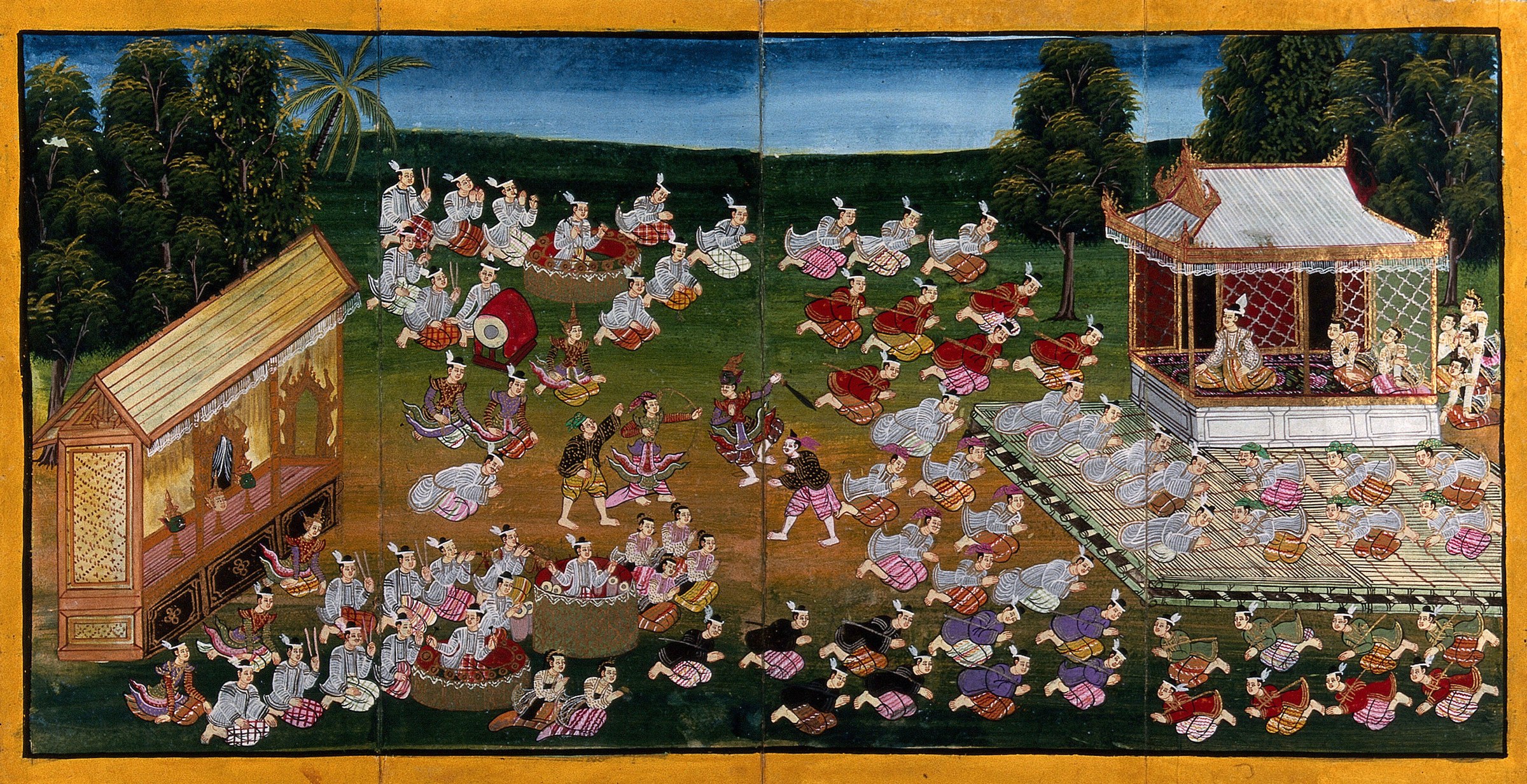
Burma: musicians and dancers perform while courtiers pay homage to a king. Gouache painting.
Unknown artist
Public Domain Mark
Continue Exploring
Lineage of Dance
500 years of dance evolution
Champions of Dance
Winners of marquee national & world titles
Language of Dance
161 dance terms & translations
Listening of Dance
Tempo, timing & musicality tools
Gallery of Dance
5,700+ artworks from museum collections
Attire of Dance
Evolution of dance dress across eras