History & Cultural Context
Tinikling is among the most widely recognized folk dances of the Philippines, named after the tikling bird (a type of rail) whose nimble hopping through grass and bamboo traps inspired the dance's characteristic movements. It is frequently described as the country's national dance, though the National Commission for Culture and the Arts notes that no dance has been officially designated as such by law.
Tinikling — In Depth
Tinikling is a Philippine folk dance performed between bamboo poles that are struck together on the beat while the dancers step in and out of them. It is danced barefoot, in triple time, and it accelerates as it goes. The risk it trades on is real: a late foot is caught between closing poles.
The name, and the bird. Tinikling is named for birds known locally as tikling, and the word has been glossed as "to perform it tikling-like" (Philippine Information Agency, August 8, 2006). Tikling is not one species. The name covers several rails, among them the slaty-breasted rail (Gallirallus striatus), the buff-banded rail (Gallirallus philippensis) and the barred rail (Gallirallus torquatus), as set out in Robert S. Kennedy, Pedro C. Gonzales, Edward C. Dickinson, Hector C. Miranda Jr. and John Ely Pritz, A Guide to the Birds of the Philippines (Oxford University Press, 2000), pp. 76-77. The usual gloss of the imagery, that the footwork imitates the bird stepping clear of grass stems or of traps set in the rice fields, is repeated almost everywhere, but we hold no source that records it as the dancers' own account of what they are doing.
Where it comes from, and how thin that record is. The dance is commonly attributed to Palo, in Leyte, in the Visayas. A reader should know what that attribution rests on. In the reference literature available to us it traces to an archived personal web page (giancruz.com, "History", archived February 27, 2009), and the one government source on the question is a Philippine Information Agency report of August 8, 2006 headed "Researchers probe the possible origin of 'tinikling' folk dance in Leyte" - a title that treats the origin as under investigation rather than settled. This page states Leyte because that is what the record says, and states that the record is weak.
The colonial punishment story is a legend, not history. A widely circulated account holds that Tinikling began as a punishment on Spanish haciendas: workers judged too slow had their feet struck with spine-tipped bamboo poles, and learned to hop clear. There is no historical evidence for it. The Wikipedia article that carries the story labels it "the legend, without historical evidence" and says in its own words that "there is no historical basis to support the previous claim"; the only citation it offers for the legend is a commercial circus website (sunnysidecircus.com, November 10, 2019). The more cautious reading in that same article is that the dance is probably of pre-Hispanic origin with later elements such as the rondalla accompaniment added - but that sentence carries no citation either, and this page does not present it as established.
Structure and timing. Two or four parallel pairs of bamboo poles, each roughly 6 to 12 feet (1.8 to 3.7 m) long, rest on two raised pieces of wood and are worked by two or more people sitting or kneeling at the ends, called clappers or clickers. The timing is triple: the poles are tapped twice on the ground on the first two beats and brought together on the third, so the dancer's steps fall on the open beats and the clash falls on the third. Dancers begin with the hands on the hips or clasped behind the back, take hands in the fastest closing section, and finish by stepping entirely clear of the moving poles. These mechanics are the ones set out in the standard teaching literature - Mellie Leandicho Lopez, A Handbook of Philippine Folklore (University of the Philippines Press, 2006), pp. 459-462, and Christy Lane and Susan Langhout, Multicultural Folk Dance Guide, Volume 2 (1998), pp. 27-33 - and in a collected account held at the USC Folklore Archives (Julia Virtue, May 14, 2013). We have not inspected the Lopez or Lane and Langhout pages ourselves; they are named here as the sources the published description rests on, not as sources we have read. One divergence in practice is worth a dancer's attention: in the United States the dance has been taught in a four-beat rather than a three-beat rhythm (Pete Kautz, Alliance Martial Arts, 2005), so a dancer trained in an American school gym and a dancer trained to the Philippine pattern are not counting the same dance.
Music, and a tempo this page will not invent. The accompaniment is the rondalla, an ensemble of plucked and strummed strings - bandurria, laud, octavina and guitar. The Smithsonian Folkways catalog entry for Bayanihan 6, by the Bayanihan Philippine Dance Company, describes that company's accompaniment as "a rondalla ensemble of plucked and strummed strings" alongside "a tuntungan (wooden percussion instrument), gongs, drums". No source we consulted gives a tempo in beats per minute for Tinikling. The only thing the literature agrees on is relative rather than absolute: the poles get faster as the dance proceeds. Any single BPM band printed for this dance should be read as a house estimate and not as a documented tempo. Nor could we verify a canonical tune. Neither Bayanihan 6 nor Folkways' Folk Songs of the Philippines (Luz Morales, Folkways Records FW08791, 1960) carries a track titled Tinikling, so this page names no recording as the standard accompaniment.
It is not the national dance of the Philippines, and that is official. Tinikling is described almost everywhere - including in the titles of several sources cited above - as the national dance of the Philippines. The Philippine government's own cultural agency says otherwise. The National Commission for Culture and the Arts, in "Official National Symbols of the Philippines" (August 28, 2009), states flatly: "Carinosa is not the national dance of the Philippines, neither is it Tinikling." The same article gives the reason. Apart from Republic Act 8491, the Flag and Heraldic Code of the Philippines, the country has only four other official national symbols: the sampaguita and the nara, declared by Governor-General Frank Murphy under Proclamation No. 652 (1934), the Philippine eagle under Proclamation No. 615 (1995) and the Philippine pearl under Proclamation No. 905, s. 1996. No dance is among them, and the NCCA lists the supposed national animal, fish, house, leaf, fruit and sport as claims circulating without legal basis. An attempt to create the designation was made and failed: House Bill No. 3926, introduced by Representative Rene Relampagos in 2014 to name the Carinosa the national dance, did not become law. A reader will find the opposite claim on most sites that write about this dance. It is popular usage, not a designation.
People and institutions. The documentation of Philippine folk dance for schools is largely the work of Francisca Reyes-Aquino (born March 9, 1899, Bocaue, Bulacan; died November 21, 1983), named National Artist of the Philippines for Dance in 1973. She published a thesis titled Philippine Folk Dances and Games in 1926 and expanded it in 1927 with the official support of the University of the Philippines president Jorge Bocobo; later titles include Philippine National Dances (1946) and the multi-volume Philippine Folk Dances. She received the Republic Award of Merit in 1954 and the Ramon Magsaysay Award for Government Service in 1962 (The National Artists of the Philippines, Cultural Center of the Philippines and National Commission for Culture and the Arts, Anvil Publishing, 2004, pp. 38-47; Ramon Magsaysay Award Foundation citation; NCCA profile, June 2, 2015). One caution for anyone citing her as the authority for this dance: a 2019 account lists Tinikling among the dances she "discovered and taught" through her books (Amierielle Anne Bulan, NOLISOLI, March 9, 2019), while her recorded collecting from 1921 onward was in barrios of Central and Northern Luzon - not the Visayas, where this dance is placed. Both statements can be true, since her books carried dances she did not personally collect, but her name is not evidence for a Leyte origin. On the performance side, the Bayanihan Philippine Dance Company is the company whose recordings of Philippine dance repertory are held by Smithsonian Folkways.
Related forms. Pole-clapping dances exist elsewhere in Asia, and the comparisons usually drawn are the Cheraw of Mizoram in northeastern India and the Mua sap of Vietnam. The sources that draw them offer no citation and no account of contact or common descent, so the resemblance should be read as a resemblance and nothing more.
What this page does not know. The Leyte origin rests on weak sources. No source we hold gives a documented tempo in beats per minute. No canonical tune is verified. The bird-imitation gloss of the name is undocumented as dancers' own testimony. Whether the dance is pre-Hispanic is asserted without citation in the literature we consulted.
Tinikling Playlists
Curated collections on the LODance YouTube channel — performances to watch, lessons to learn from, and the right music to practice with. Tap a collection to play.
▶ Performances · Open on YouTube →
Tinikling Music & Tempo
Drawn from 20 Tinikling tracks in the LODance music library.
Example tracks at practice tempo
- Bamboo Dance - Tinikling — Mabuhay Singers135 BPM
- Tinikling — Fiesta Filipina129 BPM
- Tinikling — Filipinas Rondalla152 BPM
- Tinikling — Bayanihan Philippine Dance Company171 BPM
- Tinikling — Sylvia La Torre143 BPM
- Tinikling — Fiesta Rondalla84 BPM
What to Wear
Attire guidance for Tinikling and other Global Southeast Asian Court & Folk dances. Each card below is sized to the moment — class, practice, social, or competition — because the wardrobe shifts as the stakes do.
Reading the cards
In Class
Comfortable practice wear. Some traditions emphasize bare feet and specific hand positioning that requires unencumbered arms.
Social Dancing
Traditional attire specific to each culture's dance tradition for performances and cultural events.
Competition
Full traditional costume — Thai classical: ornate gold headdress and fitted costume; Balinese: elaborate wrapped fabrics and gold accessories.
Shoes
Traditionally barefoot across most Southeast Asian classical and folk forms. The connection to earth and precise foot placement are integral to the art forms.
In Practice
Most forms practice barefoot from day one — the foot's contact with the floor is part of the technique, not removable equipment.
Price Range
- Budget: Loose practice clothing from existing wardrobe; no shoes needed.
- Mid: Practice-grade traditional pieces $100–400.
- Premium: Full court-tradition costumes (Thai classical, Balinese, Javanese) $1,000–6,000+ depending on goldwork and accessories.
Quick Tips
- •Suede-soled shoes allow controlled sliding and pivoting — essential for most partner dances.
- •Avoid rubber soles on dance floors; they grip too much and can cause knee injuries.
- •Bring a separate pair of clean shoes for the dance floor to keep it in good condition.
Sources & Further Reading
Cultural & Historical Context
Tinikling emerged from Philippines. Understanding the cultural roots, musical traditions, and social circumstances of this era enriches appreciation for the dance's characteristics and significance.
Primary Source Documents
The Library of Dance contains public-domain primary sources for dance history. Copyrighted modern syllabi are indexed with purchase links to their respective copyright owners. Search by dance name or codifier to discover primary source documents.
Last reviewed: November 2026 — This dance profile synthesizes historical research, cultural documentation, and contemporary practice knowledge to provide authoritative context.
More in Global Southeast Asian Court & Folk
Khon
Masked classical dance-drama based on Ramayana epic; features slow, controlled movements and elaborate costumes.
Legong
Graceful classical dance traditionally performed by young girls, depicting stories from Balinese-Javanese courtly literature such as the Malat; characterized by synchronized hand, eye, and body movements.
Kecak
Balinese "monkey chant": a seated male chorus chants interlocking "cak" rhythms while dancers enact Ramayana episodes.
Pendet
Young women's offering dance performed to purify temples; uses graceful arm movements and temple props.
Topeng
Masked dance-drama form depicting various social characters; combines storytelling with intricate footwork.
Reog
A centuries-old Javanese dance-drama from Ponorogo, East Java, Indonesia, built around the Dadak Merak — a massive mask combining a tiger's (or lion's) head with a towering fan of peacock feathers, balanced by a single performer. Staged at festivities, weddings, and community ceremonies.
Gandrung
Folk dance with swaying movements and flirtation between dancers; performed at celebrations.
Jaipong
Contemporary Javanese dance fusion combining traditional movements with modern music.
Baris
Warrior dance performed by men depicting martial prowess; features sharp, energetic movements.
Sanghyang
Sacred trance dance ritual believed to invoke spirits; performed to protect villages.
Singkil
Maranao folk dance of Lake Lanao, Mindanao, performed by stepping in and out of crisscrossed bamboo poles clapped together in syncopated rhythm. It dramatizes an episode of the Darangen epic in which Princess Gandingan crosses an earthquake-stricken forest, gracefully avoiding falling trees represented by the clashing poles.
Maglalatik
Men's folk dance performed with coconut shell armor depicting warrior movements.
Cariñosa
Courtship dance for couples blending Spanish and Filipino movements; performed with fan and handkerchief.
Zapin
Folk dance with Arab influences performed in pairs with hip and leg movements.
Joget
Social dance for couples combining Portuguese and Malay traditions; performed to lively music.
Robam Tep Apsara
Celestial nymph dance based on Angkor temple carvings; UNESCO Masterpiece of Intangible Heritage (2003).
Ramvong
Social circle dance performed at celebrations; blends traditional and modern movements.
Ramthai
Thai classical court and theatrical dance — khon, lakhon and ram/rabam — built on codified hand gestures and slow, gliding movement, accompanied by the piphat ensemble.
Morlam
Traditional Lao folk performance incorporating song, speech, and dance movements.
Global Southeast Asian Court & Folk in art
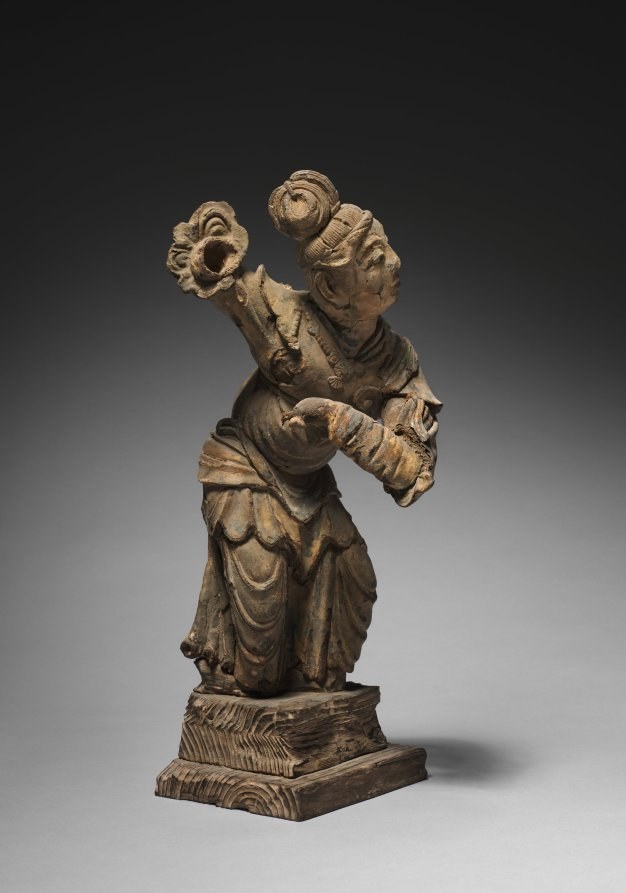
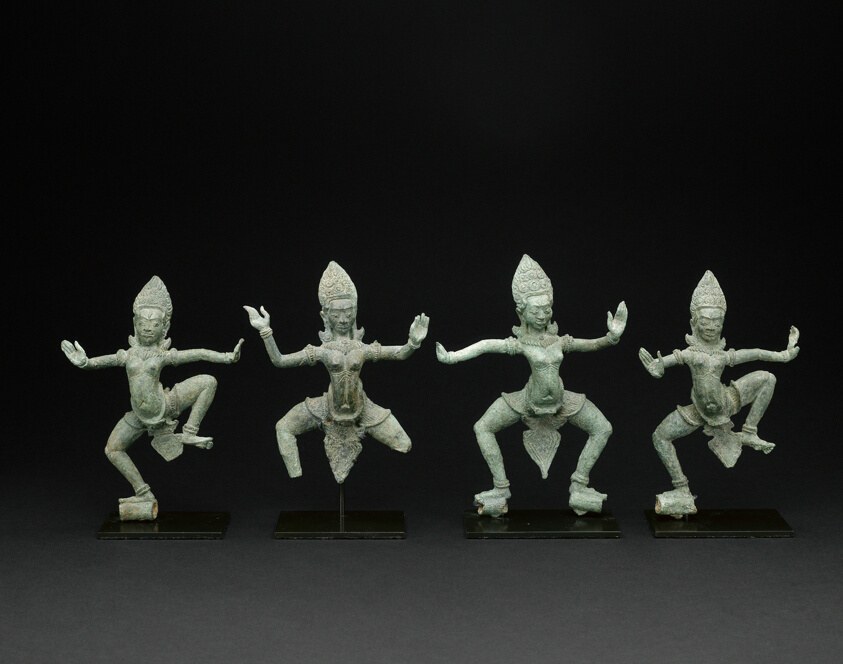
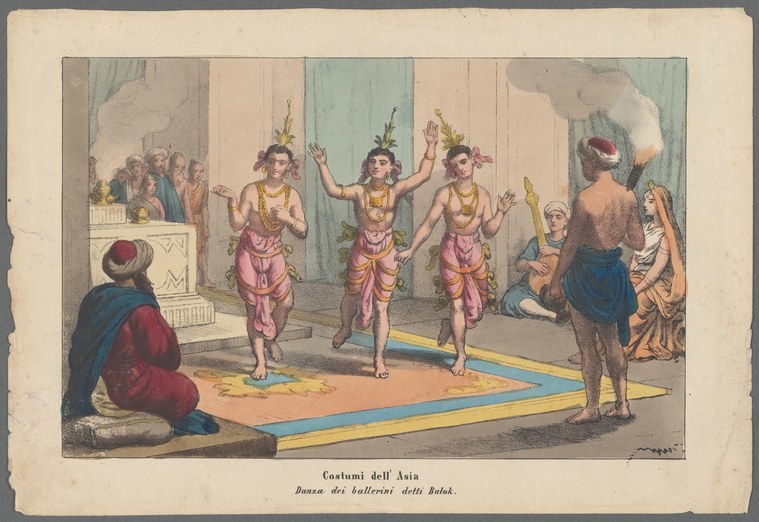
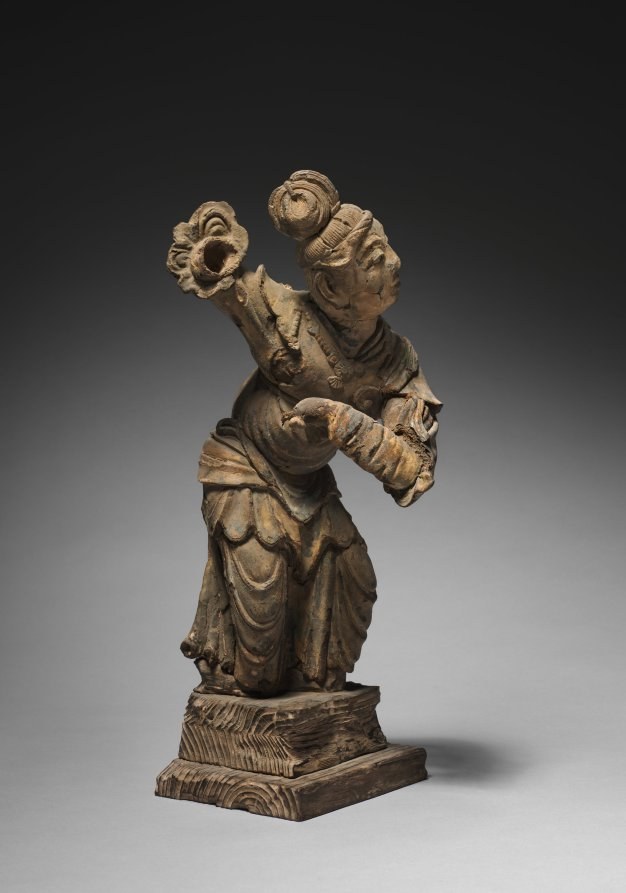
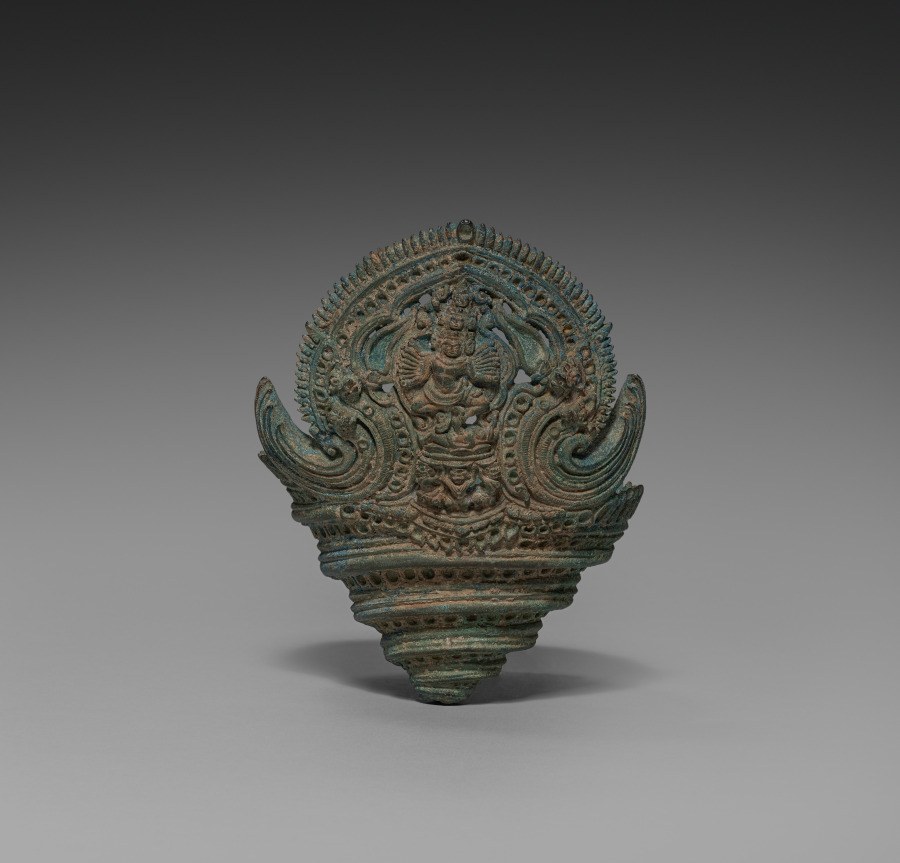
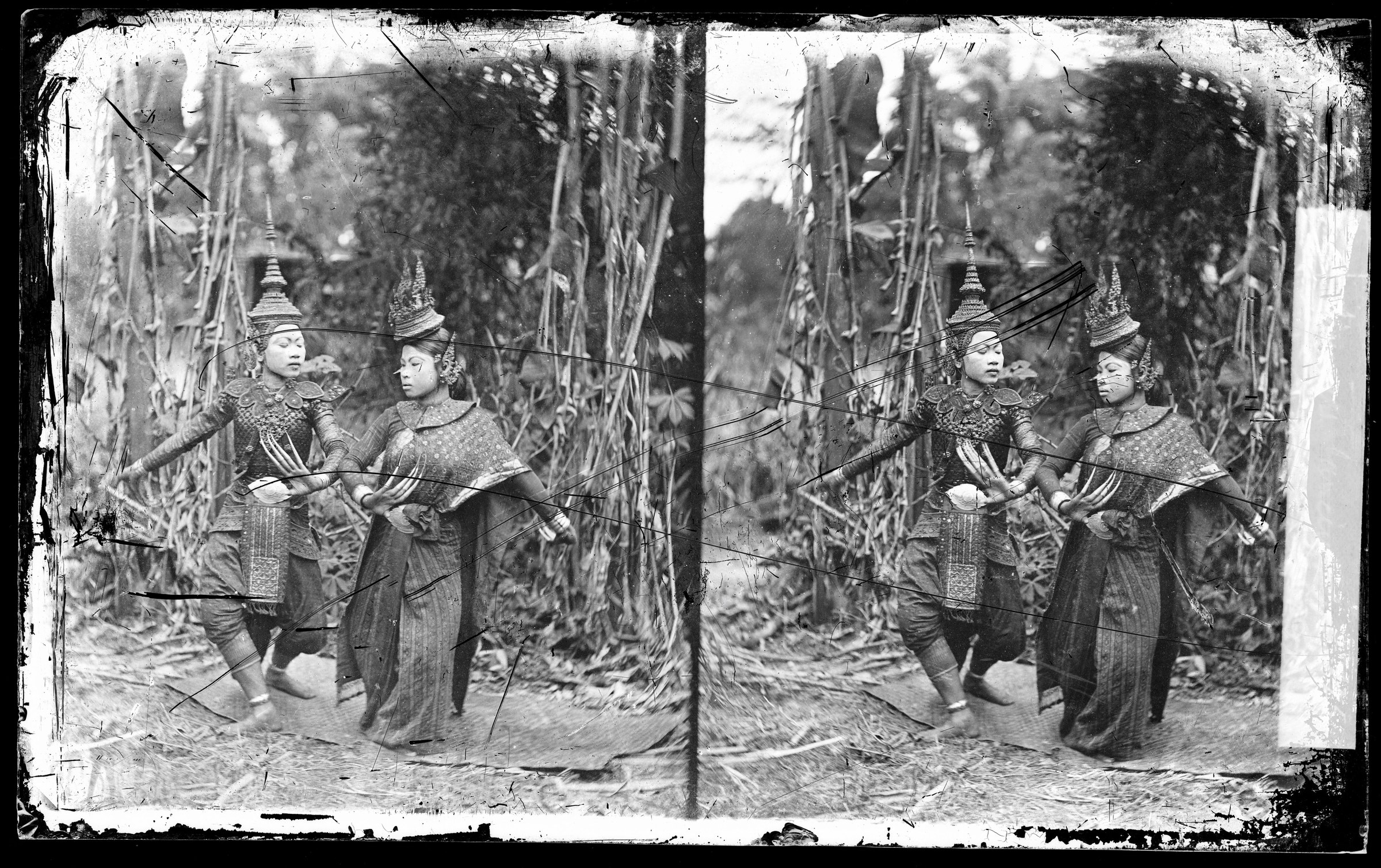
Browse the gallery →Works from the wider Global Southeast Asian Court & Folk tradition — we have not yet identified enough that depict Tinikling specifically.
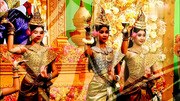
[Pictures] Cambodia Folk Dance | Aspara
cambodia
https://creativecommons.org/licenses/by-sa/4.0/
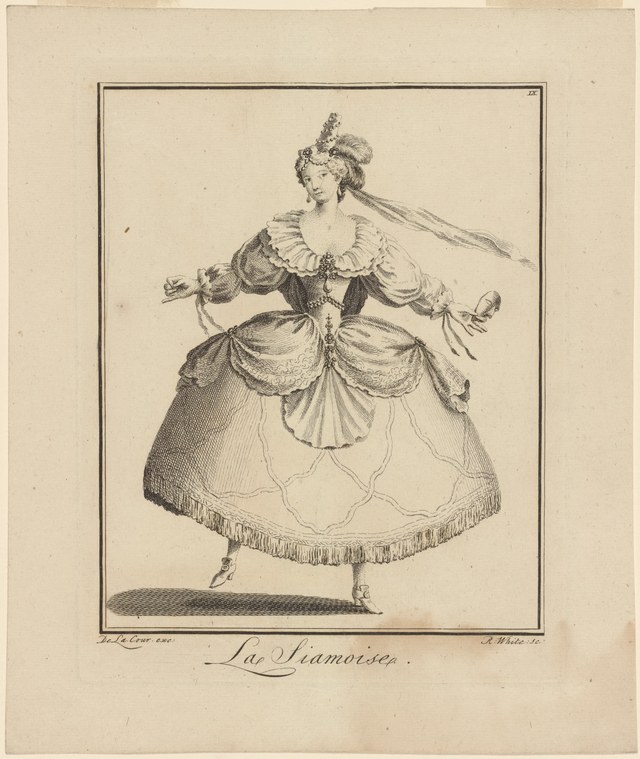
La Siamoise
Unknown artist
Public Domain
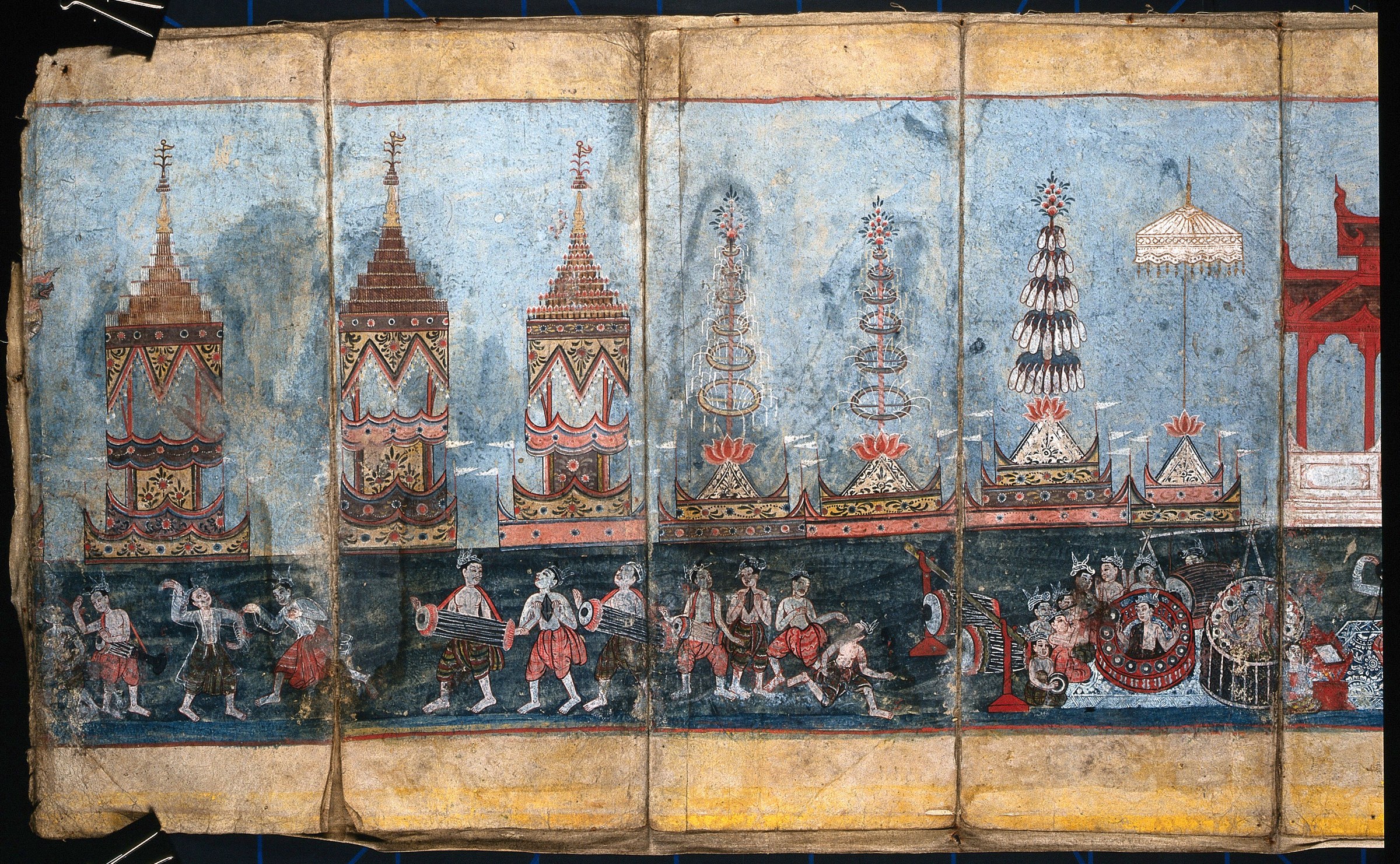
Burma: a sanctuary (?) with towers, temples, musicians and dancers. Gouache painting.
Unknown artist
Public Domain Mark
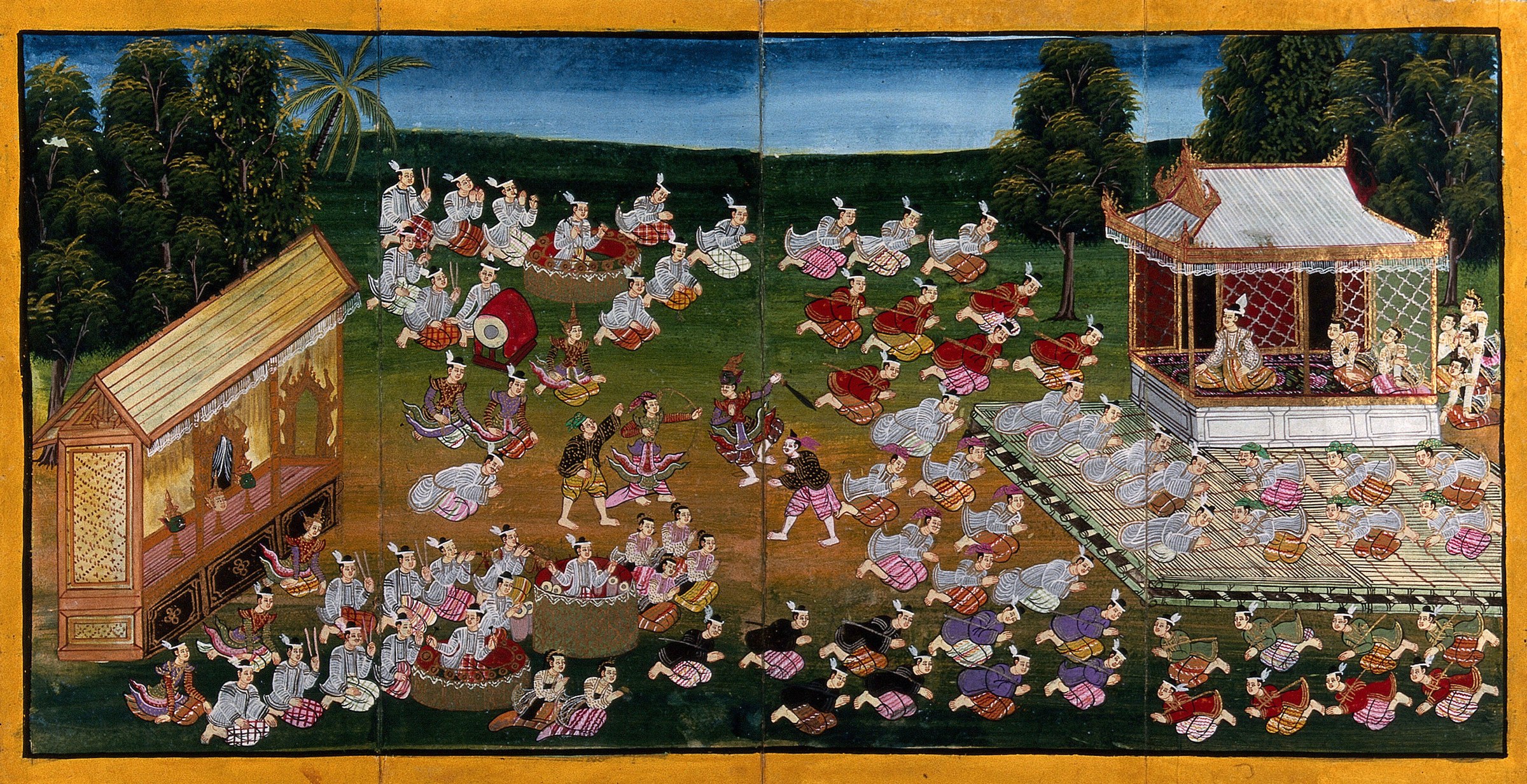
Burma: musicians and dancers perform while courtiers pay homage to a king. Gouache painting.
Unknown artist
Public Domain Mark
Continue Exploring
Lineage of Dance
500 years of dance evolution
Champions of Dance
Winners of marquee national & world titles
Language of Dance
161 dance terms & translations
Listening of Dance
Tempo, timing & musicality tools
Gallery of Dance
5,700+ artworks from museum collections
Attire of Dance
Evolution of dance dress across eras